Imitation Games
Admiration for the products of other cultures and the desire to imitate them drove some of the major developments in the history of ceramics, from the perfection of porcelain production in Japan to the fashion for Kakiemon in Europe. Technological and stylistic developments went hand in hand, enabling a complex game of influence that vacillated between imitation, adaptation, free inspiration, and deception.
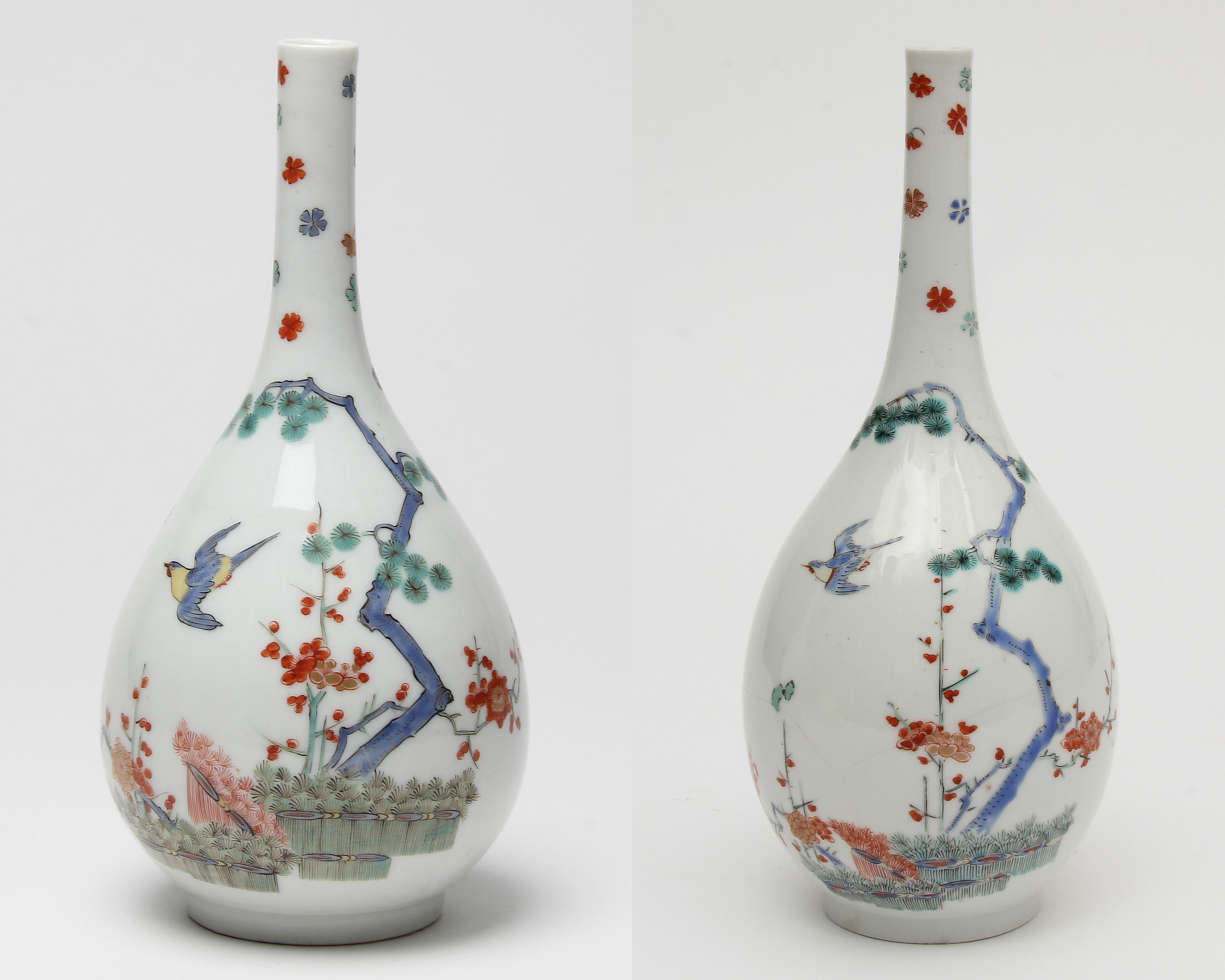
Left: Sake bottle, Germany, Meissen, c.1730, Hard-paste porcelain with overglaze enamels; Right: Sake bottle, Japan, Hizen, c.1670-1690, Porcelain with overglaze enamels. The Macdonald Collection
The Passion for Karamono
The passion for karamono, “things Chinese,” was a defining aspect of the production and consumption of art in Japan. The love of karamono has a long history going back to the Kamakura period (1185–1333) and encompassed the appreciation of Chinese porcelain. The demand for karamono also encouraged the development of the porcelain industry in Hizen, and pieces produced over the first decades of activity closely follow revered Chinese models, from the first blue and white wares to the earliest pieces decorated with overglaze enamels in the 1640s.
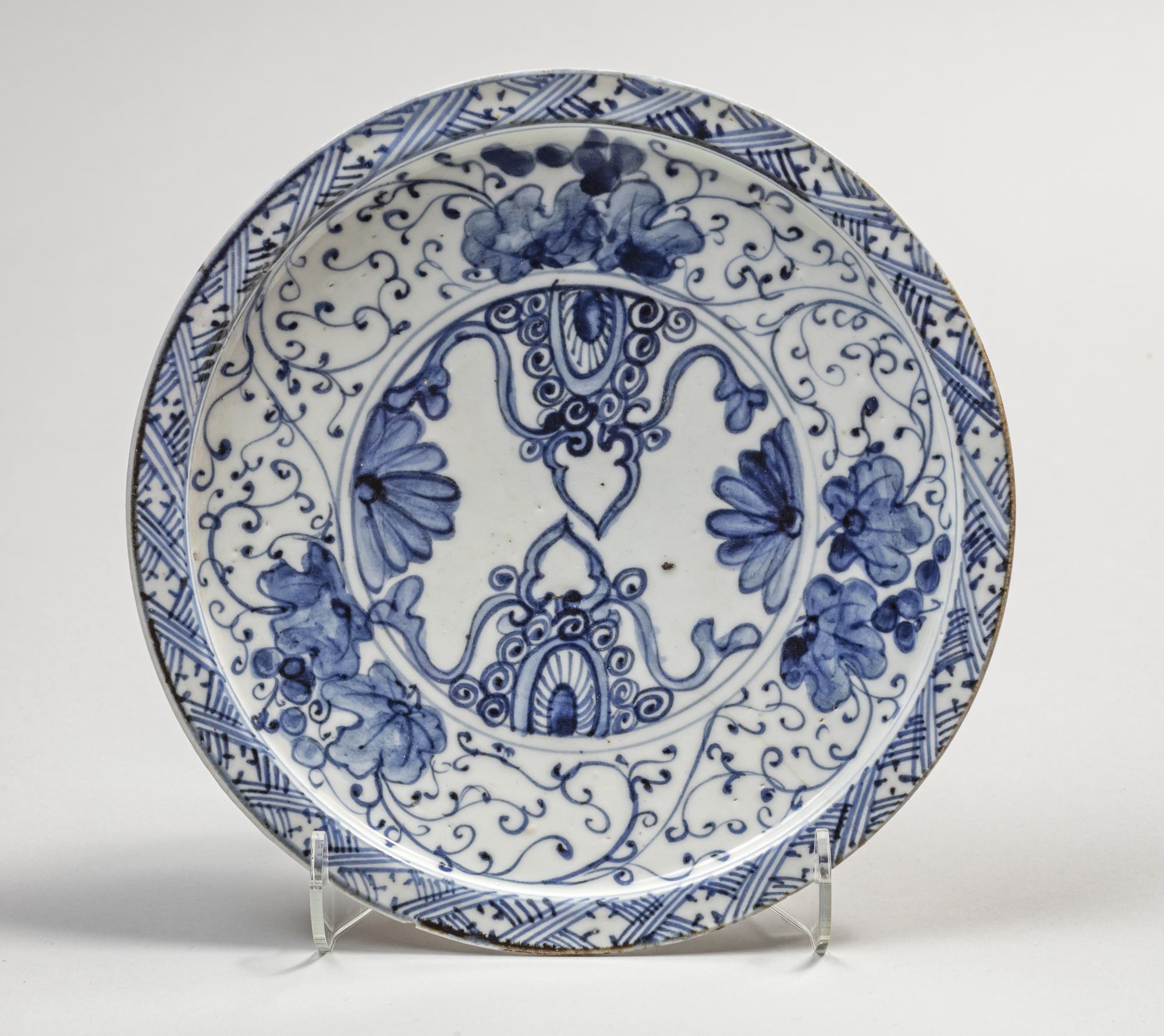
Dish with flower and grapevines after a Chinese model, Japan, Hizen, c. 1610–30. Porcelain with underglaze blue. The Macdonald Collection
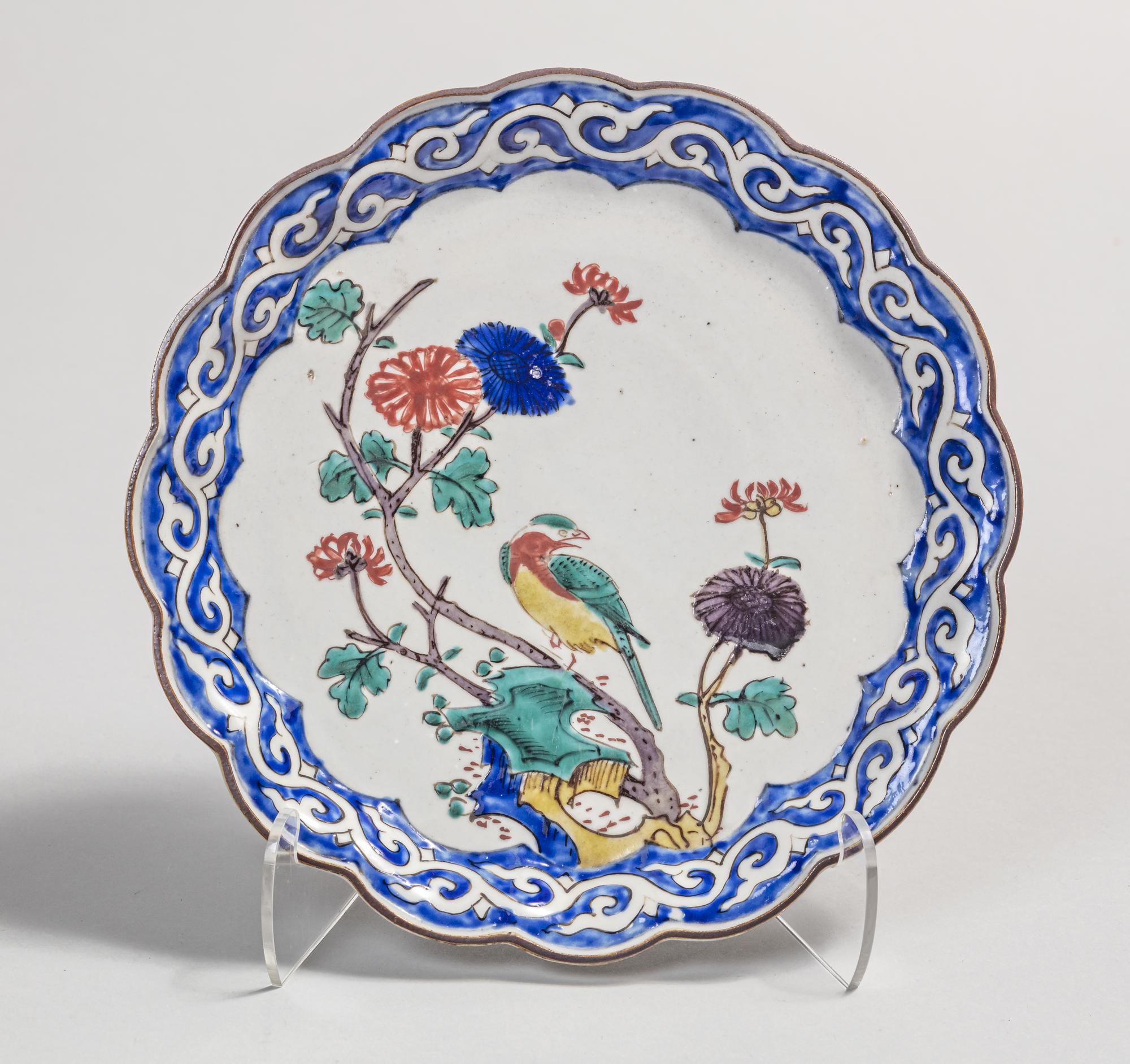
Dish with bird and flowers after a Chinese model, Japan, Hizen, c. 1640–50. Porcelain with overglaze enamels. The Macdonald Collection
Foreign Objects and Copies
While literally meaning “things Chinese,” the term karamono was used to describe many more foreign objects appreciated in Japan. Yet, the definition of “foreign” also included domestically produced objects influenced by imports such as the Japanese dish with lotus pond and crane. Made around 1700, it copies an earlier type of enamelled Chinese porcelain made for the Japanese market during the Chongzhen reign (1627–44). Such wares could have been purchased in shops specializing in karamono and Japanese objects with an “exotic” feel, as illustrated in the woodblock image.
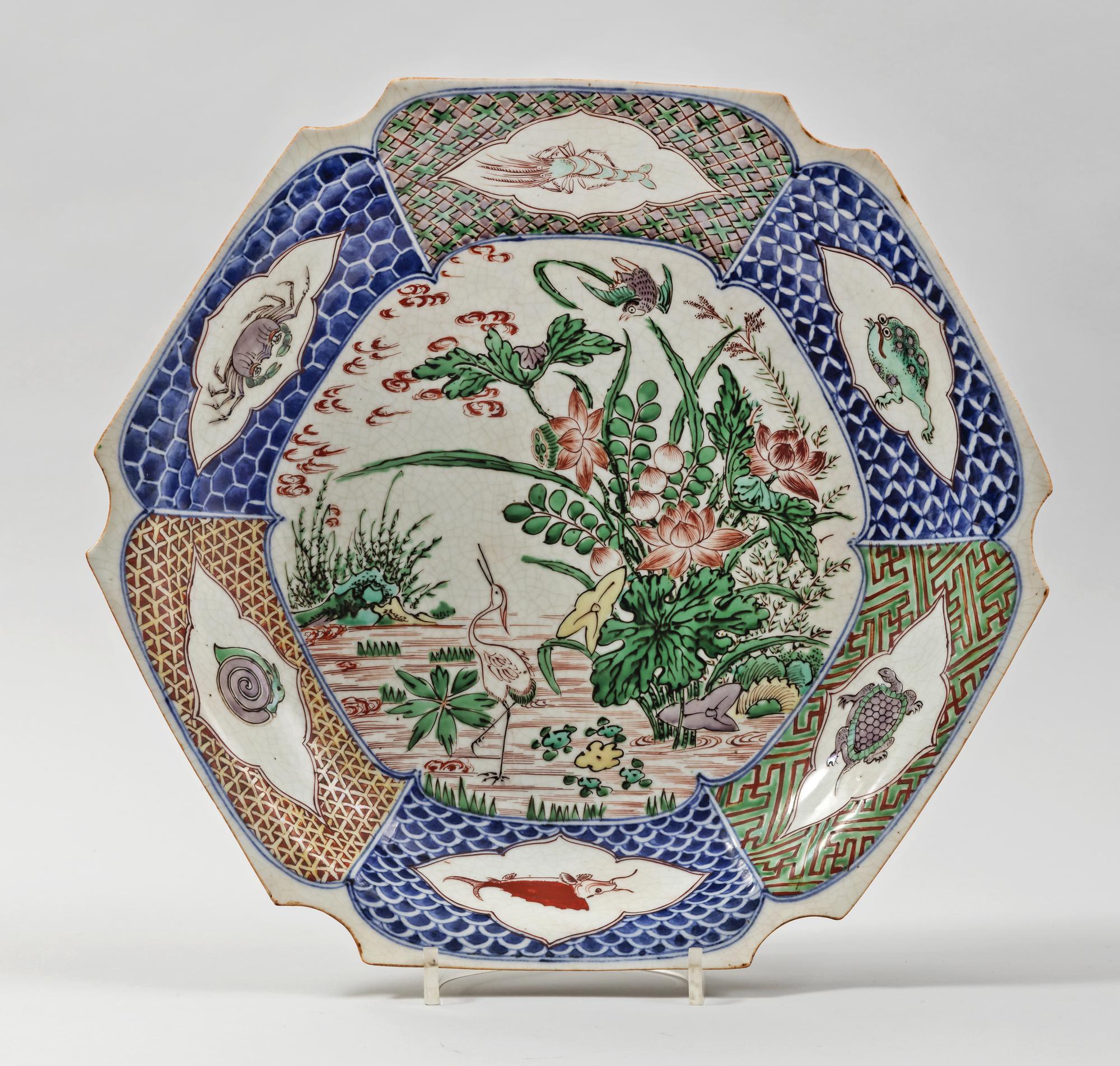
Dish with lotus pond and crane, Japan, Hizen, c. 1700. Porcelain with overglaze enamels. The Macdonald Collection
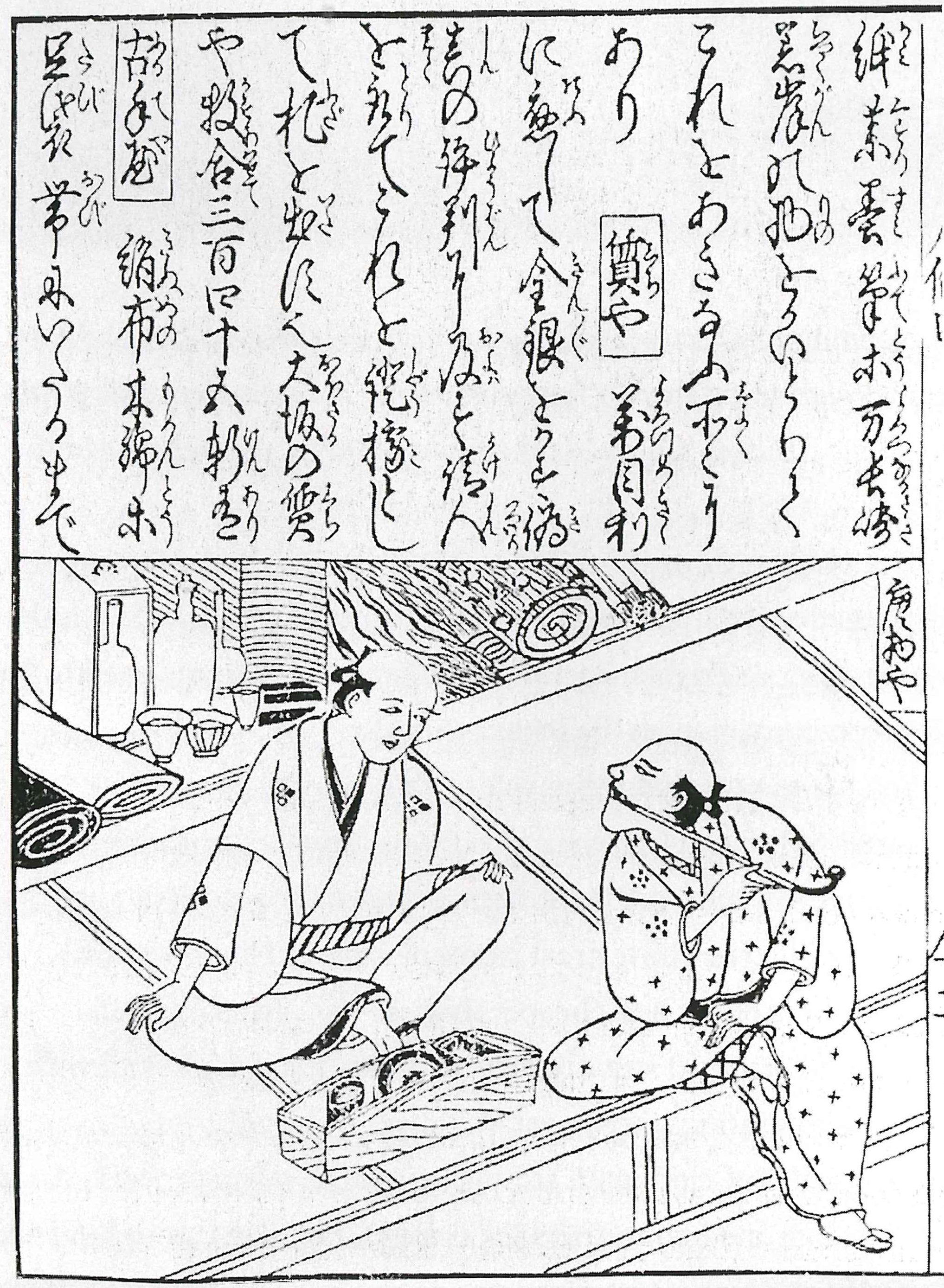
Storefront of a Karamono-ya (shop specializing in imported goods), from Jinrin kinmo zui (Illustrated Encyclopedia of Social Customs), Japan, 1690, Woodblock illustrated book, 7 vols. Credits
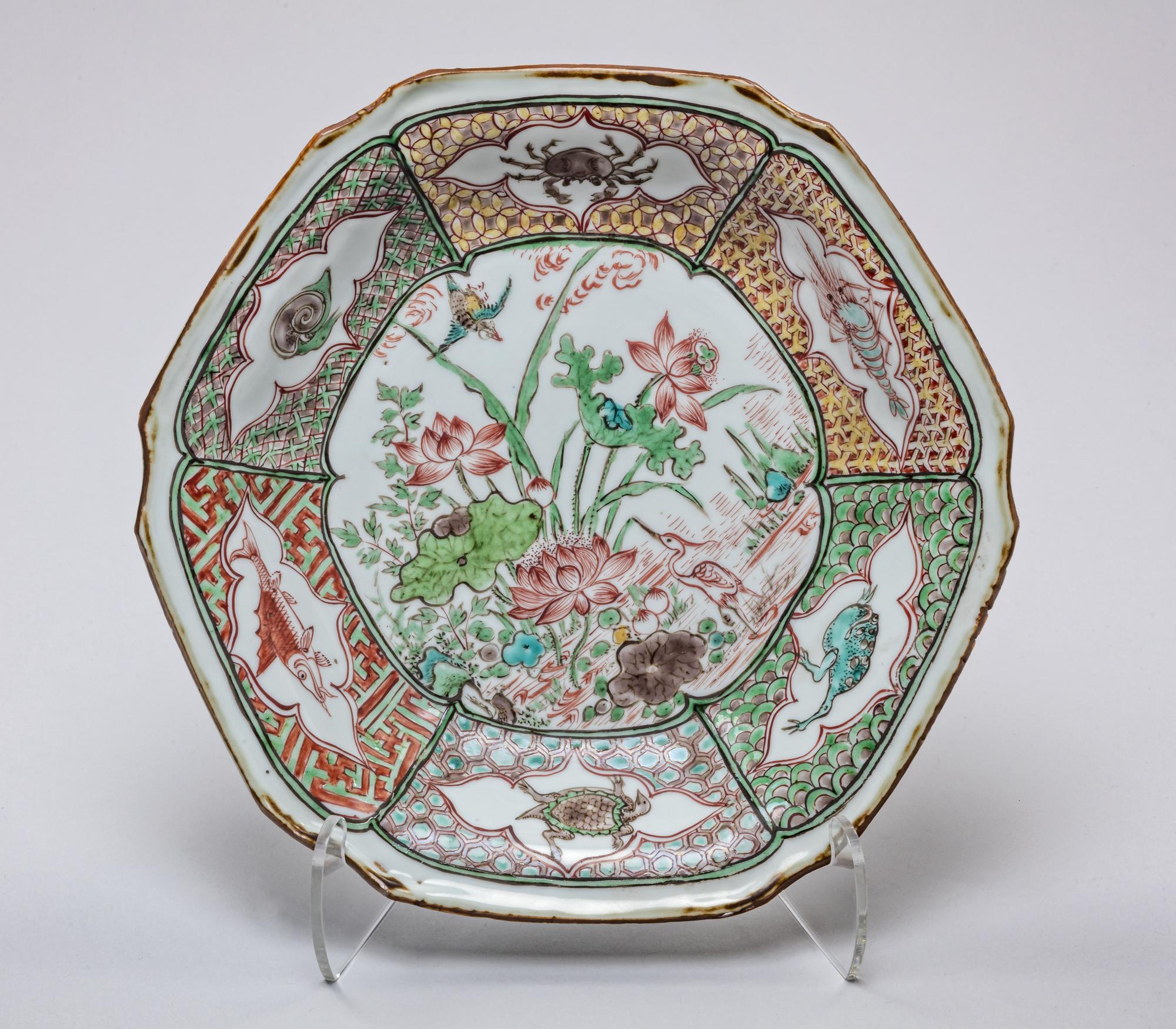
Dish with lotus pond, China, Jingdezhen, 1630–45. Porcelain with overglaze enamels. The Macdonald Collection
Hybrid Objects
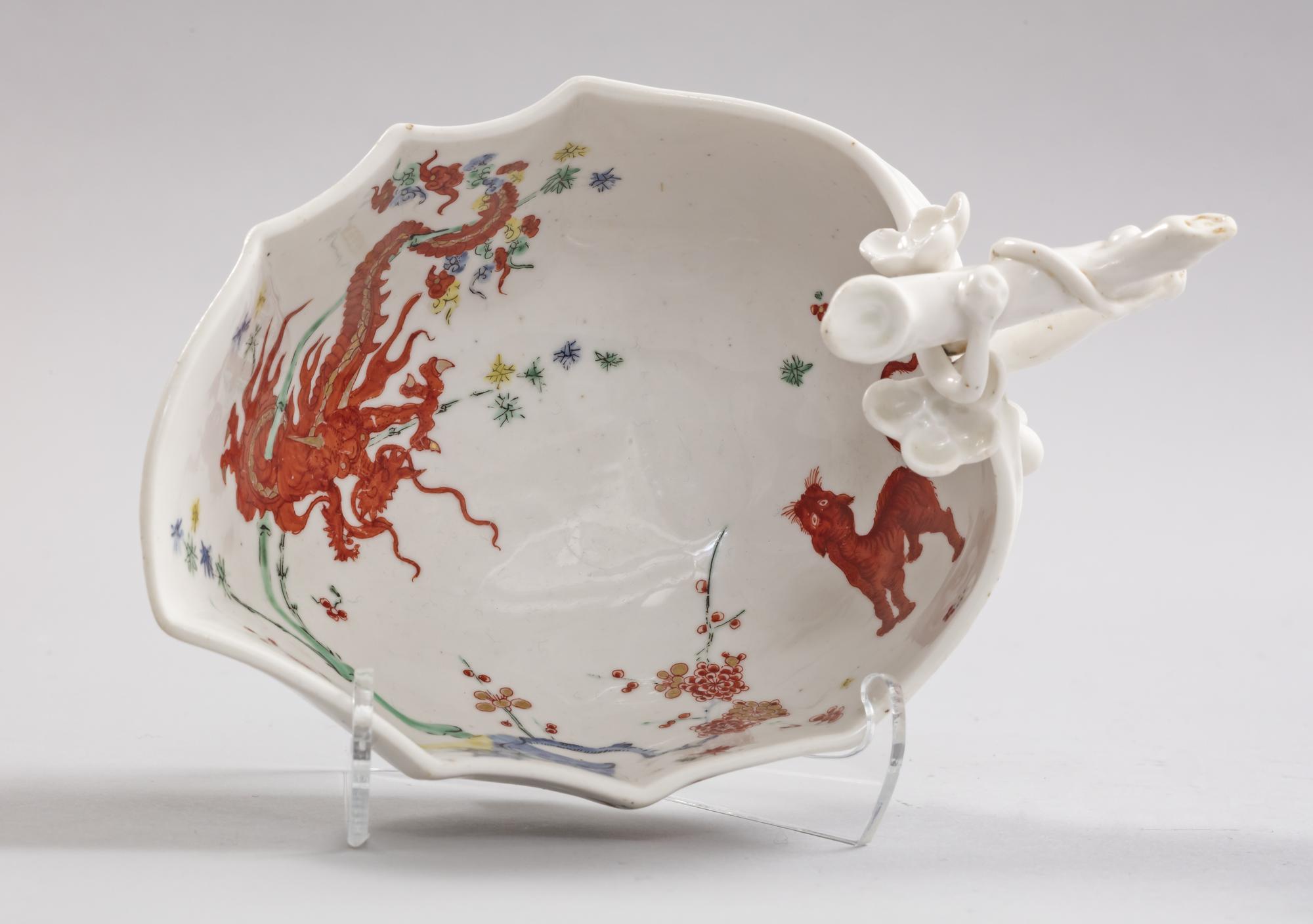
Japanese Kakiemon was one of the most admired types of porcelain in 18th-century Europe. By then, pieces in circulation were those collected in the late 1600s and were scarce. Rarity encouraged the imitation and appropriation of the style. Approaches ranged from faithful copies to the adaptation of designs onto European object types. The Chantilly ewer and basin made for the morning ritual of the toilette, and the Chelsea sauceboat, whose shape is based on a silver form, exemplify the creative appropriation of Kakiemon patterns on wares adapted to European customs.
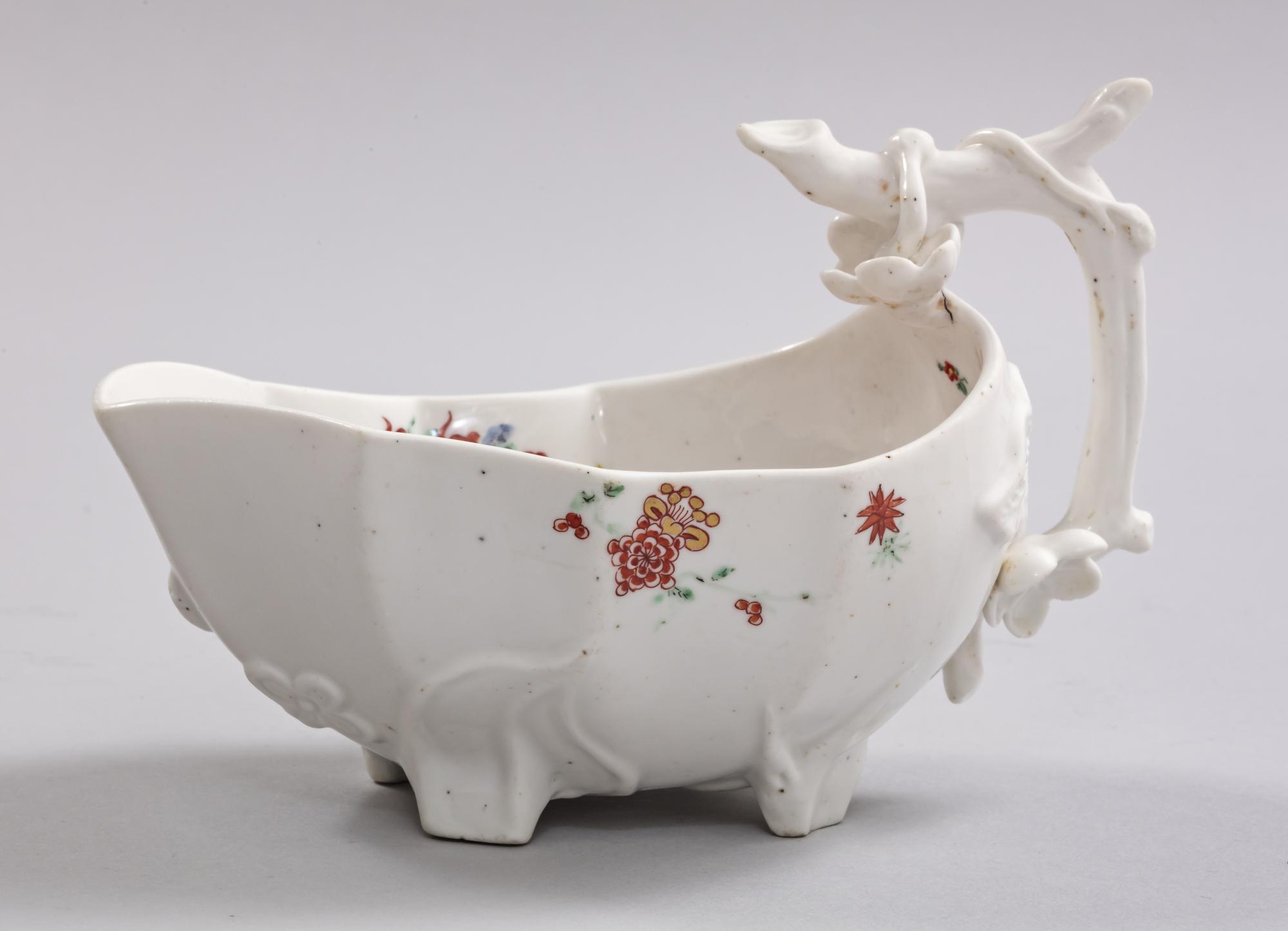
“Strawberry leaf” sauceboat, England, Chelsea, c. 1751–53. Soft-paste porcelain with overglaze enamels. The Macdonald Collection (interior view below)
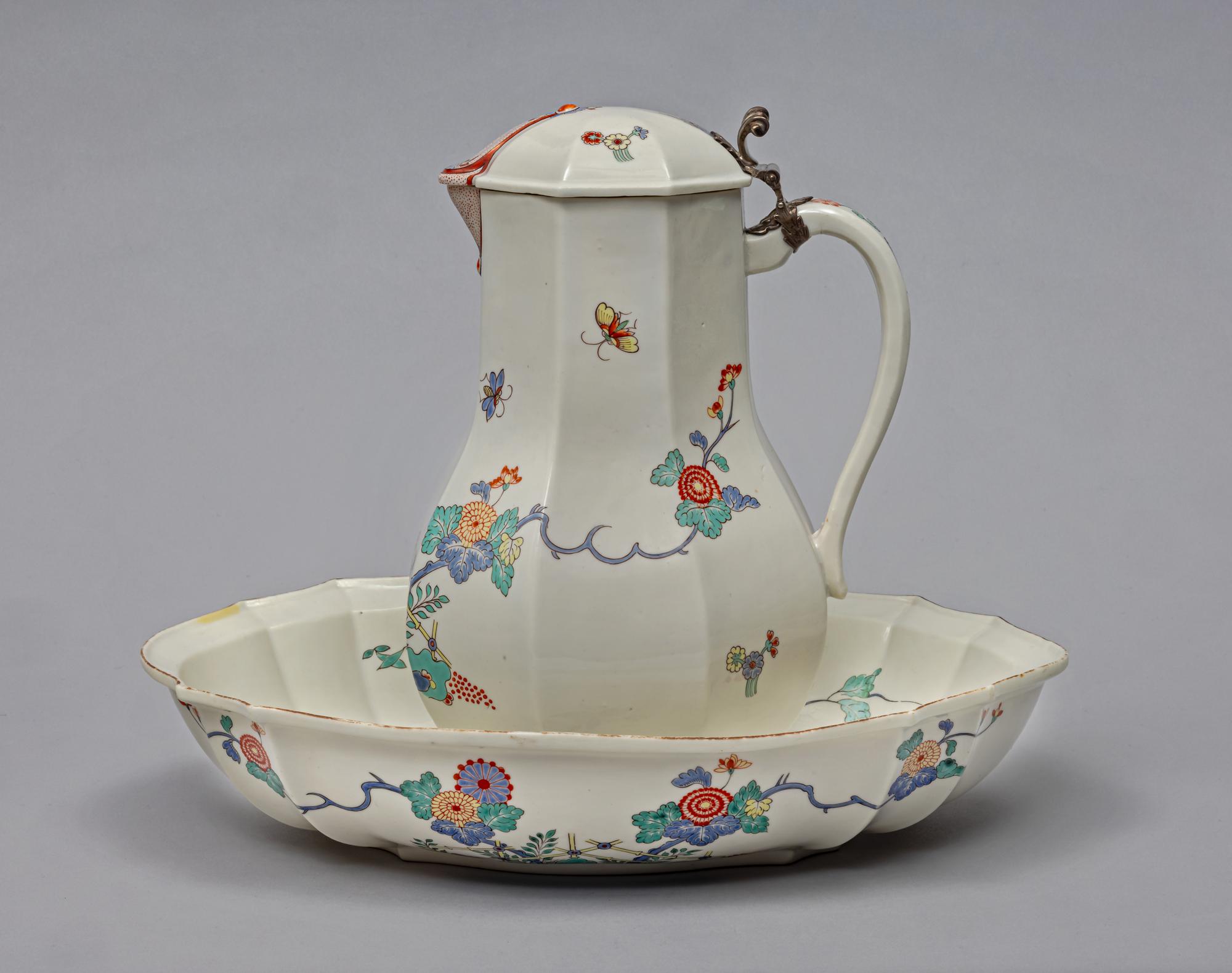
Ewer and basin in the Kakiemon style
France, Chantilly, c. 1735–40
Soft-paste porcelain with tin-opacified lead glaze and overglaze enamels
The Macdonald Collection
A Story of Deception: The Lemaire Affaire
The “Lemaire Affaire” is the most famous episode of deceit in the history of 18th-century porcelain. Recognizing the gains to be made from the sale of Japanese porcelain on the Paris luxury market, French merchant Rodolphe Lemaire went to Meissen and negotiated a series of contracts (1728–31) for the production of copies of Japanese pieces from Augustus the Strong’s collection, intending to sell them as originals. This resulted in such faithful copies, as exemplified by these bottles, that one can hardly discern the difference.
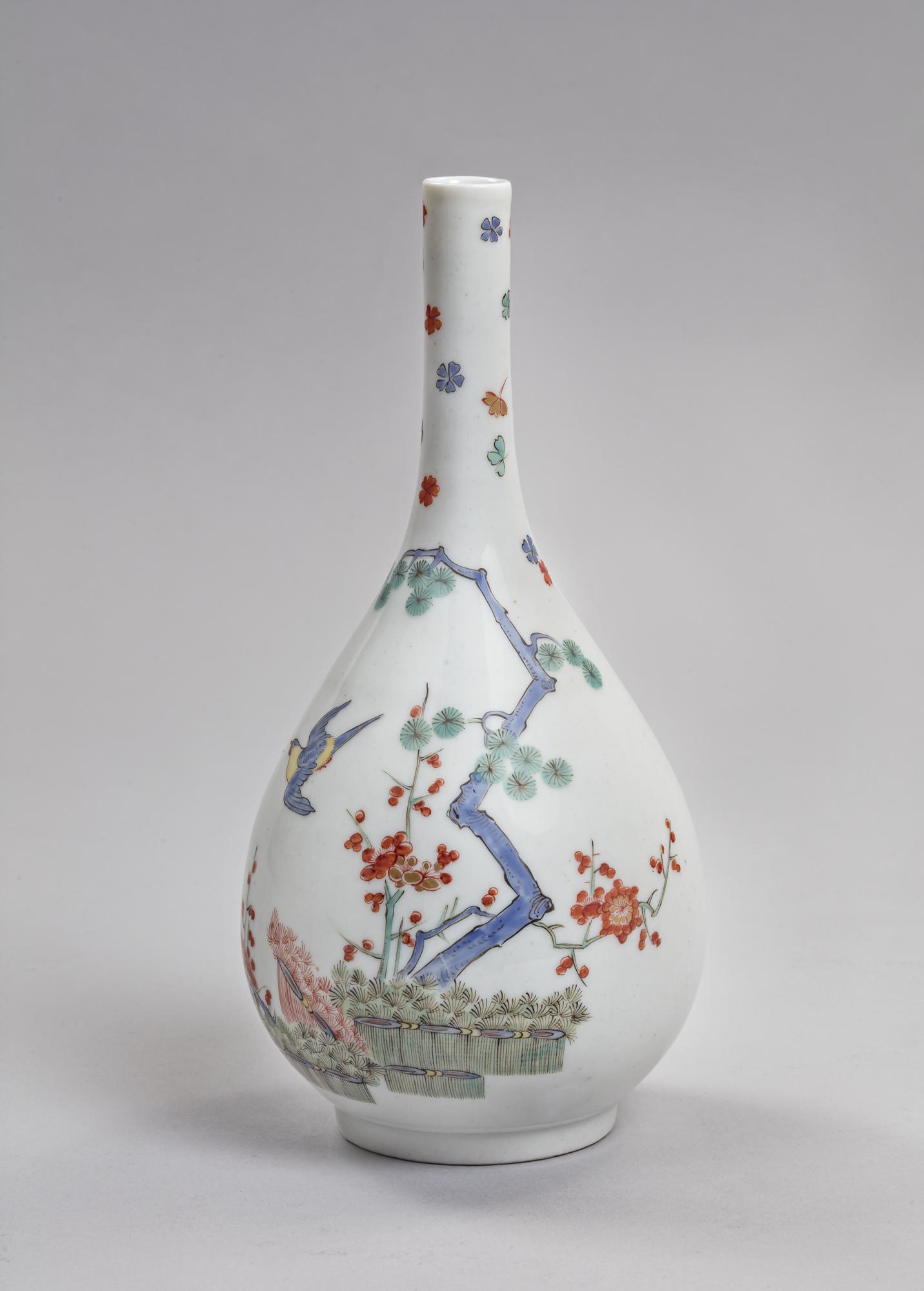
Sake bottle, Germany, Meissen, c. 1730. Hard-paste porcelain with overglaze enamels. The Macdonald Collection
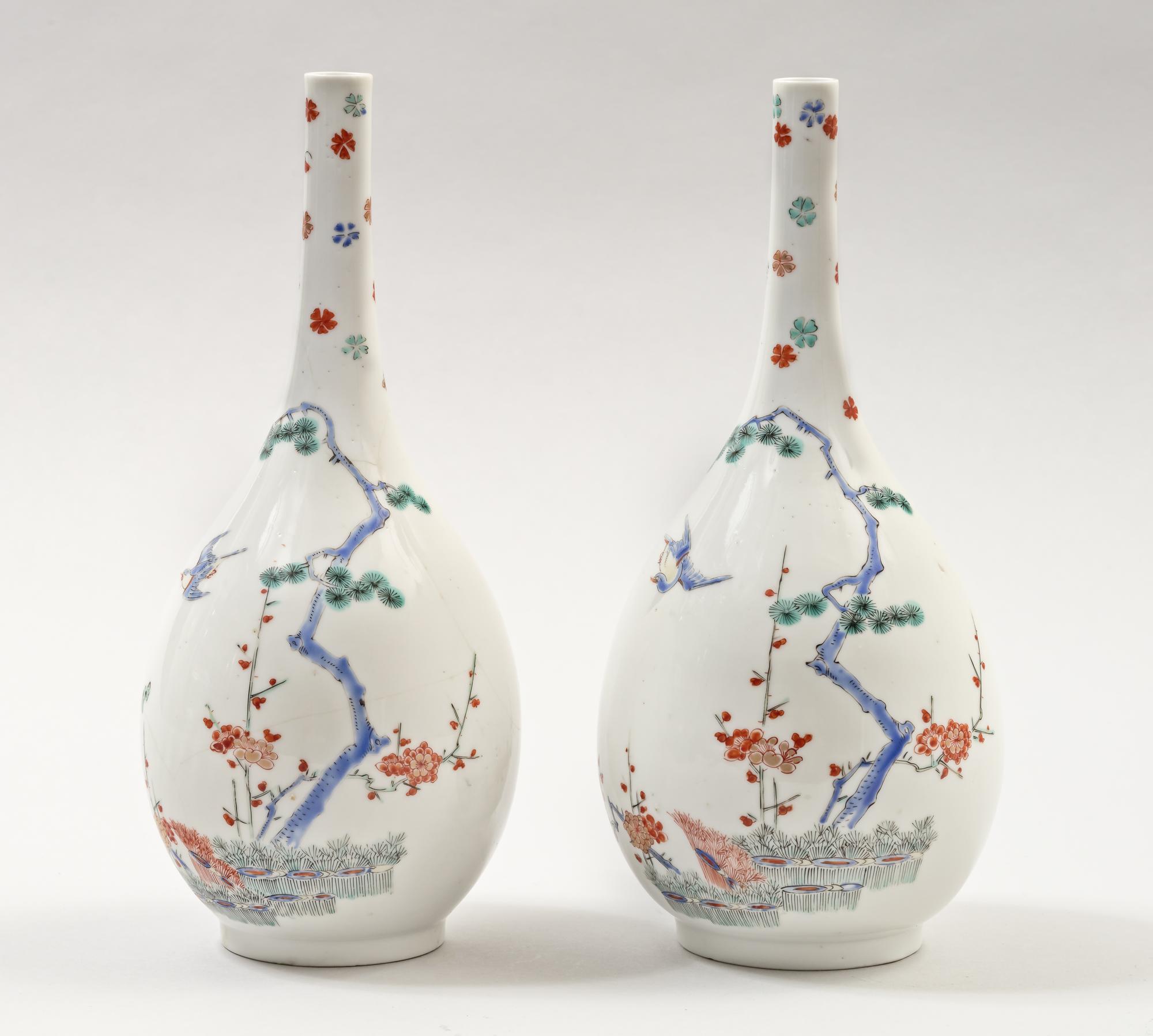
Pair of sake bottles. Japan, Hizen, c. 1670–90s. Porcelain with overglaze enamels. The Macdonald Collection
Fashion Trends: Kakiemon and Chinoiserie
The fashion for Kakiemon in Europe is an aspect of Chinoiserie, a European style featuring fantastical figures and landscapes. Chinoiserie resulted from the encounter with images of Asia in European publications and the demand for Chinese- and Asian-inspired luxury goods. At this point, the distinction between Japanese and Chinese porcelain was not clearly drawn and both were more broadly associated with a remote place. Chinoiserie figures are rendered in the Kakiemon palette on the Saint-Cloud snuff box, while the Worcester dish unites the Kakiemon bird and flower motif with design elements drawn from Chinese porcelain in the famille verte palette.
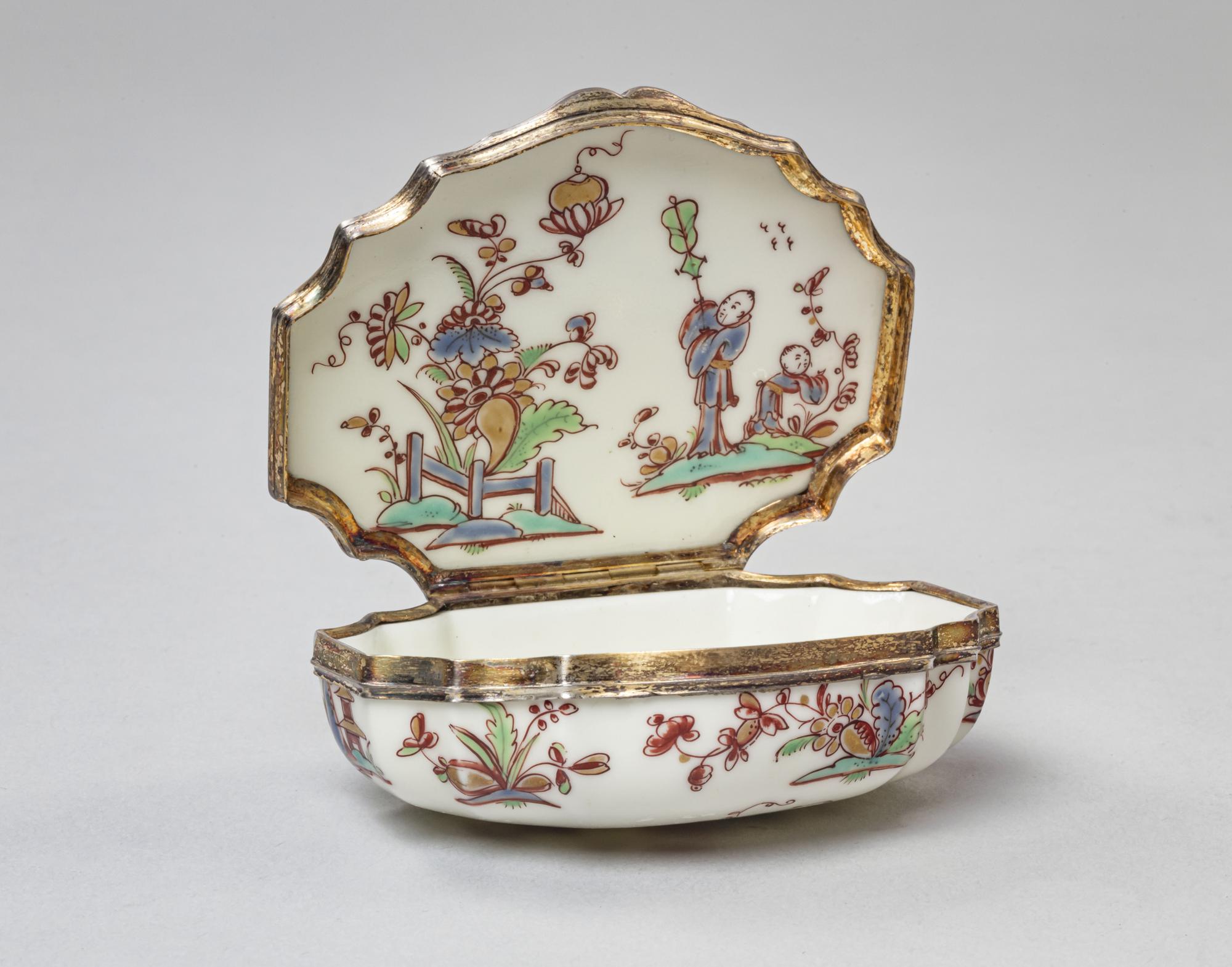
Snuff box, France, Saint-Cloud, c. 1745. Soft-paste porcelain with overglaze enamels; silver gilt mounts. The Macdonald Collection
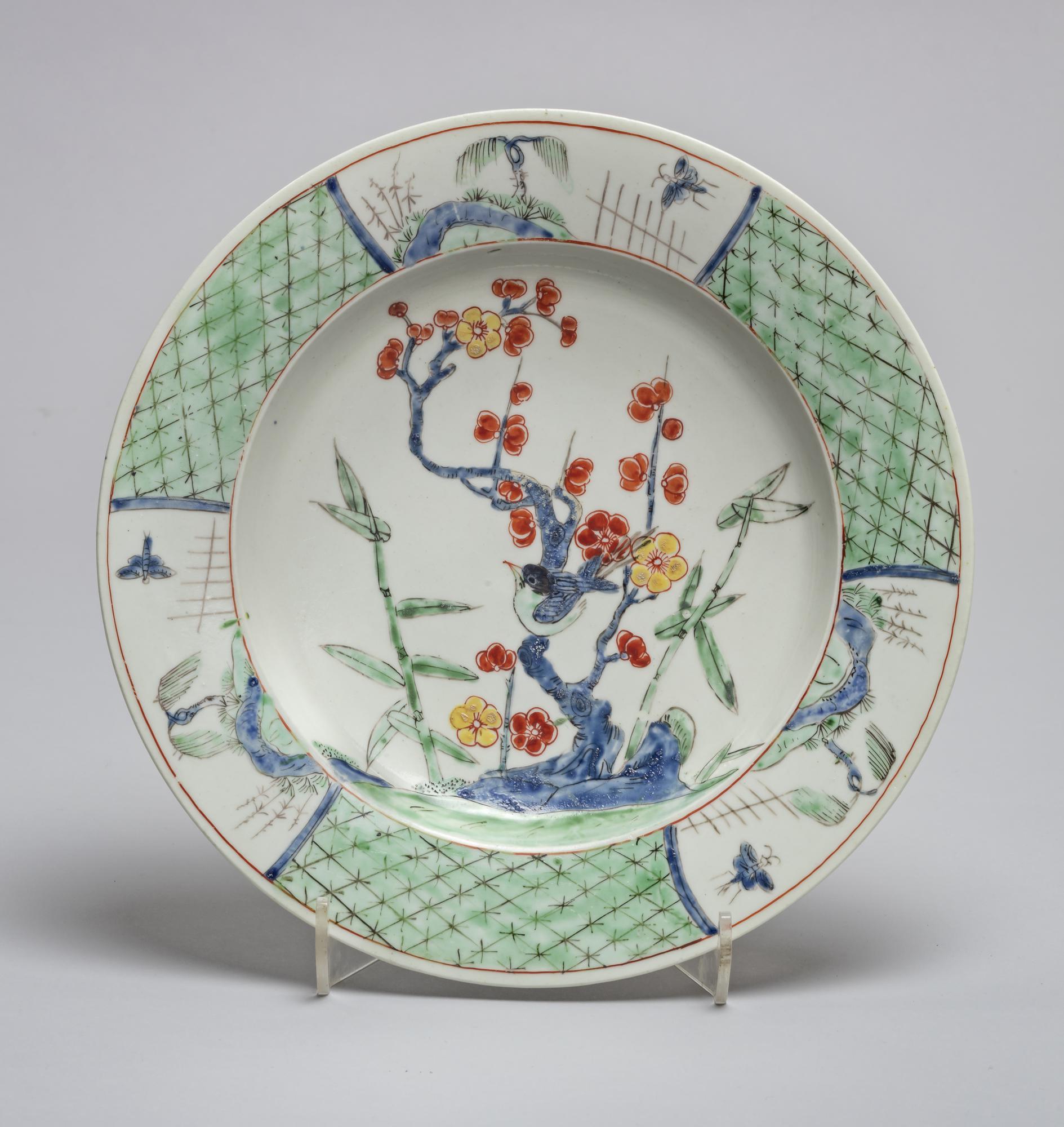
Plate with famille verte bird and flowers, England, Worcester, c. 1752. Soft-paste porcelain with overglaze enamels. The Macdonald Collection
Chinese Reflections on Kakiemon
The origins of Kakiemon porcelain were further complicated by the circulation of Chinese copies. Following a period of decline, in the 1670s, the potters of Jingdezhen, China, became competitive once more on the international market. China then reasserted itself as the leading producer and exporter of porcelain in Asia while also exploiting the continued demand for Japanese porcelain in Europe. These pieces show China’s response to the popular Japanese style.
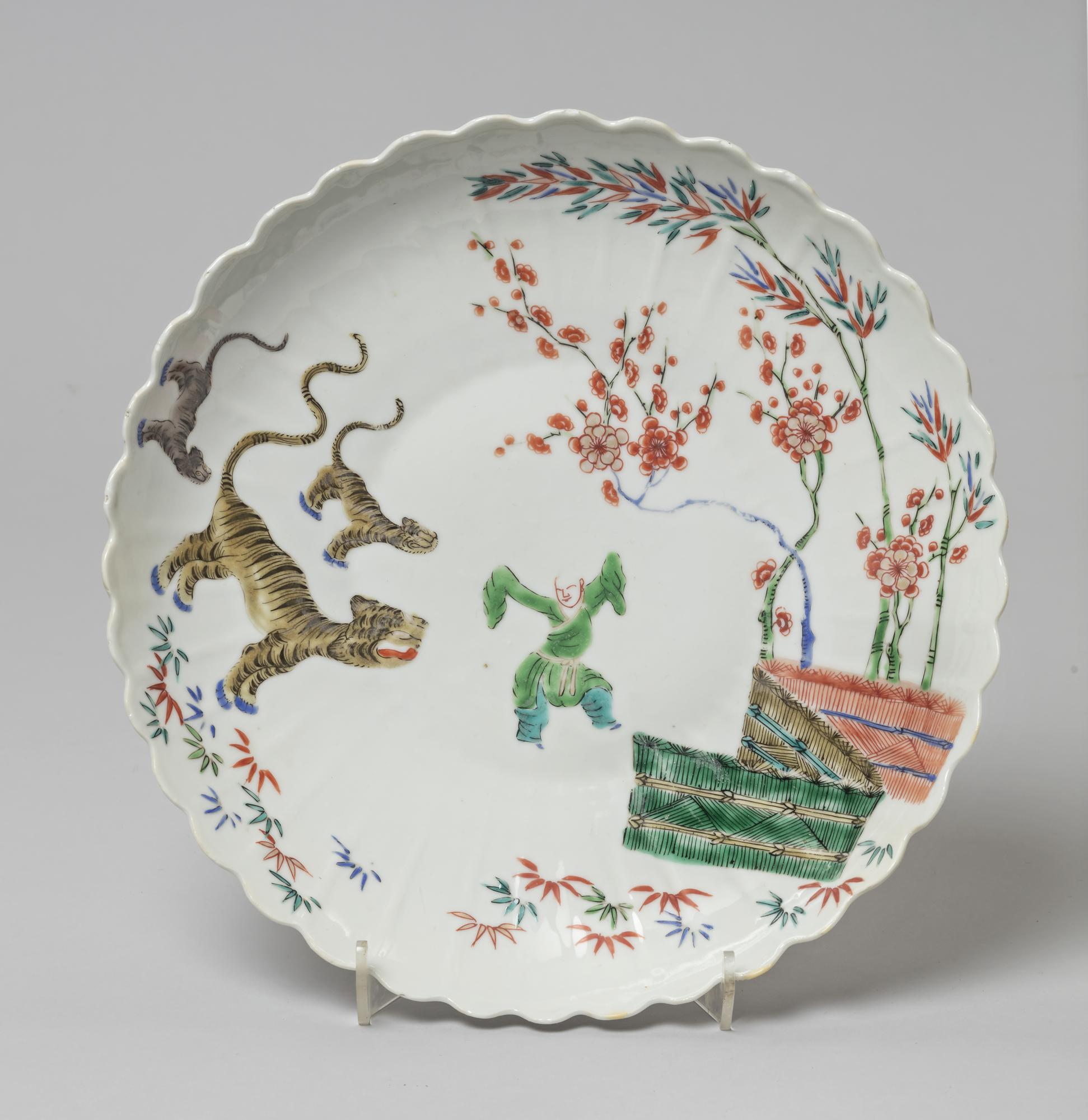
Dish with three tigers, China, Jingdezhen, 1700–20. Porcelain with overglaze enamels. The Macdonald Collection
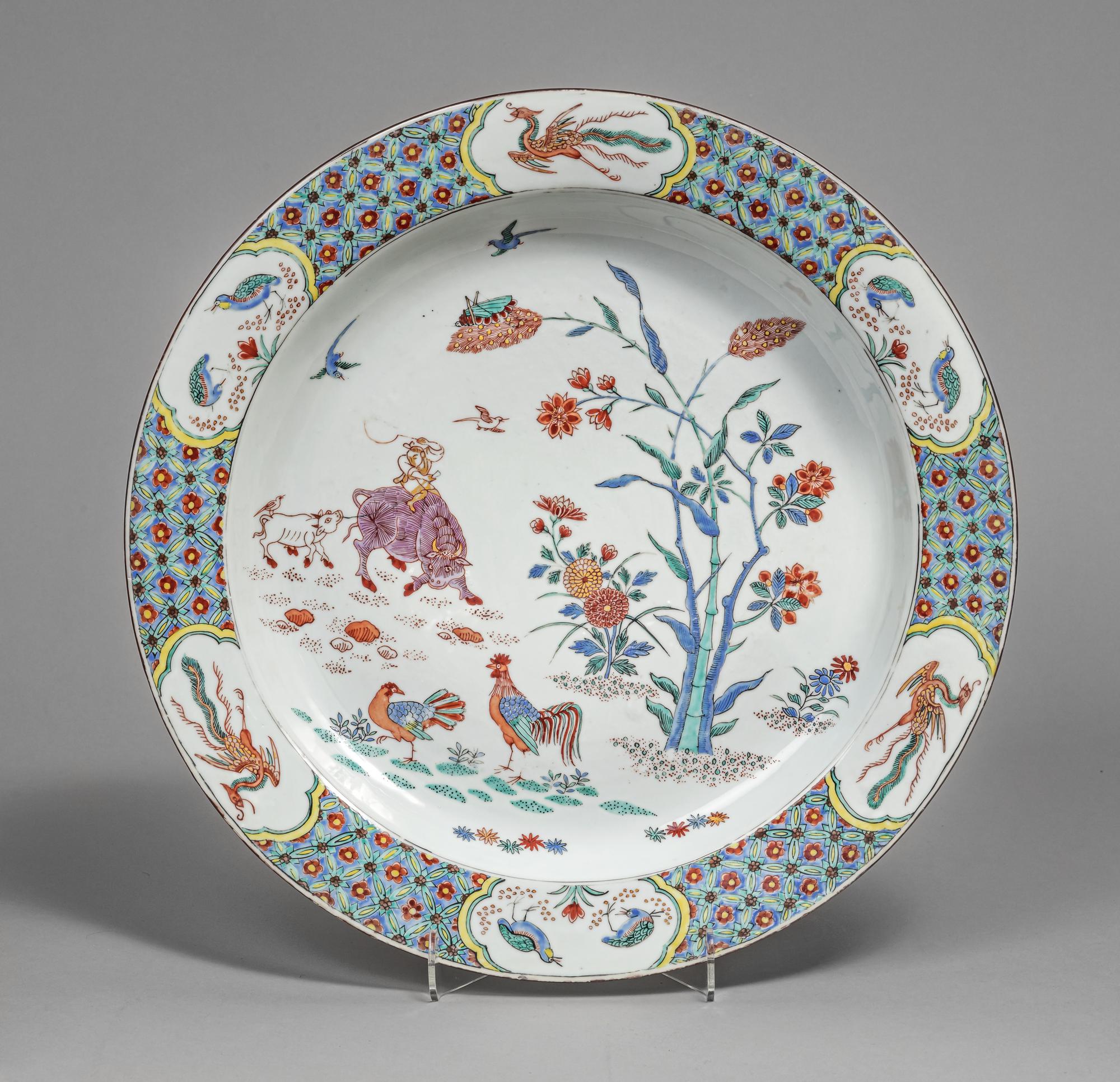
Large plate with bull and roosters, China, Jingdezhen, 1700–20. Porcelain with overglaze enamels. The Macdonald Collection
Honest Copy or Forgery?
From around 1850, the revival of historical ceramic styles coincided with a surge of interest for Japanese art. In this context, the French firm of Edmé Samson & Cie created copies of both Japanese Kakiemon and European Kakiemon-style porcelain. Making reproductions of objects from museums and private collections was the firm’s declared specialty. Yet, while Samson typically declared authorship through its mark, it remains uncertain if some pieces may have been intended to deceive. Some may have been intentionally left unmarked, thus leading to false attributions.
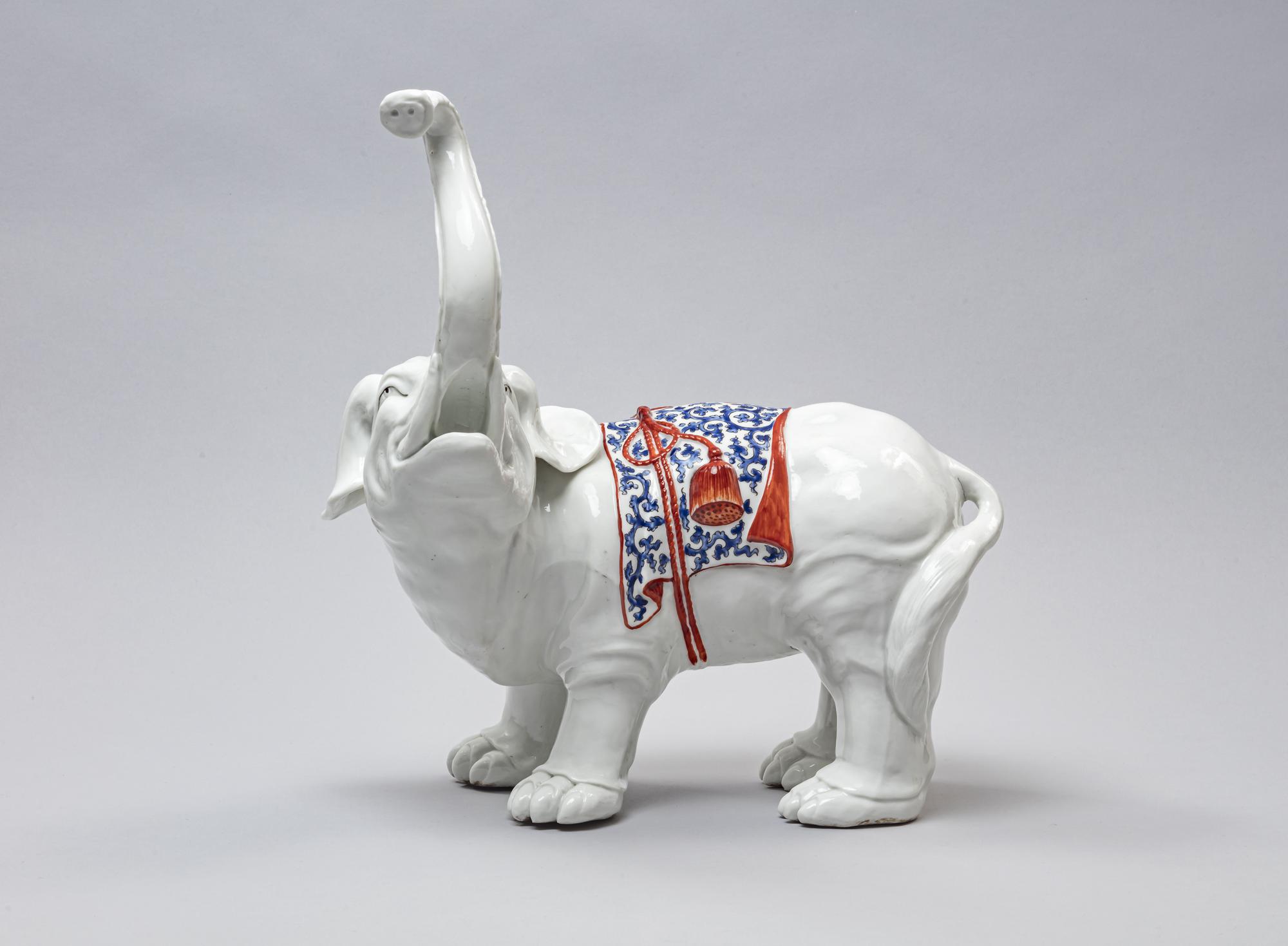
Elephant after a Japanese original, France, Samson, Edmé & Cie, c. 1850–90. Hard-paste porcelain with overglaze enamels. The Macdonald Collection
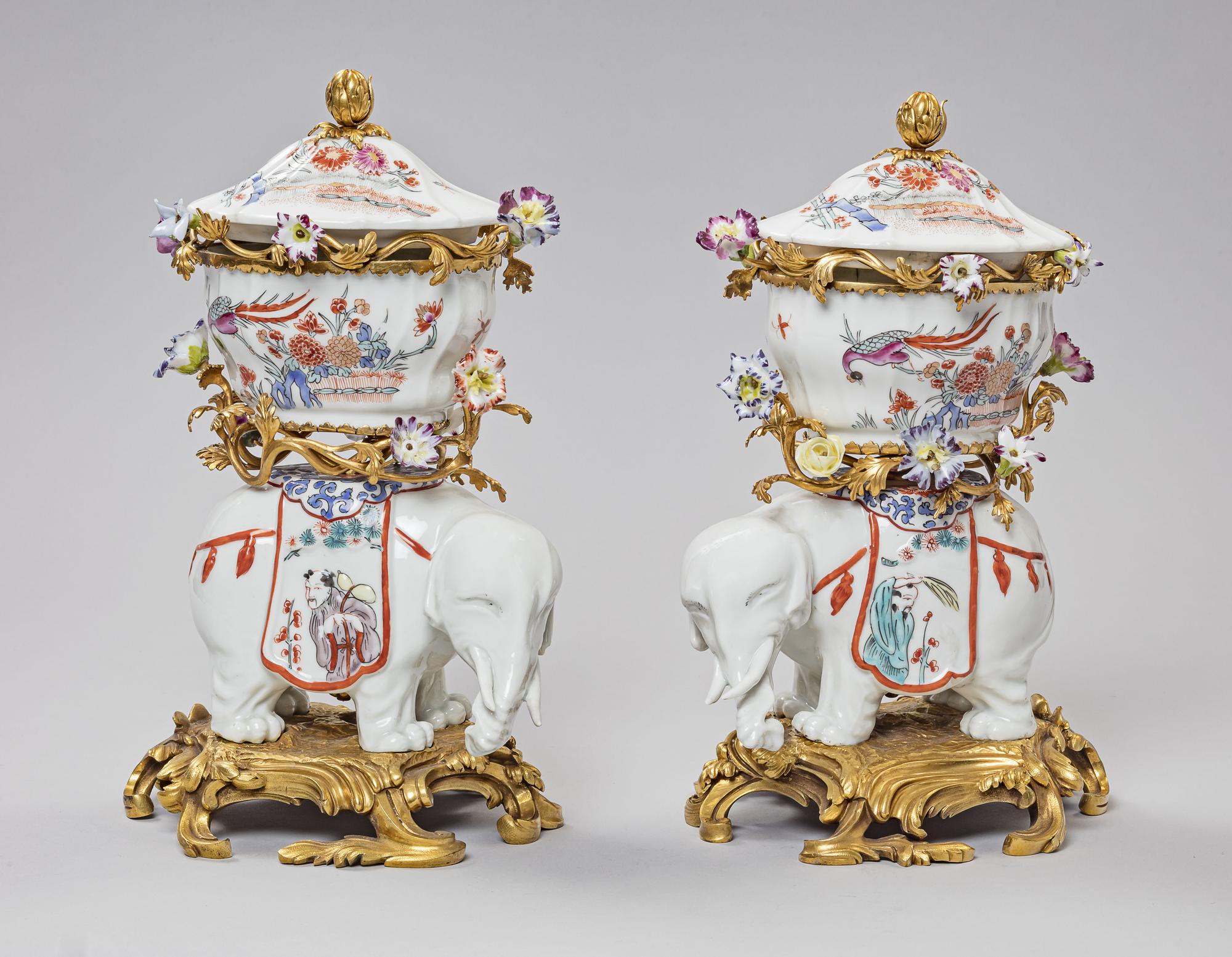
Pair of elephant potpourris, France, Samson Edmé & Cie, c. 1850–90. Hard-paste porcelain with overglaze enamels. The Macdonald Collection