Chinese Porcelain for Japan and Europe

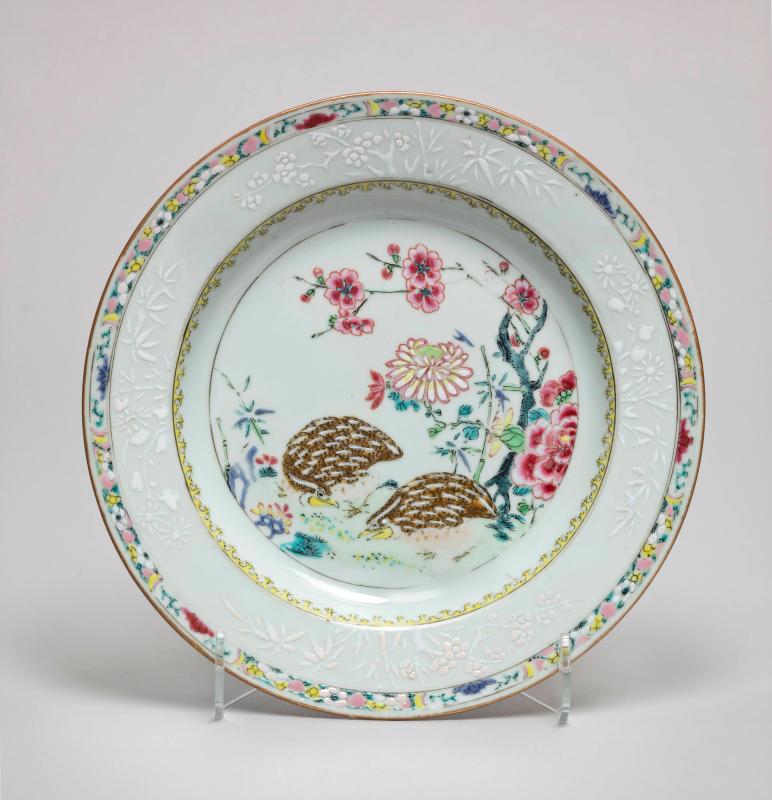
In addition to fulfilling domestic and imperial orders, the potters of Jingdezhen, China, deftly responded to the tastes and demands of foreign markets from South East Asia to the Americas. The Macdonald Collection includes pieces made specifically for export to Japan and Europe, highlighting a rich network of exchange.

0
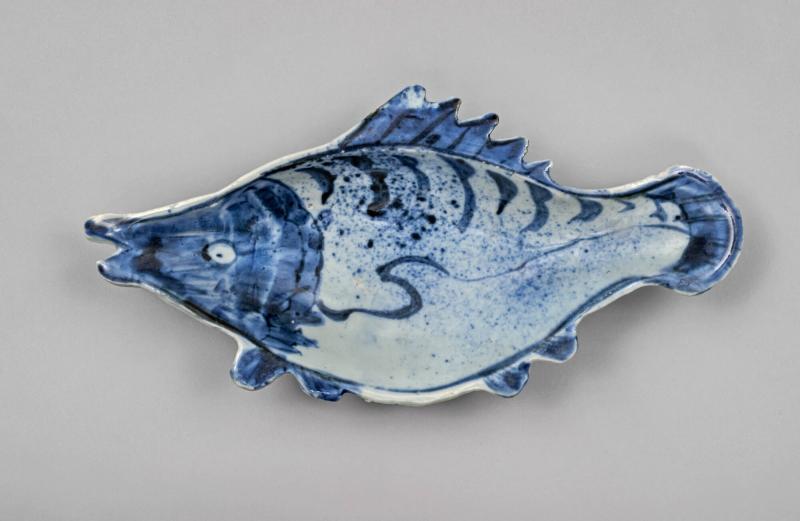
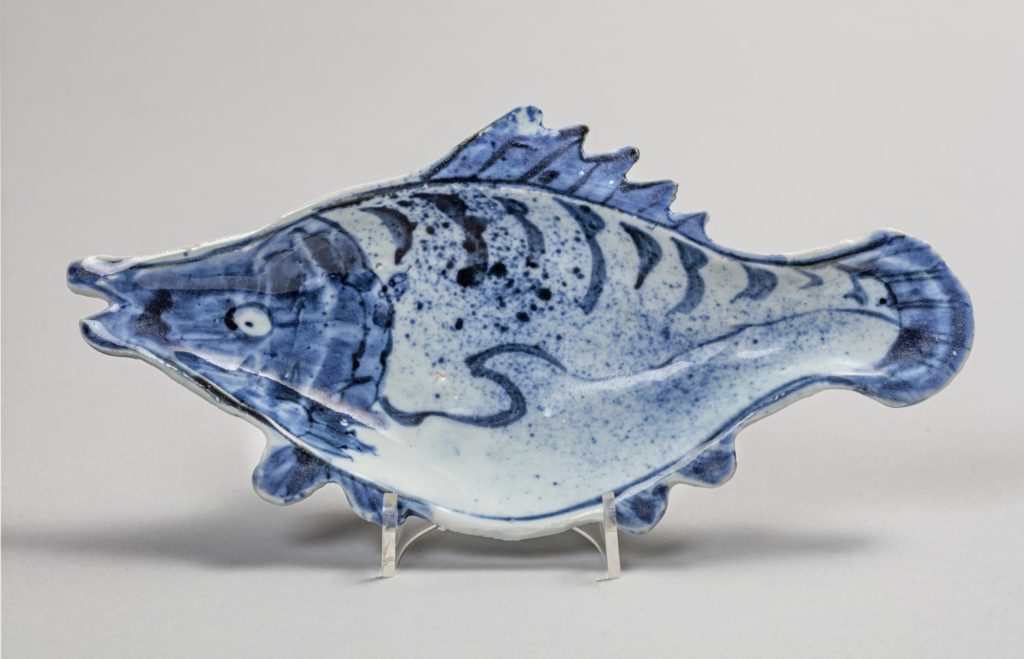
Dish in the shape of a fish, China, Jingdezhen

Dish in the shape of a fish, China, Jingdezhen, c. 1621–27 (Tianqi period). Porcelain with underglaze cobalt blue. The Macdonald Collection
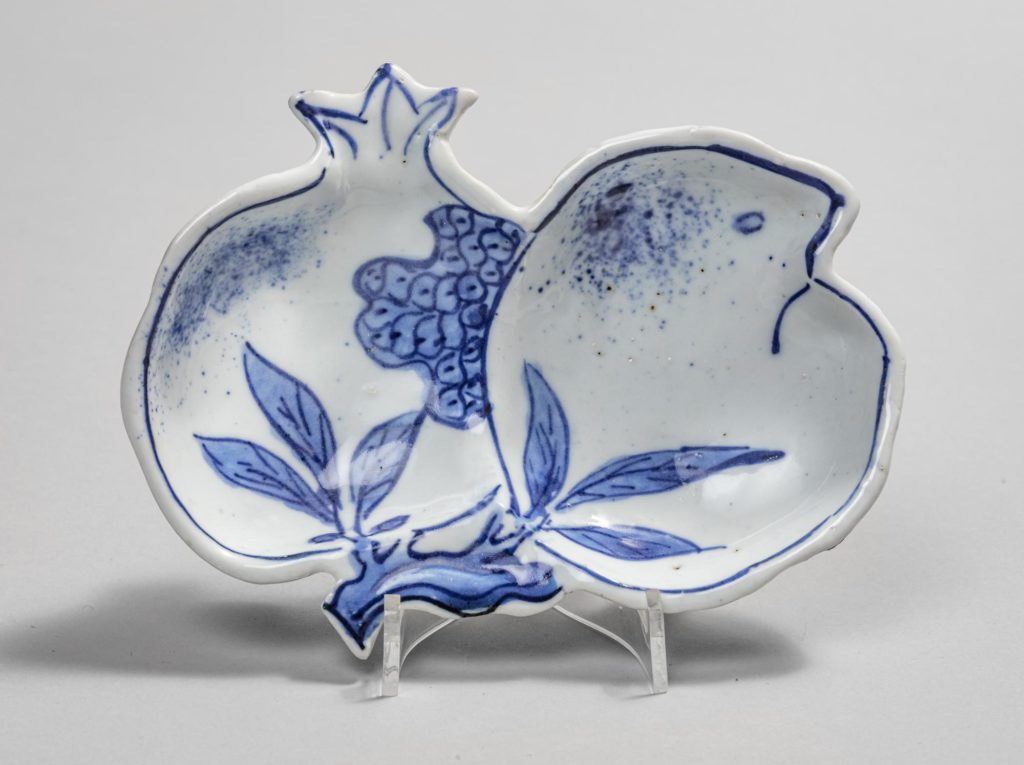
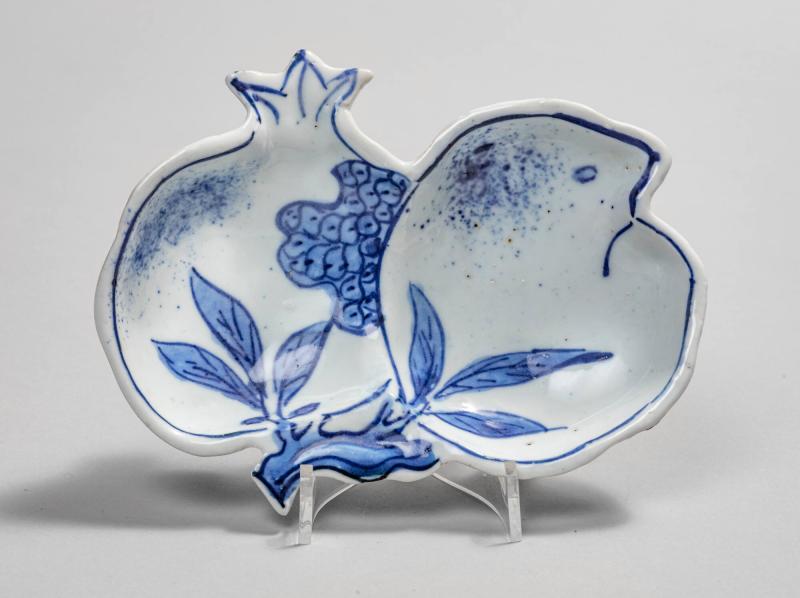
Dish in the shape of a pomegranate and peach, China, Jingdezhen

Dish in the shape of a pomegranate and peach, China, Jingdezhen, c. 1621–27 (Tianqi period), Porcelain with underglaze blue. The Macdonald Collection

The presence of Chinese porcelain in Japan goes back to the Kamakura period (c. 1185–1333). Chinese imports were, however, limited in number and expensive so that very few could afford them. By the last decades of the 16th century, Chinese blue-and-white porcelain was imported in greater quantity and integrated within the rituals of the Japanese tea ceremony. In the 1620s and 1640s, small blue-and-white dishes in naturalistic forms (known as ko-sometsuke, or “old blue and white”) were produced specifically for this purpose. The fish-shaped and peach- and pomegranate-shaped dishes exemplify the type appreciated for its rustic and spontaneous quality.

1Discover more about the fish-shaped dish
0
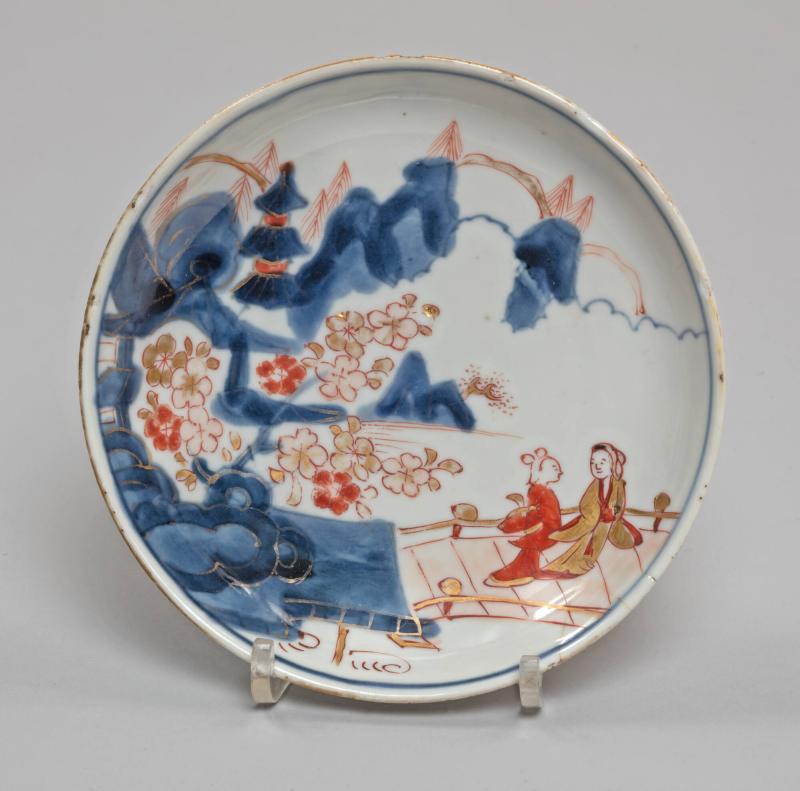
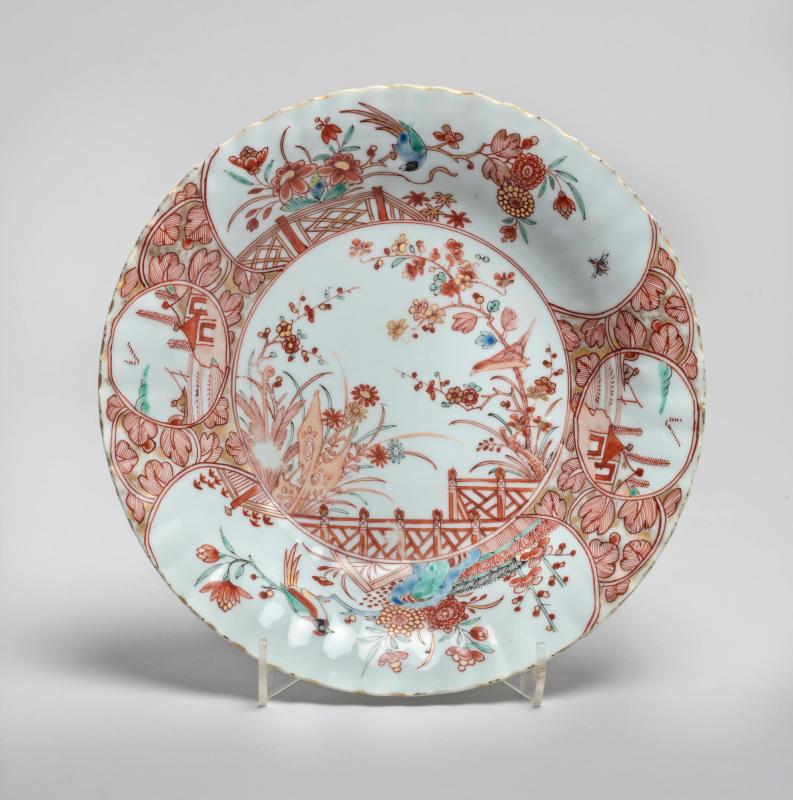
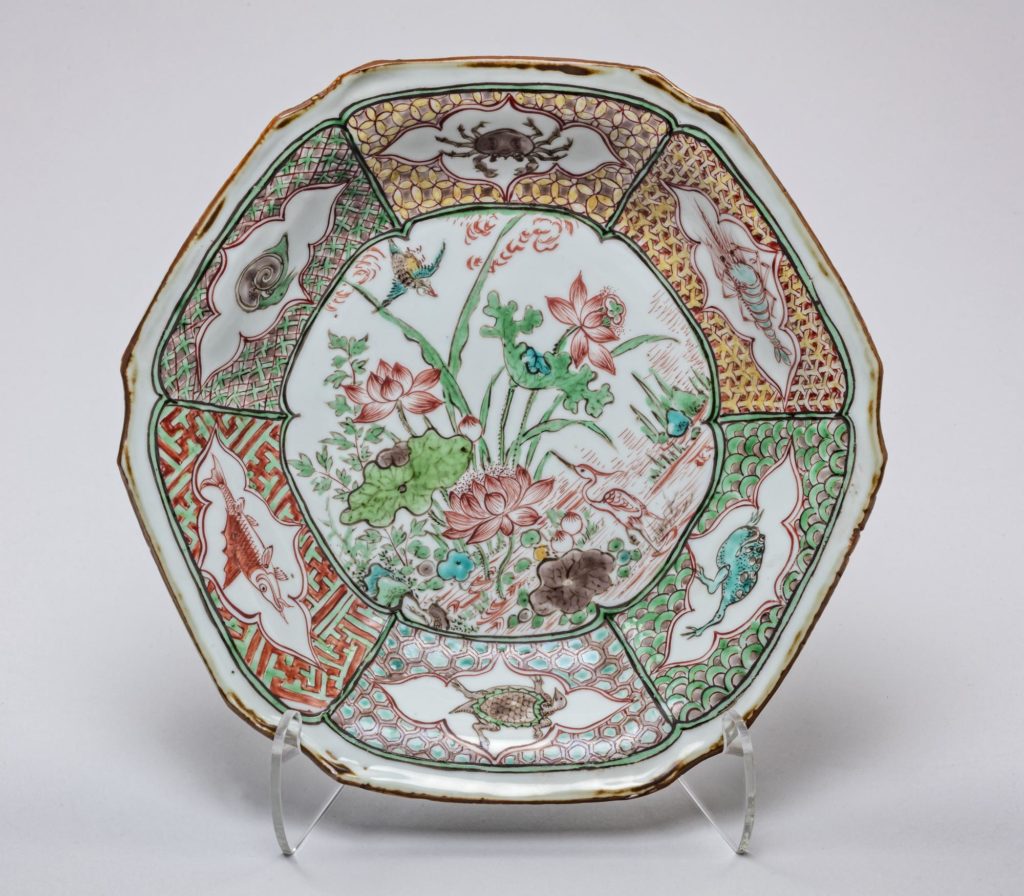
Dish with lotus pond, China, Jingdezhen

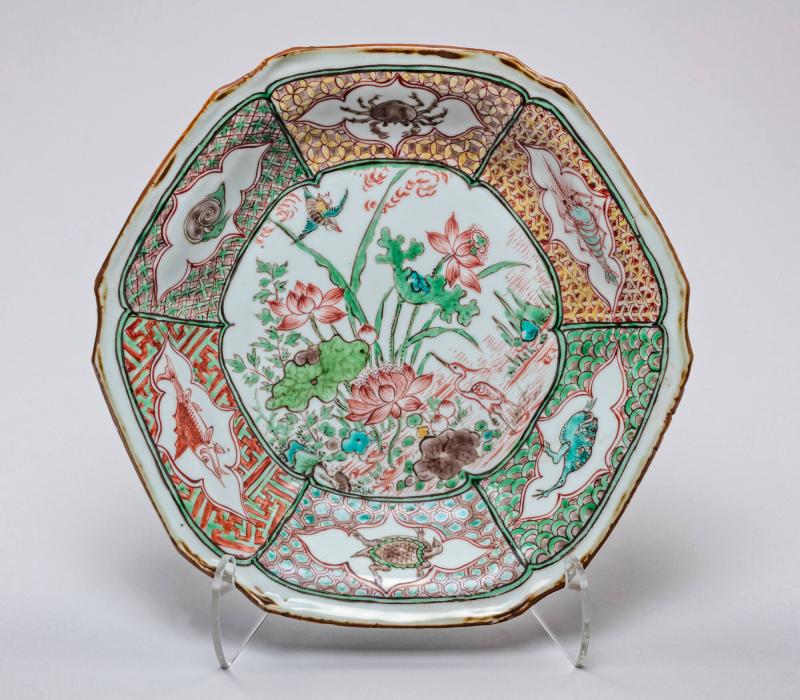
Dish with lotus pond, China, Jingdezhen, 1630–45. Porcelain with overglaze enamels. The Macdonald Collection

By contrast to ko-sometsuke, the plate with a lotus pond points to the appreciation of colourful and densely patterned objects in the early Edo period. These richly enamelled pieces made in the 1630s and ’40s would have possibly appealed to the tastes of Japan’s warrior class.

0
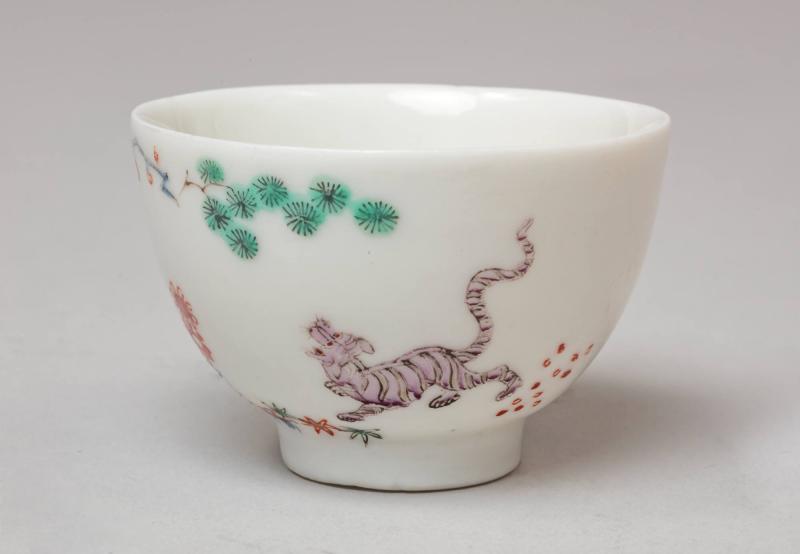
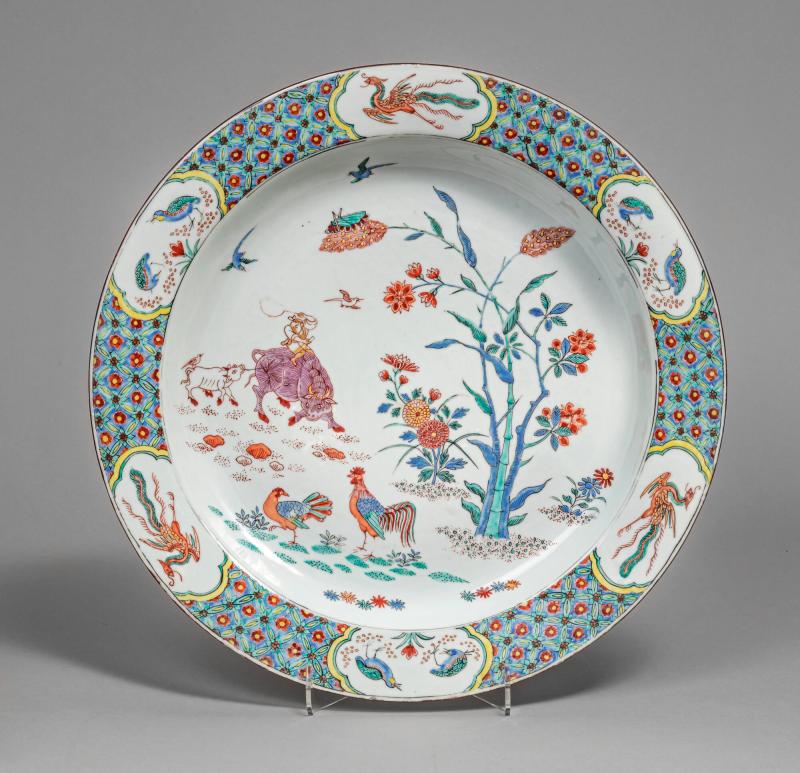
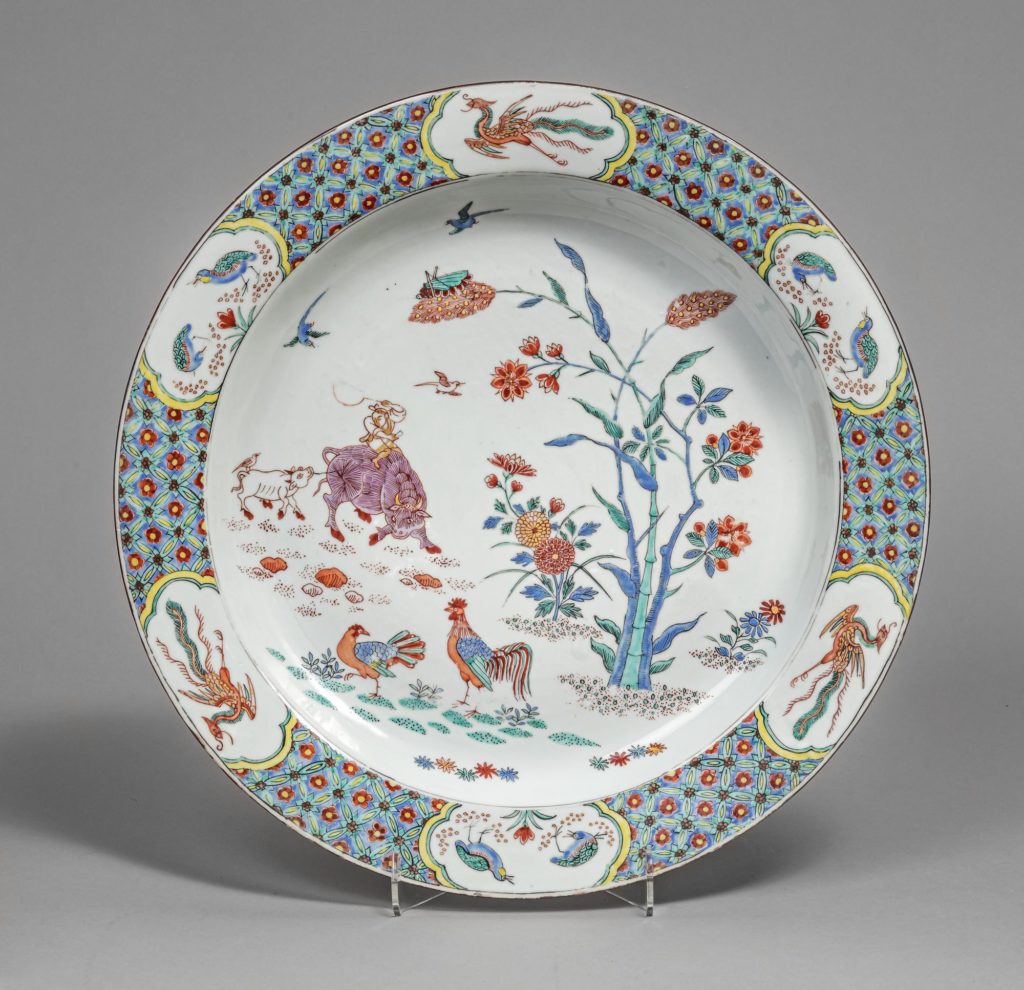
Large plate with bull and roosters, China, Jingdezhen

Large plate with bull and roosters, China, Jingdezhen, 1700–20. Porcelain with overglaze enamels. The Macdonald Collection

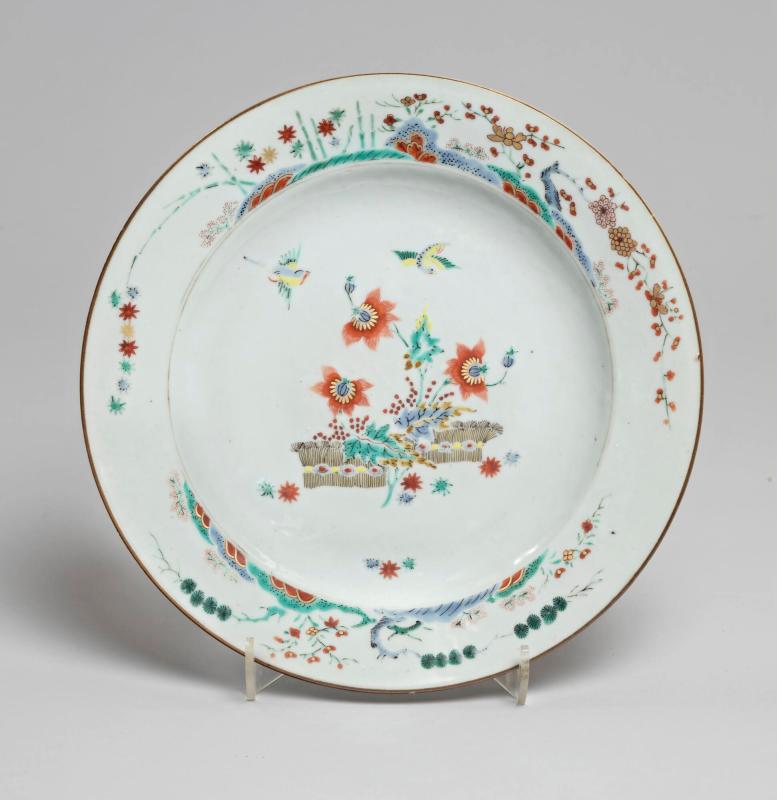
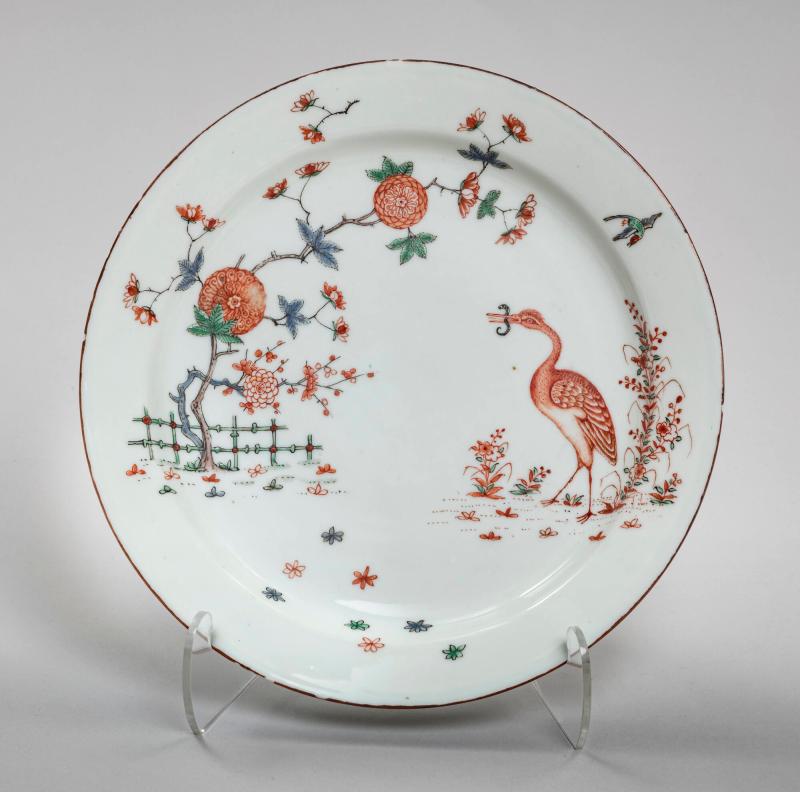
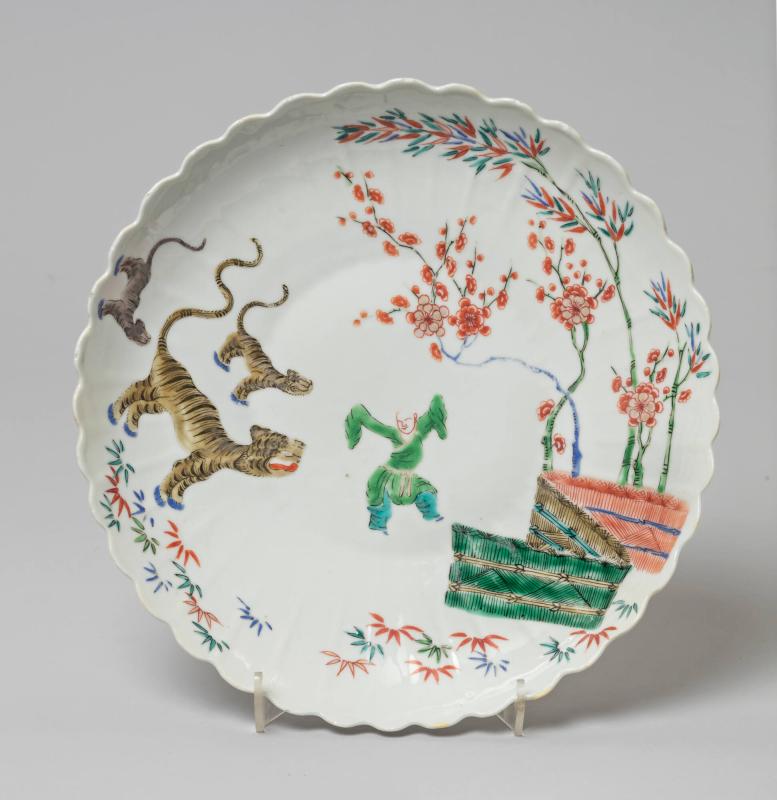
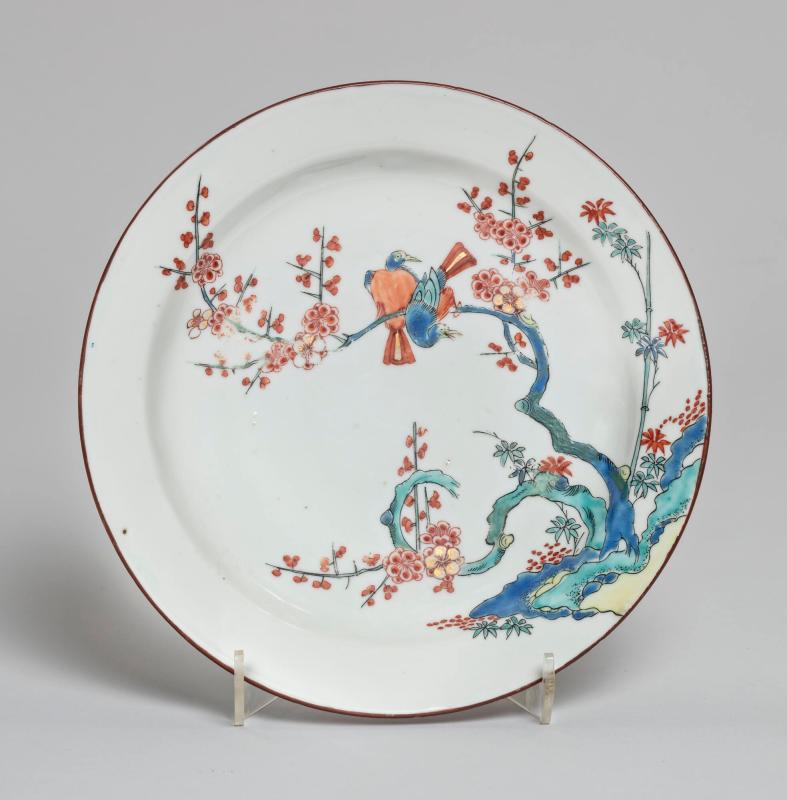
From the 1640s to approximately the1670s, porcelain production considerably declined in China. Export to other markets ceased with the collapse of the Ming Dynasty and ensuing political upheaval. This retraction from international trade benefitted Japan, allowing its emergence as a leading producer and exporter of porcelain in Asia. By the 1680s, however, Chinese kilns were once more competitive. Over the next decades, they exploited the demand for Japanese porcelain in Europe by creating pieces interpreting the Kakiemon style, such as the large plate with bull and roosters.

0
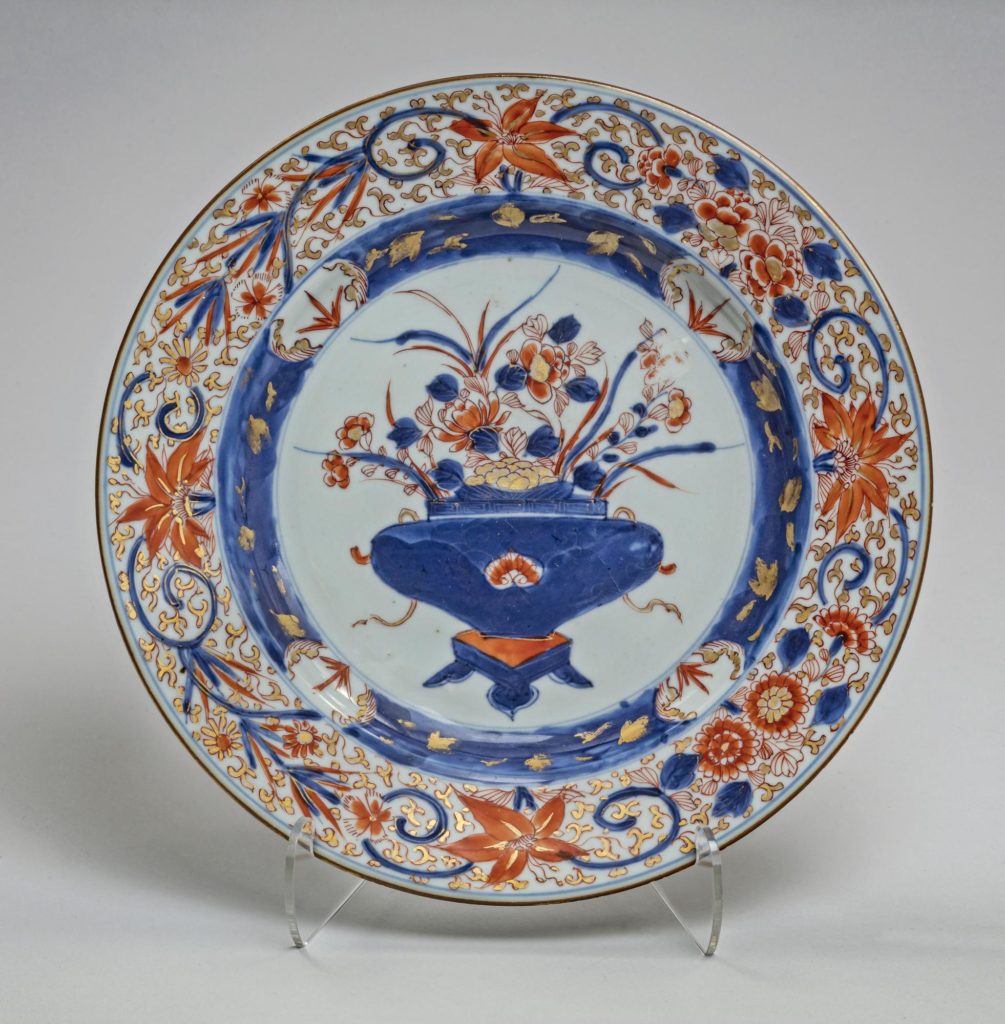
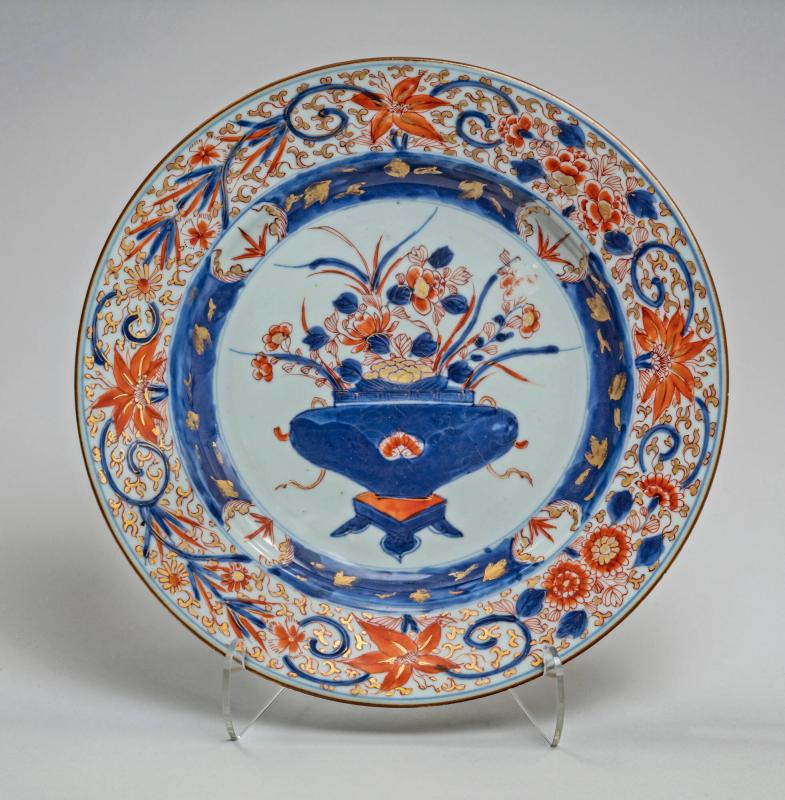
Chinese imitation of Japanese Imari dish

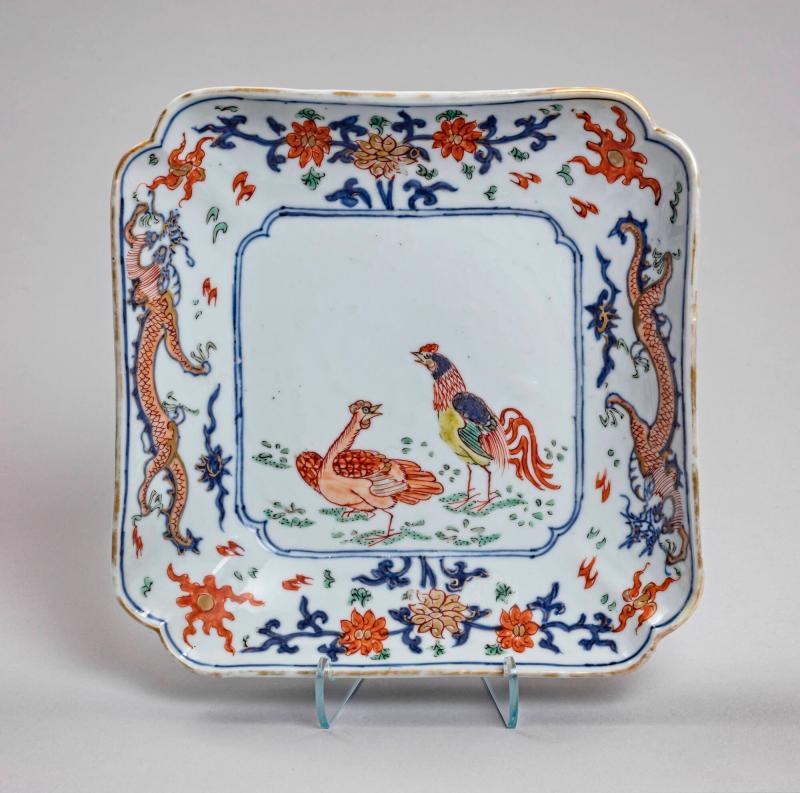
Dish in the Japanese Imari-imitation style, China, Qing Dynasty, Jiaqing Period (1796-1821), c.1800, Porcelain with underglaze blue, overglaze enamels, gilding. The Macdonald Collection

Chinese kilns also made imitations of Japanese Imari wares, which were in great demand in Europe. The latter are characterized by the predominance of underglaze blue and red enamels and gilding. By the 1720s, the Chinese had nearly usurped the European market, causing the decline of Arita’s porcelain industry, and by 1750, Arita’s export trade in porcelain had ceased.