Porcelain and Politics
What did the Japanese elite and the rulers of Europe have in common? They both amassed great quantities of porcelain, gifted porcelain as part of diplomatic exchanges, and supported its production as a symbol of status, power, and technological advance.
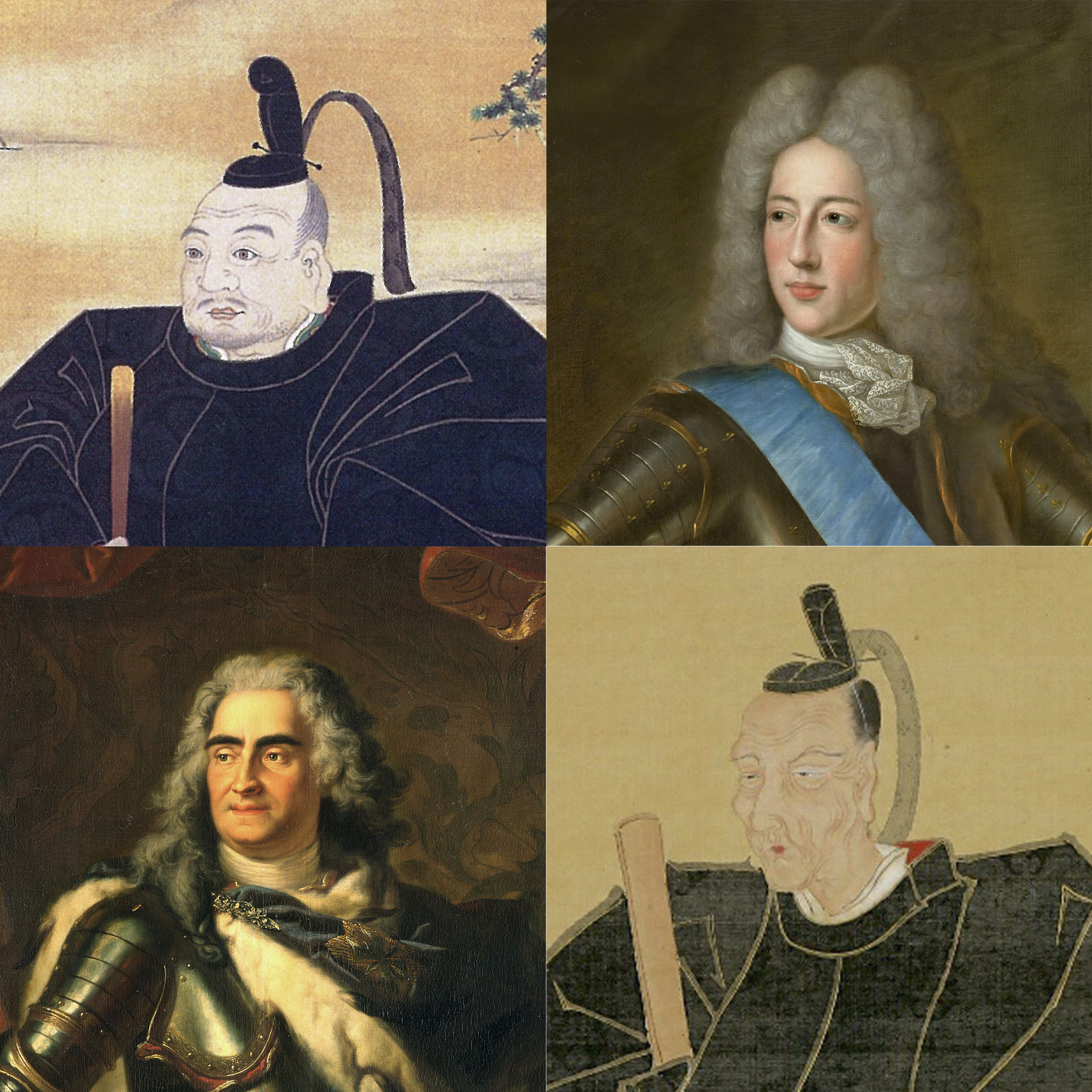
Clockwise from top left: Portrait of Tokugawa Ieyasu, Kanō Tan'yū, Japan, 17th century; Portrait of Louis Henri de Bourbon, septième prince de Condé (After Restoration); Pierre Gobert, France, date unknown; Nabeshima Katsushige, Japan, c.1661, The Museum Chokokan, Nabeshima; King Augustus II of Poland, Elector of Saxony, Louis de Silvestre, the Younger, Germany, 1718
Credits
A Daimyo’s Tribute Gift of Chinese Porcelain
Porcelain emerged as a political tool following Japan’s unification under the Tokugawa shogunate, which ruled from 1600 until the Meiji Restoration in 1868, known as the Edo period. Tokugawa Ieyasu established the new capital in Edo (present-day Tokyo) and ruled through a system known as the bakufu. To ensure peace and loyalty among the feudal lords, known as daimyo, the bakufu established among other things a system of annual gift giving to the shogun. The official gift presented by the Nabeshima daimyo, who ruled over Hizen Province, consisted of Chinese porcelain, to which he had special access through the port of Nagasaki.
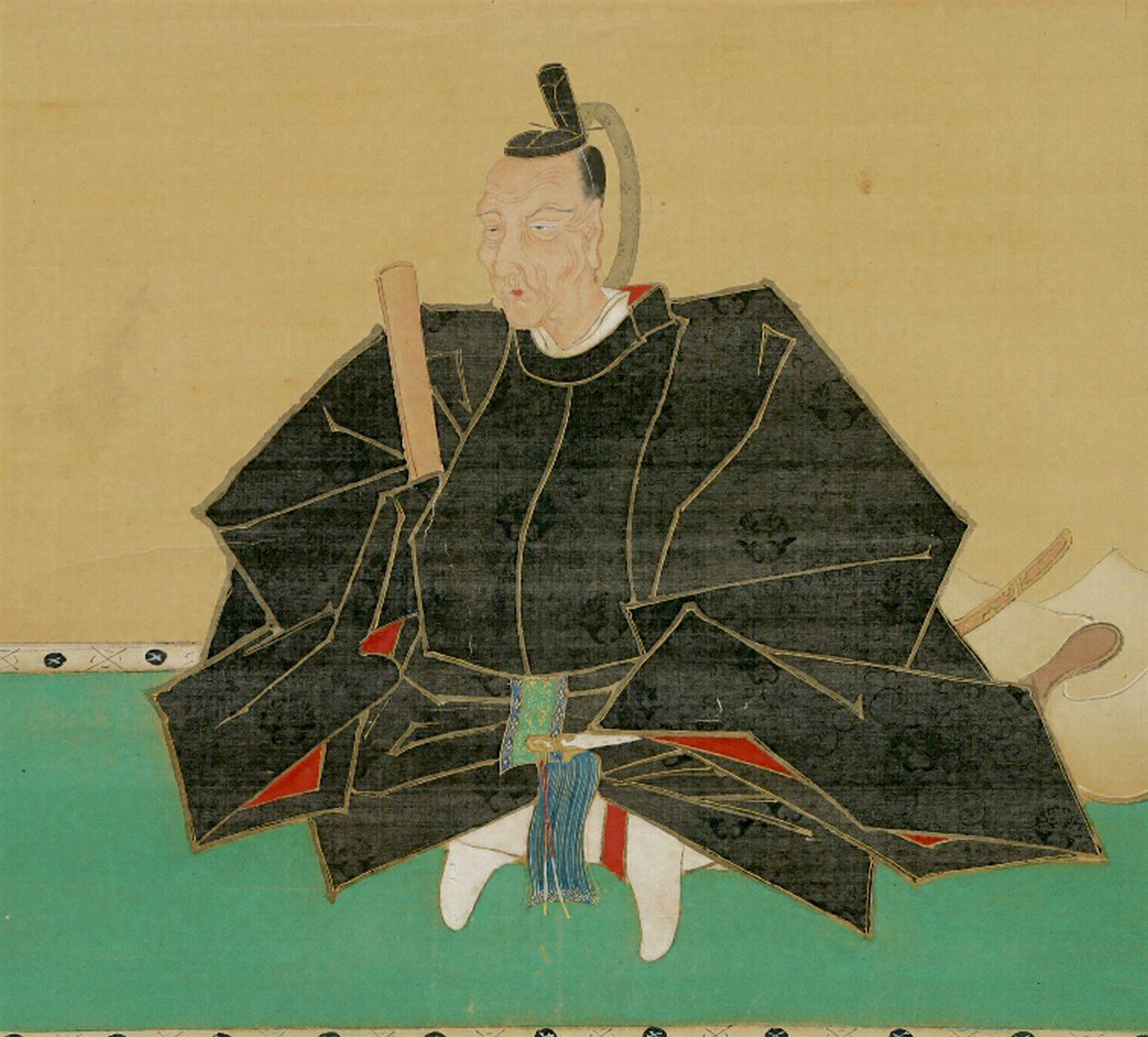
Portrait of Nabeshima Katsushige, Japan, c.1661, The Museum Chokokan, Nabeshima. Credits
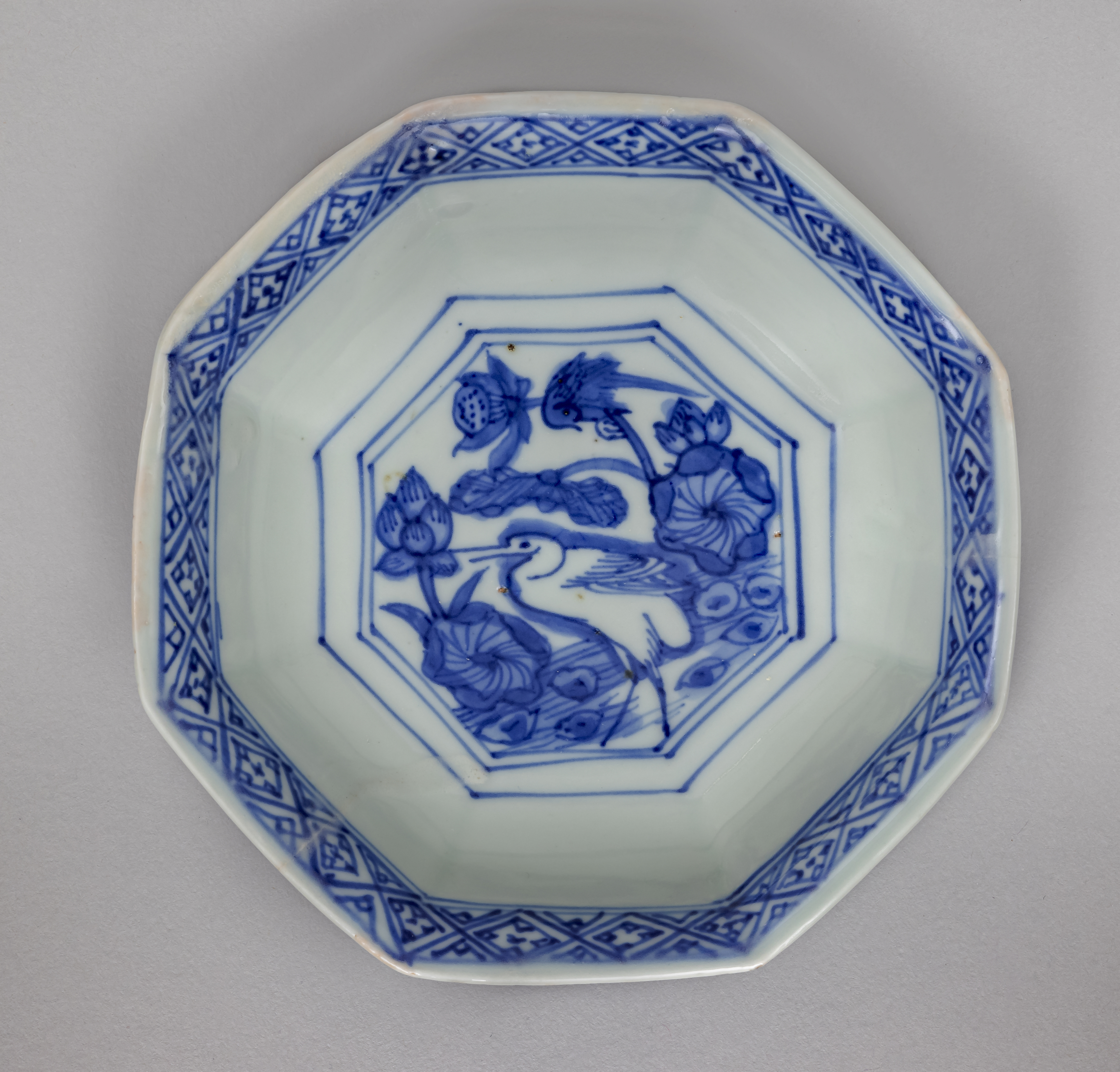
Side dish with heron among lotus, China, Ming Dynasty (1368-1644), c.1550-1640, Porcelain with underglaze cobalt blue, Gardiner Museum, The Robert Murray Bell and Ann Walker Bell Collection of Chinese Blue and White Porcelain
Nabeshima: Porcelain for the Shogun
Chinese porcelain became unavailable with the fall of the Ming Dynasty in 1644. Daimyo Nabeshima Katsushige then sought alternatives within his domain, selecting the best pieces made in Arita to gift the shogun. He also selected the best artisans to work at a kiln dedicated to this exclusive production, which would eventually move to the remote village of Ōkawachiyama. Nabeshima porcelain was an exclusive type and was never sold. It was used by a very restricted circle consisting of the shogun’s and Nabeshima daimyo’s entourage.
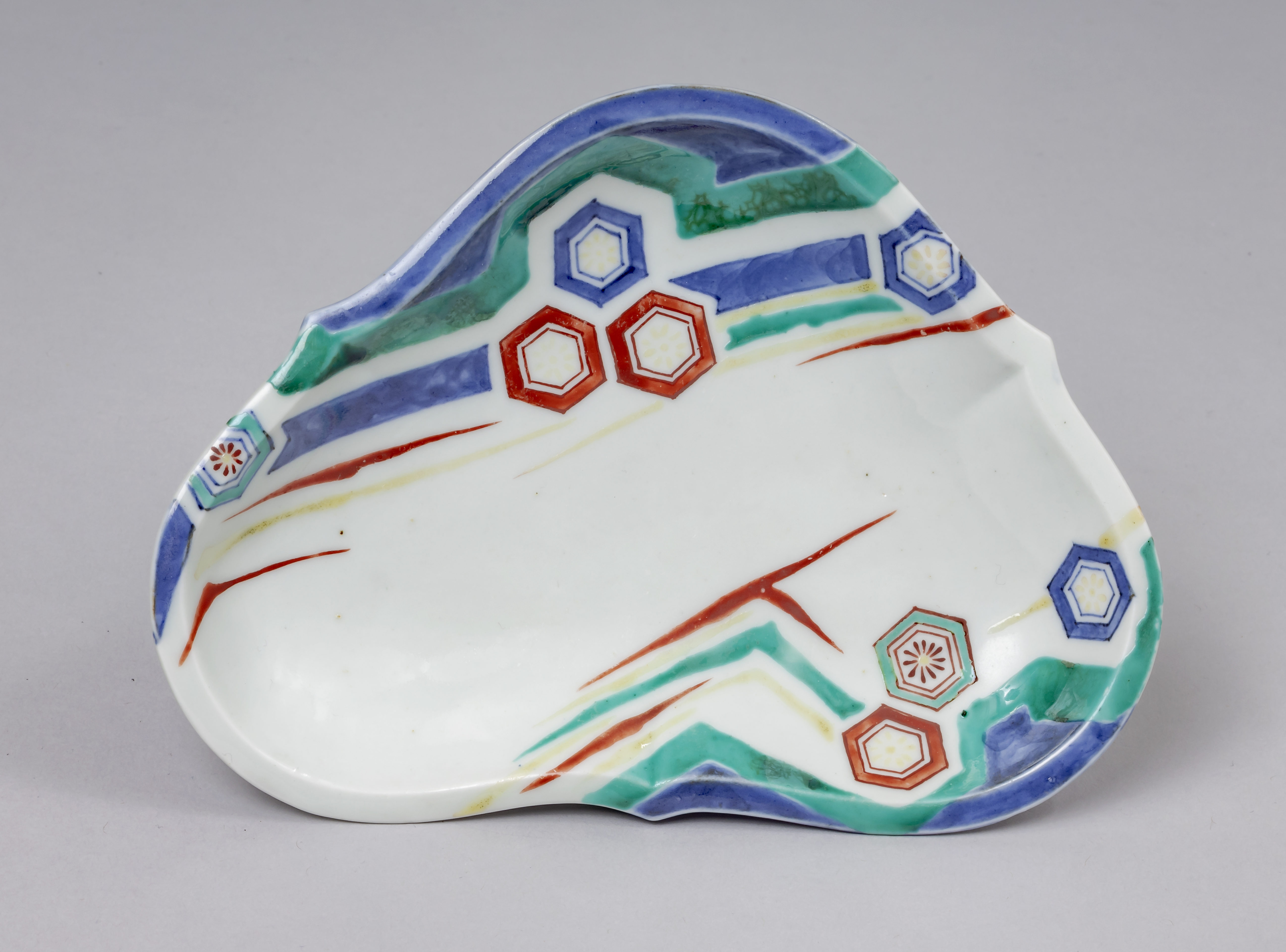
Triangular dish
Japan, Hizen, 1650–70
Porcelain with underglaze cobalt blue, overglaze enamels
The Macdonald Collection
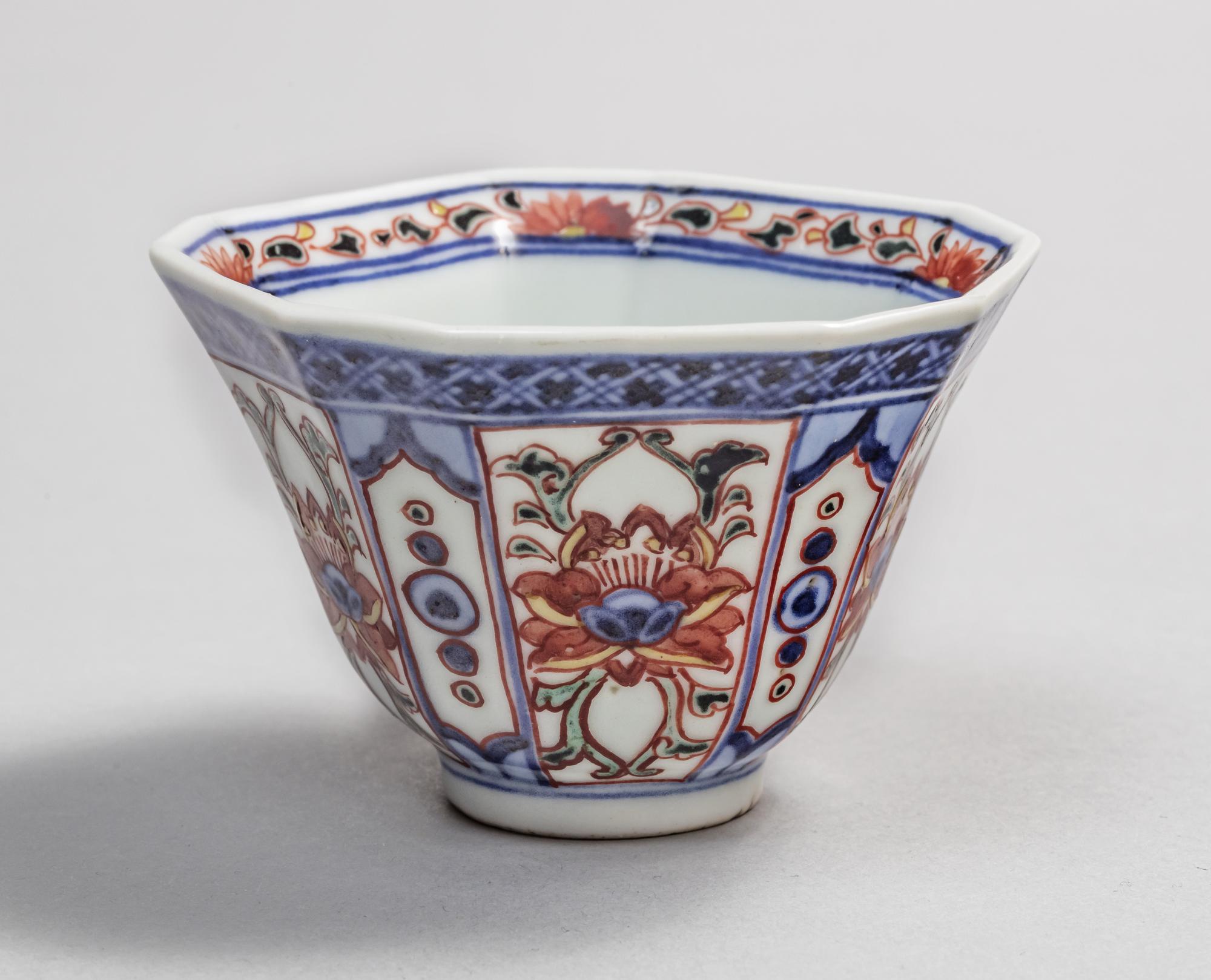
Cup with floral design, Japan, Hizen, late 17th- to early 18th century. Porcelain with underglaze cobalt blue, overglaze enamels. The Macdonald Collection
Asian Porcelain in Europe: Access and Privilege
In 17th-century Europe, the accumulation of Chinese and Japanese porcelain and its public display symbolized wealth and status. In the interiors of rich city-dwellers, porcelain was displayed in small quantities over mantels, chimney pieces, and above doorways, often in symmetrical arrangements called “garnitures,” as seen on this engraving. In aristocratic palaces, the practice of displaying porcelain en masse led to the development of porcelain rooms, pioneered by Queen Mary II in the 1690s. Tall vases are among the Japanese export wares that filled such spaces.
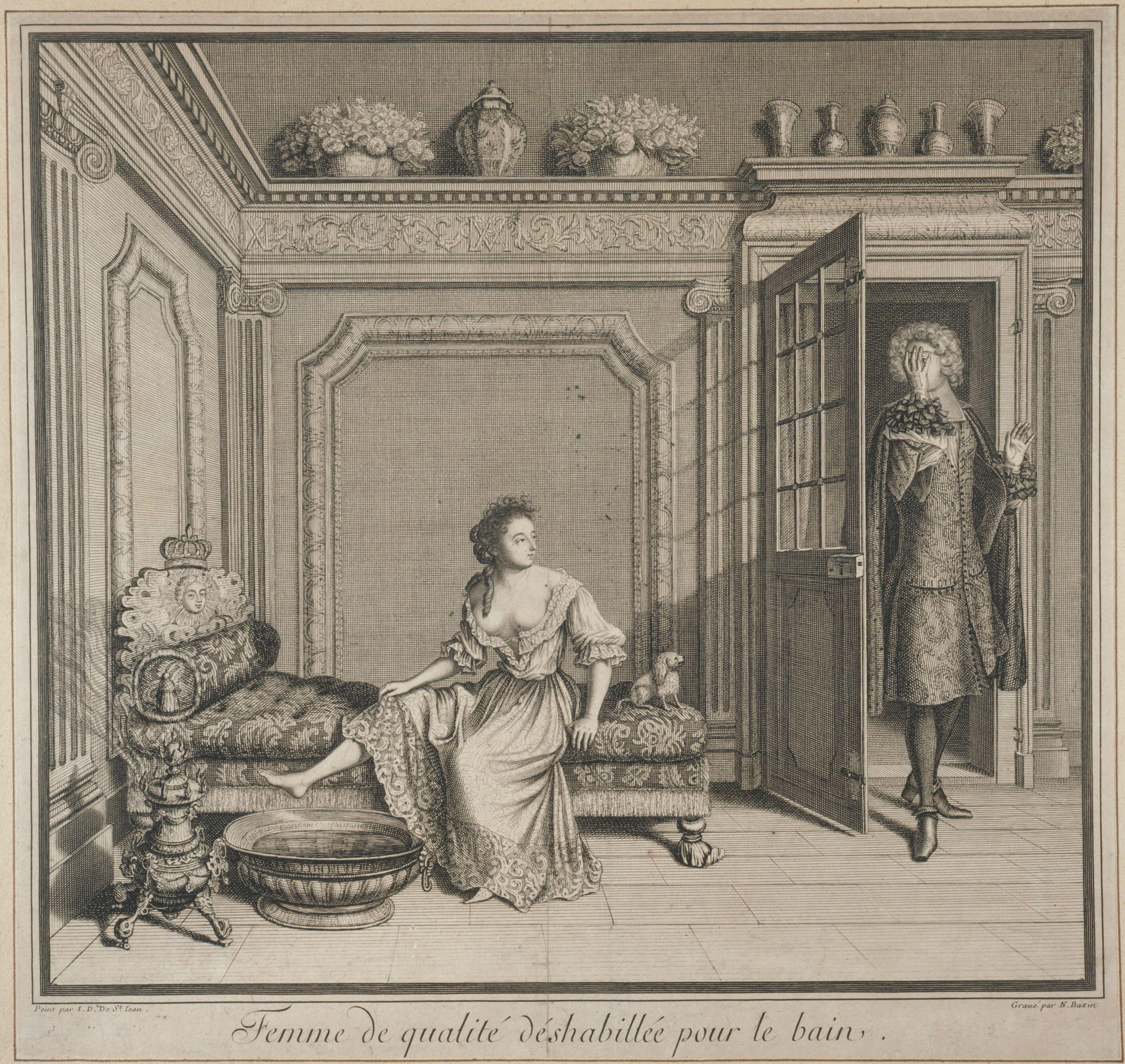
In this engraving, a garniture of vases is displayed above the doorway.
Gentlewoman undressing for a bath, Attributed to Nicolas Bazin, France, c. 1685 Credits
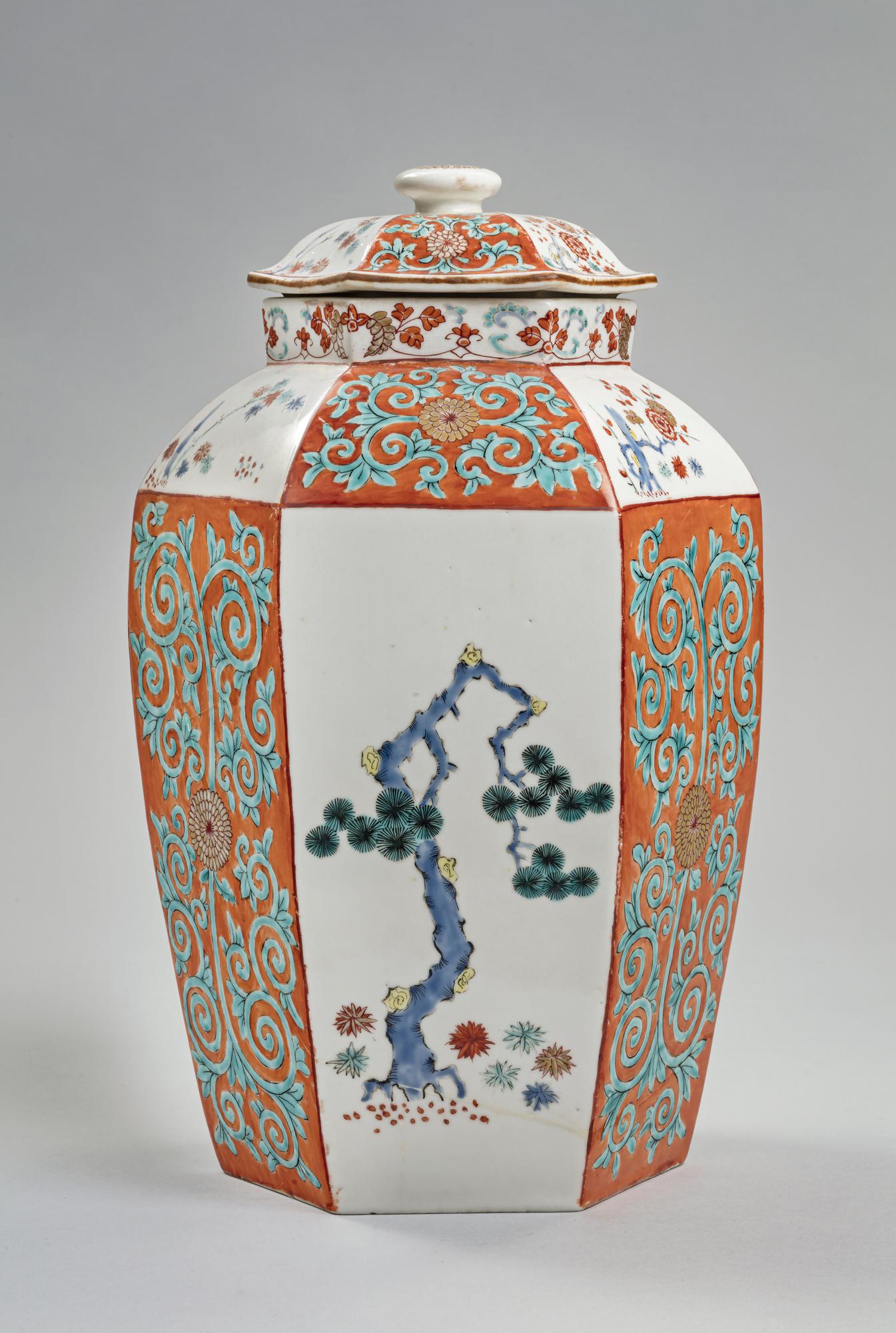
Hexagonal jar, after a Japanese original, England, Chelsea, c. 1752–55. Soft-paste porcelain and overglaze enamels. The Macdonald Collection
The Most Famous Porcelain Exchange
European rulers often acquired Asian porcelain as part of diplomatic gifts, either through foreign embassies or from other European princes. Augustus II the Strong, king of Poland and elector of Saxony (1670–1733), is noteworthy for the most curious diplomatic exchange of all time. In 1717, he famously gave 780 Saxon soldiers to Friedrich Wilhelm of Prussia (1688–1740) in exchange for 30 tall vases and 121 large plates. Augustus kept his collection of Asian porcelain, estimated at 25,000 pieces, in a purpose-built palace called the Dutch Palace, which he later renamed the Japanese Palace.
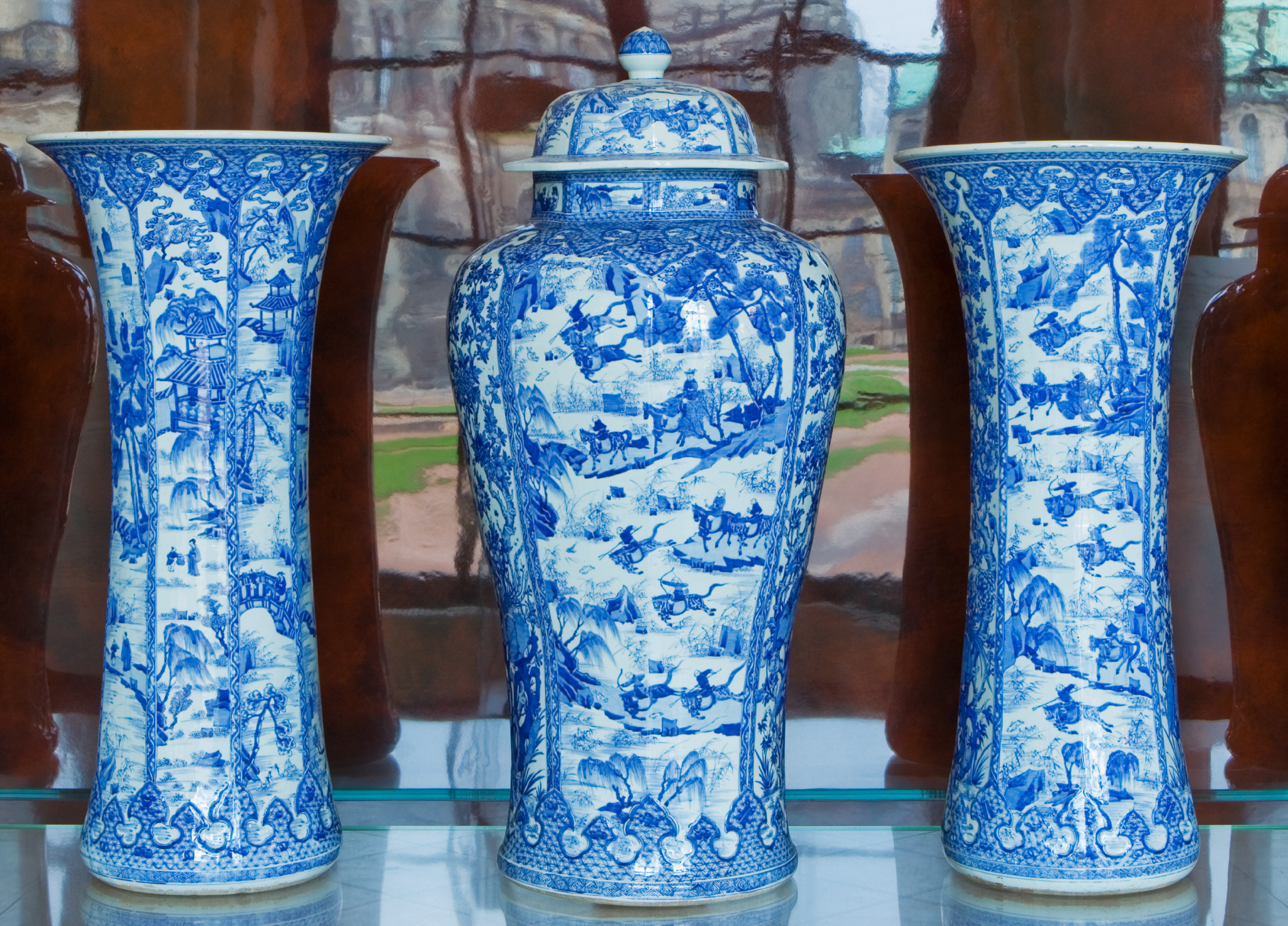
Three of the vases acquired by Augustus the Strong in an exchange with Friedrich Wilhelm of Prussia in 1717
China Jingdezhen, Qing Dynasty, Kangxi Period (1662-1722), Porcelain with underglaze blue. Augustus the Strong's Japanese Palace, Dresden, Germany. Staatliche Kunstammlungen, Porzellansammlung Credits
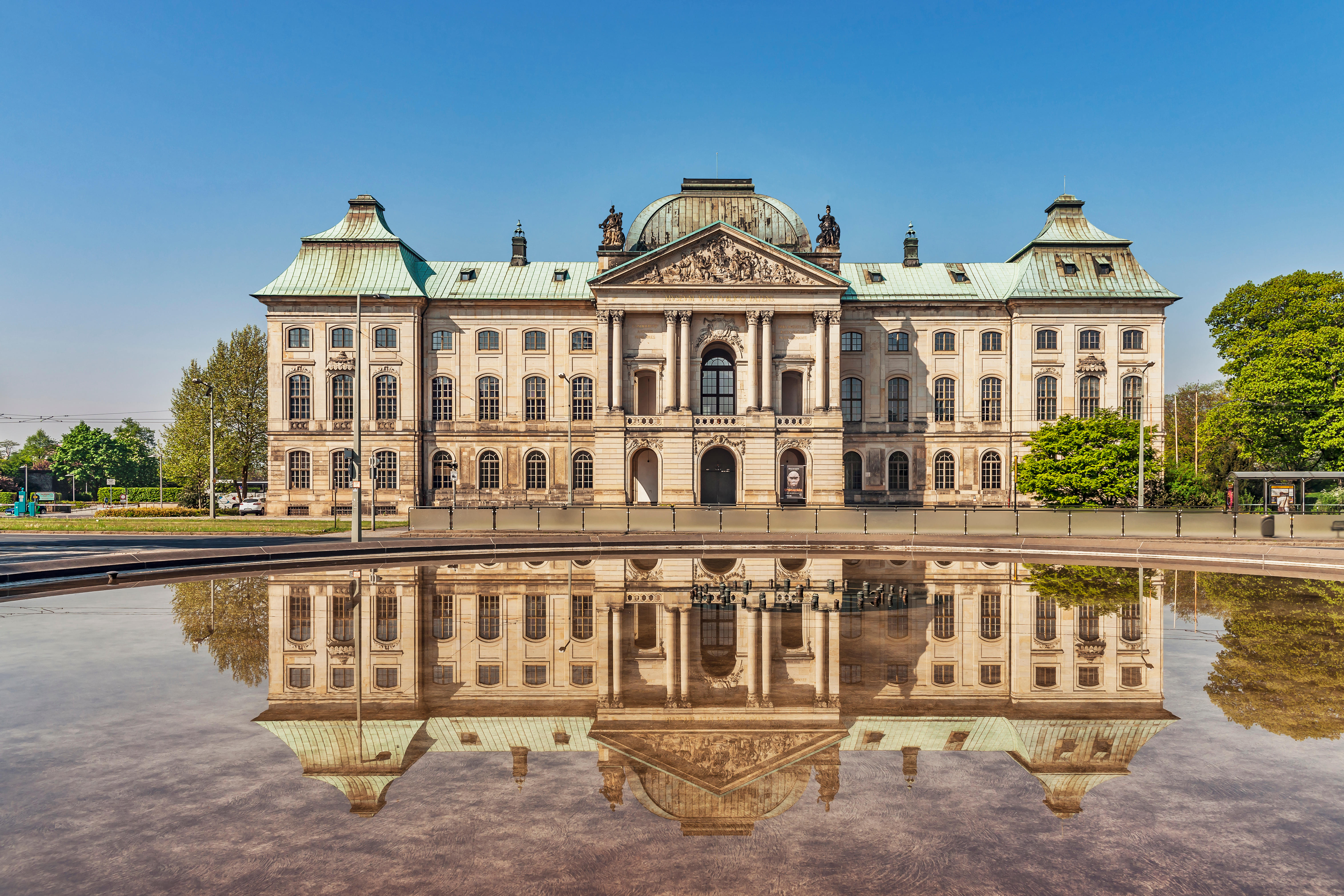
The Japanese Palace, Dresden, Germany Credits
Secret and Power
Owning Asian porcelain was not sufficient for European rulers, and the quest for the secrets of its making unfolded over centuries. This resulted in the production of soft-paste porcelain until the first major breakthrough took place in Dresden in 1708 under the patronage of Augustus the Strong. Following the discovery of the Arcanum, or secret recipe, he founded the first European porcelain manufactory that produced a type of ware comparable to Asian porcelain. Augustus’s commercial enterprise established in nearby Dresden in 1710 signalled technological advance and industry within his kingdom.
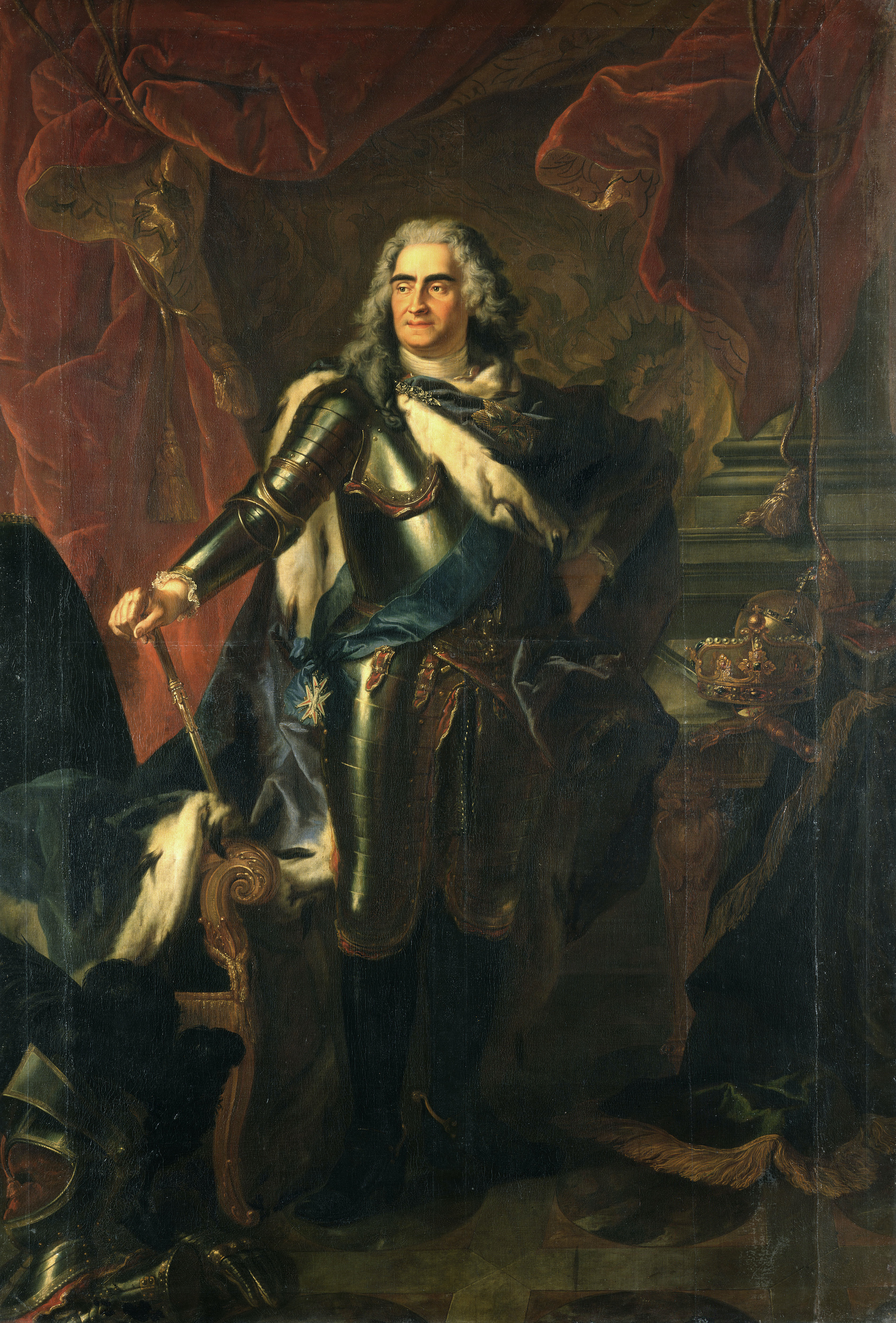
Portrait of King Augustus II of Poland, Elector of Saxony, Louis de Silvestre, the Younger, Germany, 1718, Oil on canvas.
Credits

Sake bottle, Germany, Meissen, c. 1730. Hard-paste porcelain with overglaze enamels. The Macdonald Collection
Porcelain Rivalries
Making porcelain was a symbol of a ruler’s power, and factories supported by aristocratic patrons emerged throughout Europe. One of them was Chantilly in France, founded under the patronage of Louis Henri, duc de Bourbon, Prince de Condé around 1730. Louis Henri is considered Augustus the Strong’s French counterpart as a porcelain collector, although his holdings were on a much more modest scale. While producing a soft-paste porcelain, his manufactory nevertheless rivalled with Meissen in the imitation of Japanese porcelain, then the most rare and sought-after type of porcelain in France.
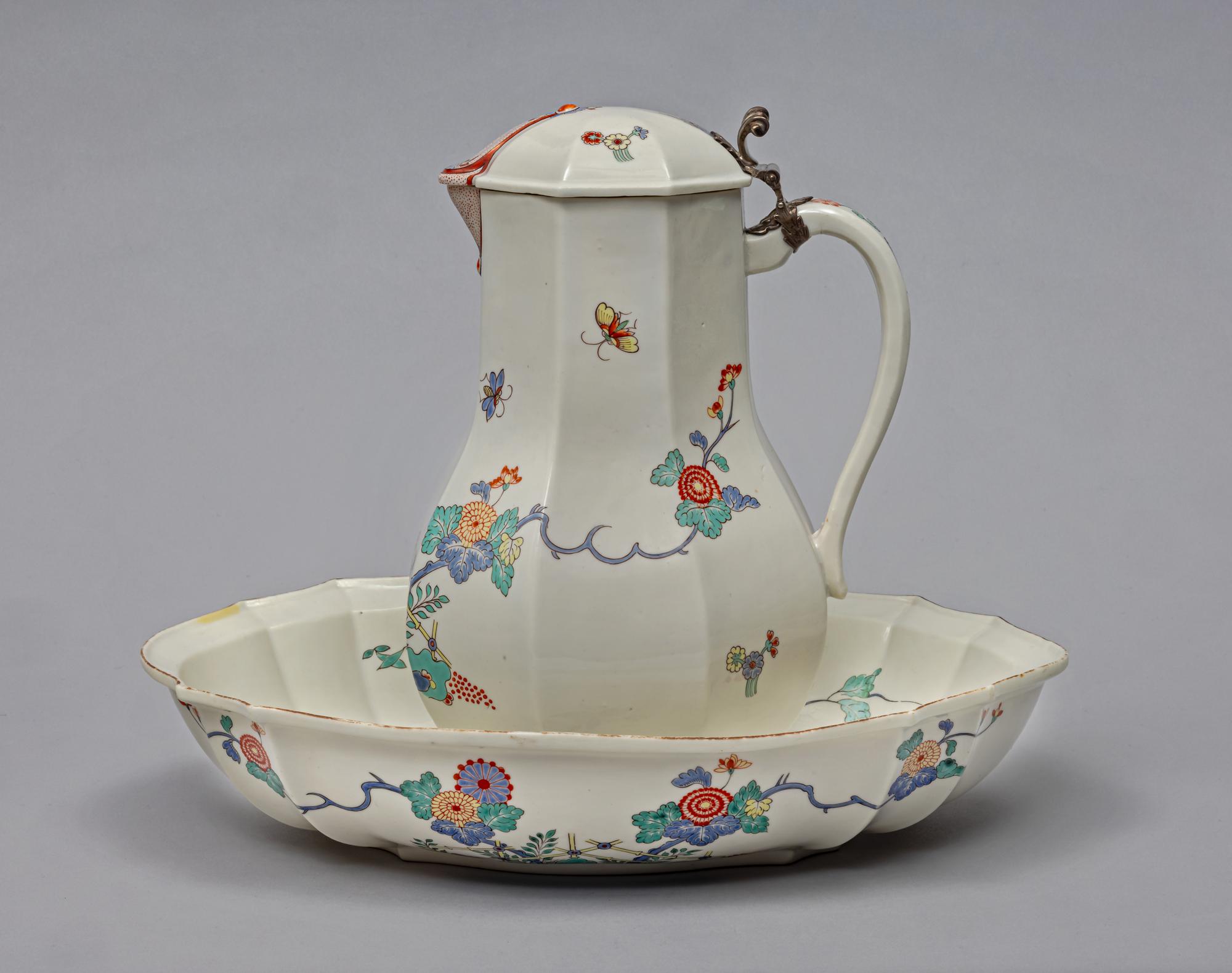
Ewer and basin in the Kakiemon style
France, Chantilly, c. 1735–40
Soft-paste porcelain with tin-opacified lead glaze and overglaze enamels
The Macdonald Collection
Portrait of Louis Henri de Bourbon, septième prince de Condé (After Restoration), Pierre Gobert, France, date unknown, Oil on Canvas. Musée Condé.
Credits