Lost in Translation
As objects circulated around the world, their functions were often adapted to suit the customs and needs of different cultures. The meaning of images could also have assumed a life of their own, as foreign narratives and symbolism were misinterpreted or transformed. Explore these instances of cultural misunderstandings and creative appropriation.
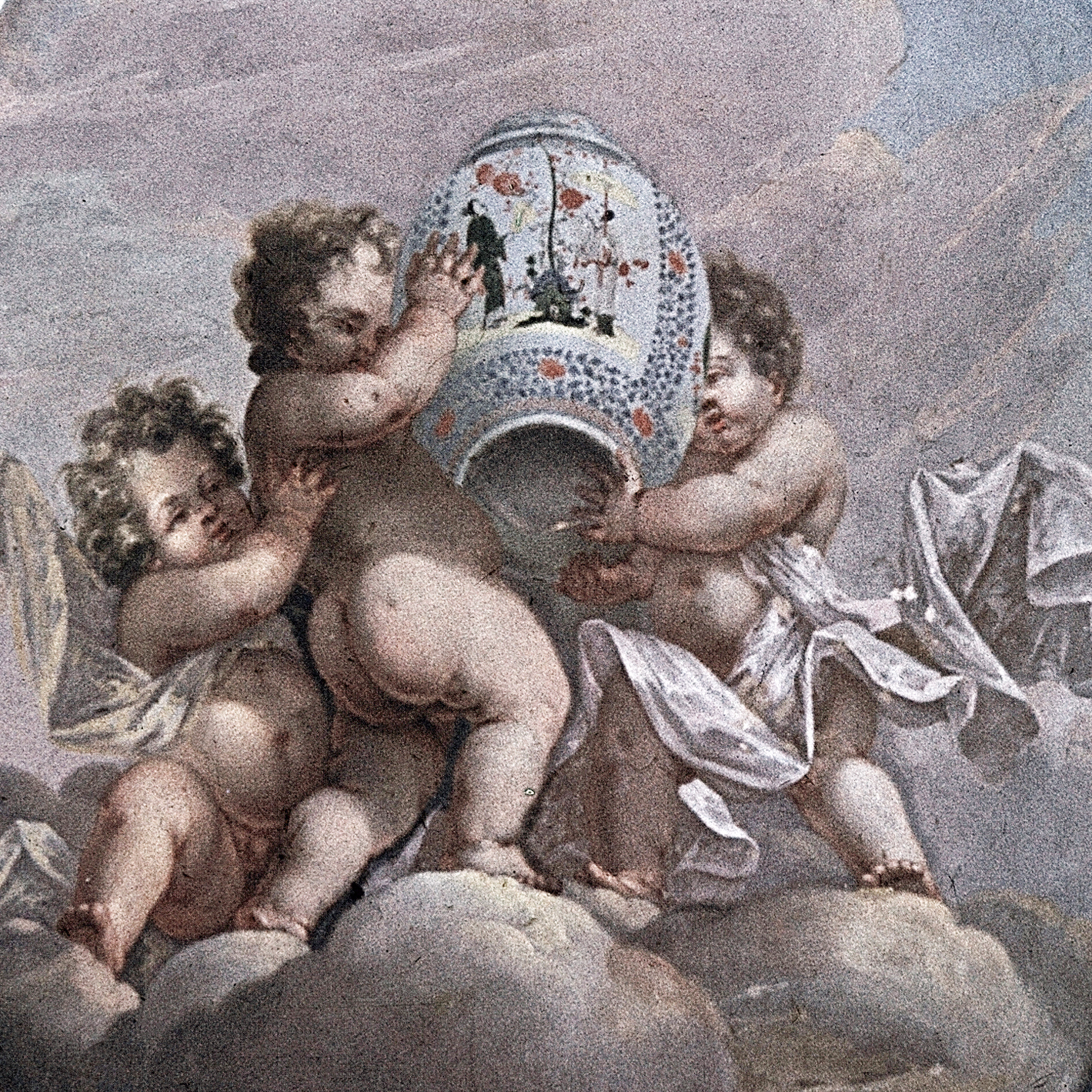
Putti playing with a Japanese Kakiemon vase, Detail from the ceiling of Schloss Oranienburg, Augustin Terwesten, Germany, 1695
Credits
From Incense Burner to Food Container
Incense burners (koro in Japanese) are among the objects originally made for a domestic market and which at some point landed in export shipments. They consequently became common export items, and this Kakiemon-style example was made with a foreign market in mind. Once in Europe however, it was not employed to burn incense; sources indicate that a piece like this one could have been used as a small tureen to serve a richly spiced stew. The small tureen standing on three feet, made at Meissen, was directly inspired by the shape of this koro.
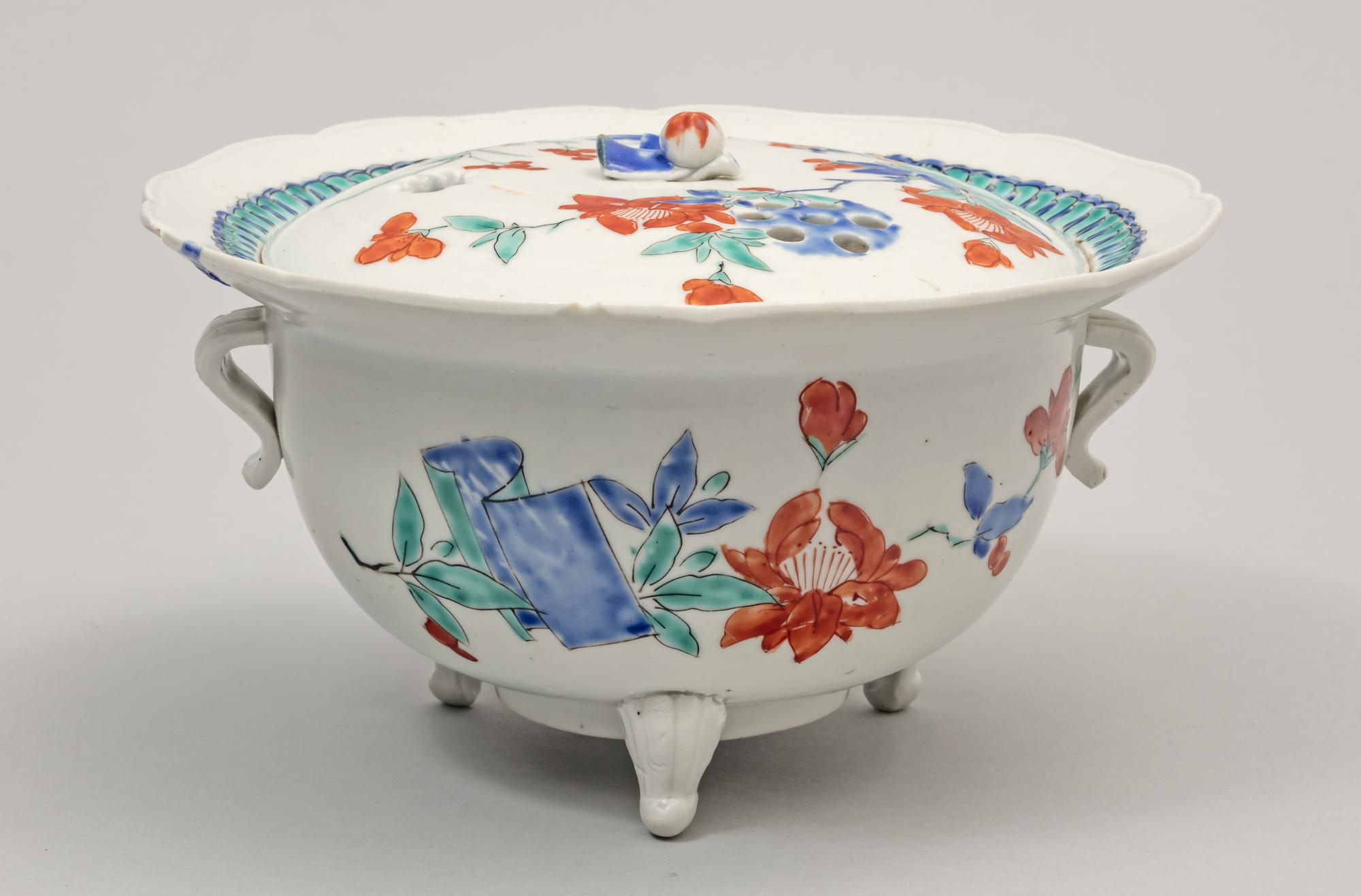
Incense burner (Koro), Japan, Hizen, c. 1700. Porcelain with overglaze enamels. The Macdonald Collection
Tureen, Germany, Meissen, c. 1725. Hard-paste porcelain with overglaze enamels, gilding. Gardiner Museum, Gift of George and Helen Gardiner
From Sake Kettle to Teapot
In Japan, this kettle was likely used to serve warm rice wine, or sake. Its decoration of a phoenix with wings extended in a crest-like design would have appealed to members of the samurai class. A vessel of this shape appears in this festive banquet scene. In Europe, this object would most likely have been employed as a teapot.
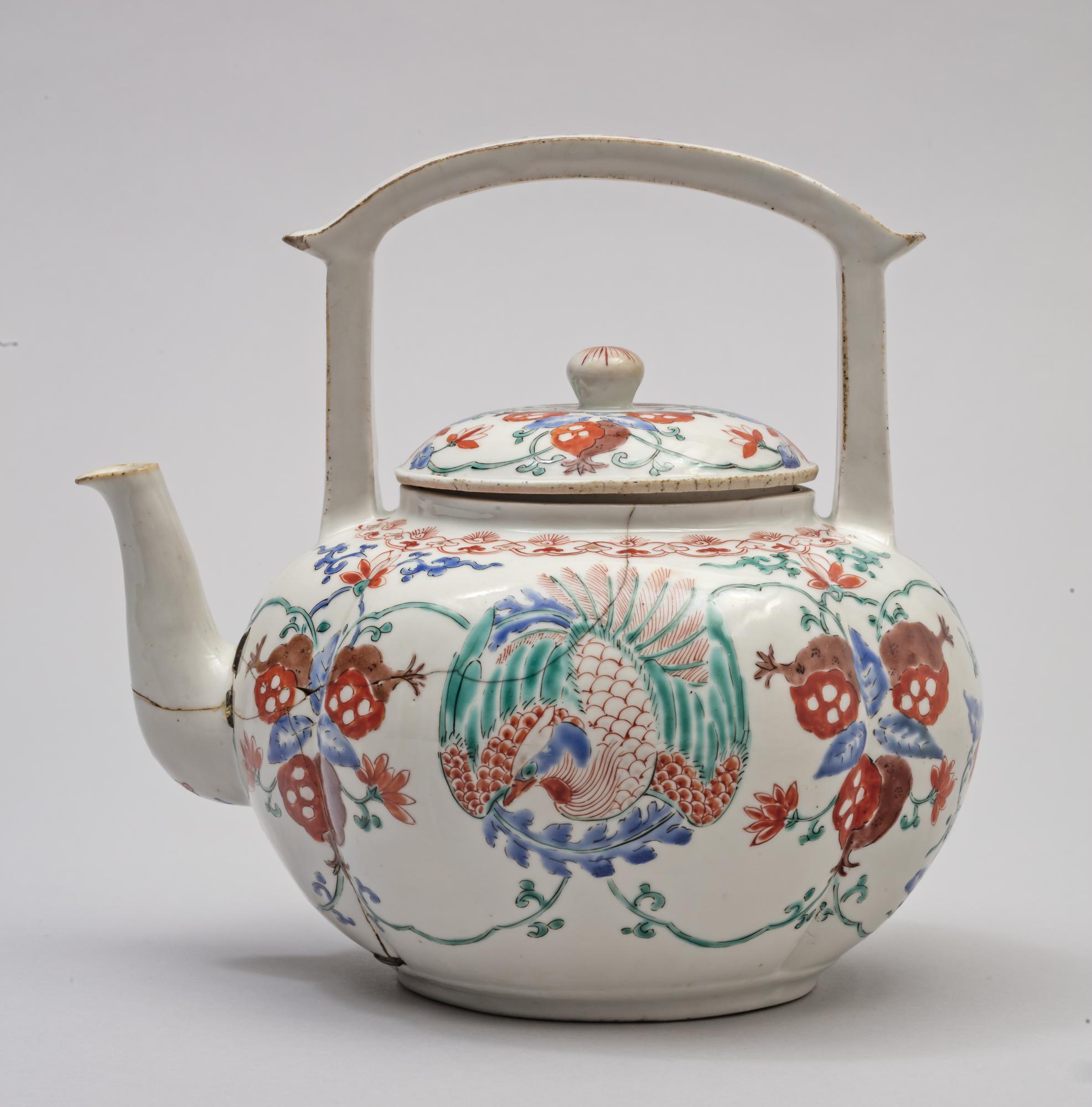
Wine or sake ewer, Japan, Hizen, c. 1670–90. Porcelain with overglaze enamels. The Macdonald Collection
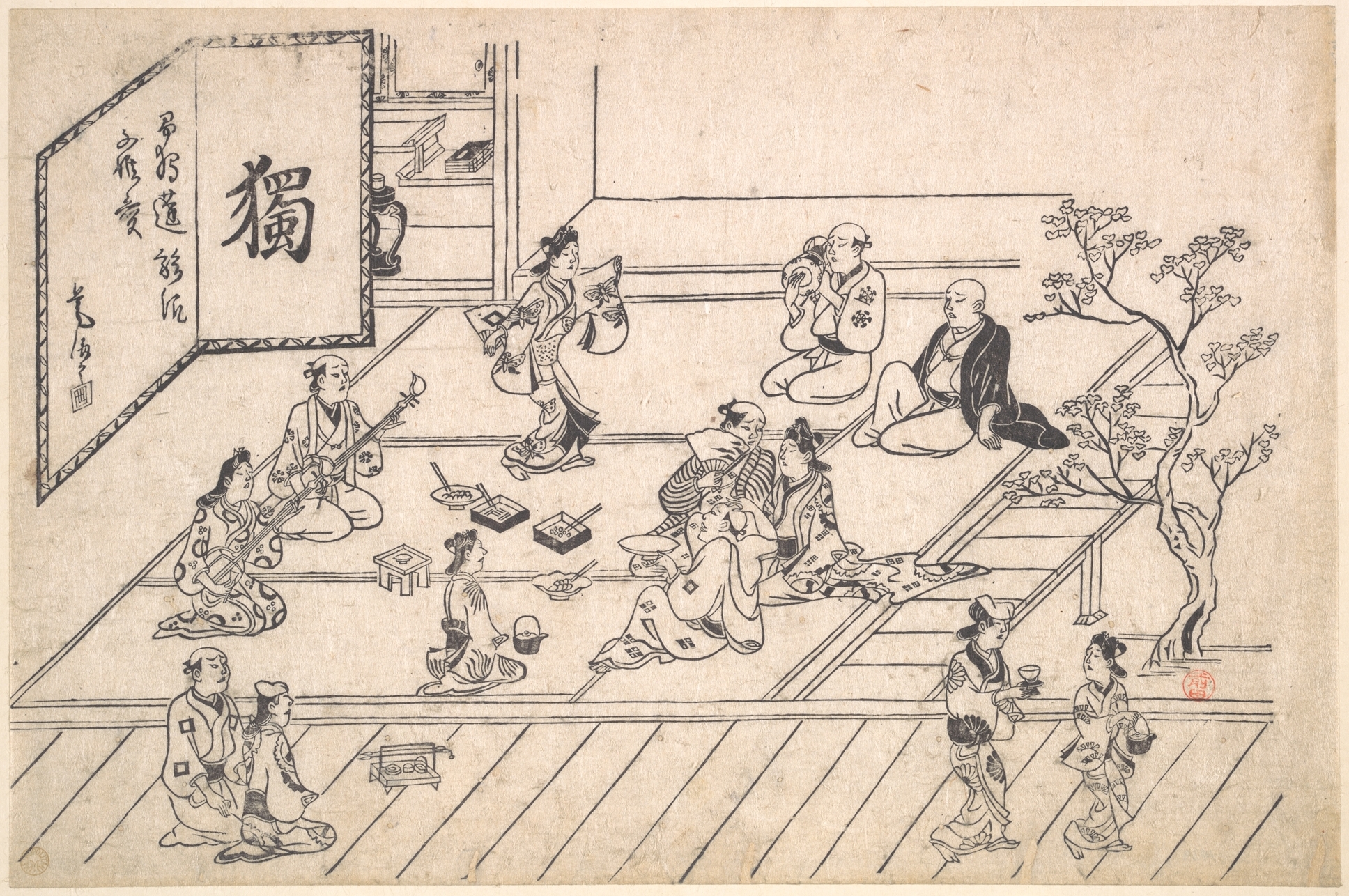
Interior scene in the Yoshiwara, Hishikawa Moronobu, Japan, ca. 1680, Woodblock print; ink on paper. Metropolitan Museum of Art. Credits
From Squirrel to Rat
In Chinese and Japanese cultures, squirrels and grapes formed a rebus representing the desire for many sons. However, Europeans did not know the meaning of the design and described it as the “rat and grape” motif. In the early 18th century, Meissen decorators combined rat-looking squirrels with the Japanese banded hedge design, which decorators mistook for wheat sheaves. The motif was also very popular in France at Chantilly.
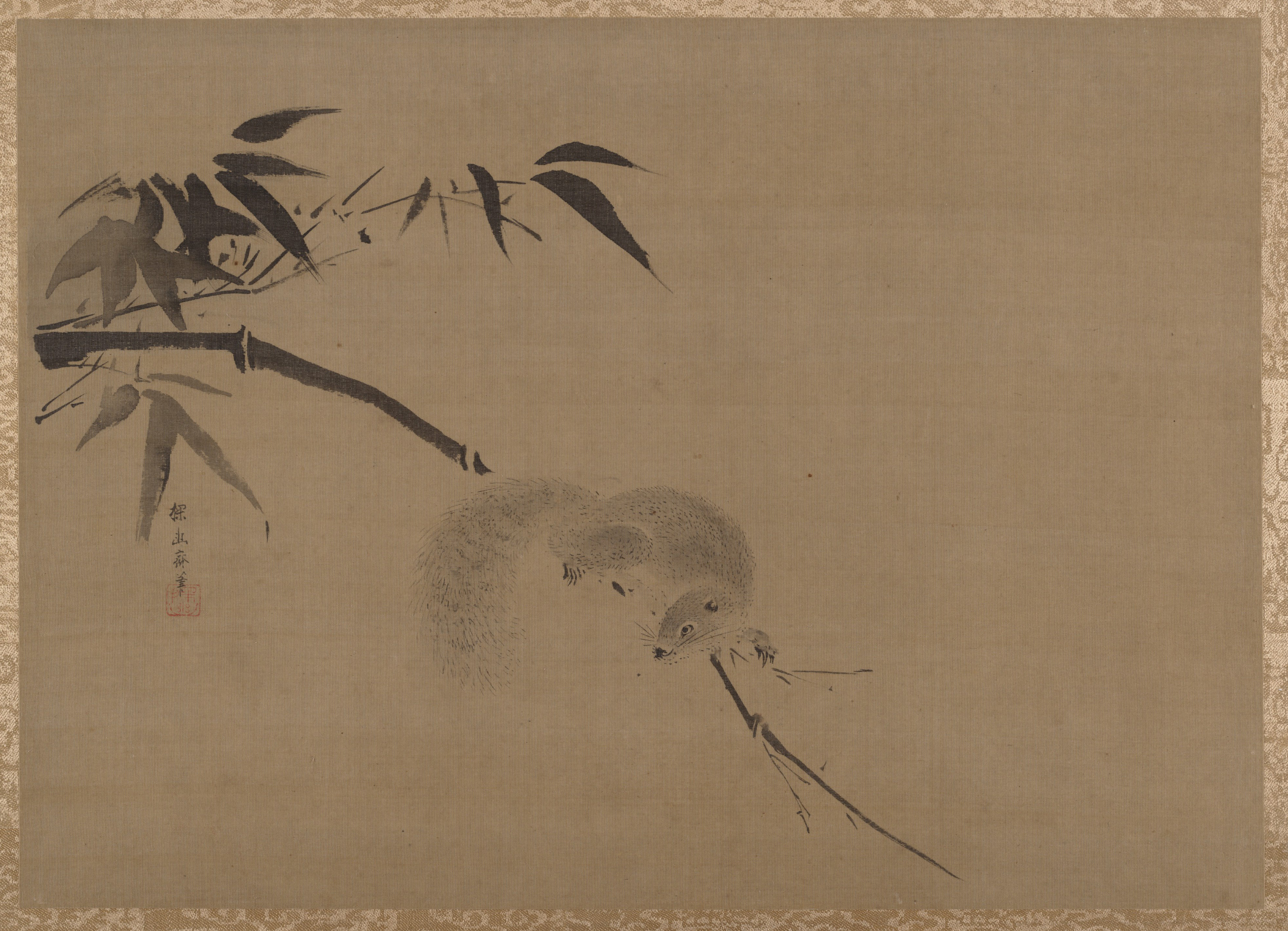
Squirrel on Bamboo, Kanō Tan'yū, Japan, Edo Period, c. 1650, Album leaf, ink and colour on silk. Metropolitan Museum of Art. Credits
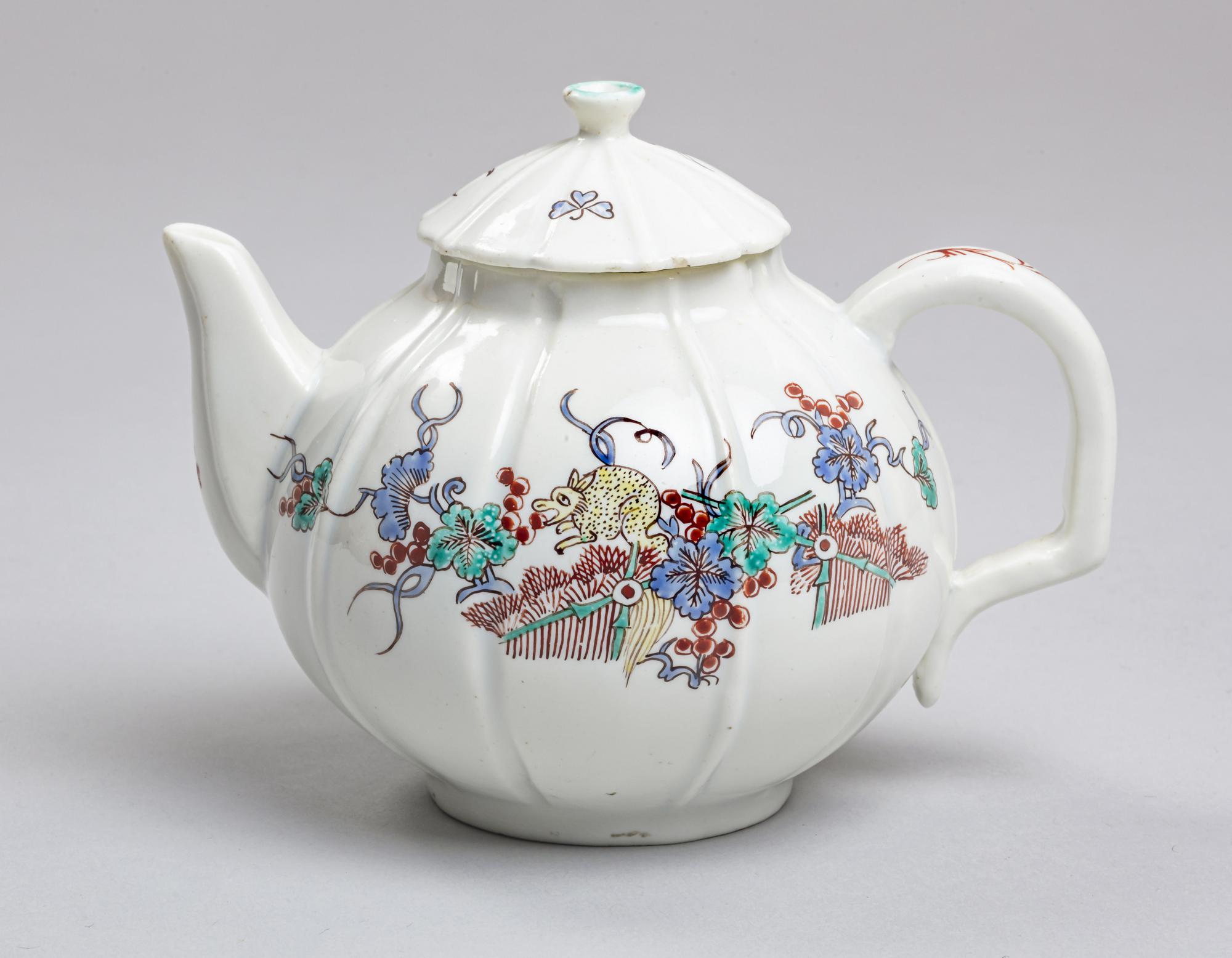
Teapot with grapes and squirrels, France, Chantilly, c. 1730–40. Soft-paste porcelain with overglaze enamels. The Macdonald Collection
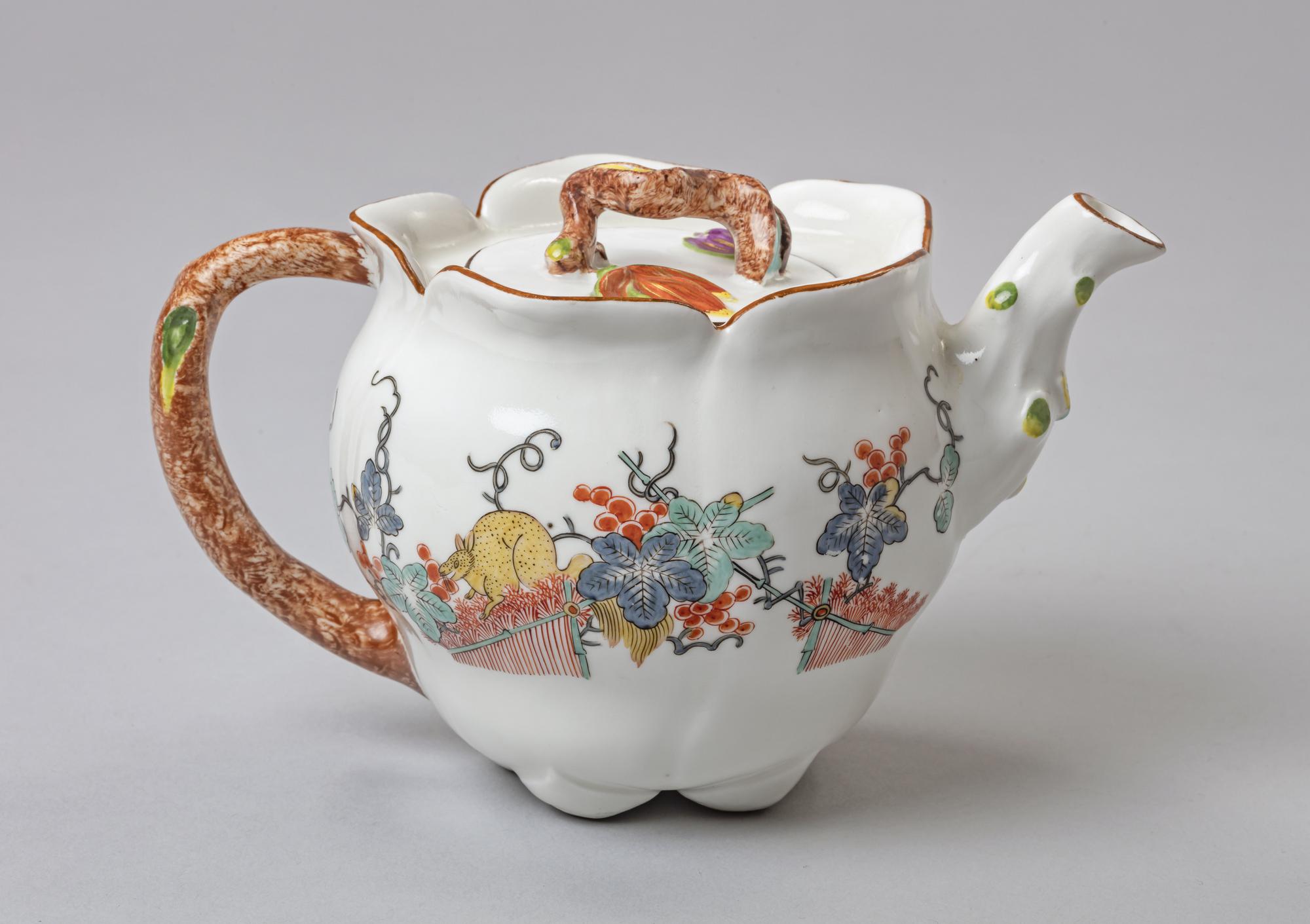
Magnolia-shaped teapot, Germany, Meissen, c.1730-1740, Hard-paste porcelain with overglaze enamels. The Macdonald Collection
From Shiba Onko to “Hob in the Well”
The story of Shiba Onko was one of the most popular Kakiemon designs, as the numerous copies made throughout Europe indicate. This motif recounts an episode in the life of the Chinese statesman Sima Guang (known as J. Shiba Onko in Japan), who as a youth, rescued a boy from drowning in a large water jar by throwing a rock at it to break it. In England, it came to be known as “Hob in the well” for it was thought to depict an elf inhabiting a well, while the Dutch often described the motif as “the little man in the well.”
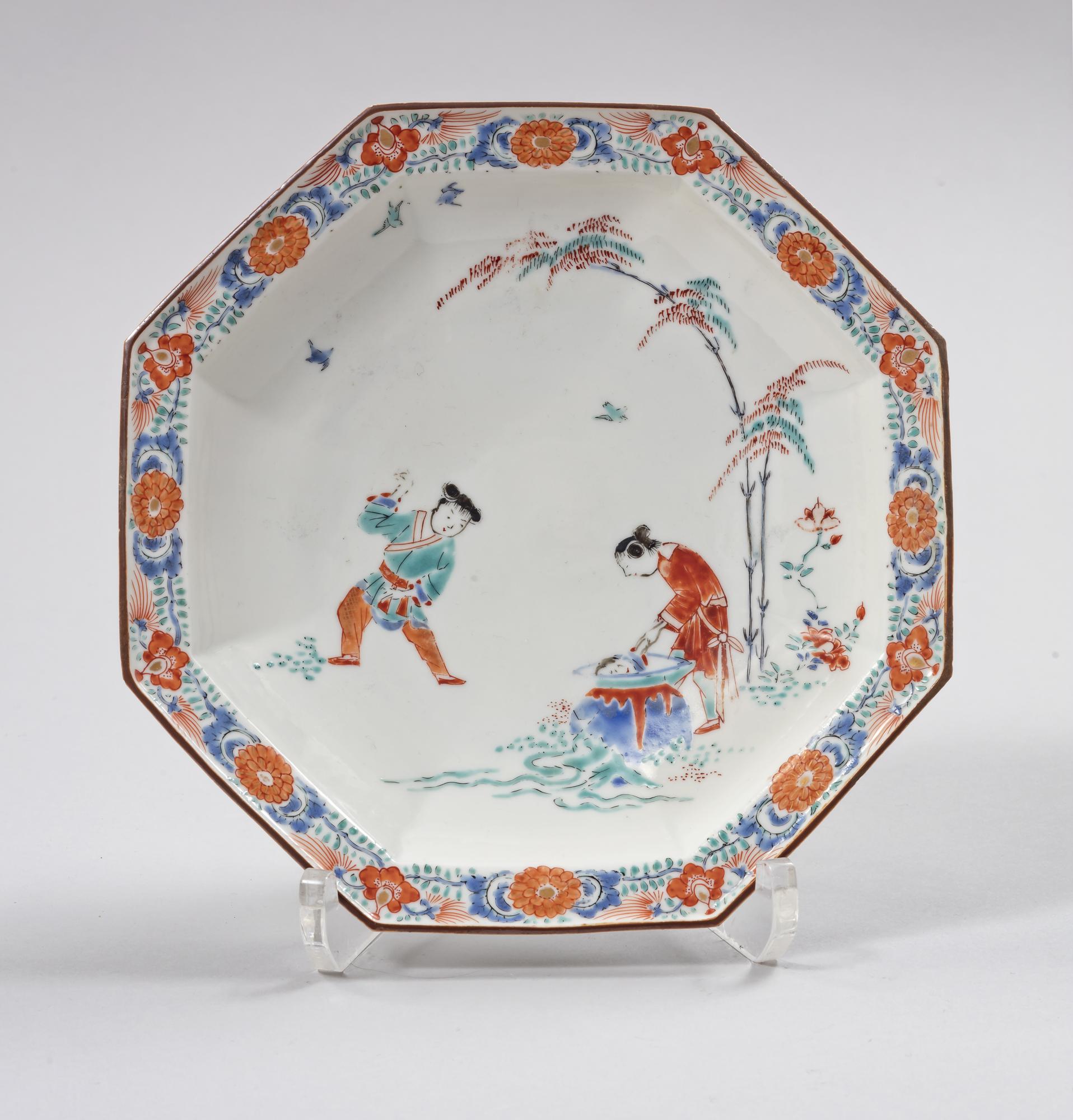
Octagonal dish with Shiba Onko design, Japan, Hizen, c. 1670–90s. Porcelain with overglaze enamels, iron-oxide brown. The Macdonald Collection
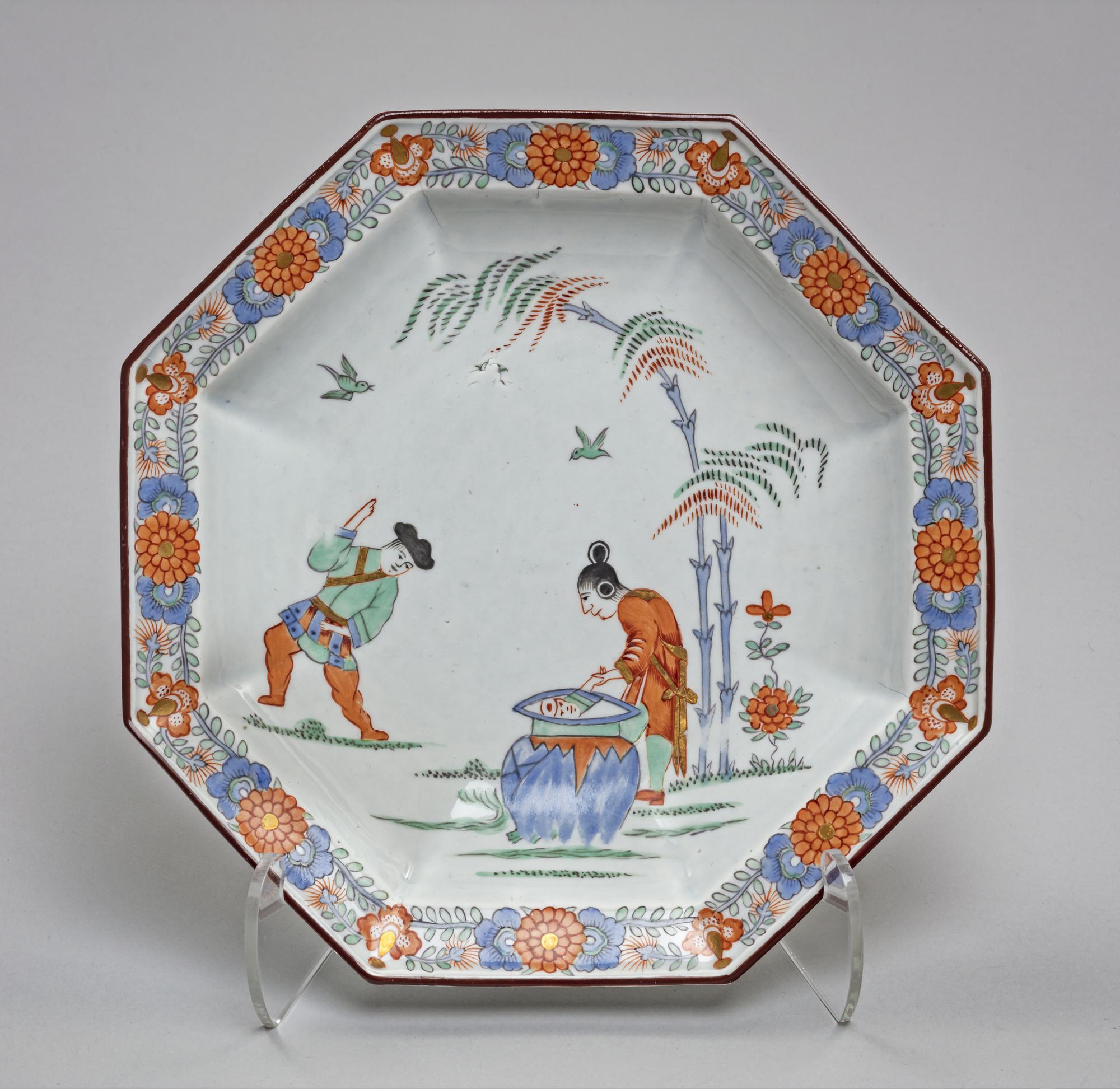
Octagonal dish with Shiba Onko design, Austria, Imperial Vienna Manufactory, c. 1750. Hard-paste porcelain with overglaze enamels. The Macdonald Collection
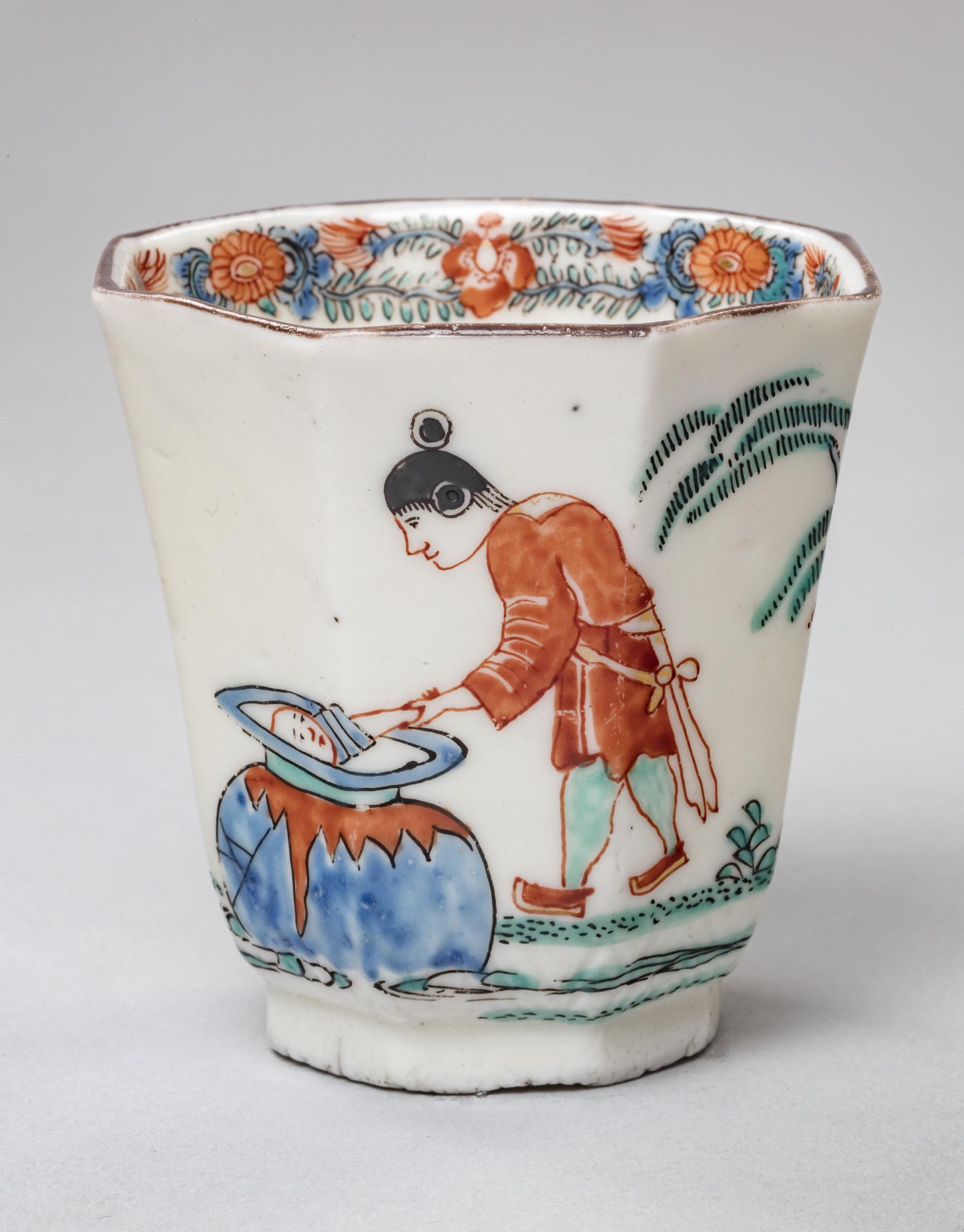
Beaker with Shiba Onko design, beaker made in Jingdezhen, China, c. 1700–20; decorated in the Netherlands, c. 1730. Hard-paste porcelain with overglaze enamels. The Macdonald Collection
From The Tale of Genji to “Lady in a Pavilion”
The meaning behind the design known as the “Lady in a Pavilion” was also lost as it travelled to Europe. The scene most probably derives from the 11th-century Japanese classic The Tale of Genji. In Europe, the literary association would have been lost and the scene reduced to an “exotic” image of a beautiful woman near a verandah. The motif was particularly popular at the Chelsea porcelain manufactory in England.
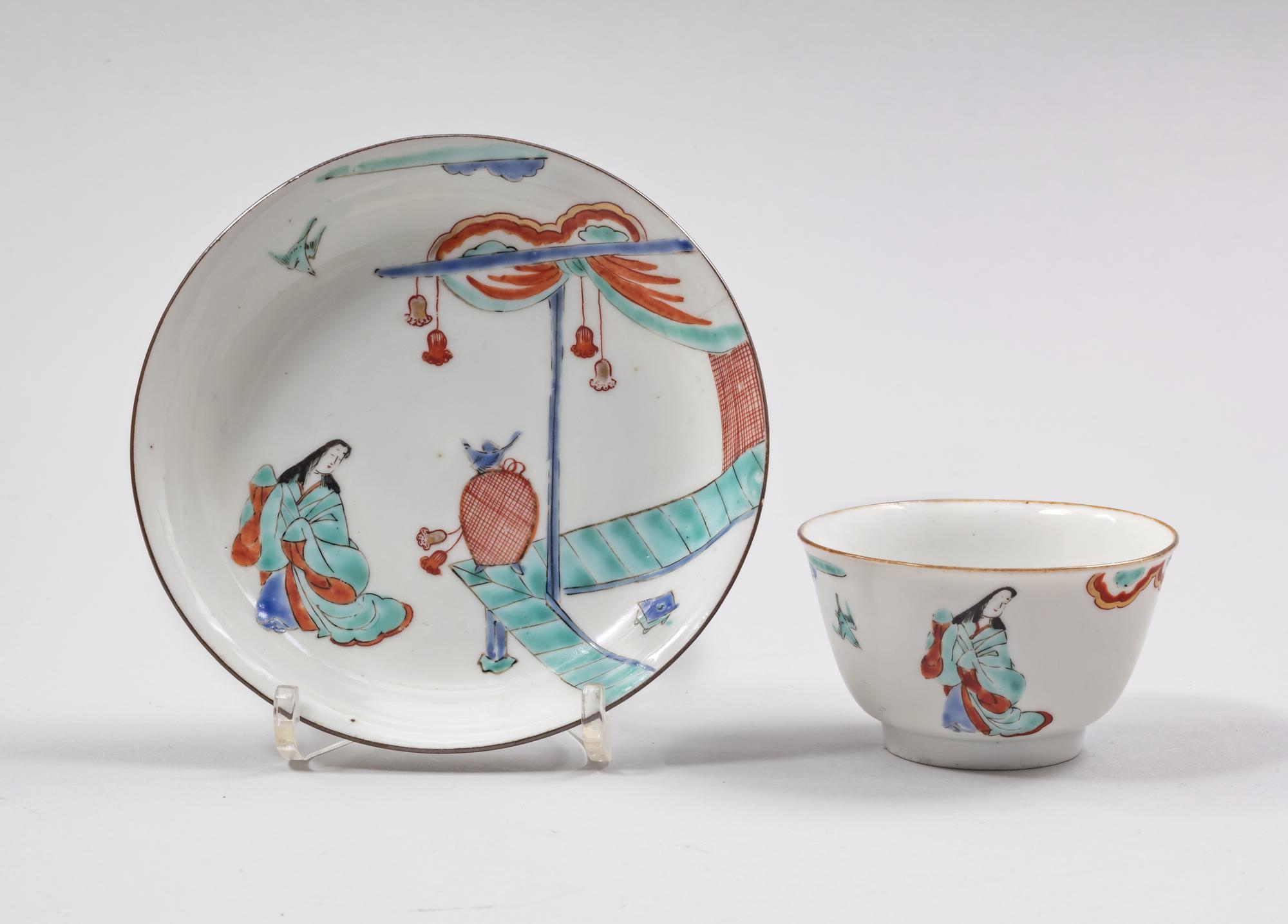
Cup and saucer with Lady in a Pavilion, Japan, Hizen, c. 1680–1700. Porcelain with overglaze enamels. The Macdonald Collection
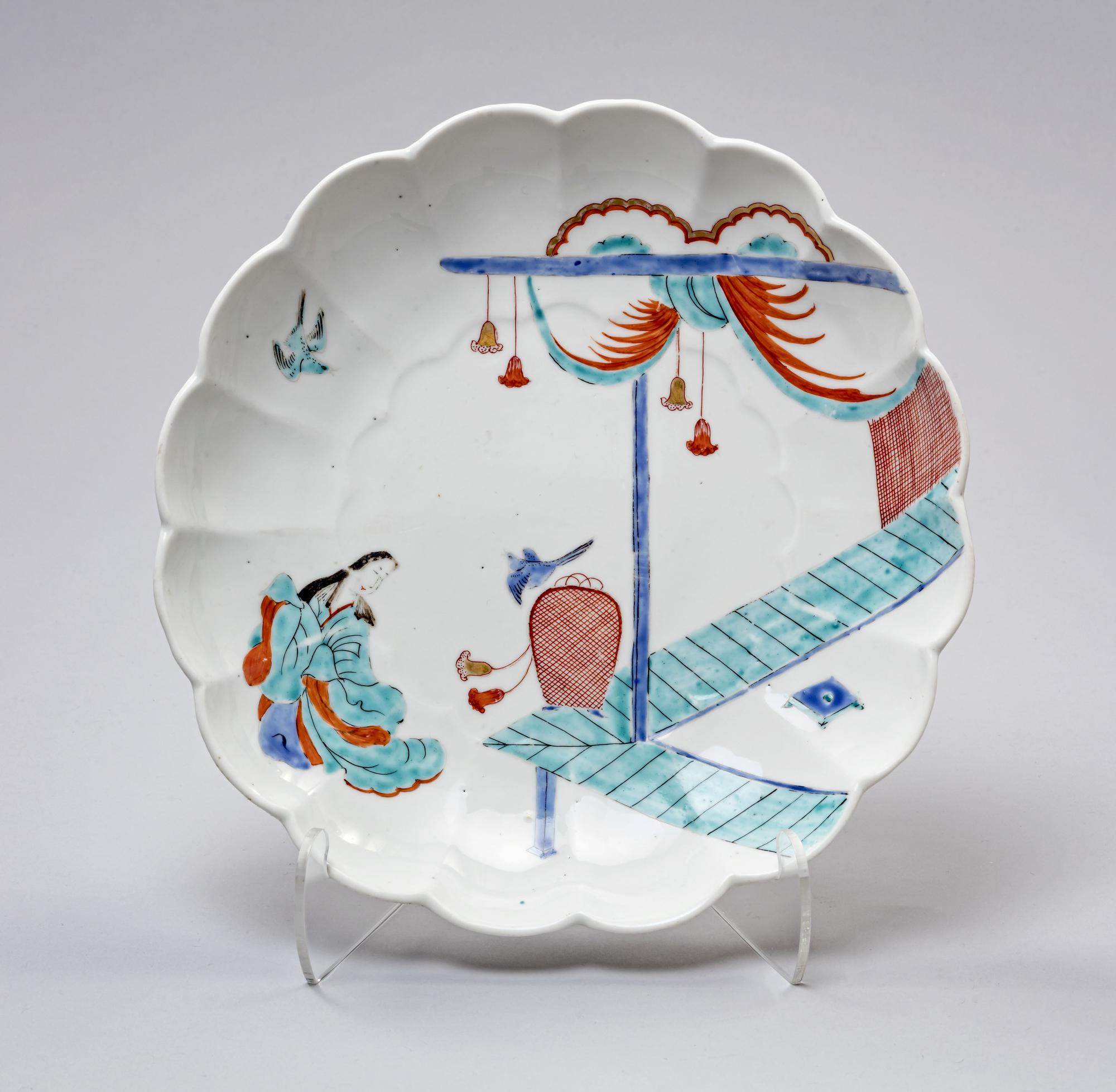
Dish with Lady in a Pavilion, England, Chelsea, 1750–52. Soft-paste porcelain with overglaze enamels. The Macdonald Collection
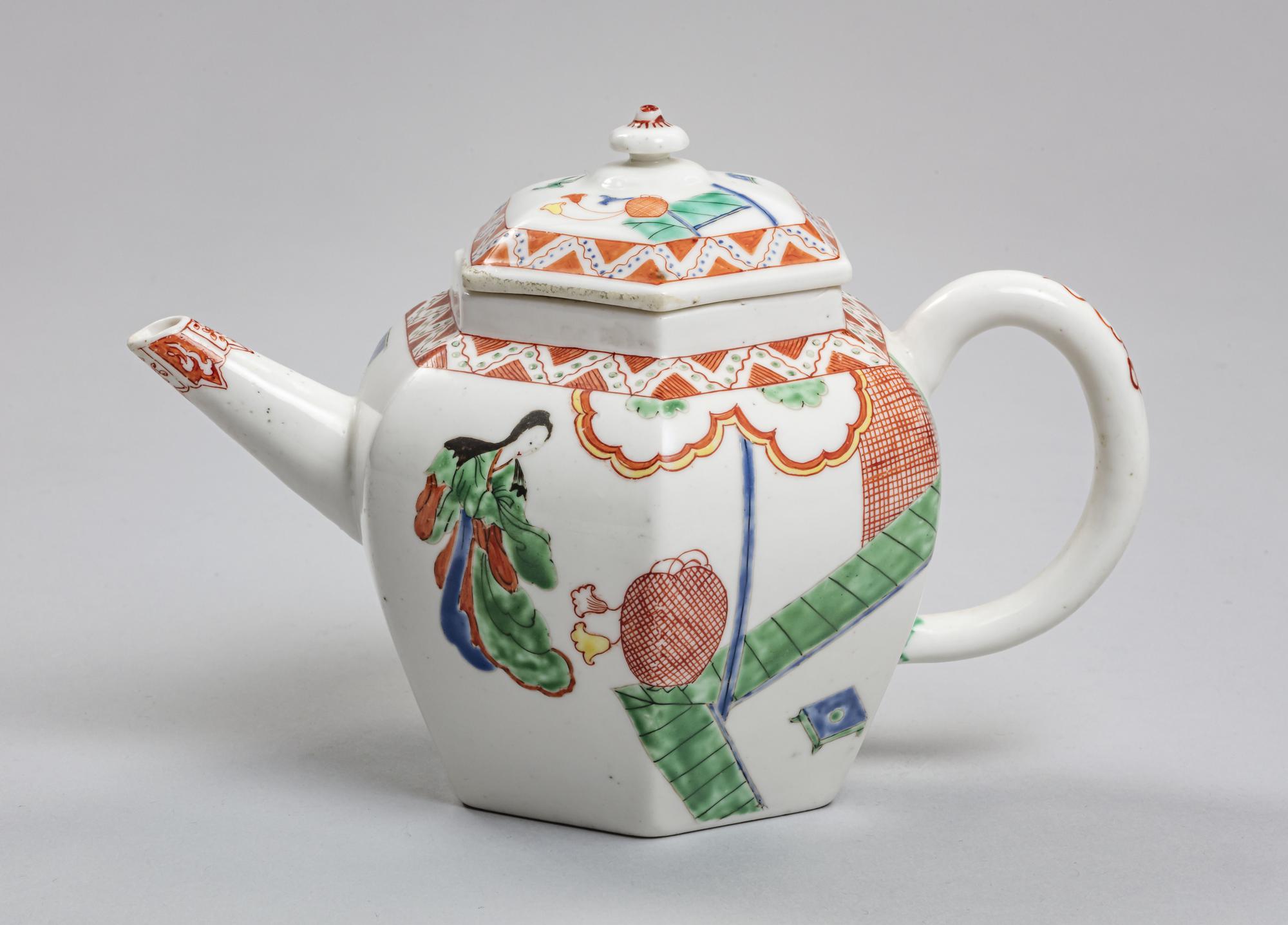
Teapot, England, Chelsea, 1750–52. Soft-paste porcelain with overglaze enamels. The Macdonald Collection