Tea, Coffee, and Chocolate in Europe
From the 16th to the 18th century, Europe’s material world and consumption habits transformed through trade and colonial expansion. During this period, tea, coffee, and cocoa offered new sensory experiences and revolutionized drinking habits. The enjoyment of these caffeinated beverages called for new types of objects, many of which were made of porcelain. Like the porcelain wares made to contain them, their consumption signaled wealth and status. Throughout the 18th century, increased availability and lower prices made the beverages accessible to all social classes.
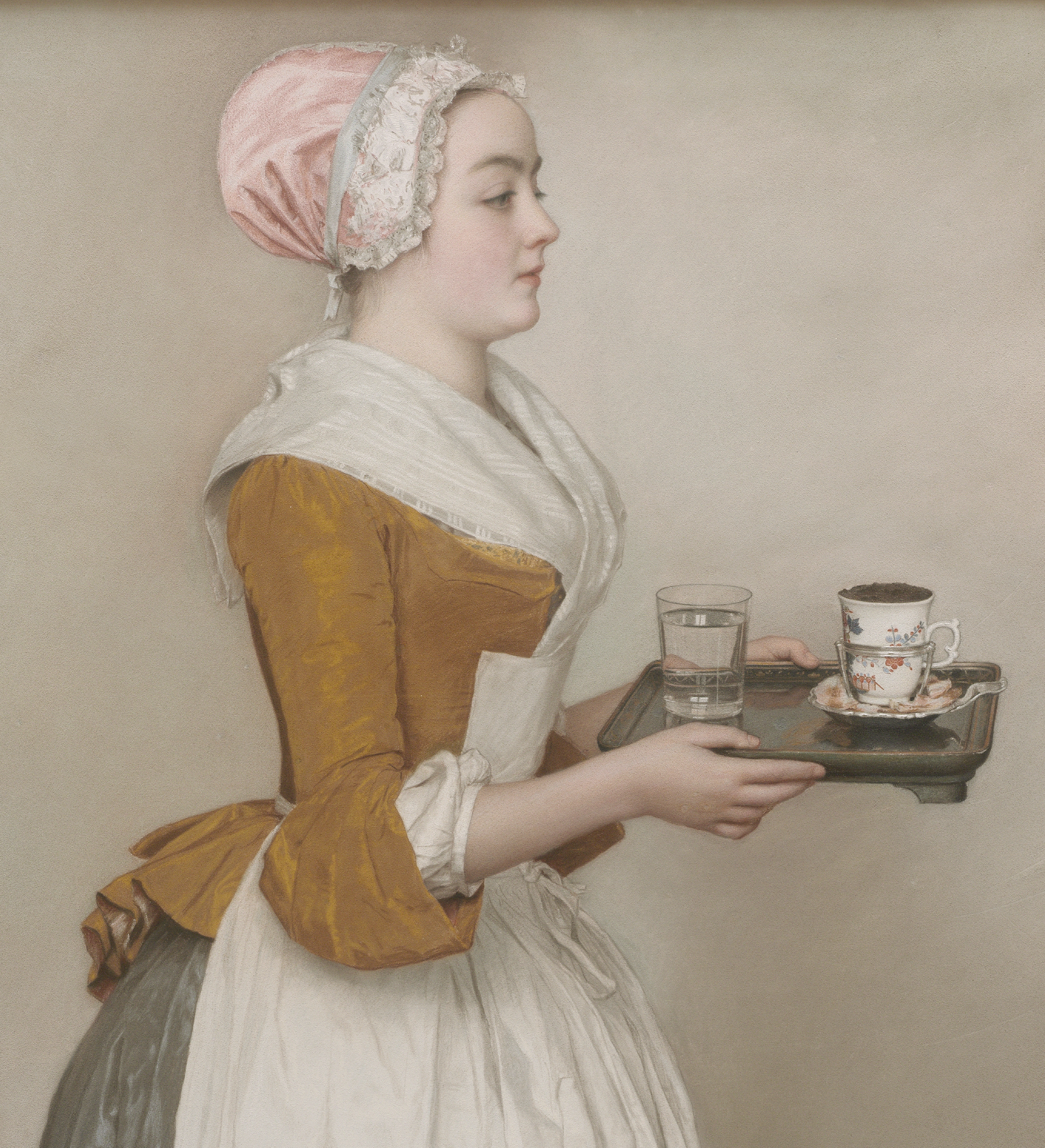
In Jean-Étienne Liotard's The Chocolate Girl (Pastel on vellum, c.1744), a young servant carries a Kakiemon-style chocolate cup on a Japanese lacquer tray.
Credits
From Distant Places
Tea, coffee, and cocoa were native to China, Ethiopia, and Mesoamerica respectively. The beverages’ distant origins are envisioned in this image from a contemporary treatise in which each figure embodies a racial stereotype. The man wearing a turban is associated with coffee, thus alluding to the role of the Ottoman Empire in its trade. The porcelain wares employed to serve the drinks also reinforced their foreign origins. Tea, coffee, and chocolate were drunk from Asian porcelain or European porcelain very often decorated in Asian-inspired styles, including Kakiemon.
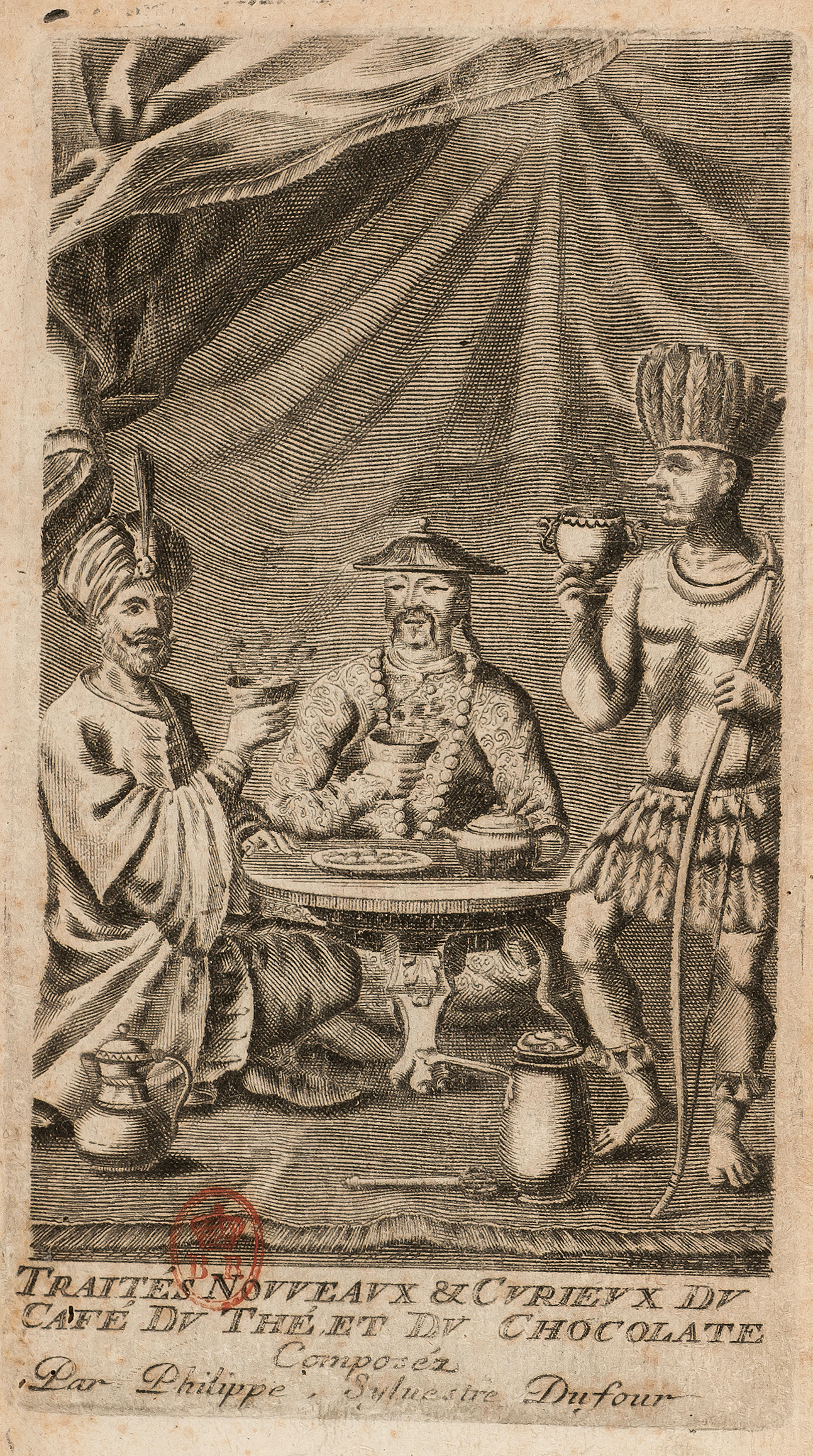
Images disseminated through print and material culture contributed to the formation of racial stereotypes. Frontispiece from Traitez nouveaux et curieux du café, du thé et du chocolate by Philippe Sylvestre Dufour, France, 1685. Bibliothèque nationale de France.
Credits
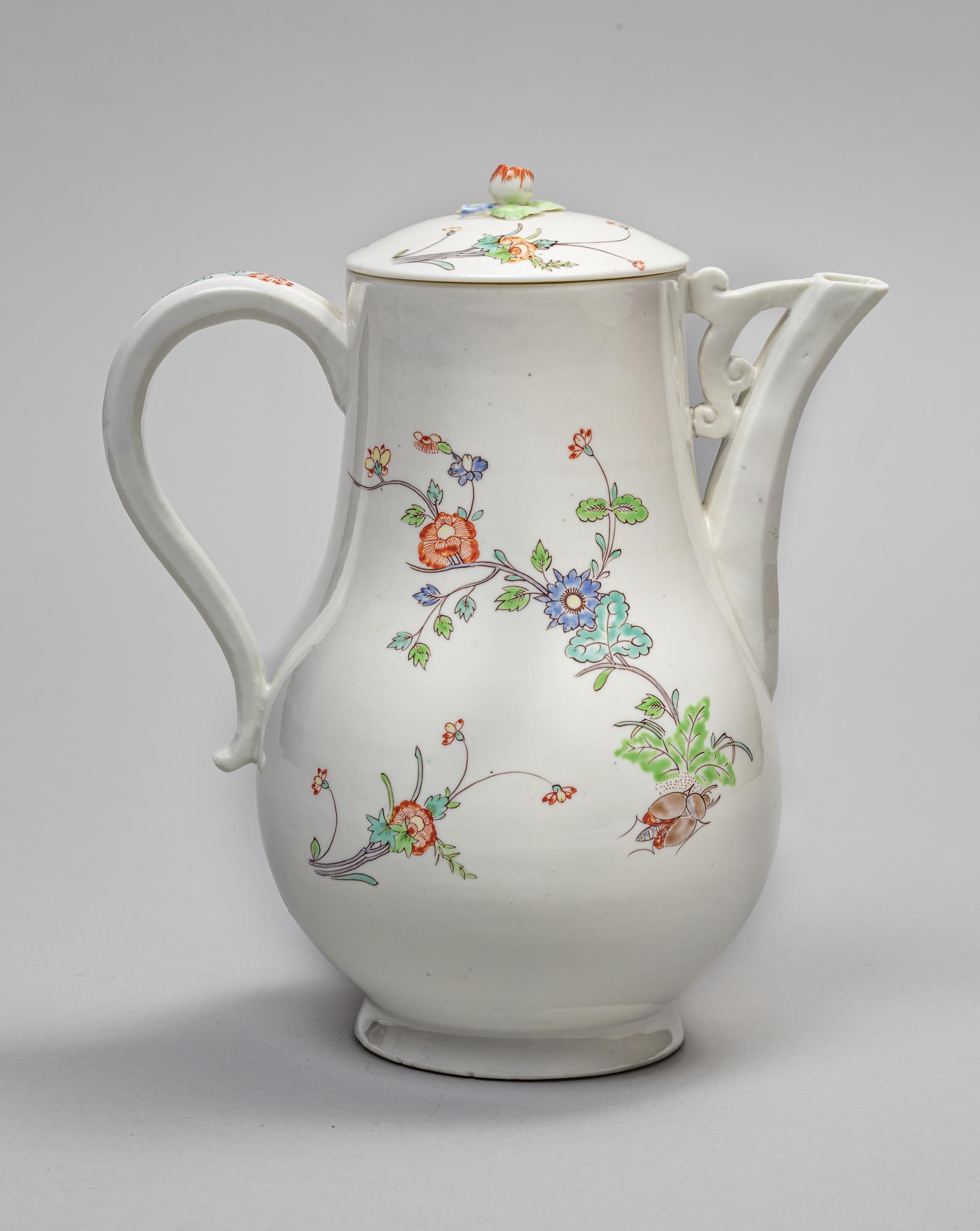
Coffee pot, France, Chantilly, c.1735-1740, Soft-paste porcelain with overglaze enamels. The Macdonald Collection
New Wares
Porcelain’s capacity to withstand boiling water made it ideal for serving these hot beverages. Their consumption called for new wares, ranging from coffee and chocolate pots to tea canisters and sugar bowls. At the centre of this new equipage, the teapot was ubiquitous and remains iconic to this day. European porcelain manufacturers originally found inspiration in the Chinese teapot, characterized by a small, round, squat form.

Clockwise from top left: Teapot, England, Bow, c.1747; Teapot, England, c.1745-1755; Teapot with 'Lady in a Pavillion', England, Chelsea, c.1750-1752; Acanthus-leaf teapot, England, Chelsea, c.1745-1749. The Macdonald Collection
The Anatomy of the Cup
Arita kilns introduced cup and saucer combinations in the 1670s, which they made for export to European markets and the Middle East. European porcelain manufactories first copied the imported teabowl and later Europeanized the form by adding a handle, and sometimes two. Although cups were used interchangeably for the three beverages, two-handled cups are usually associated with chocolate. Beakers were also employed, either with a matching porcelain saucer with a raised gallery or combined with a saucer made of another precious material, such as metal and tortoiseshell.
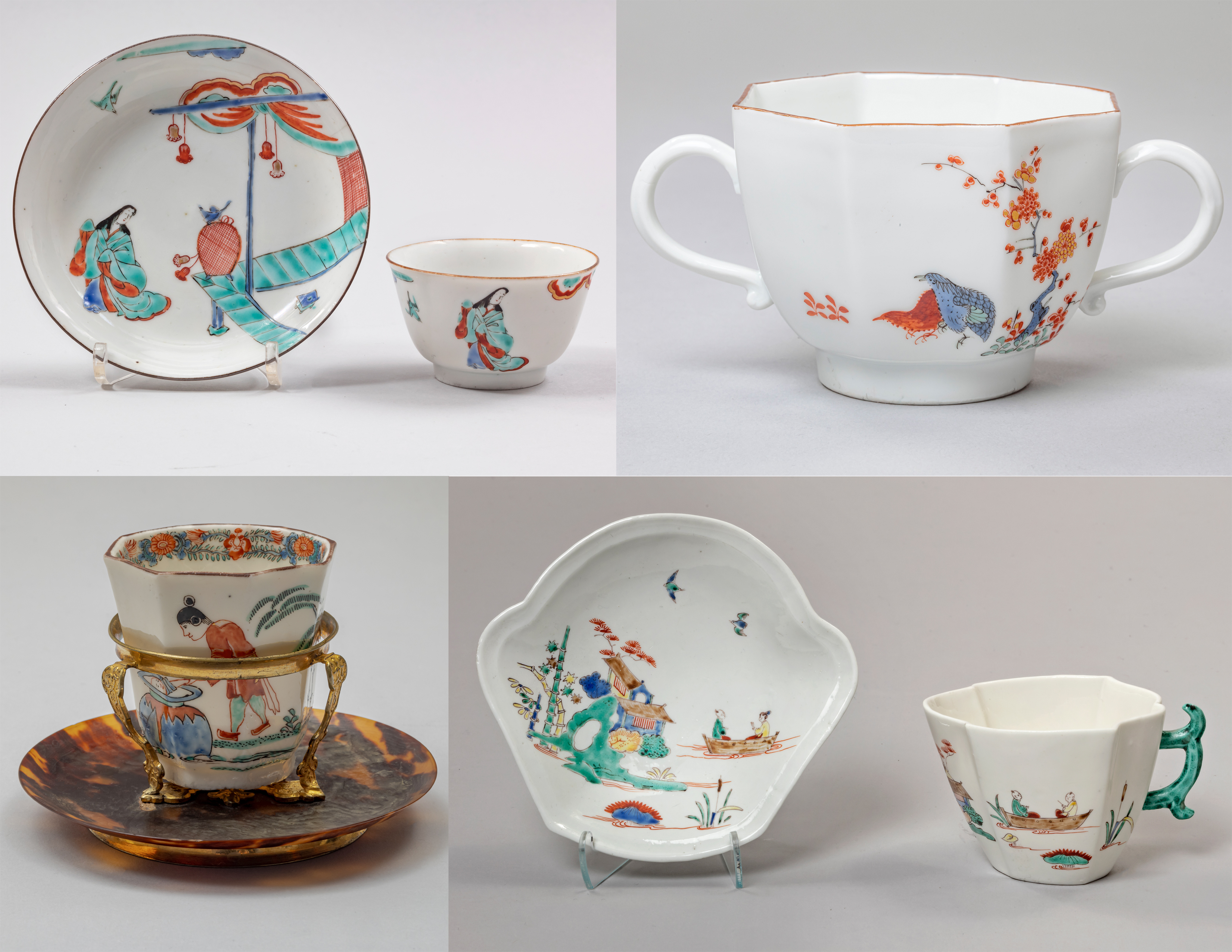
Clockwise from top left: Teabowl and saucer with Lady in a Pavilion, Japan, Hizen, c.1680-1700; Two-handled cup with quail, Germany, Meissen, c.1730; Teacup and saucer, France, Chantilly, c.1730-1740; Beaker with Shiba Onko in trembleuse saucer, China, Quing Dynasty, Kangxi Period (1662-1723), c.1700-1720, decorated in the Netherlands c.1730. The Macdonald Collection
Sugar: From Plantation to Tea Table
Europeans adapted the three beverages, which they considered bitter in their natural state, by adding milk and sugar. Imported from the Americas, sugar’s increasing availability was key to the drinks’ resounding success. Sugar has, however, a dark history, having contributed to the expansion of colonial plantations, together with systems of slavery, indentured labour, and oppression. It was cultivated in Brazil and the Caribbean using the labour of enslaved Africans who toiled and lost their lives on colonial plantations. In the last decades of the 18th century, 80 percent of the sugar available worldwide came from the British and the French colonies.
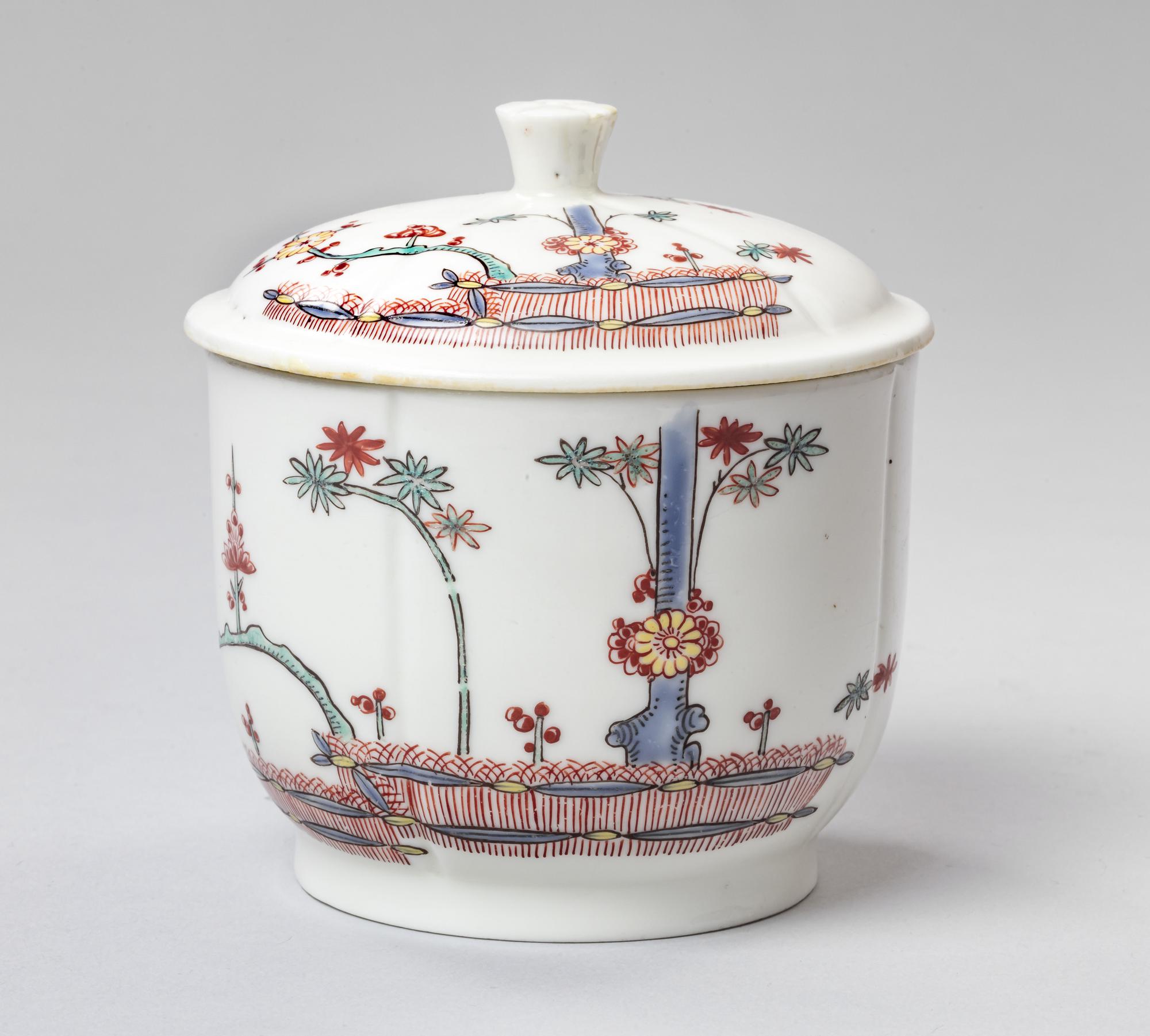
Sugar bowl with banded hedge, France, Saint-Cloud, c. 1735. Soft-paste porcelain with overglaze enamels. The Macdonald Collection
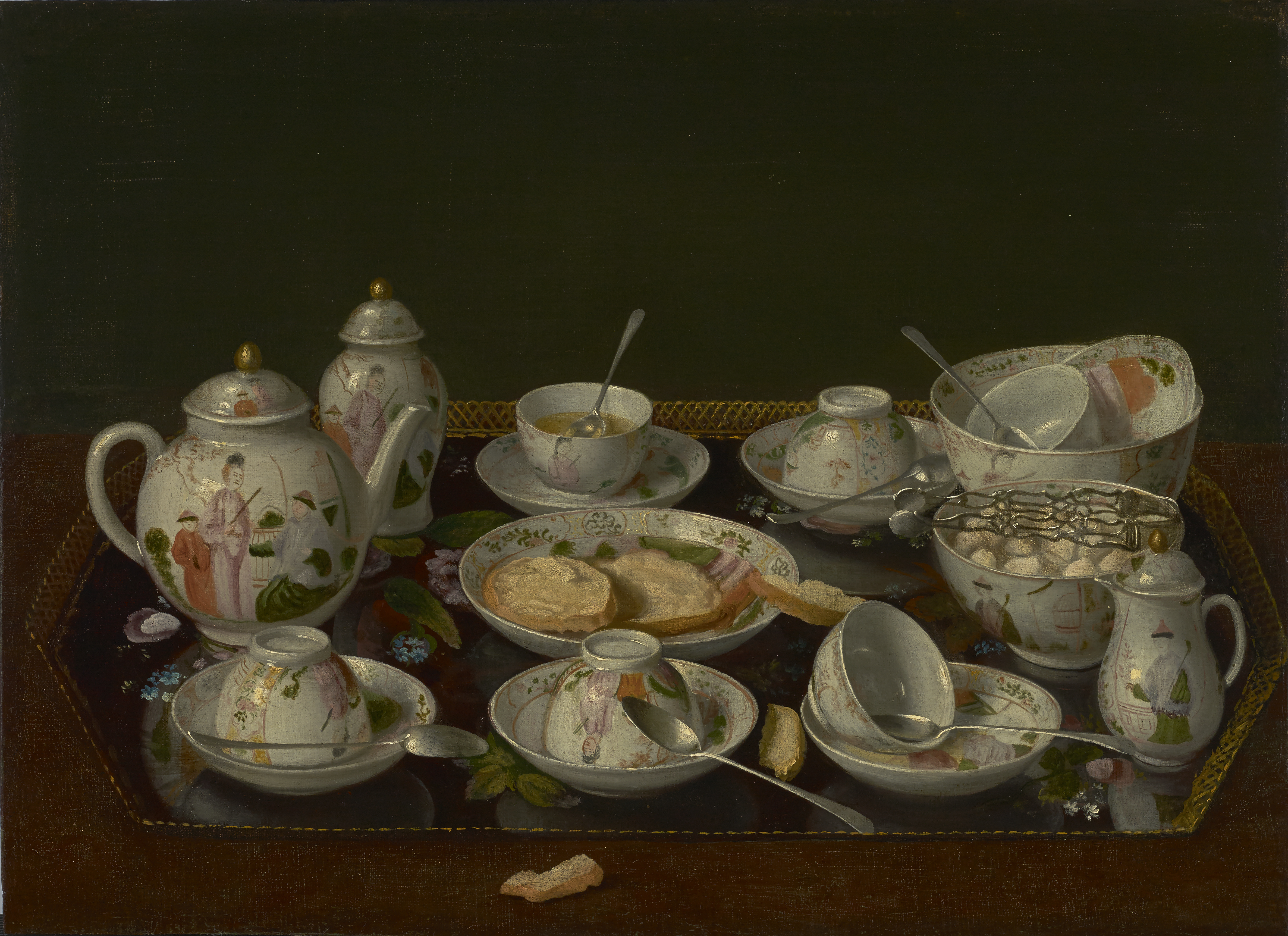
A sugar bowl features prominently in this still life by Jean-Étienne Liotard, Switzerland, c.1781-1783, Oil on canvas mounted on board. The J. Paul Getty Museum, Los Angeles.
Credits
The Trade in “Colonial Groceries”
Sugar was not the only commodity that catalyzed the exploitation of enslaved labour. This was also the case for other “colonial groceries,” including cotton, coffee, cocoa, and tobacco. By the 18th century, the consumption of tobacco had spread throughout Asia and Europe. The crop was also transplanted to China and Japan. In Europe, consuming tobacco called for new types of objects, including snuff boxes and tobacco jars.
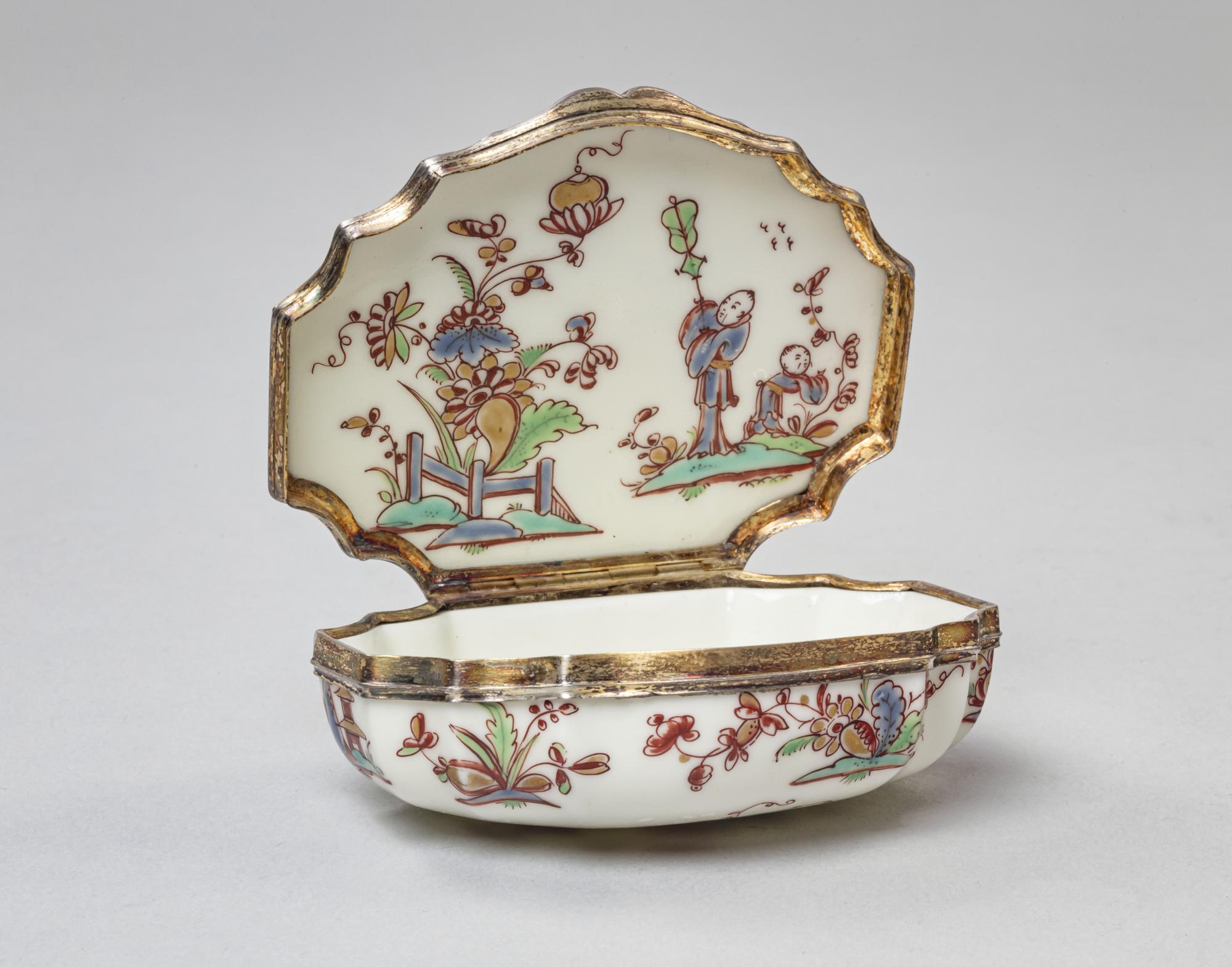
Snuff box, France, Saint-Cloud, c. 1745. Soft-paste porcelain with overglaze enamels; silver gilt mounts. The Macdonald Collection
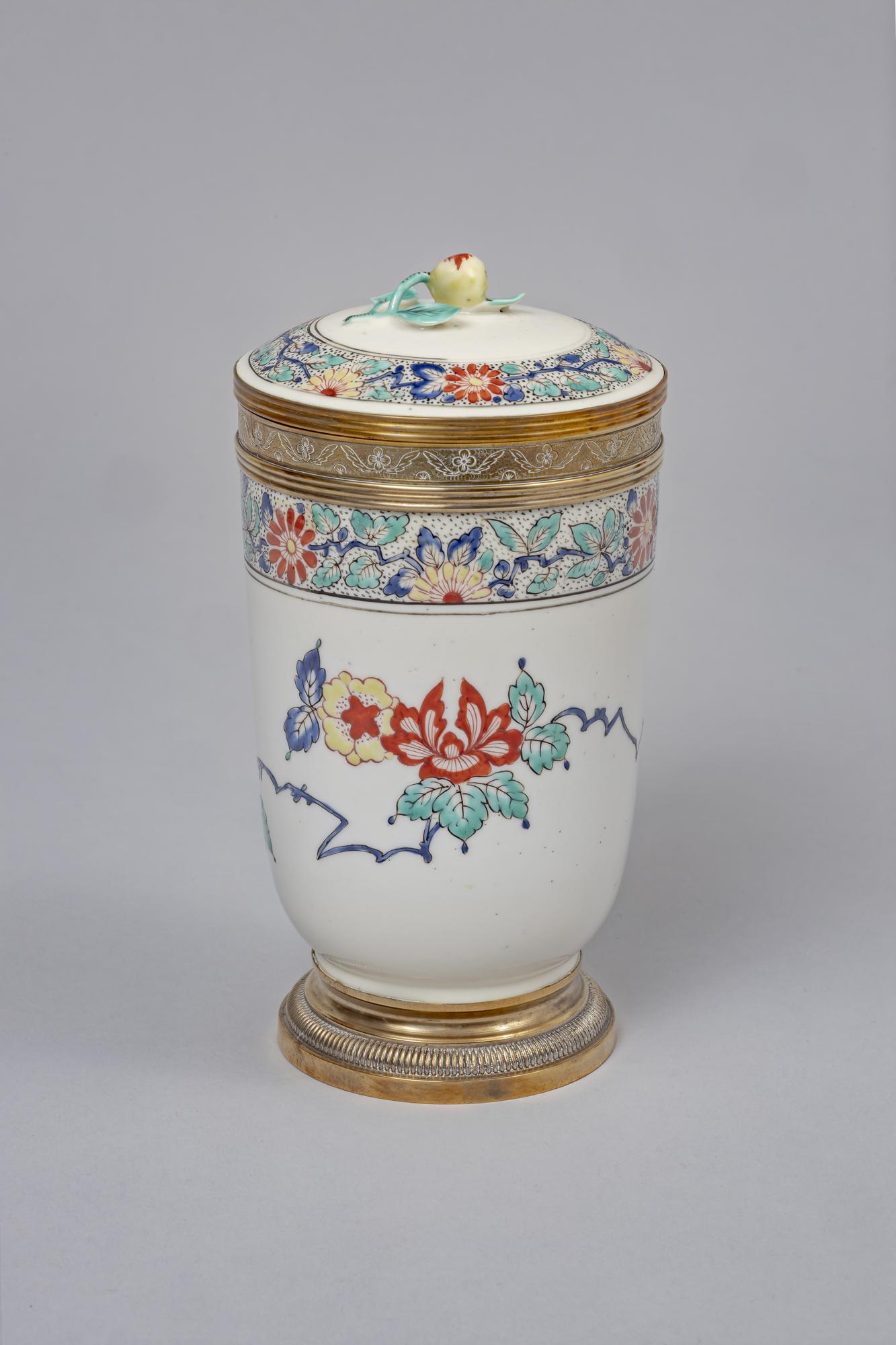
Tobacco jar, France, Chantilly, c. 1730–40. Soft-paste porcelain with tin-opacified glaze, overglaze enamels; gilt-metal mounts. The Macdonald Collection