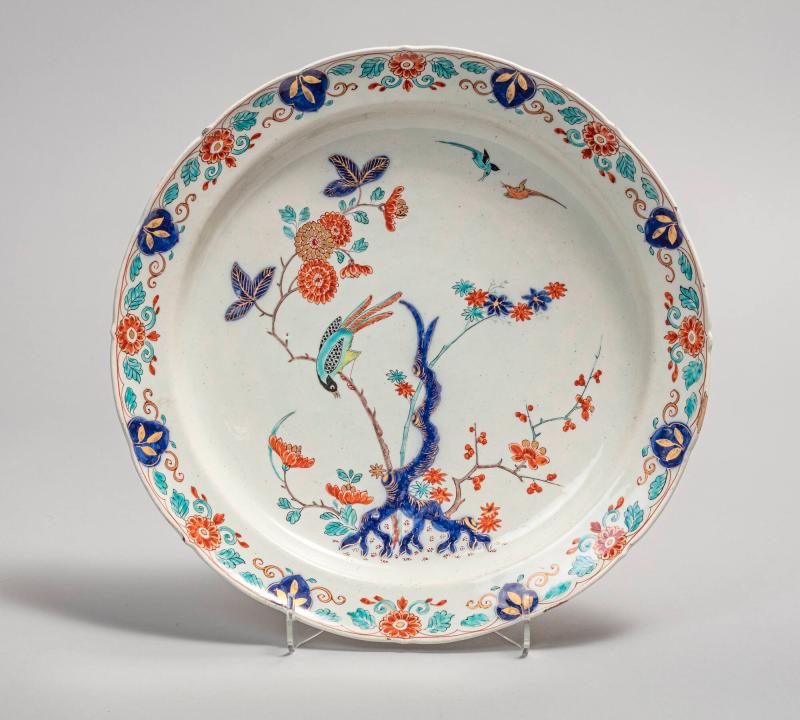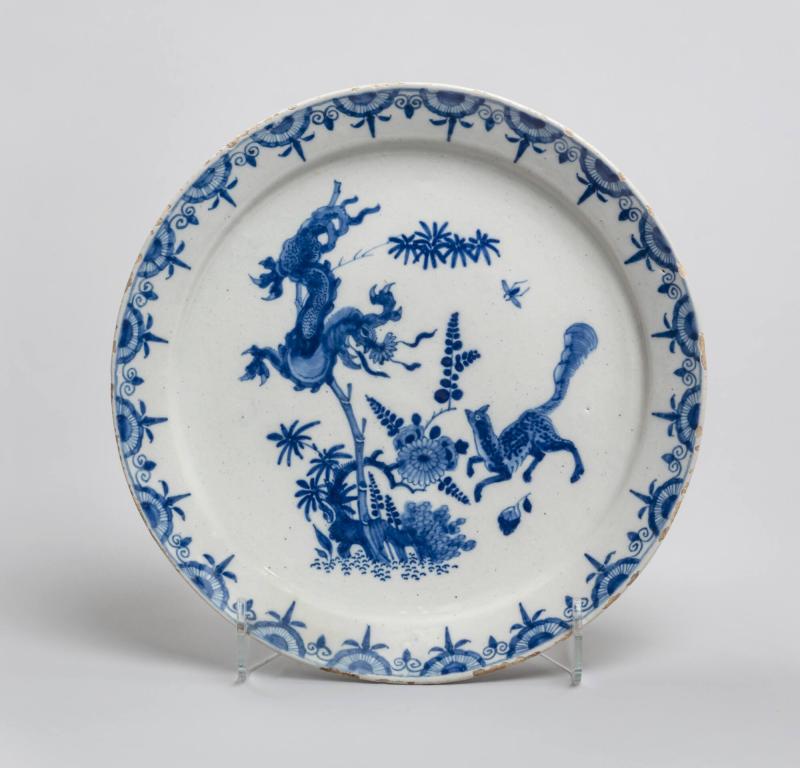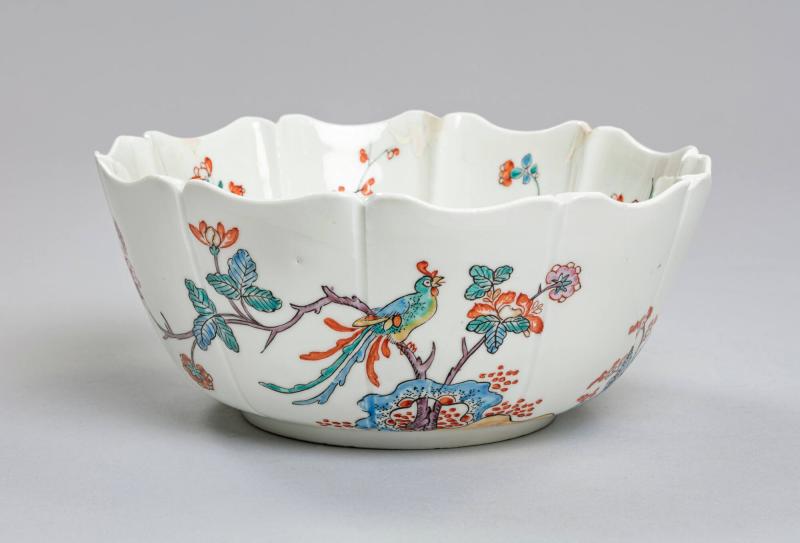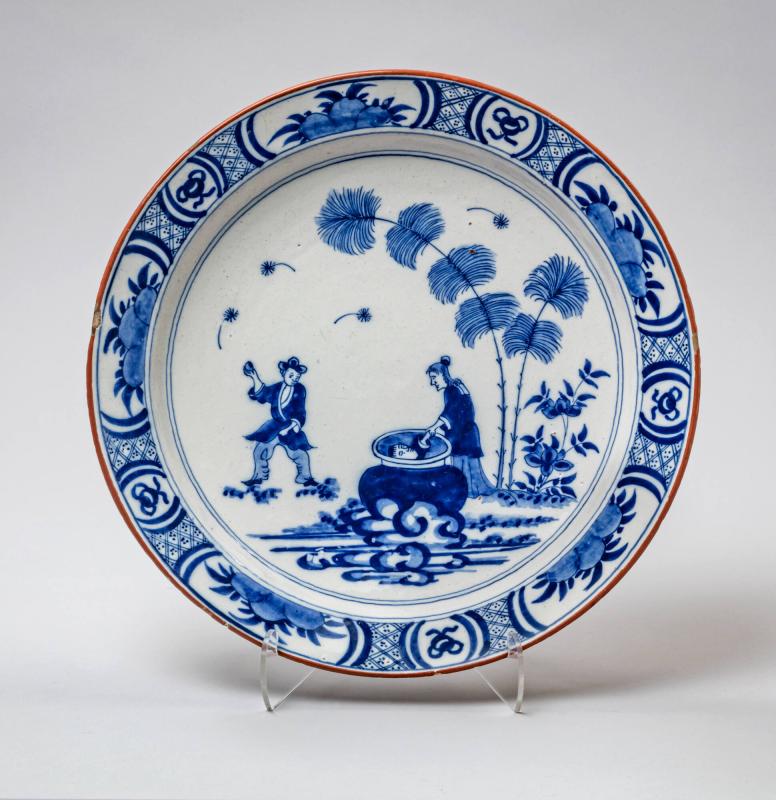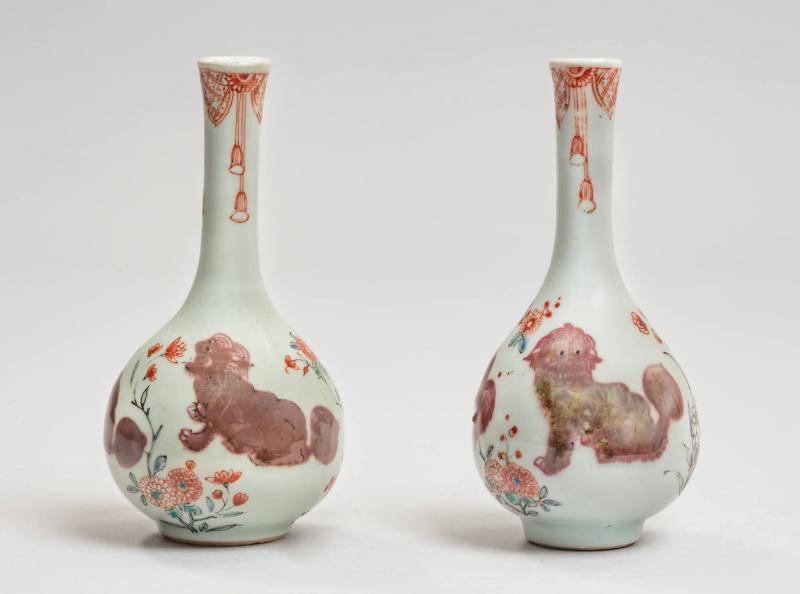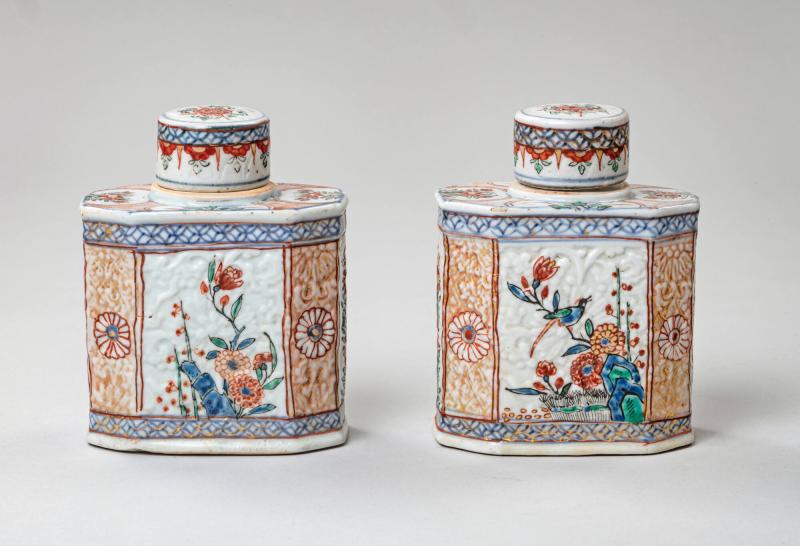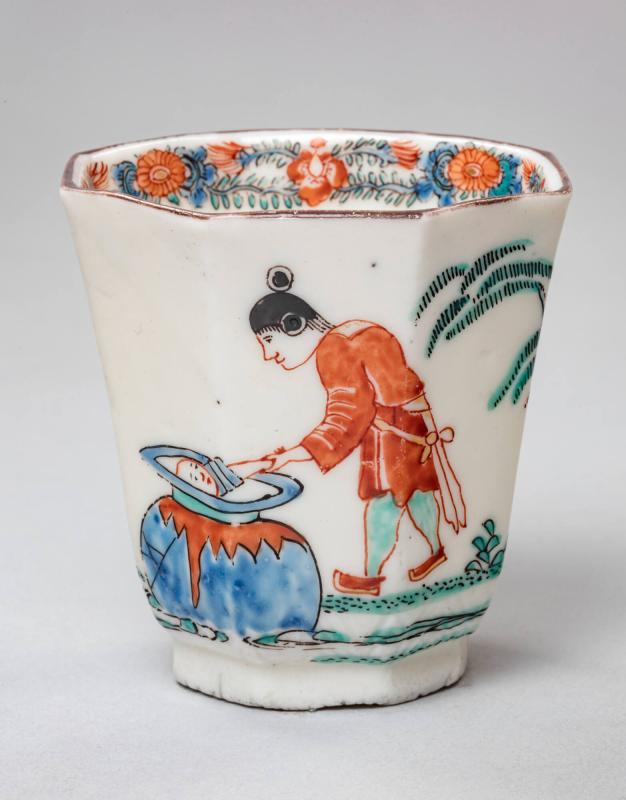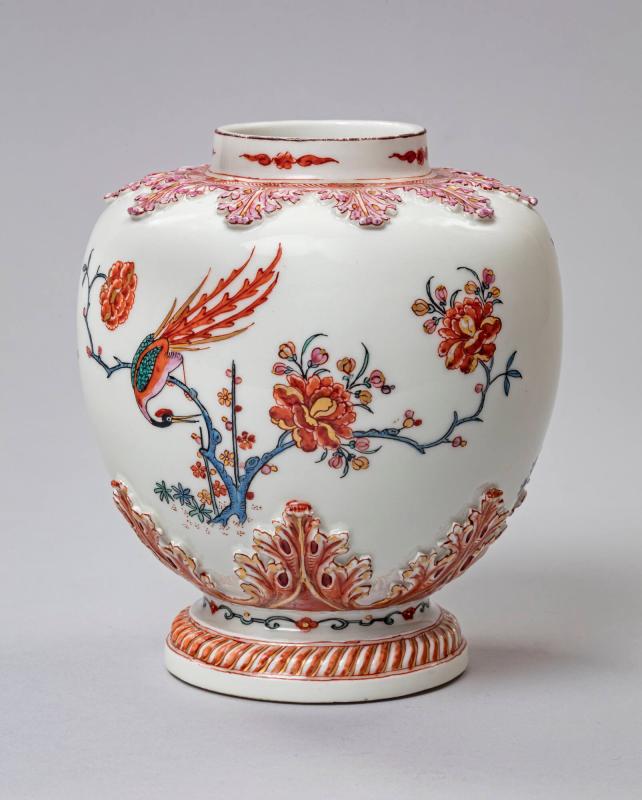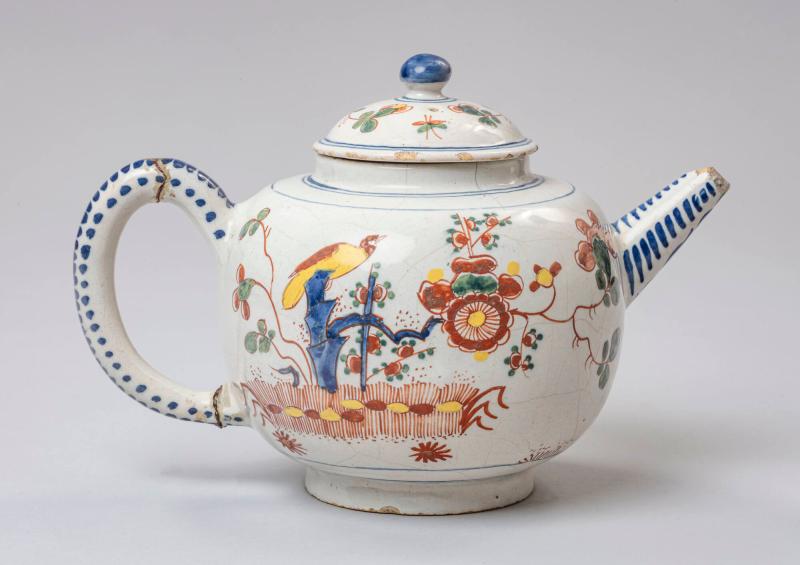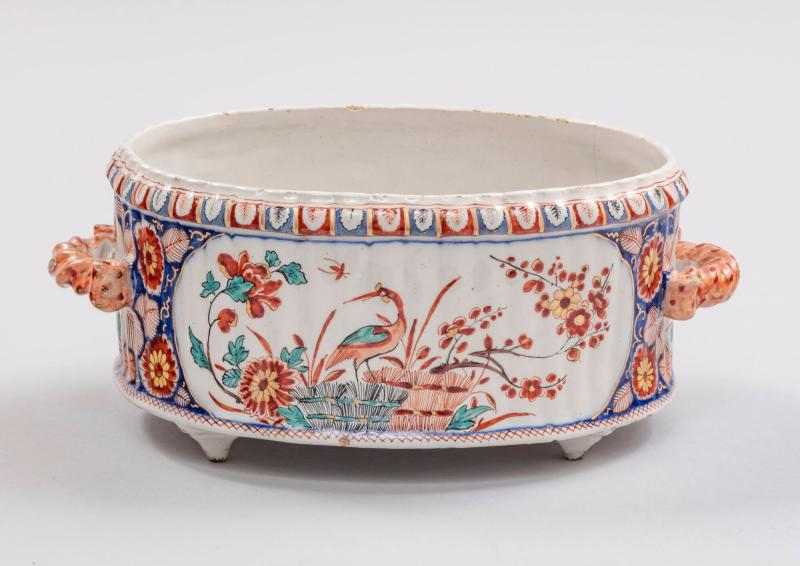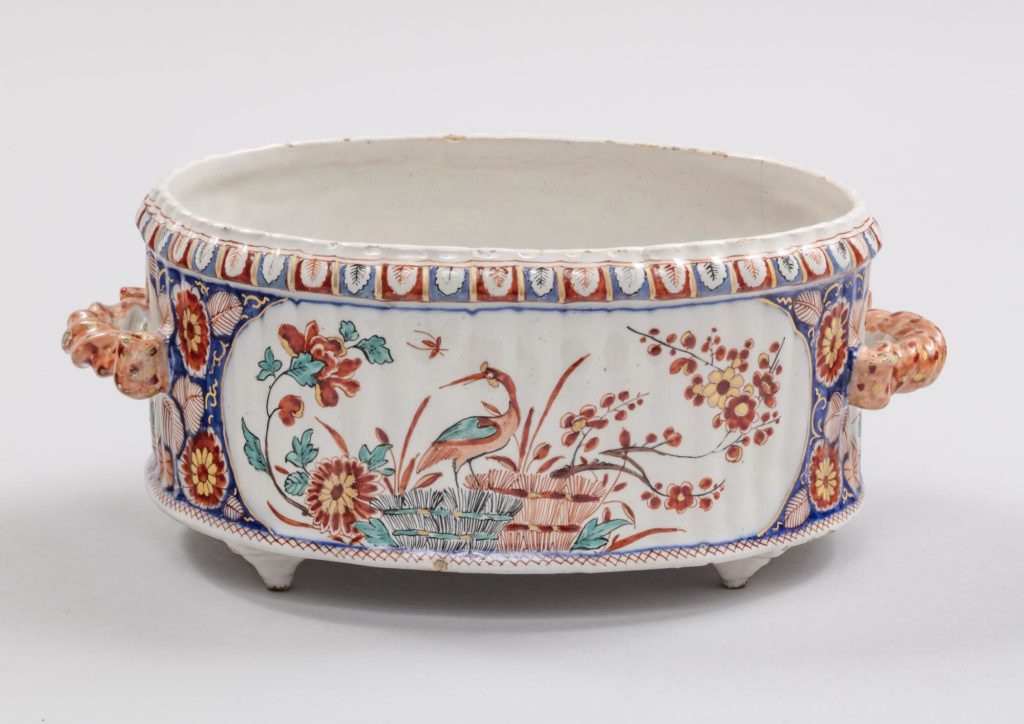
Oval basin with Japanese designs, The Netherlands, Ary van Rijsselberg, c.1720-1730, Tin-glazed earthenware with underglaze blue, overglaze enamels and gold. The Macdonald Collection
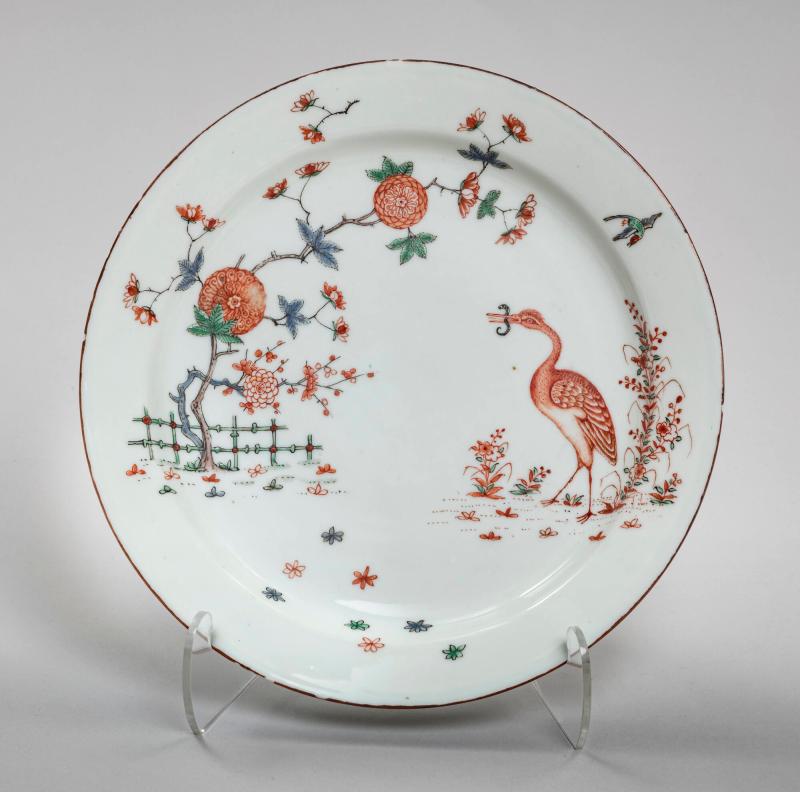
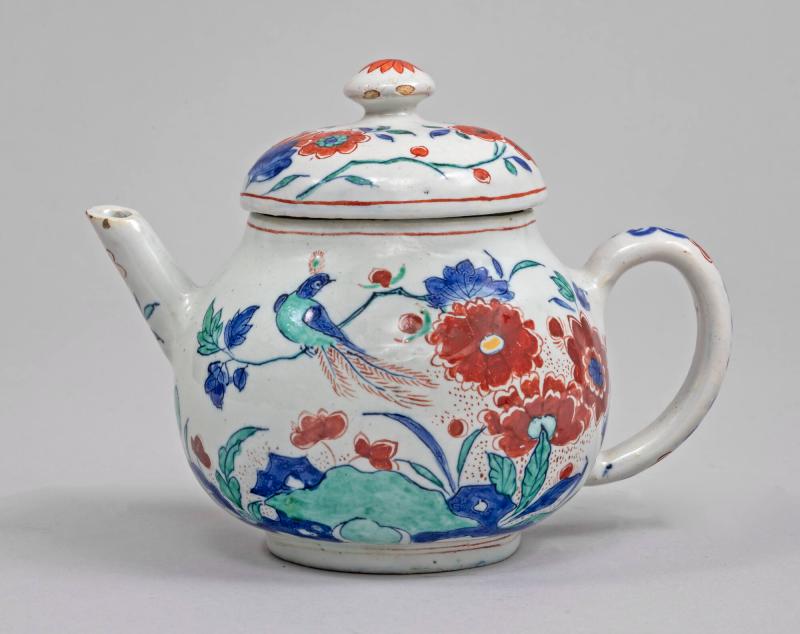
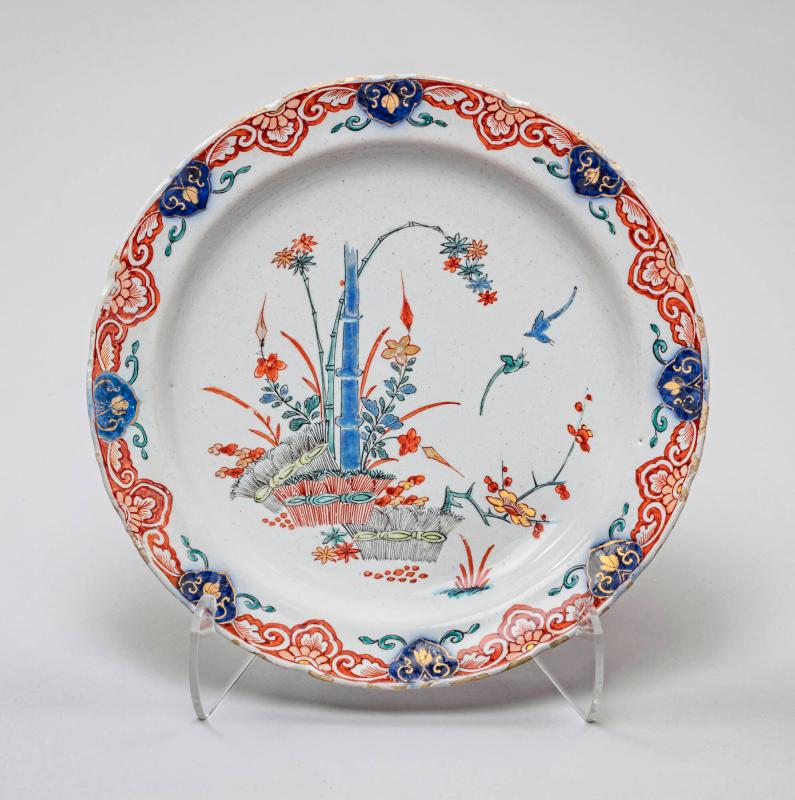
The production of Delftware—an earthenware covered by a fragile tin glaze—was well established in Holland around 1660, when the first Japanese porcelain imports arrived. Dutch potters, however, only mastered low-fired polychrome enamels around 1700, a technique that enabled them to imitate the Kakiemon palette. This oval basin marked with the monogram of Ary van Rijsselberg, made c. 1720–30, is decorated with Kakiemon motifs—banded hedges, a crane, and flowers—in reserve on each side. The surrounding deep-blue ground with red and gold flowers show the simultaneous influence of Imari porcelain.