The Kakiemon Style in Austria and Italy

In Continental Europe, it was primarily in France and Germany that Japanese Kakiemon porcelain caught the imagination of porcelain makers. We nevertheless see occasional adaptations in Austria and Italy in the second half of the 18th century.

0
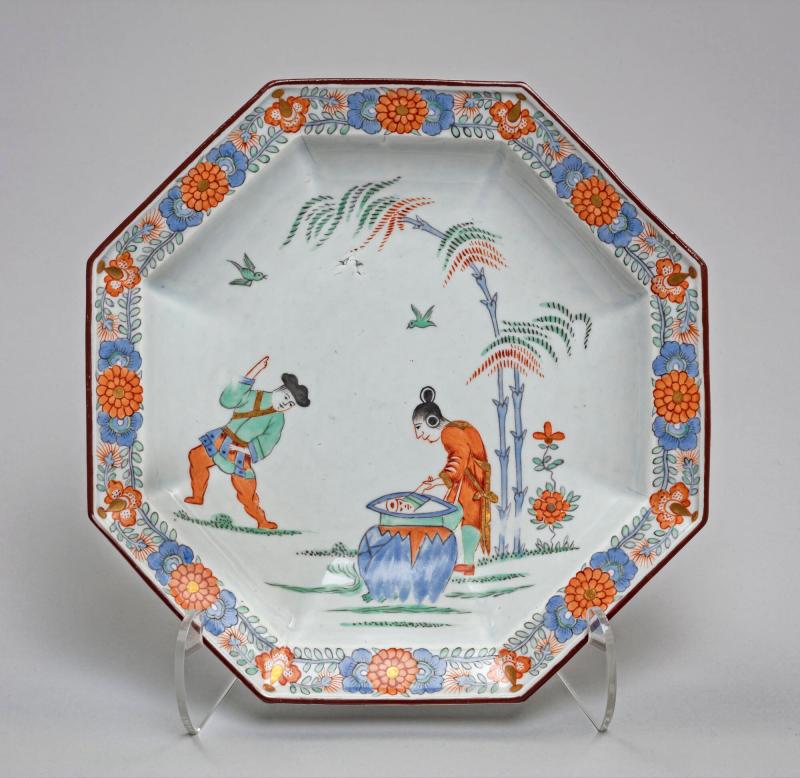
Octagonal Dish with Shiba Onko

Octagonal dish with Shiba Onko, Austria, Vienna, c.1750, Hard-paste porcelain with overglaze enamels, The Macdonald Collection

In Vienna, the Du Paquier manufactory, Meissen’s fiercest competitor, seems to have resisted direct copies of Japanese originals in favour of free improvisations. Only after it was taken over by the State in 1744, do we encounter rare imitations such as this octagonal plate with the Shiba Onko design, dated to the 1750s.
0
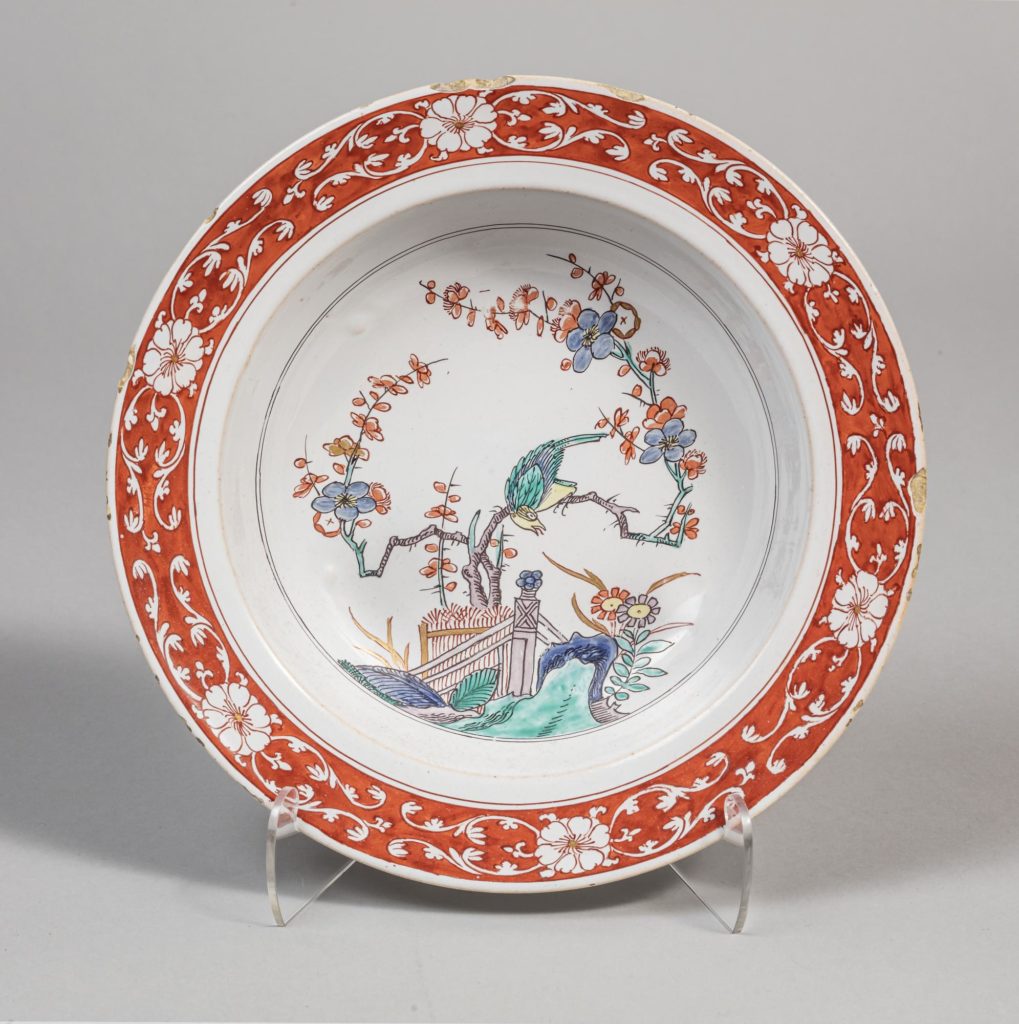
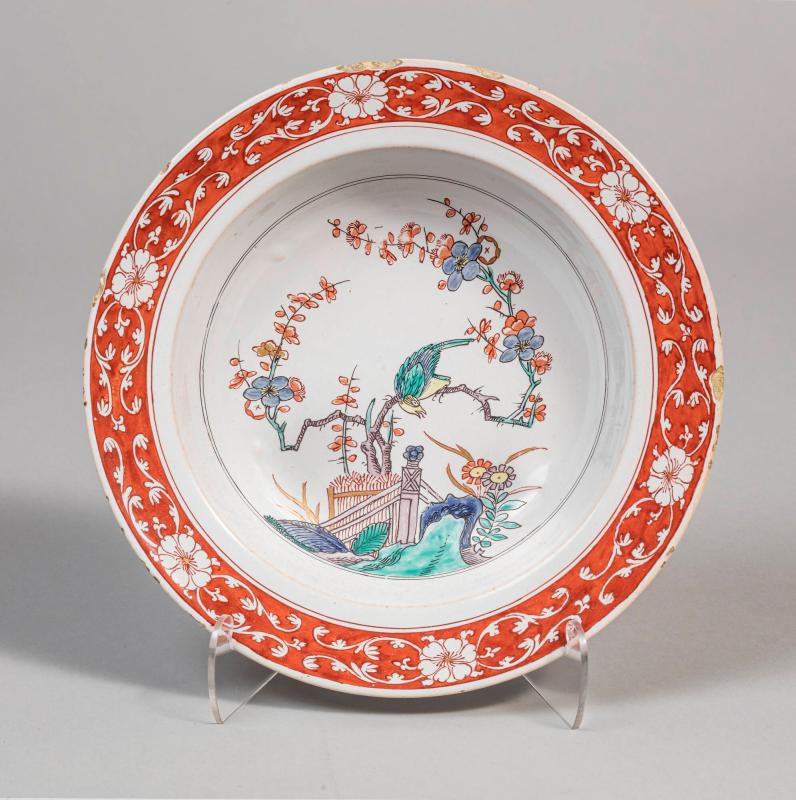
Kakiemon-style dish with bird in a tree

Kakiemon-style dish with bird in a tree, Italy, Milan, Manufactory of Pasquale Rubati, c.1750-1780, tin-glazed earthenware. The Macdonald Collection

In Italy, porcelain manufactories showed little interest in the Kakiemon style as opposed to the Japanese Imari style or colour palette. Nevertheless, the Milan factory of Pasquale Rubati, which produced tin-glazed earthenware (maiolica) as opposed to porcelain, found inspiration in the Kakiemon style. This dish with a bird on a branch, made between 1770 and 1790, also features a red ornamental border derived from Chinese Kangxi porcelain.