The Kakiemon Style in England

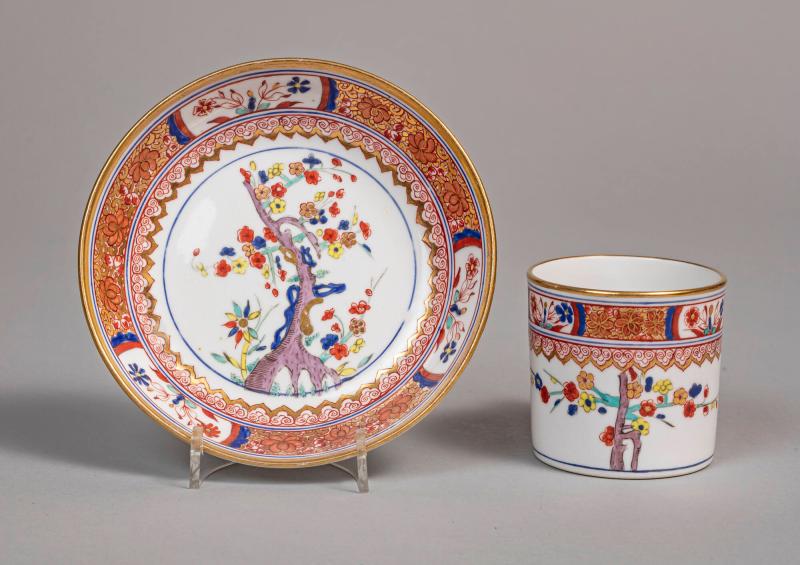
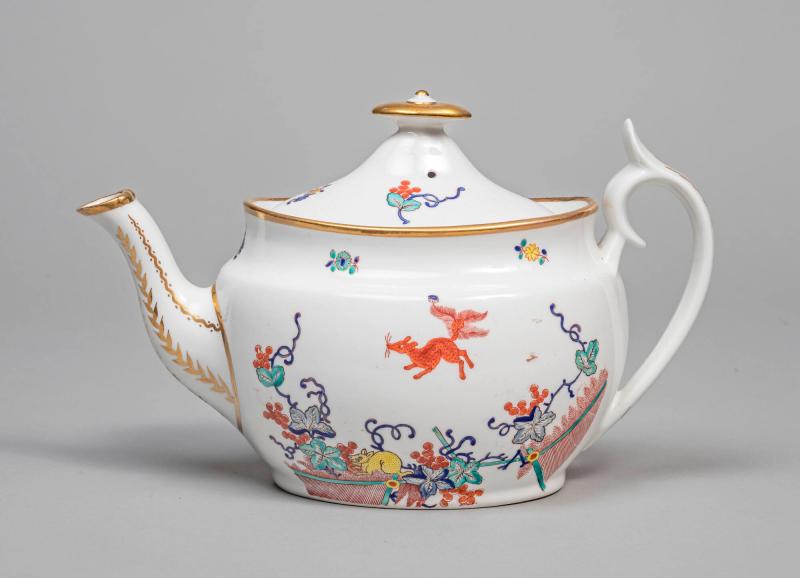
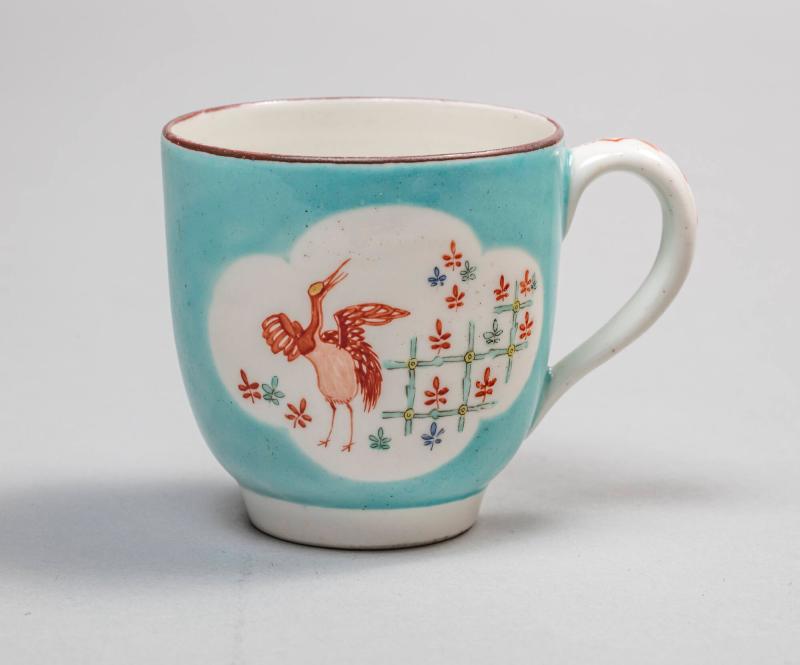
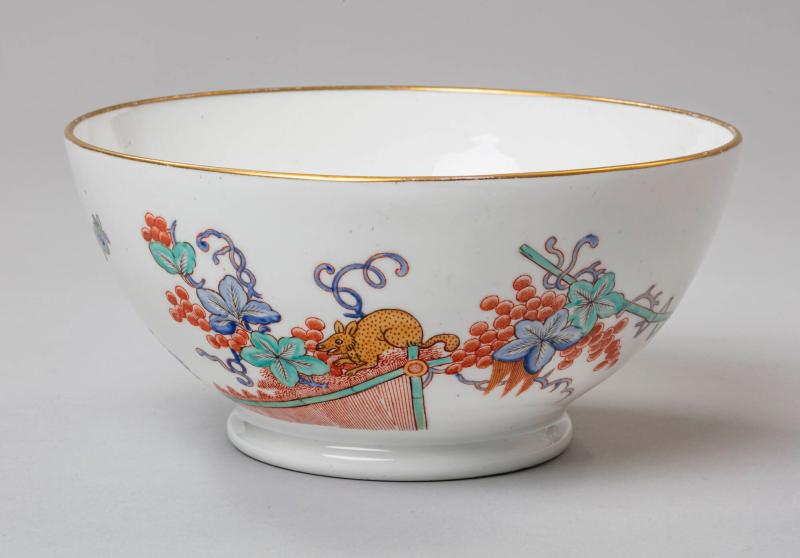
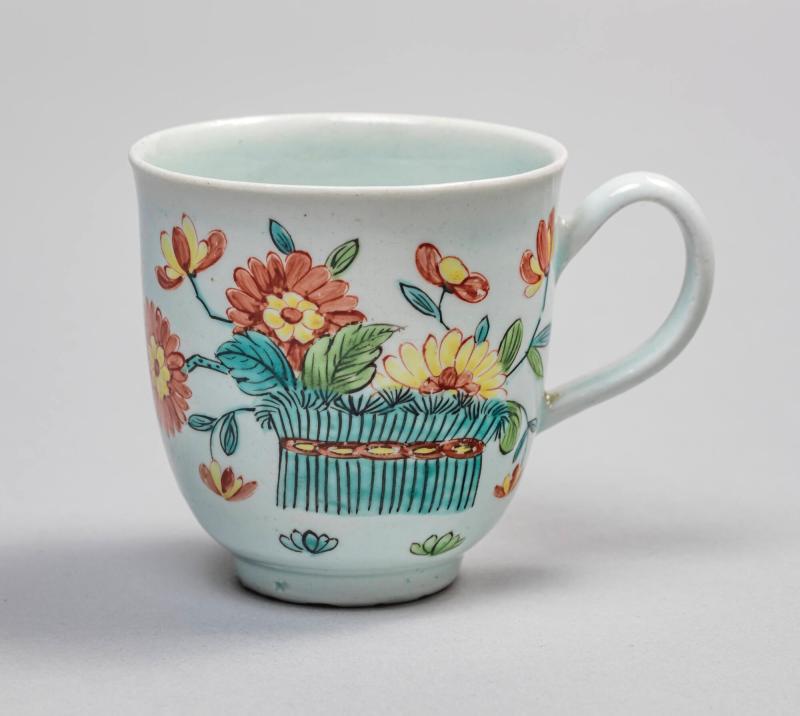
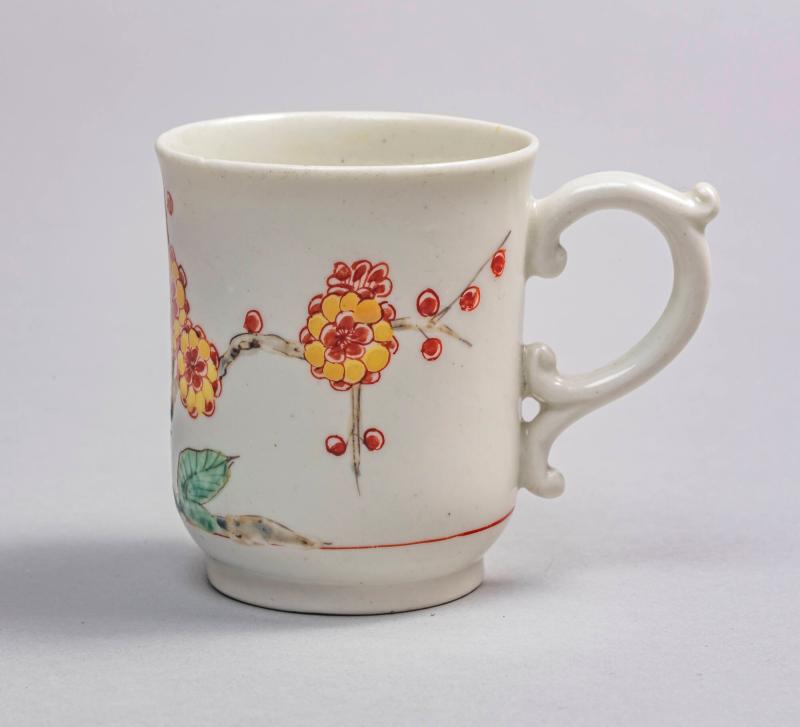
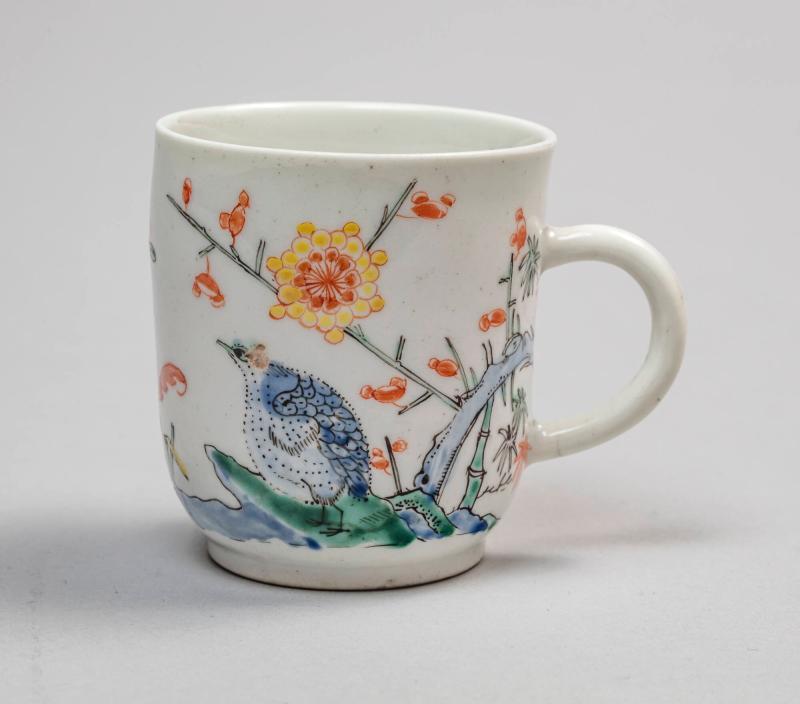
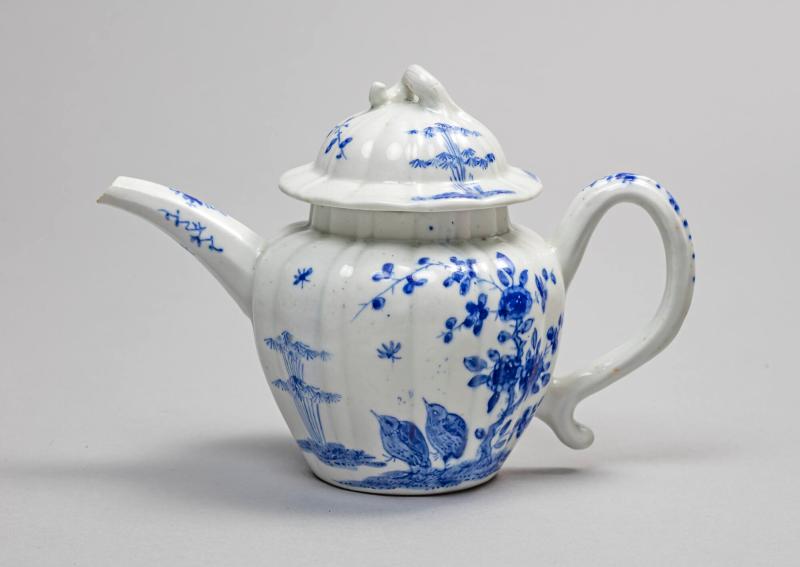
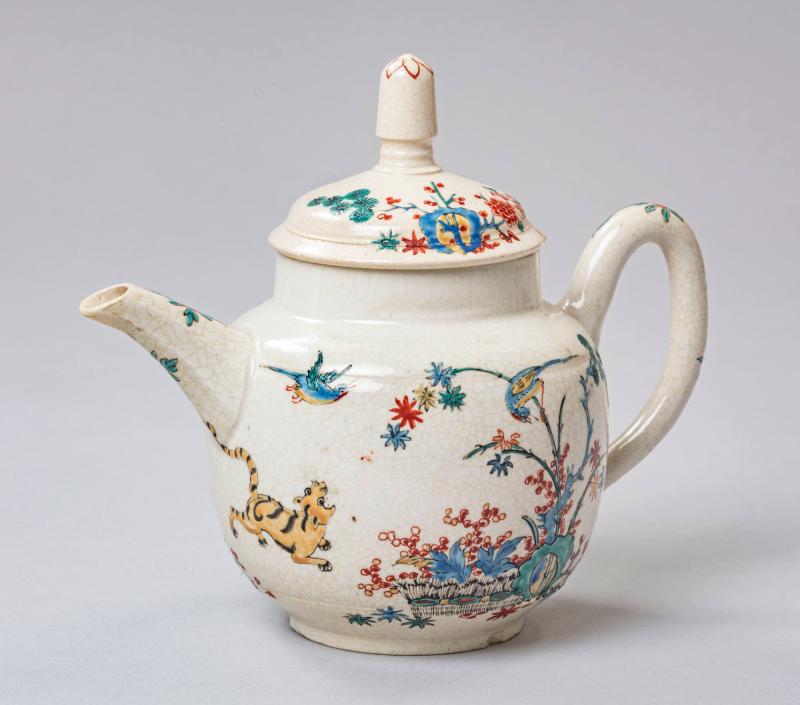
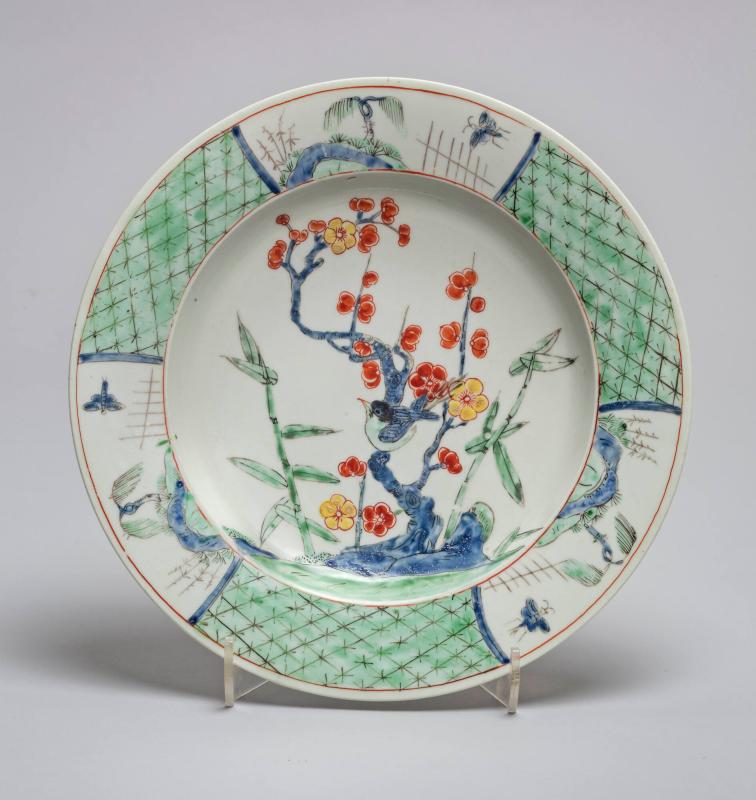
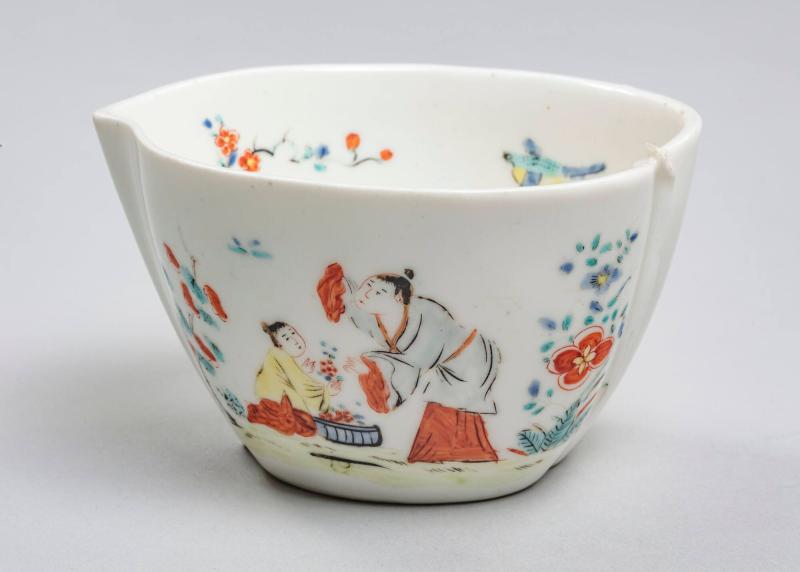
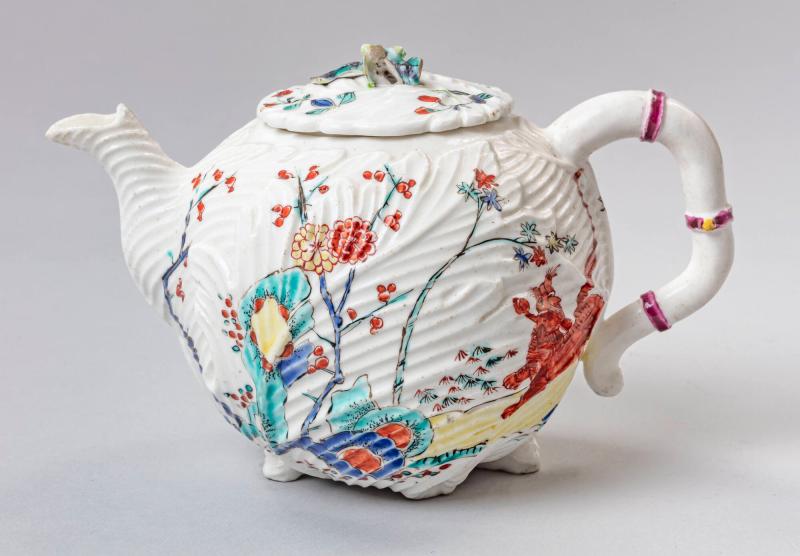
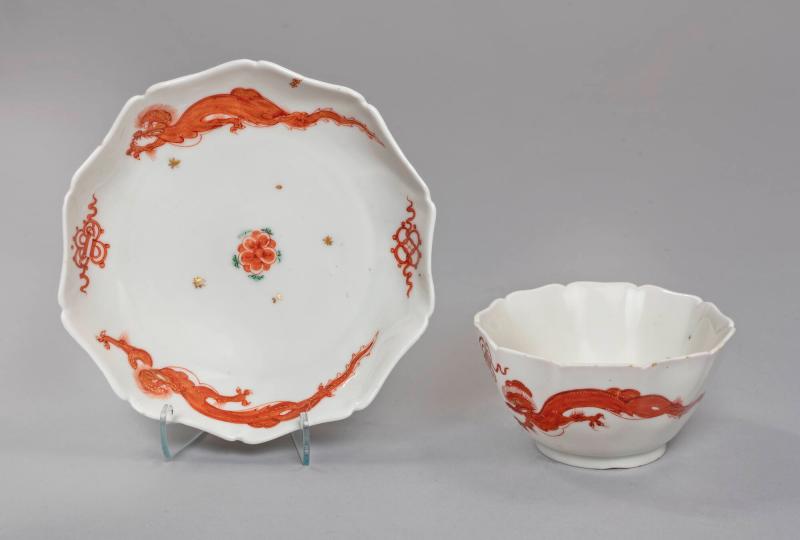
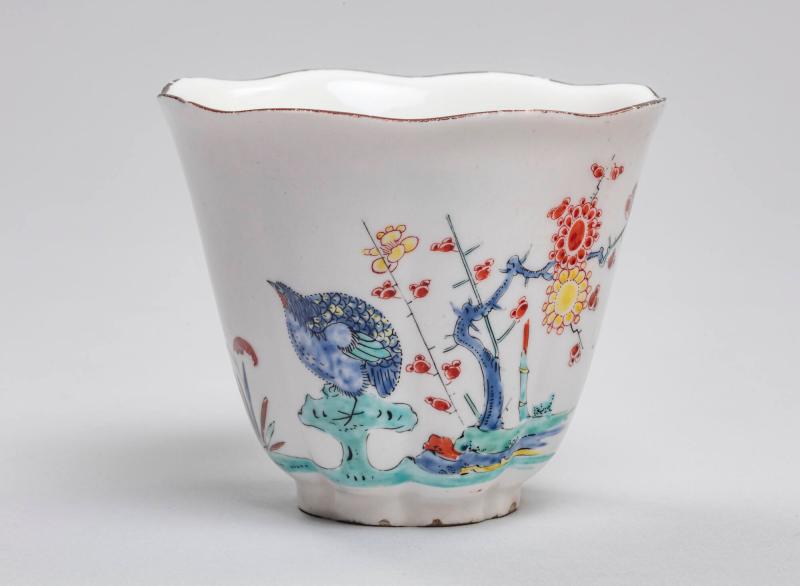
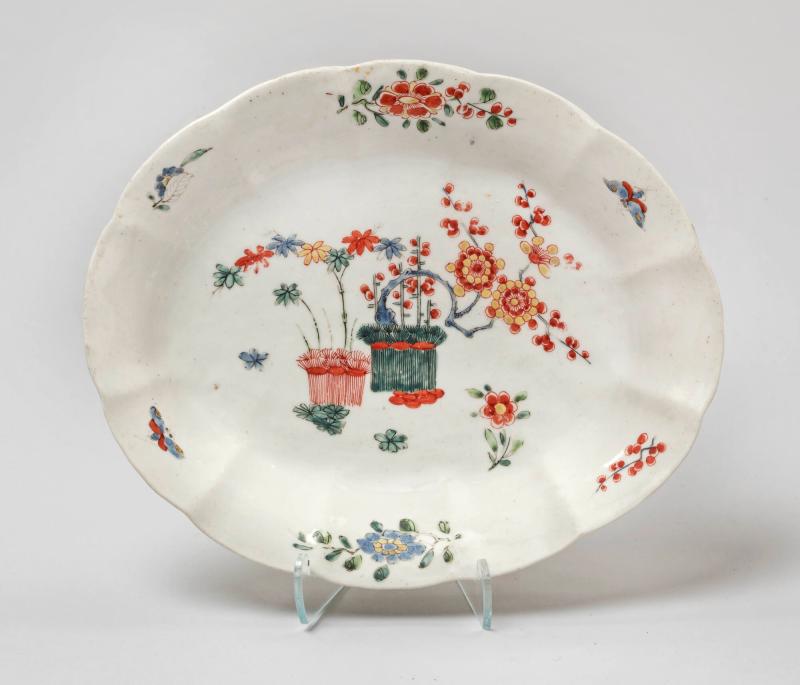
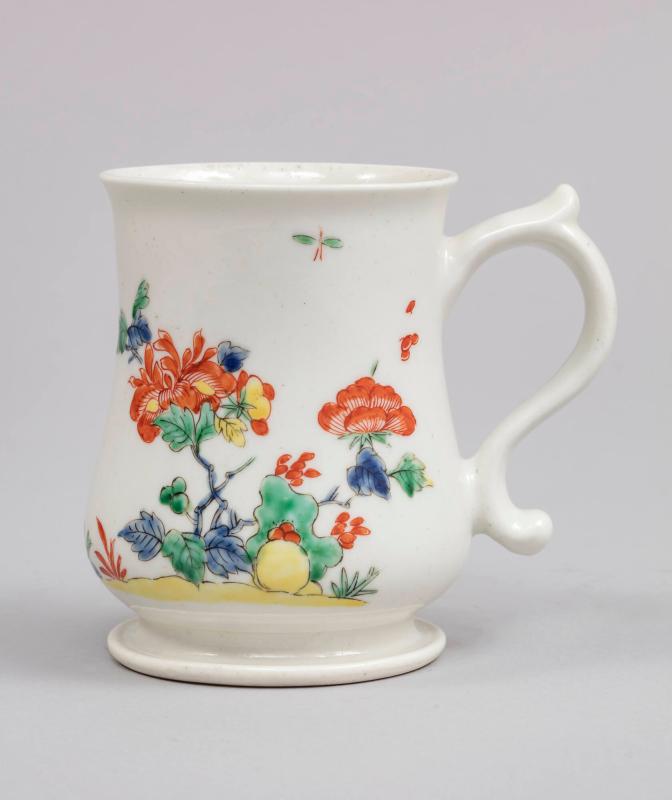
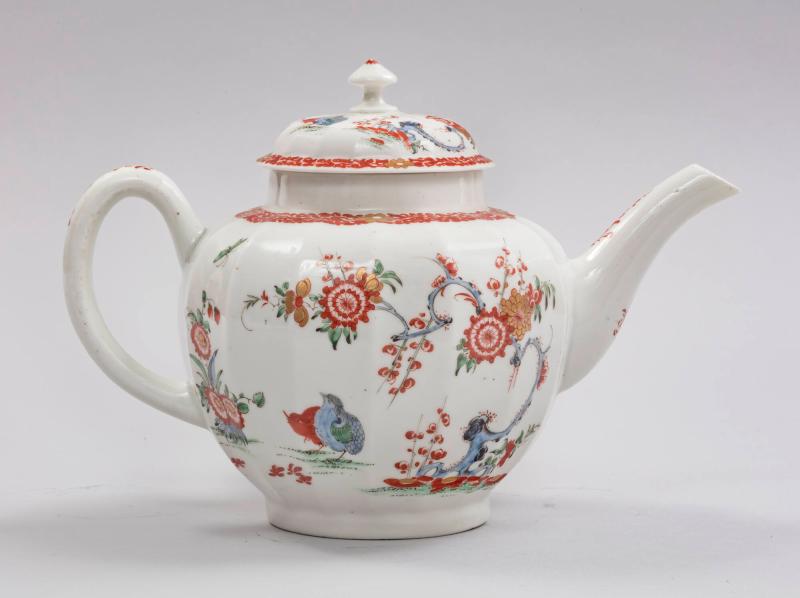
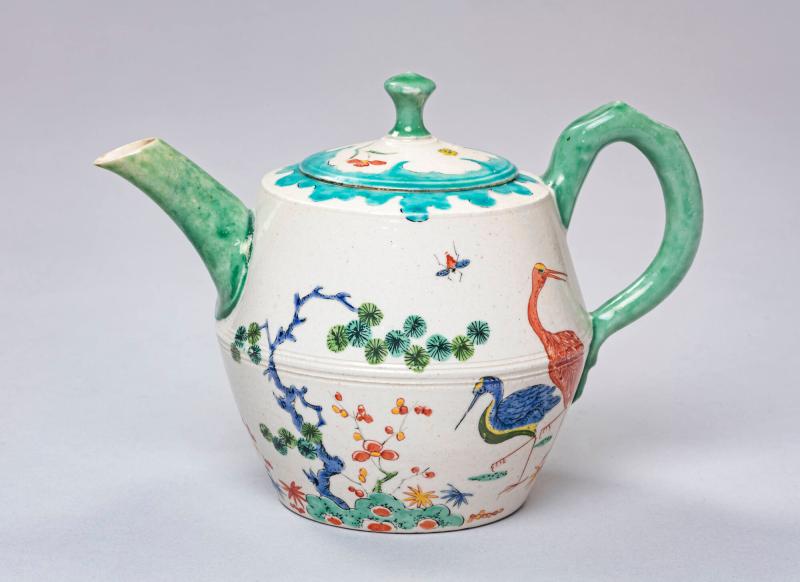
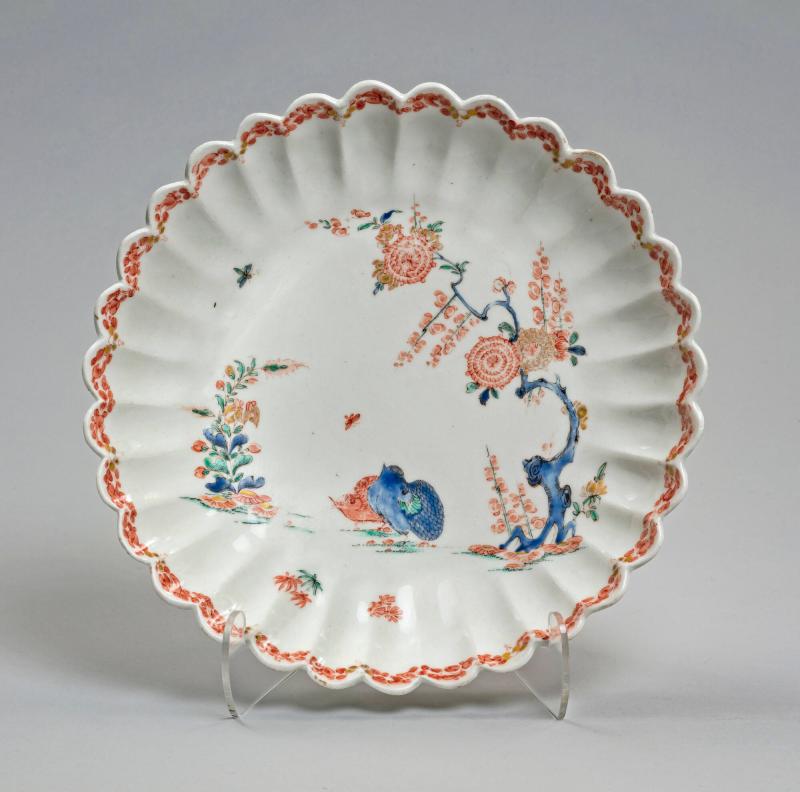
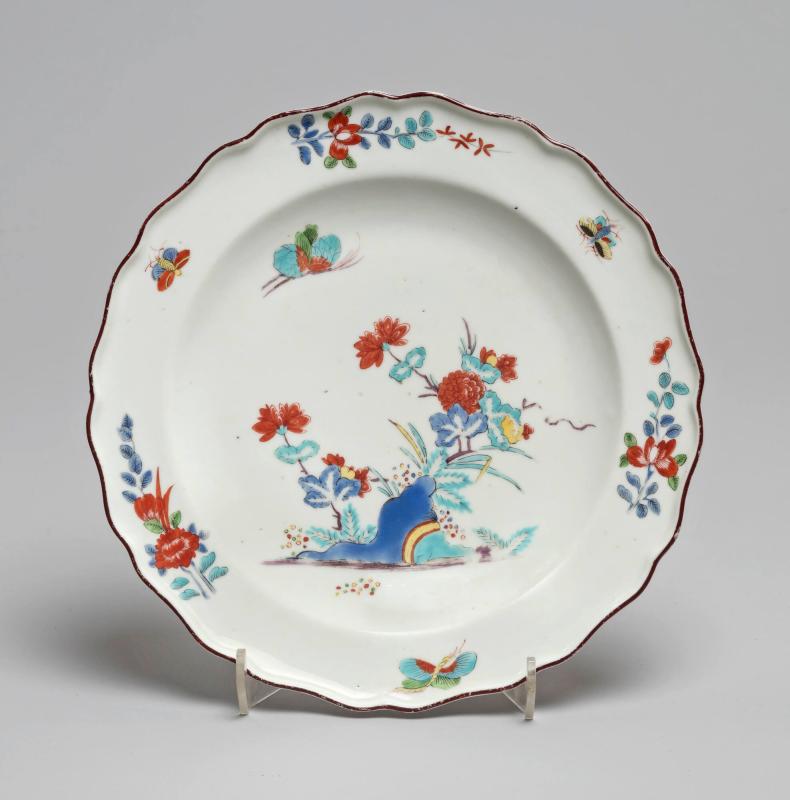
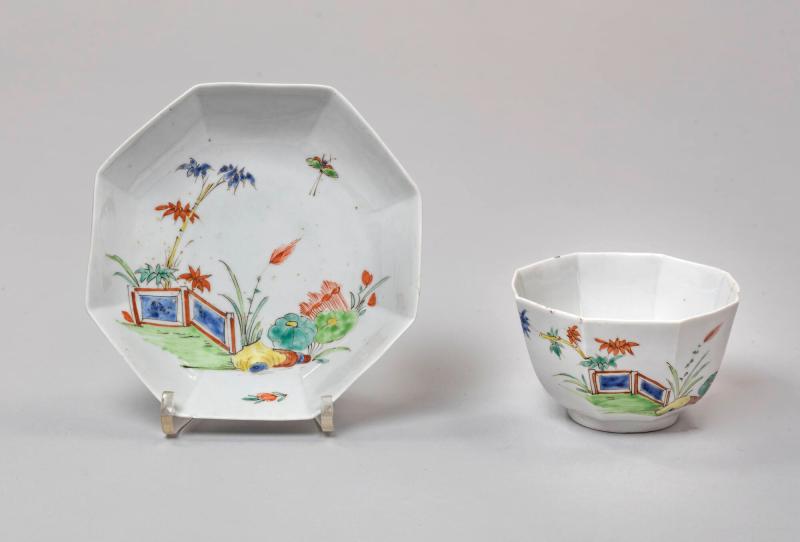
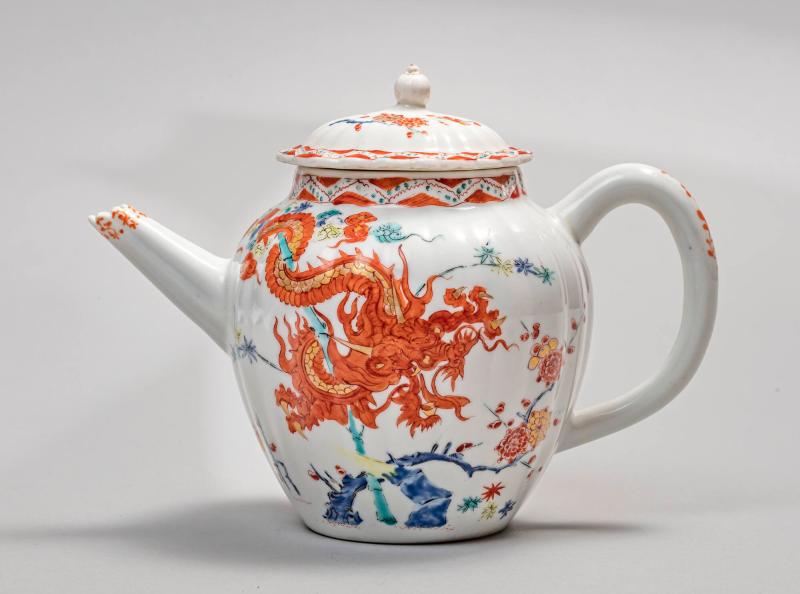
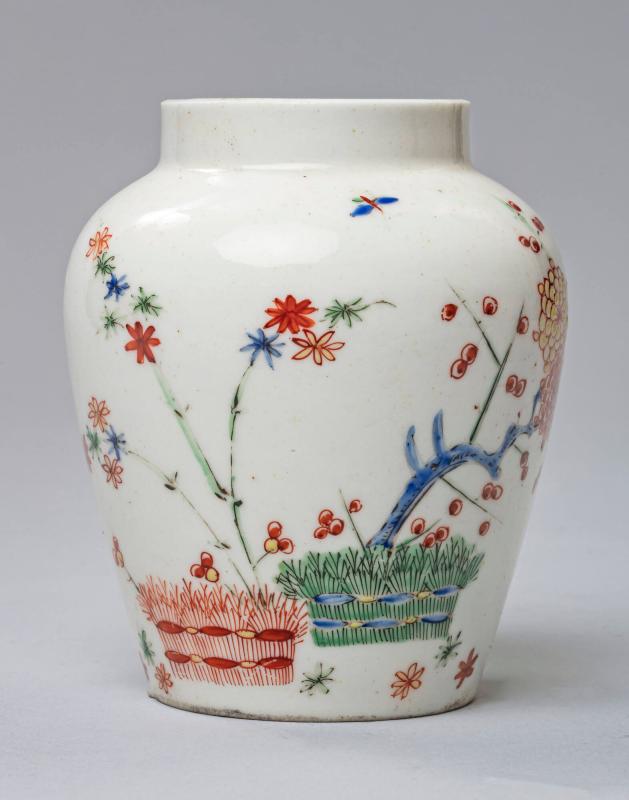
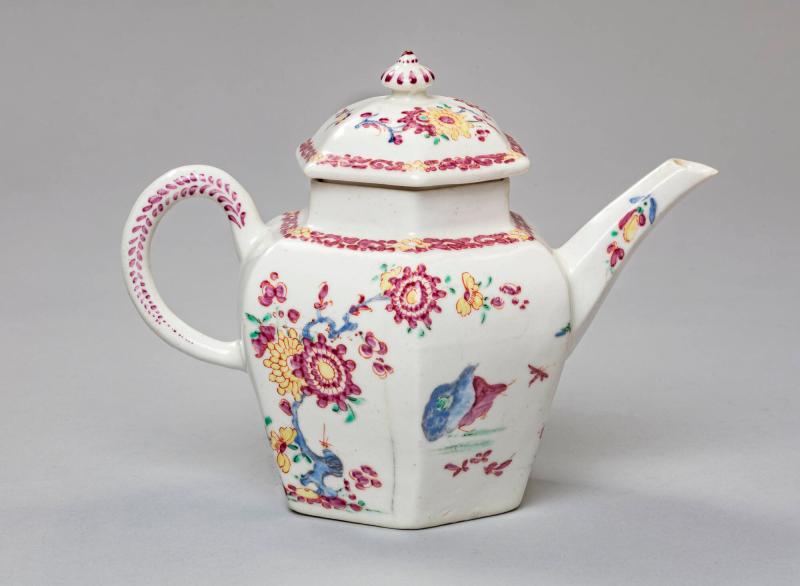
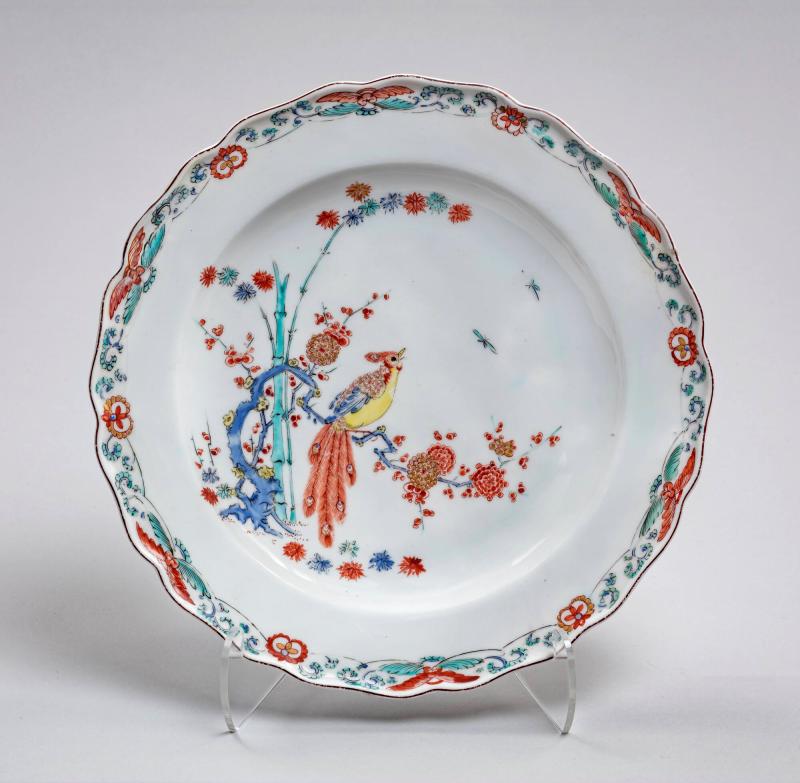
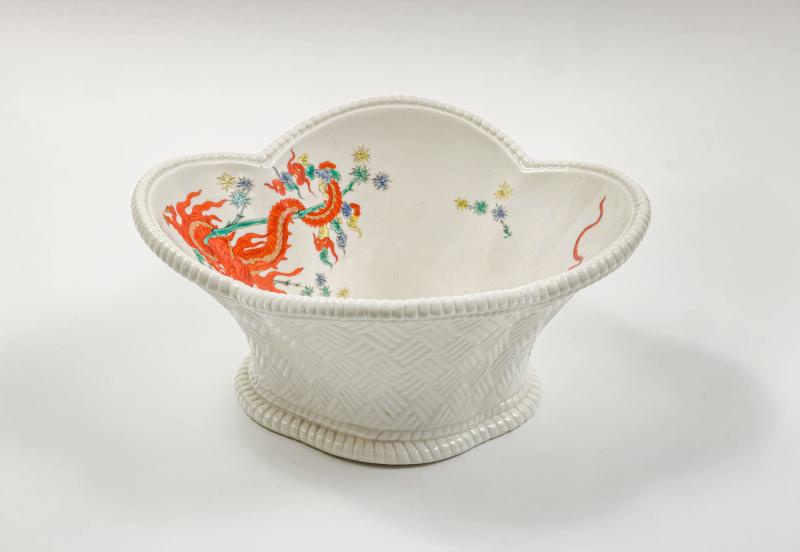
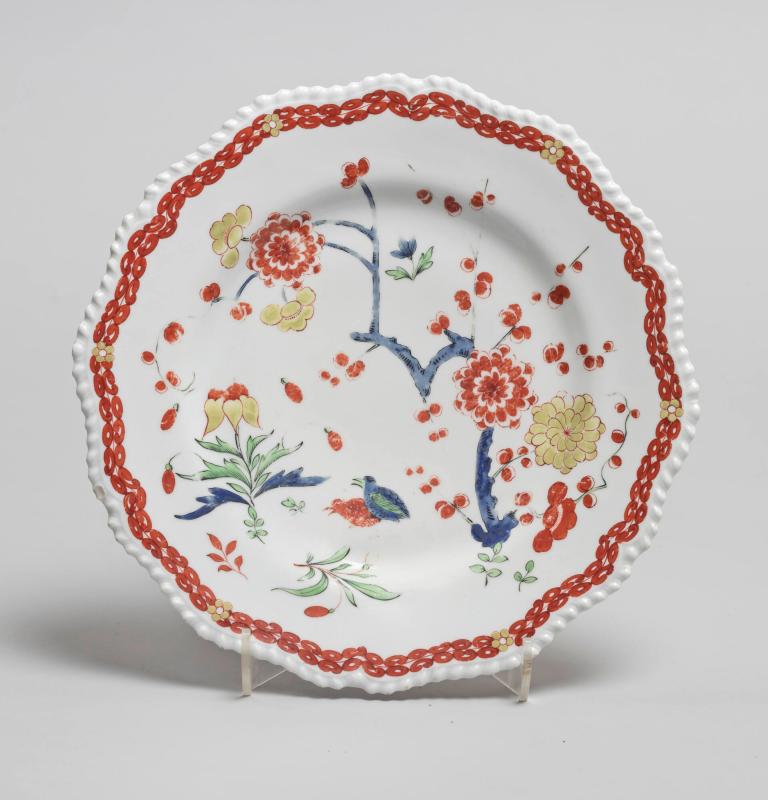
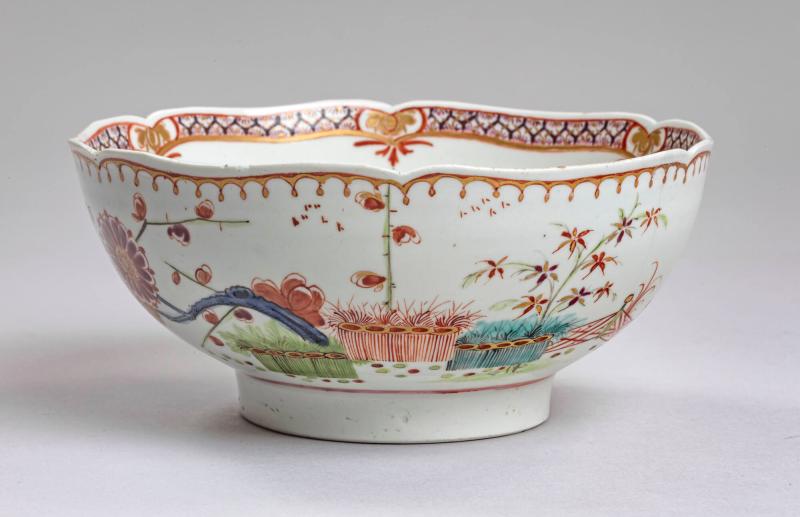
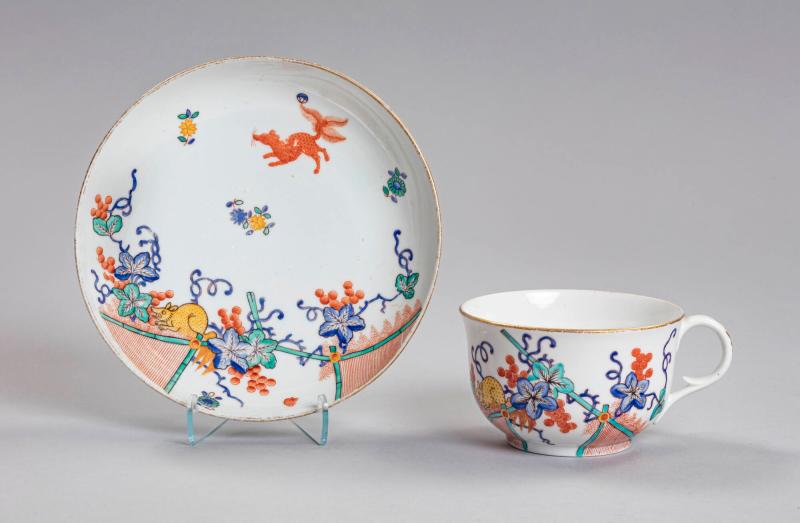
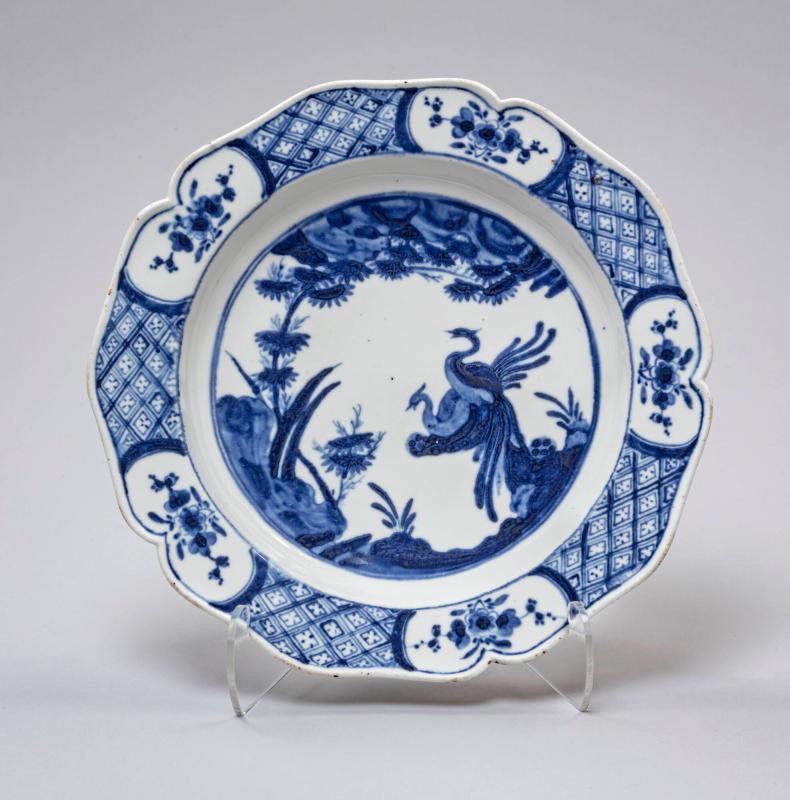
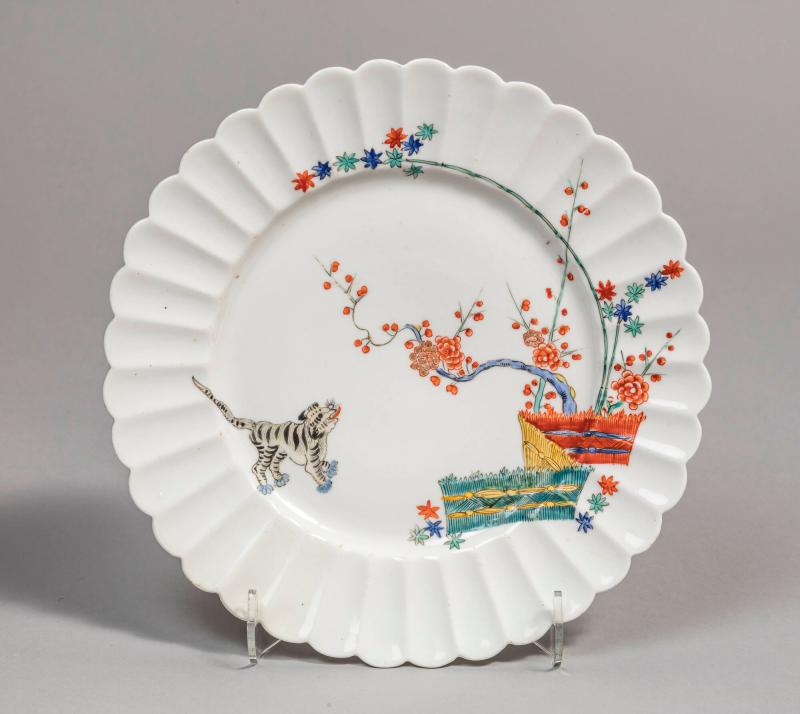
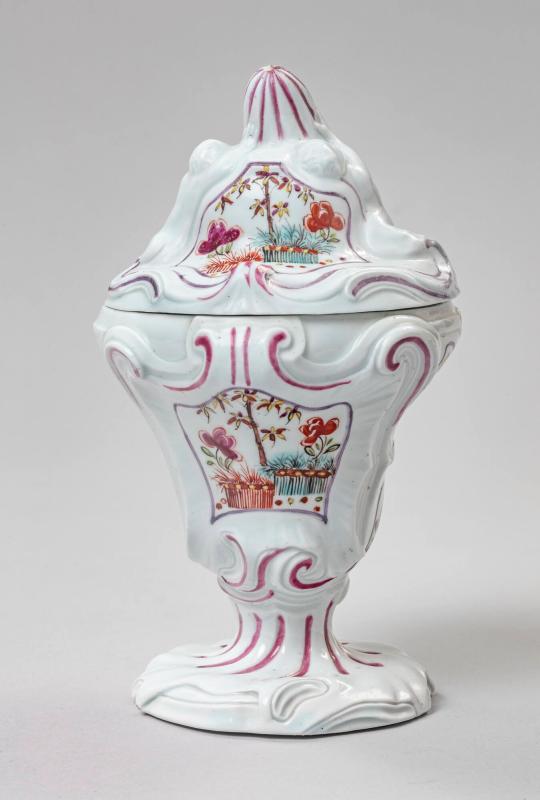
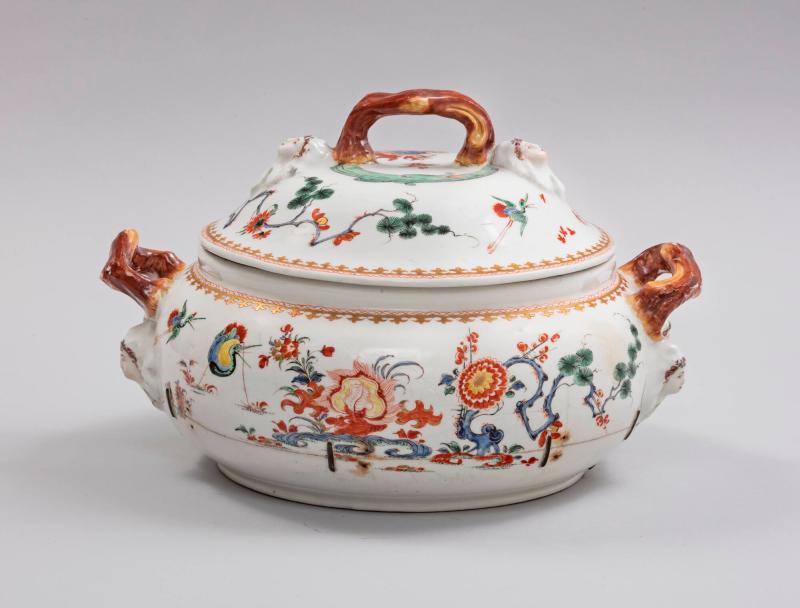
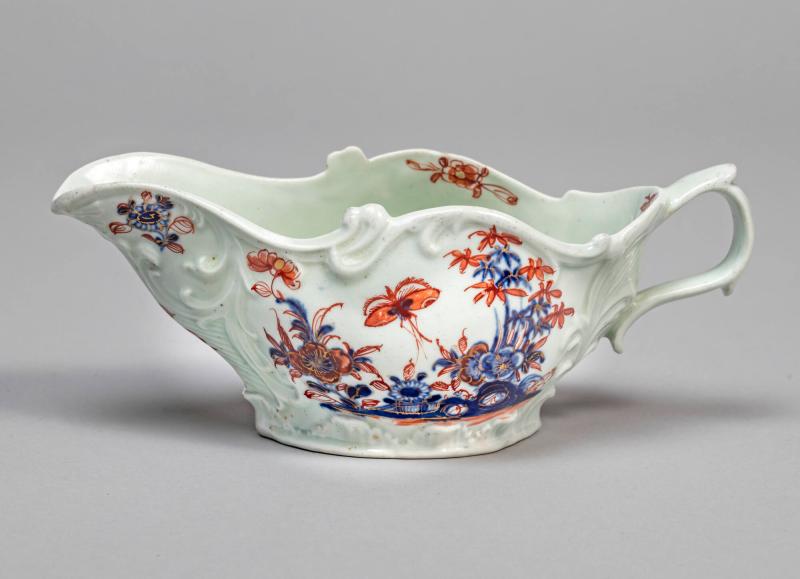
The Kakiemon style swept over England in the 1740s, when the fashion was coming to an end on the European continent. Approaches varied from exact replicas of Japanese models to free interpretations that only vaguely point to the East. As in France, the English manufactories produced soft-paste porcelain. Contrary to the situation in France and Germany, where factories were supported by aristocratic patronage, English manufactories were commercial enterprises founded by independent entrepreneurs.

0
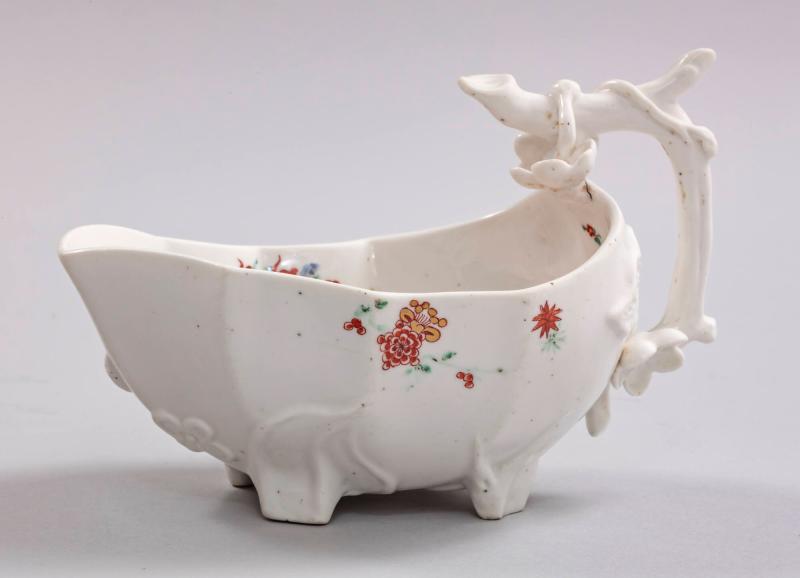
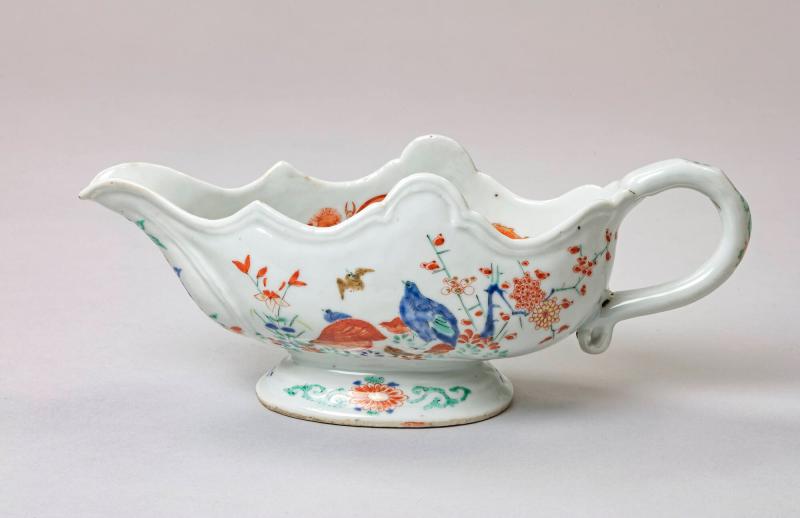
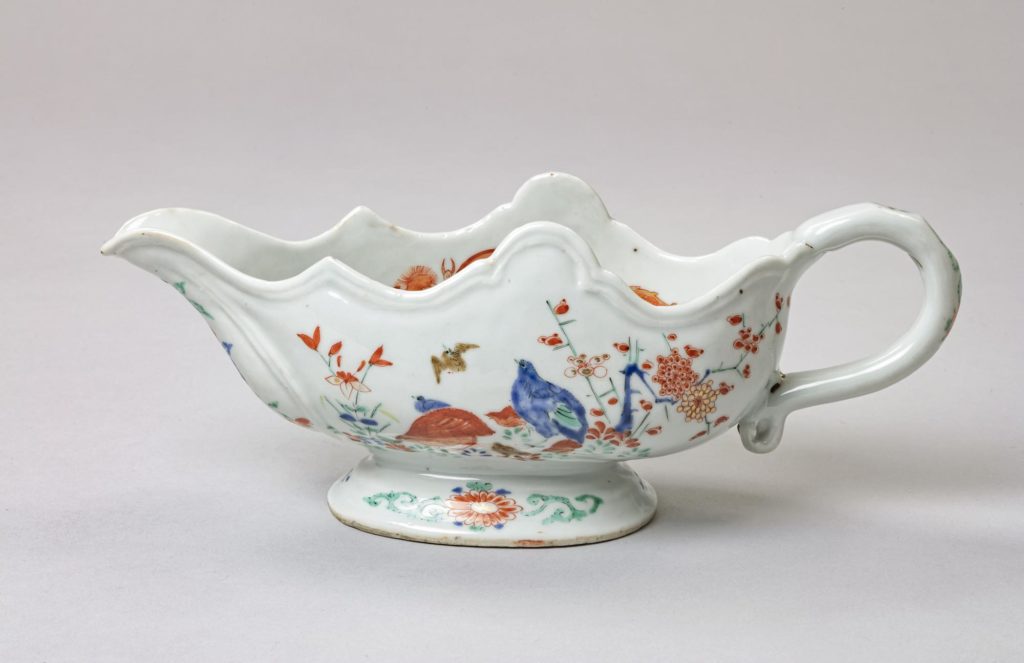
Sauceboat with Quail

Sauceboat with quail, China, Qing Dynasty, Yongzheng Period (1723-1735), c.1730-1740; decorated in England c.1740-1750, Porcelain with overglaze enamels. The Macdonald Collection
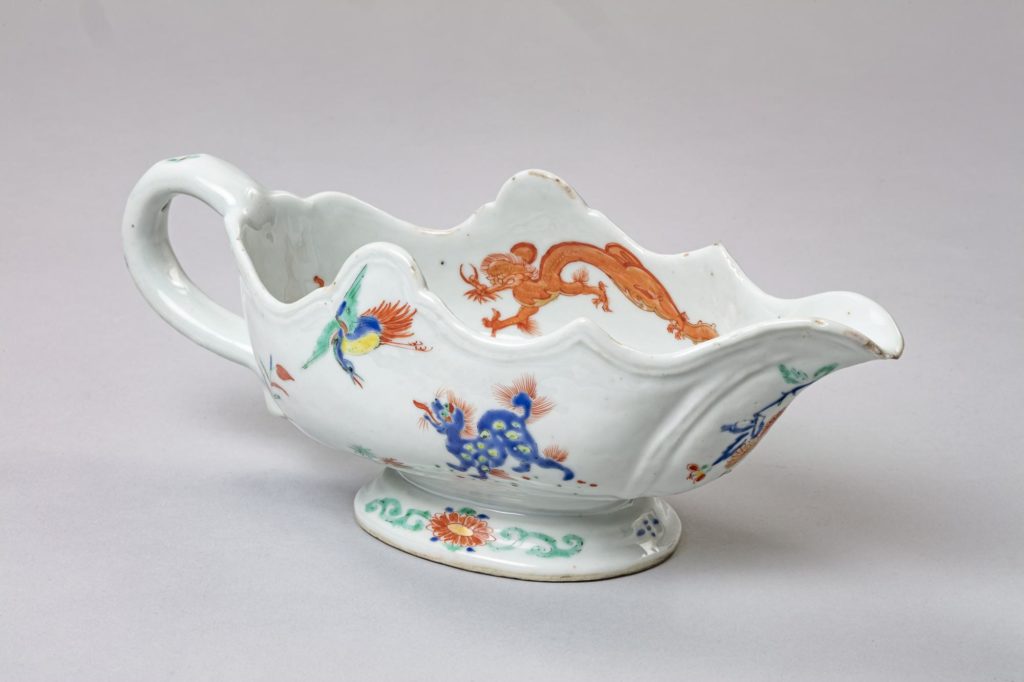
Sauceboat with Quail

Alternate view of sauceboat with quail

Independent porcelain decorators working from imported blanks—commonly known as Hausmalers—were the first to translate Kakiemon motifs. This sauceboat was made in the 1730s in Jingdezhen for European consumers as indicated by its shape based on English silver. In the 1740s, an English painter enlivened it with an array of Kakiemon motifs dispersed inside and out, including a dragon, a flying crane, quails, blossoming prunus trees, and a mythical qilin.
0
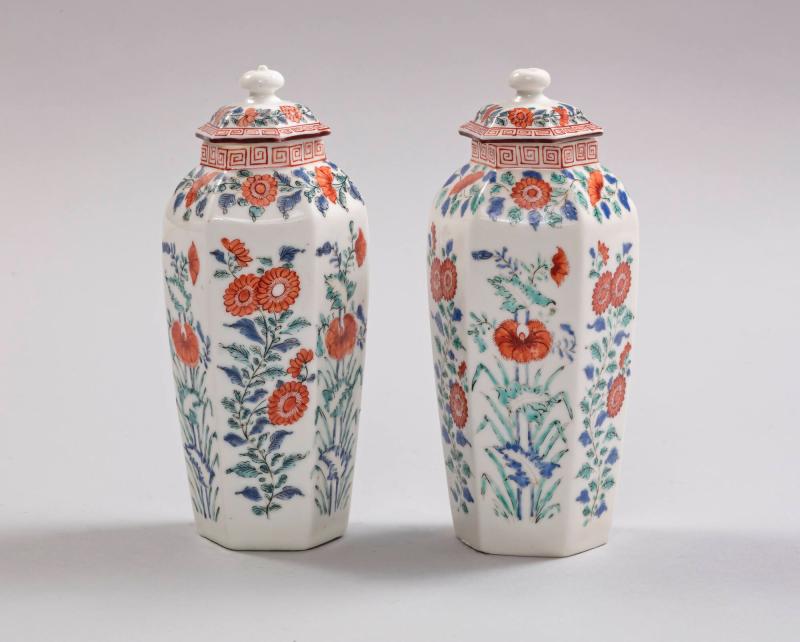
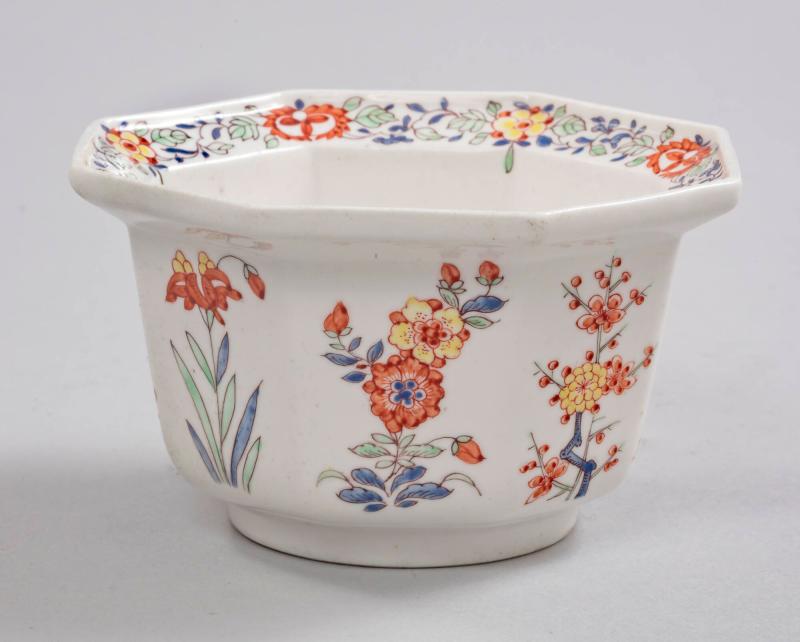
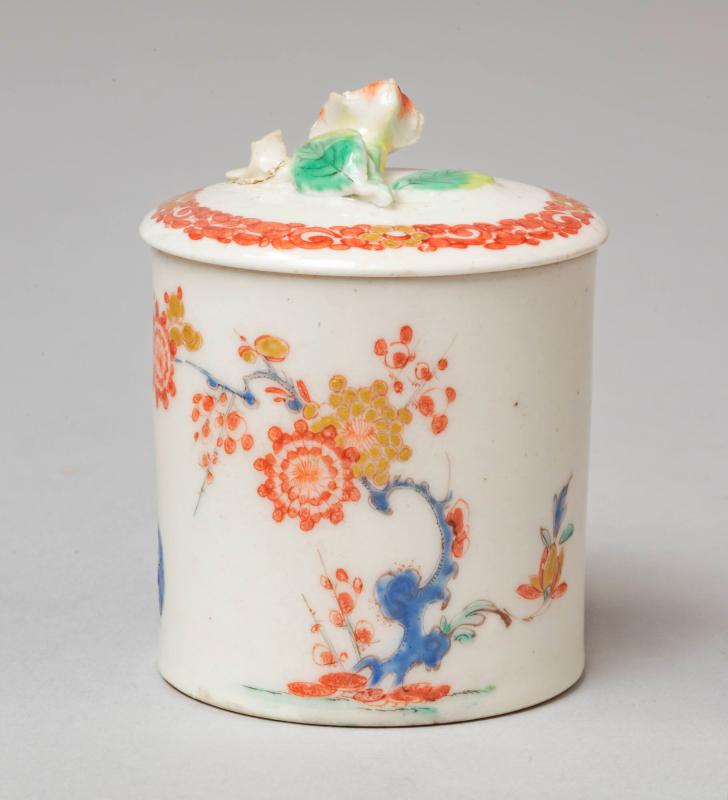
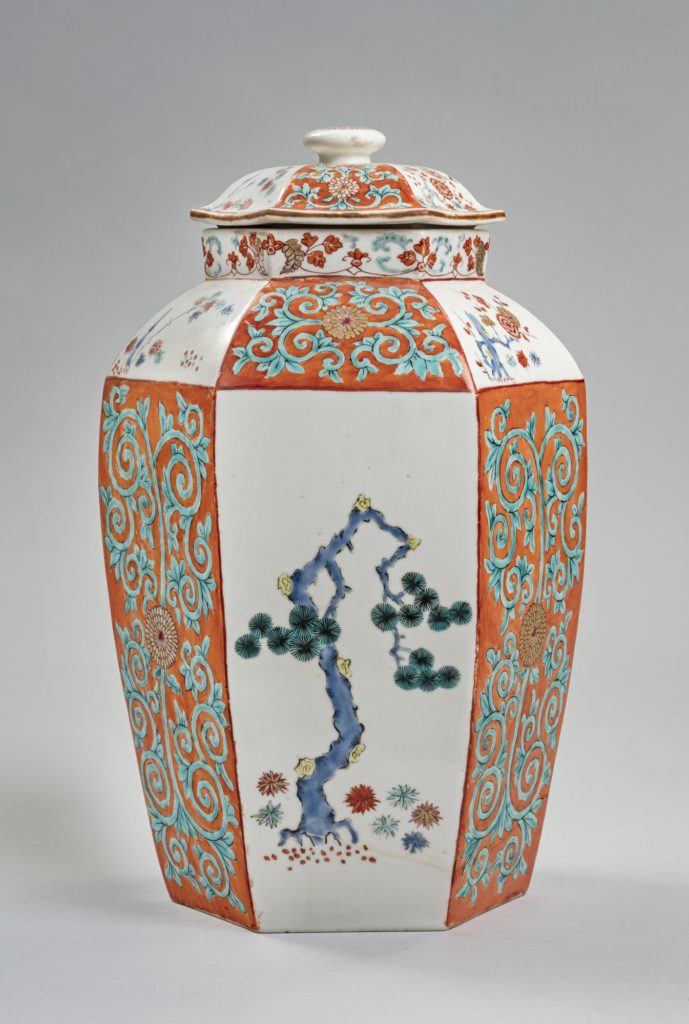
Hexagonal jar, after a Japanese original, England, Chelsea

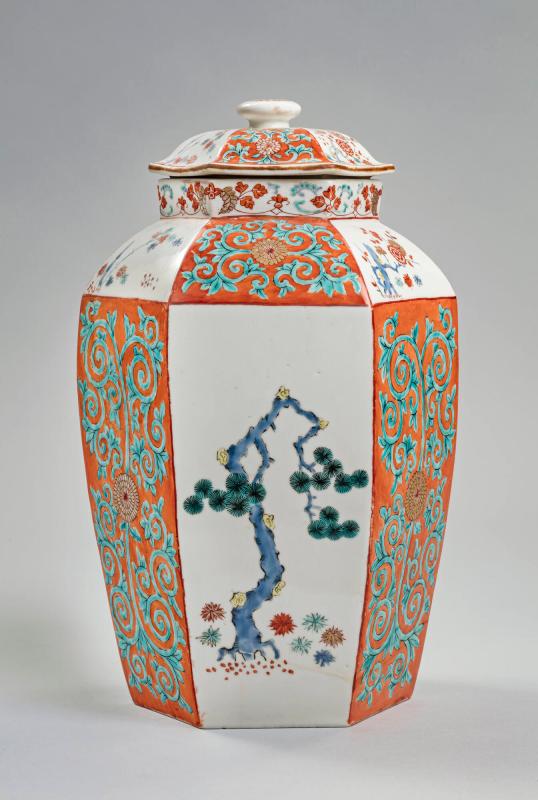
Hexagonal jar, after a Japanese original, England, Chelsea, c. 1752–55. Soft-paste porcelain and overglaze enamels. The Macdonald Collection
Established in the early 1740s, the Chelsea and Bow manufactories were the first to produce Japanese-inspired designs. Chelsea, which catered to London’s elite, closely imitated Japanese models from around 1750. The Hampton Court-style vase, based on a Japanese original in Queen Mary II’s collection at Hampton Court, is perhaps the most famous example.


1Discover more about the "Hampton Court Vase"
0
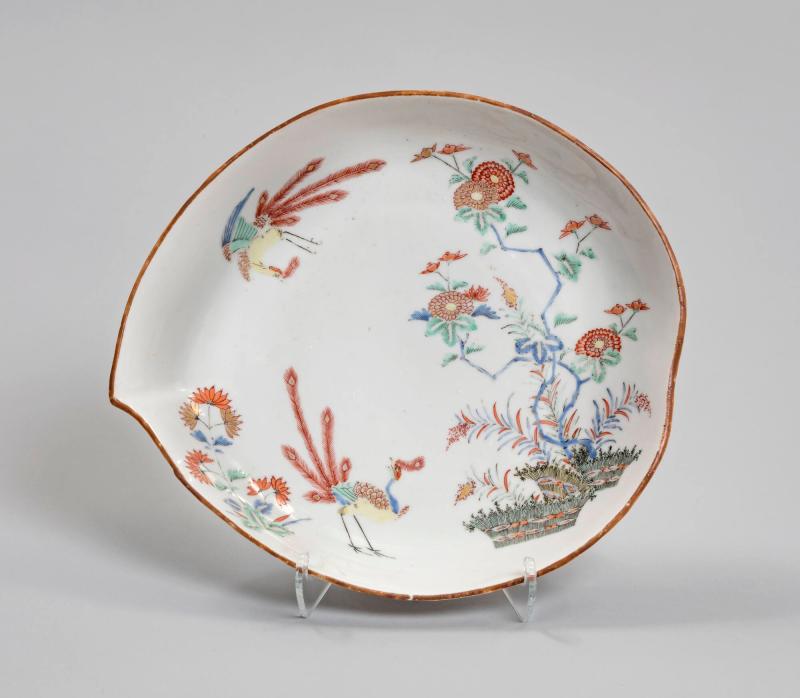
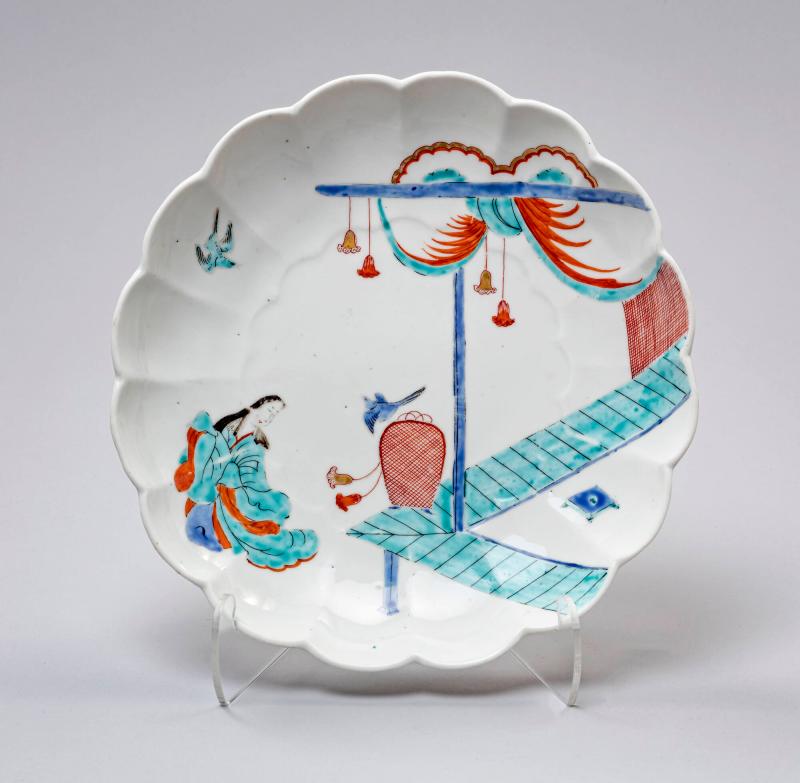
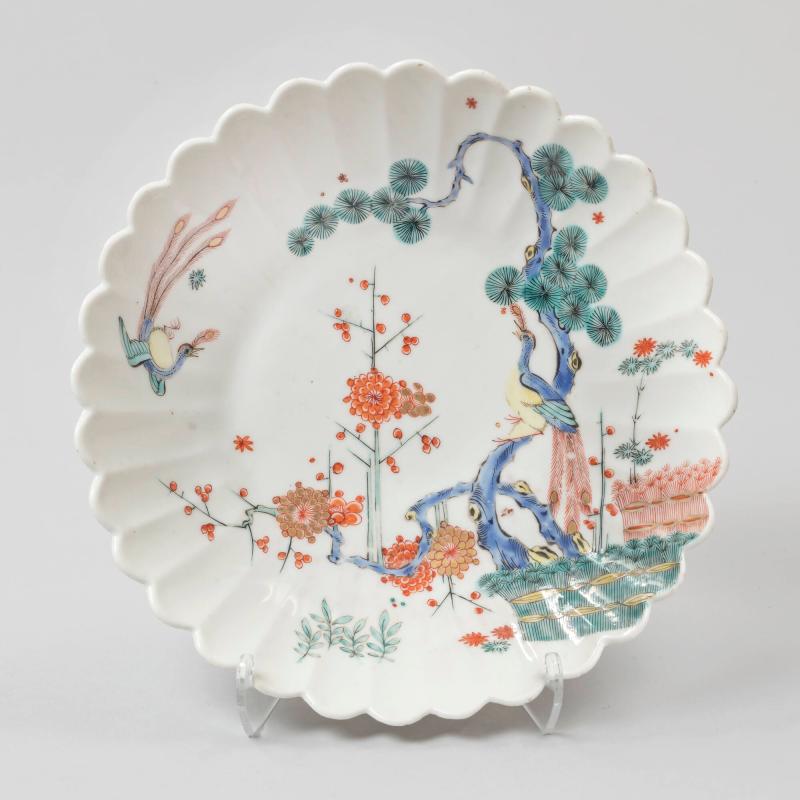
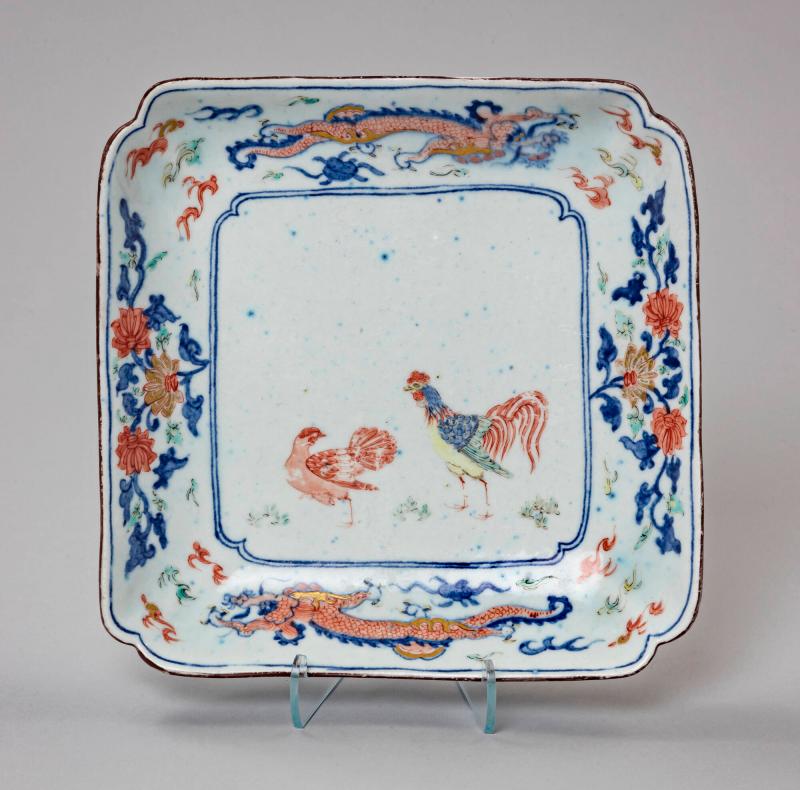
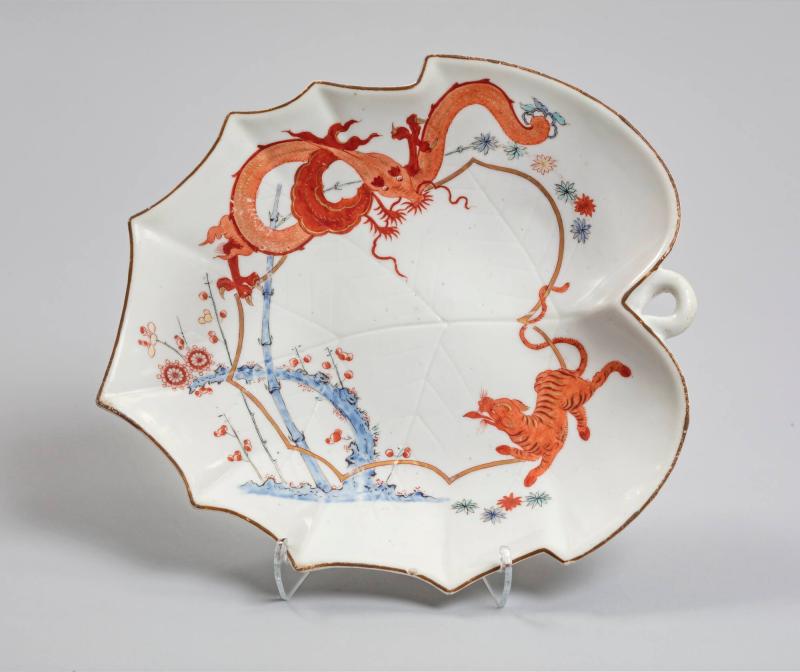
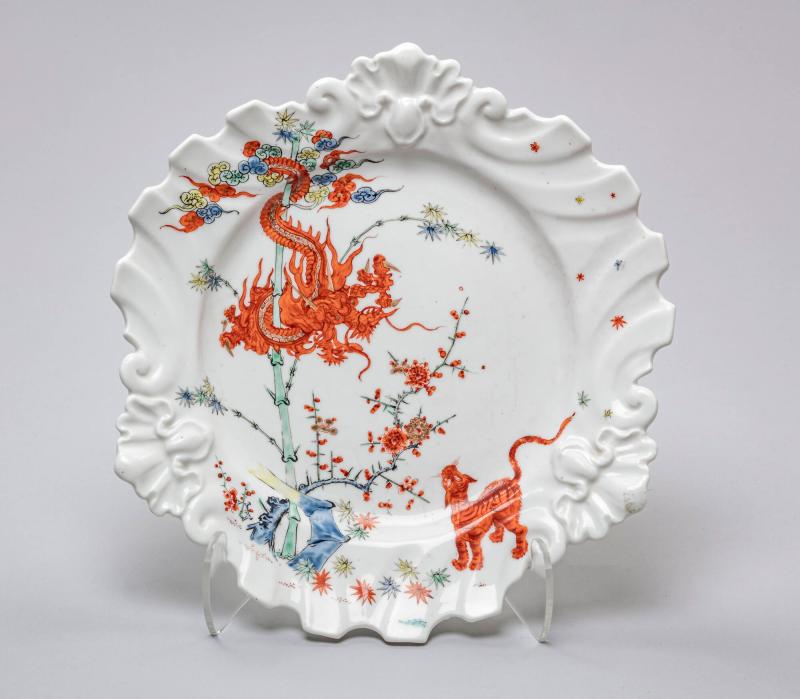
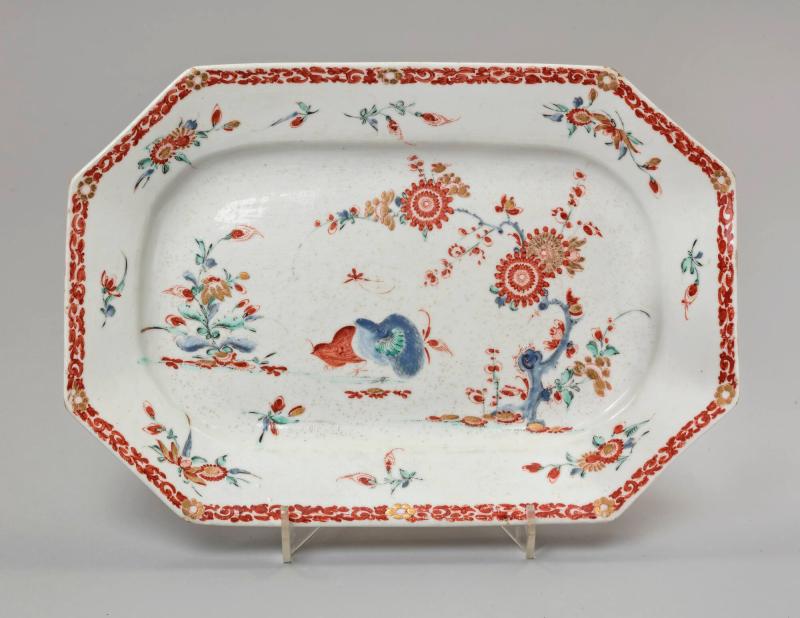
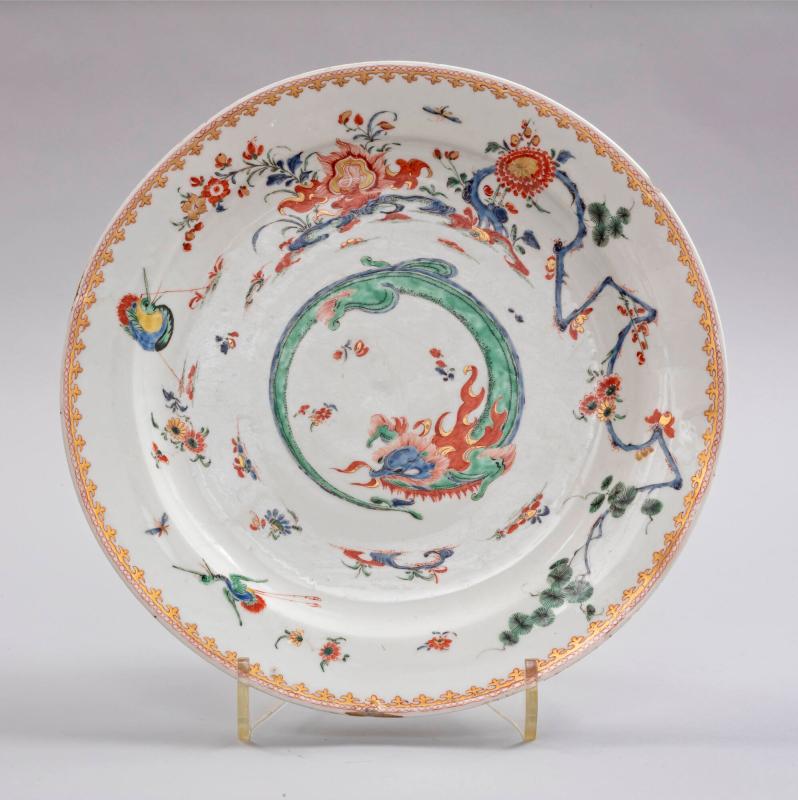
Silver-Shaped Dish with Dragon and Tiger

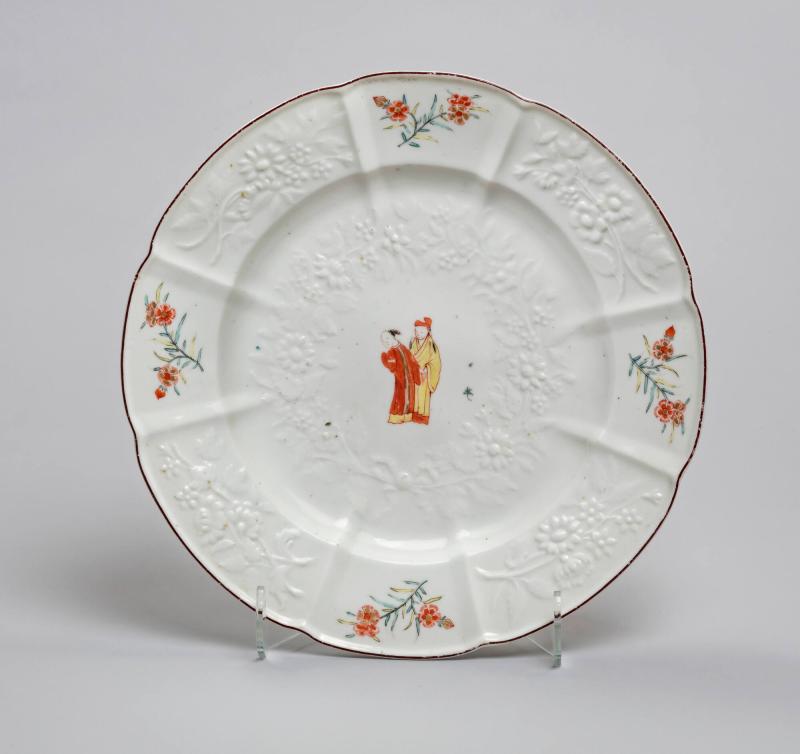
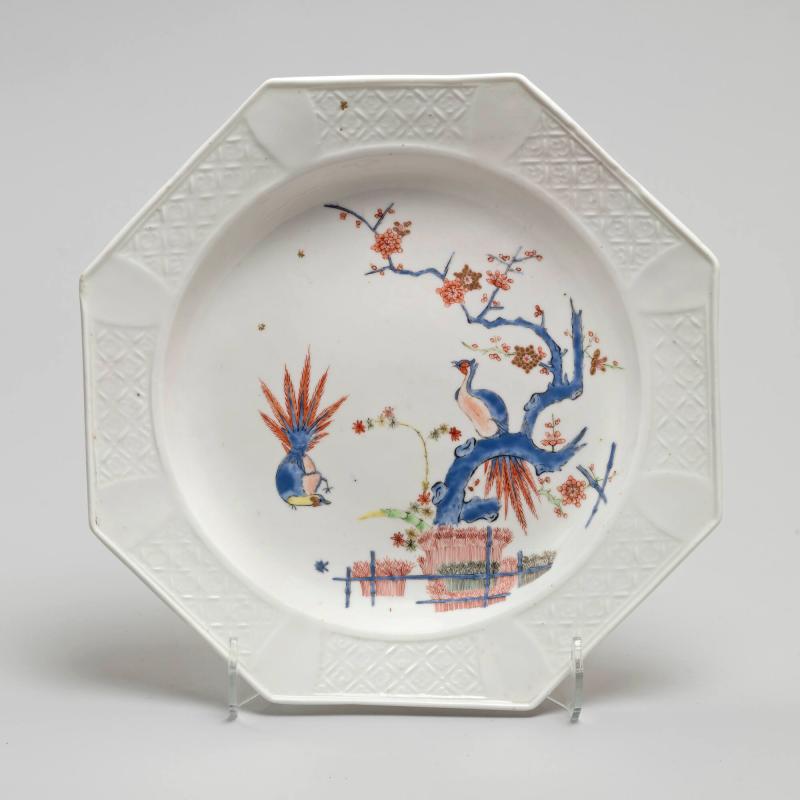
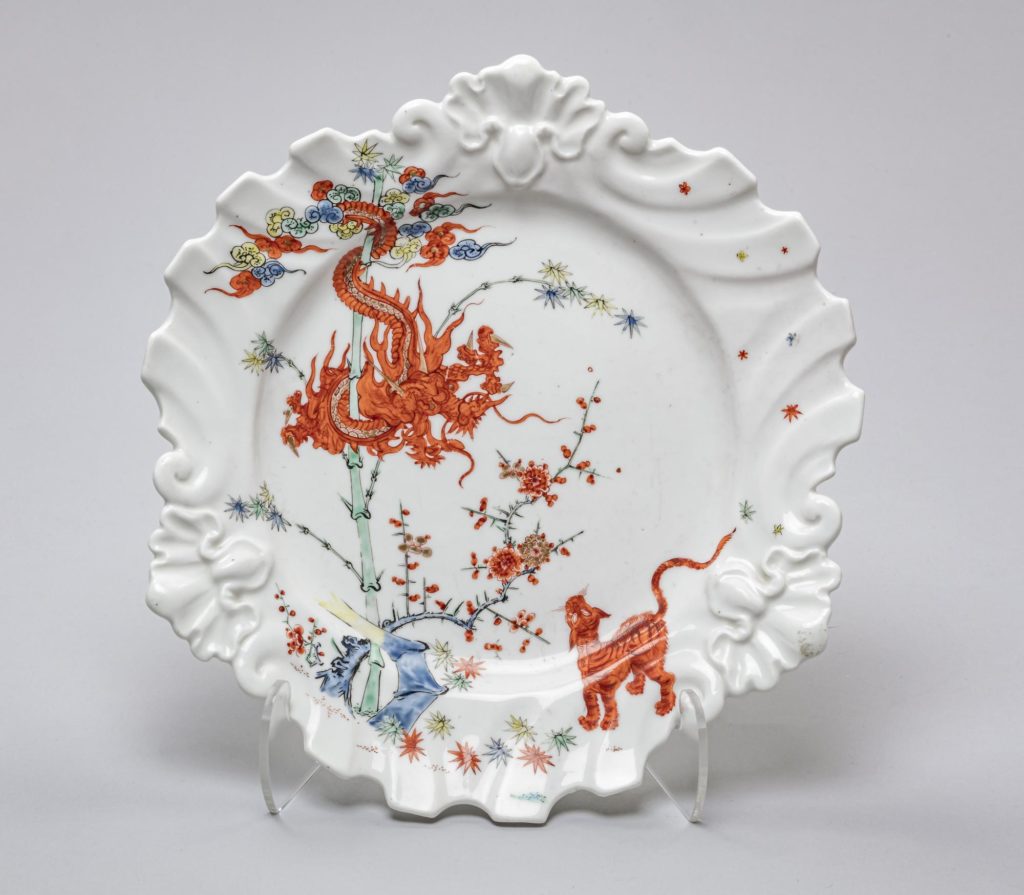
Silver-shaped dish with dragon and tiger, England, Chelsea, c.1750-1752, Glassy (frit) soft-paste porcelain with overglaze enamels. The Macdonald Collection

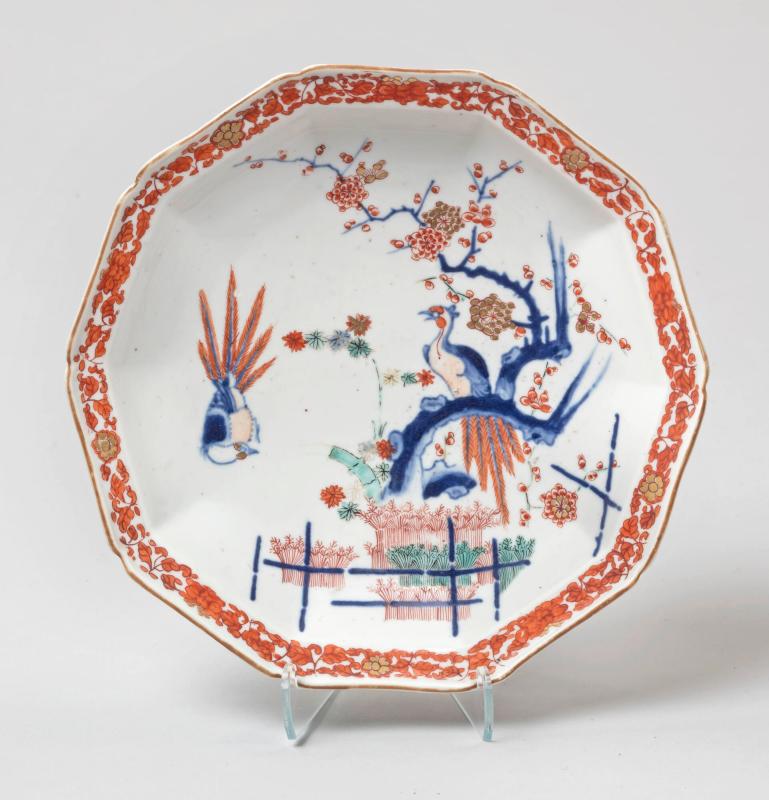
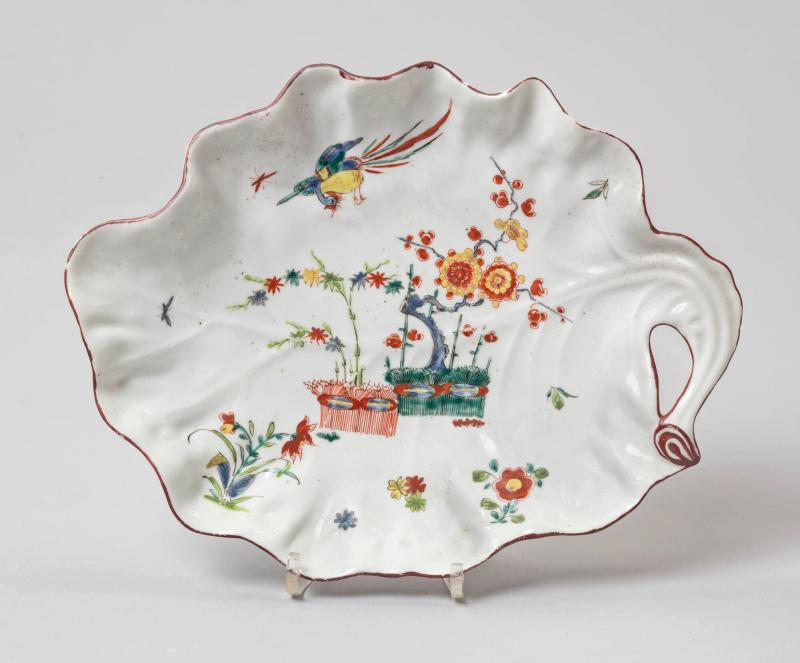
Chelsea also responded to market demand by applying Kakiemon imagery to shapes inspired by silver, more specifically designs by Nicholas Sprimont—one of the factory’s founders and a former silversmith—as illustrated in this moulded plate decorated with a dragon and tiger.

0
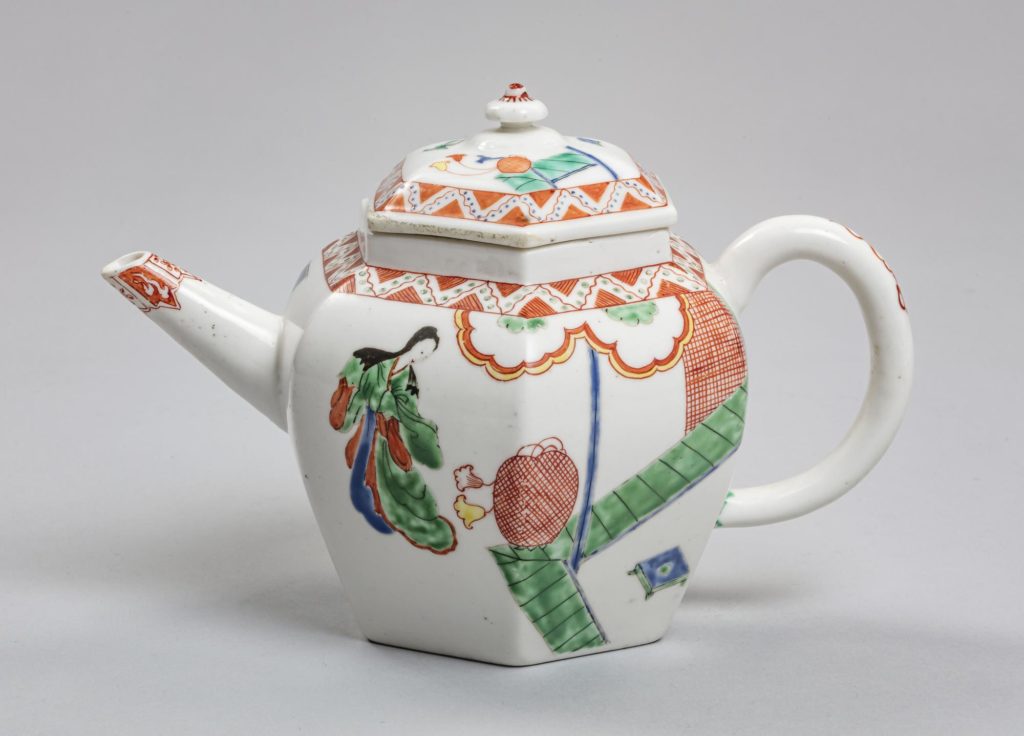
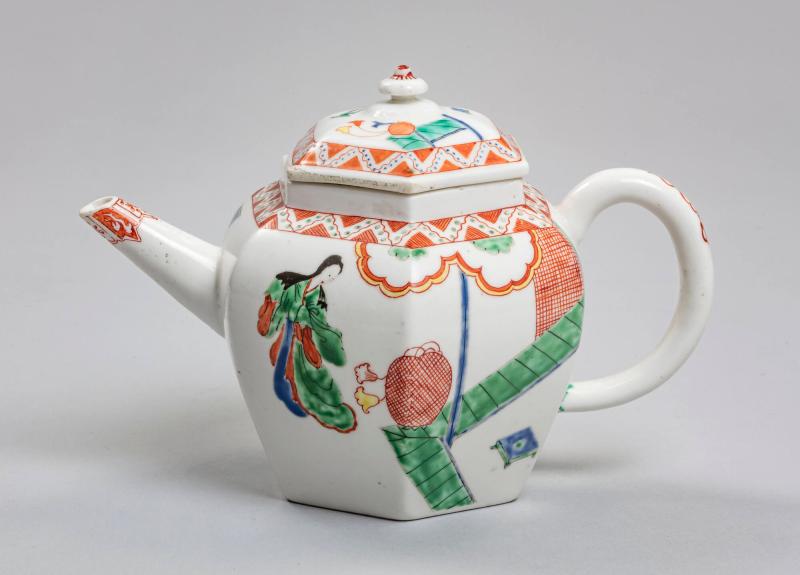
Teapot with Lady in a Pavilion England, Chelsea

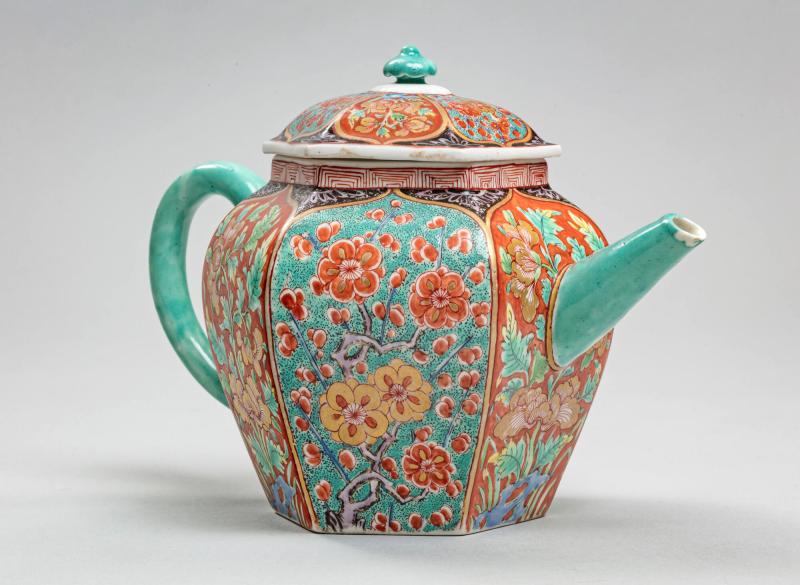
Teapot with Lady in a Pavilion England, Chelsea, 1750–52 Soft-paste porcelain with overglaze enamels The Macdonald Collection

The hexagonal shape of the teapot with the “Lady in a Pavilion” pattern is also based on a European silver prototype. The “Lady in a Pavillion,” also known as the “Lady in the Verandah” or “Old Lady” pattern, was one of the rare figurative patterns encountered on Japanese Kakiemon wares, and one of the most popular at Chelsea.

1Discover more about this teapot with Lady in a Pavillion
0
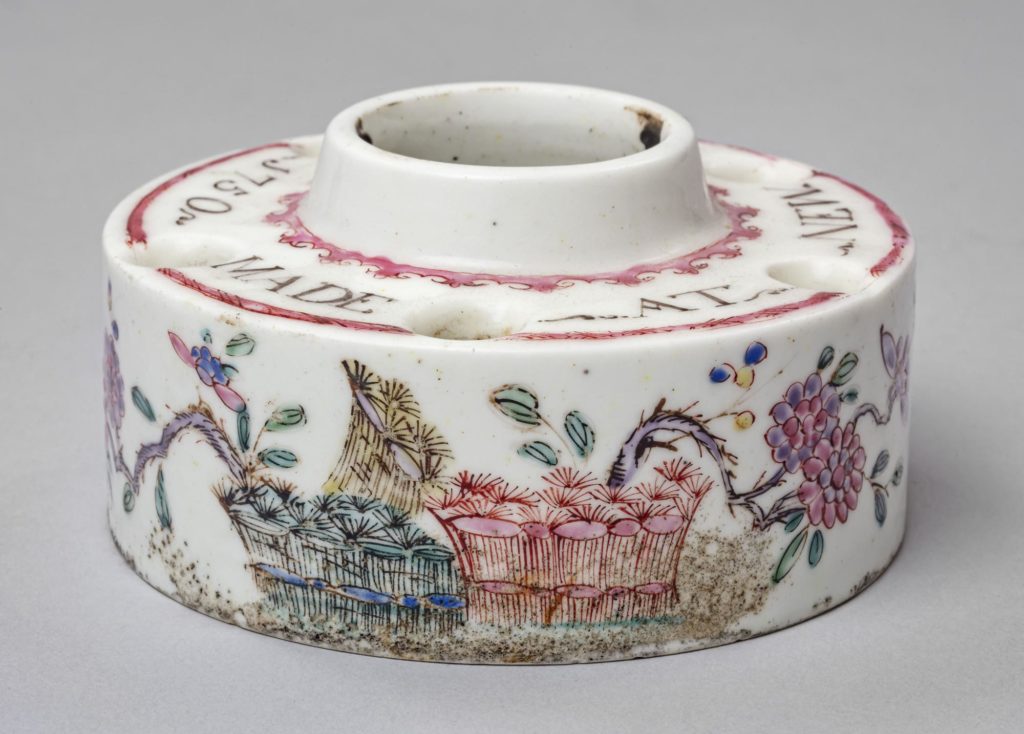
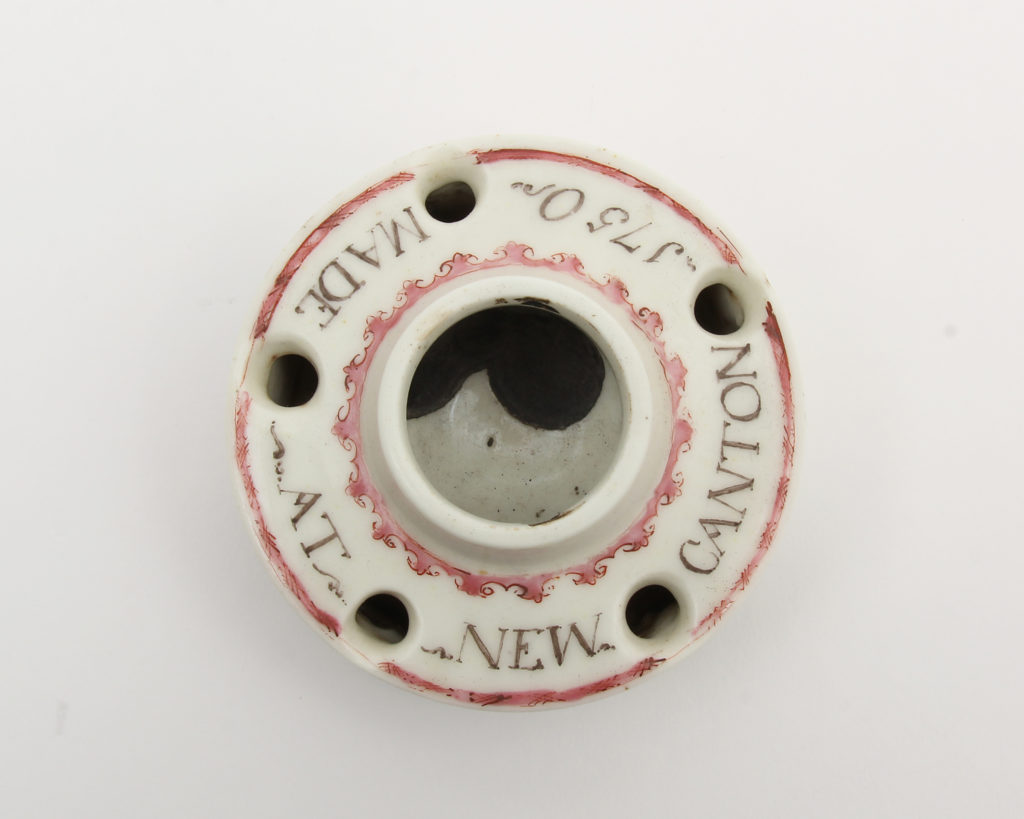
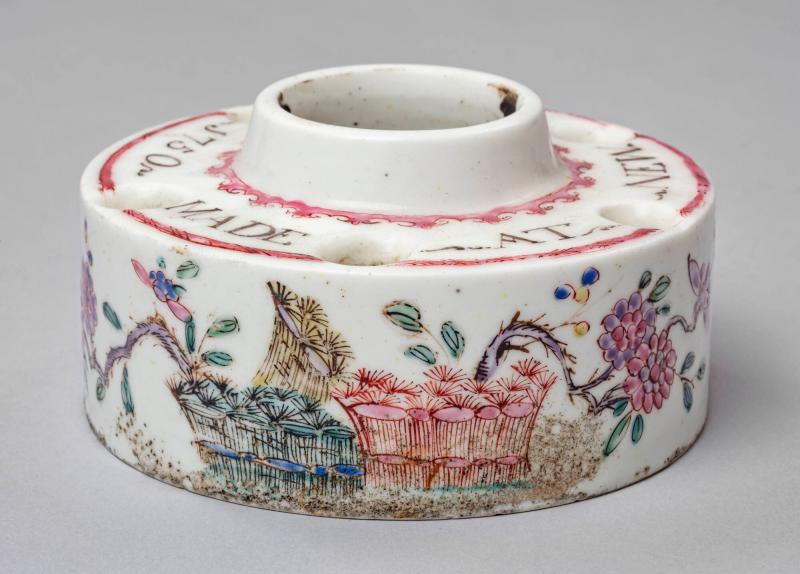
Inkwell with Banded Hedge

Inkwell with banded hedge, England, Bow, c.1750, Phosphatic (bone ash) soft-paste porcelain with overglaze enamels. The Macdonald Collection

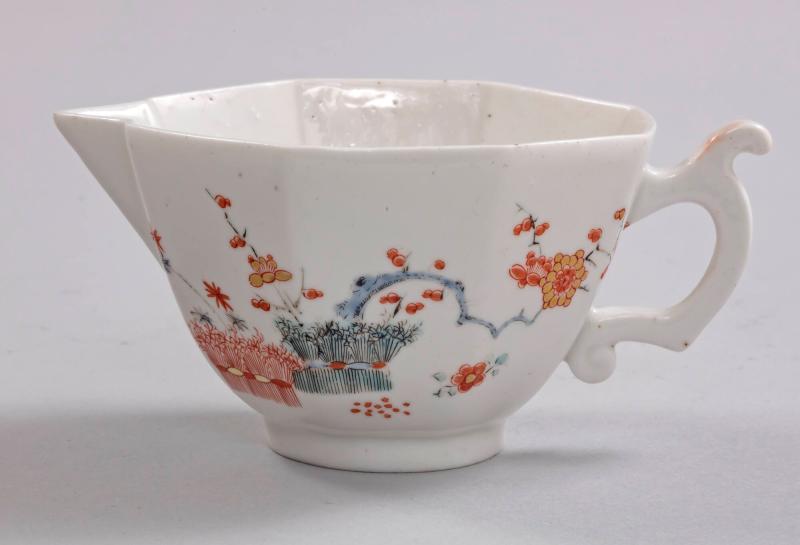
Chelsea stopped producing Kakiemon-style porcelain around 1755, but production continued for another five years at the Bow manufactory, which catered to a broader market. The motif of the banded hedge appears on one of the factory’s earliest Kakiemon-inspired pieces: an inkwell based on a European form, inscribed with the words “Made at New Canton 1750,” the name under which the factory first advertised itself.

0
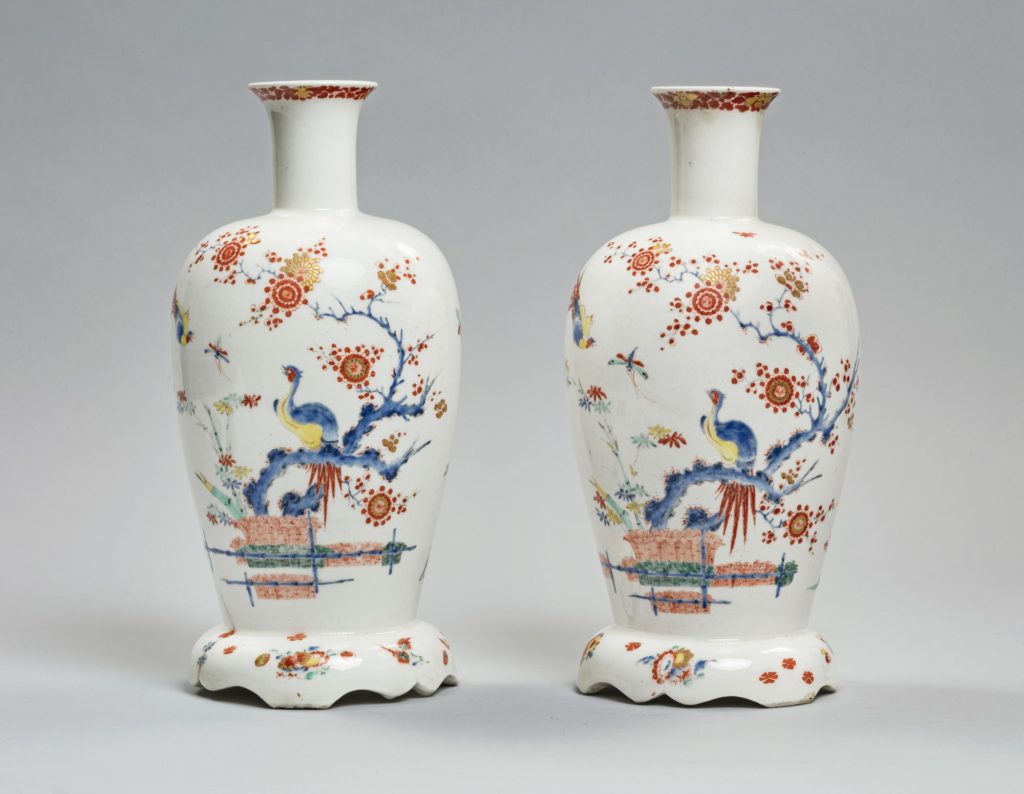
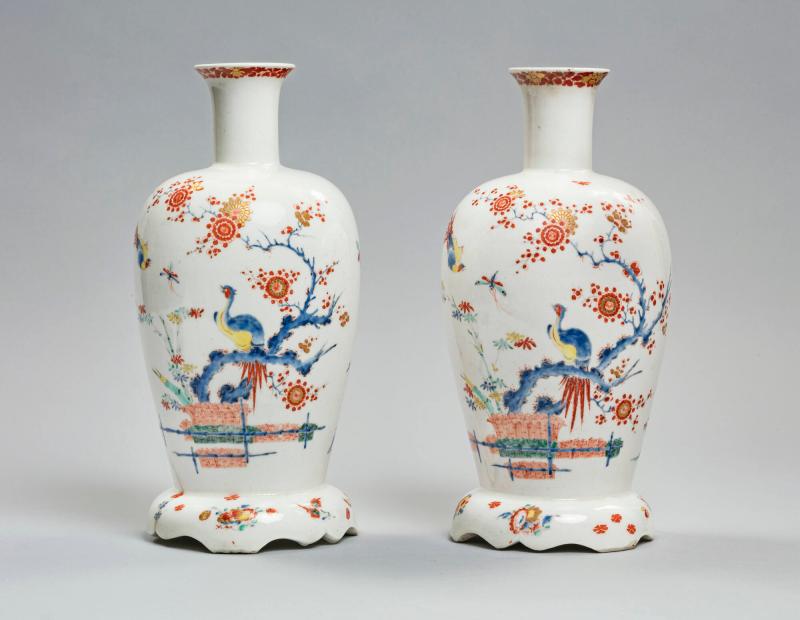
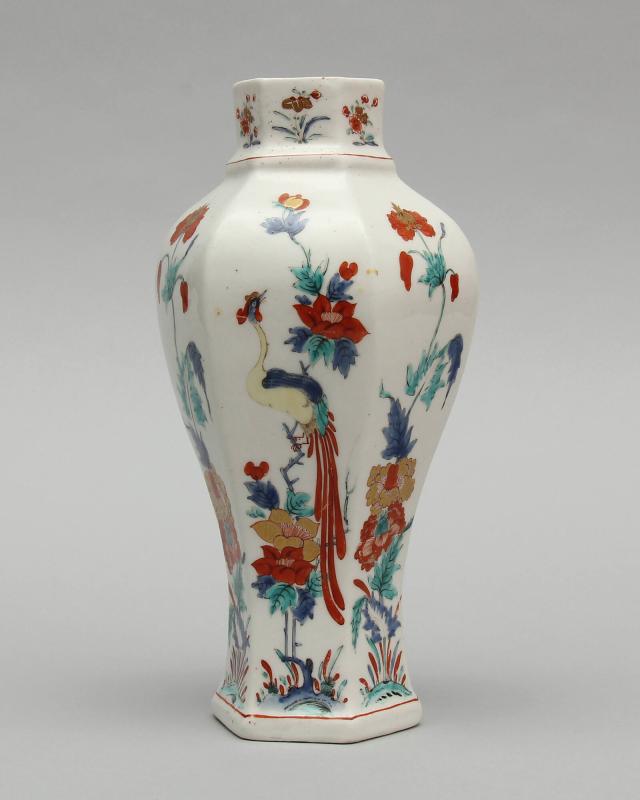
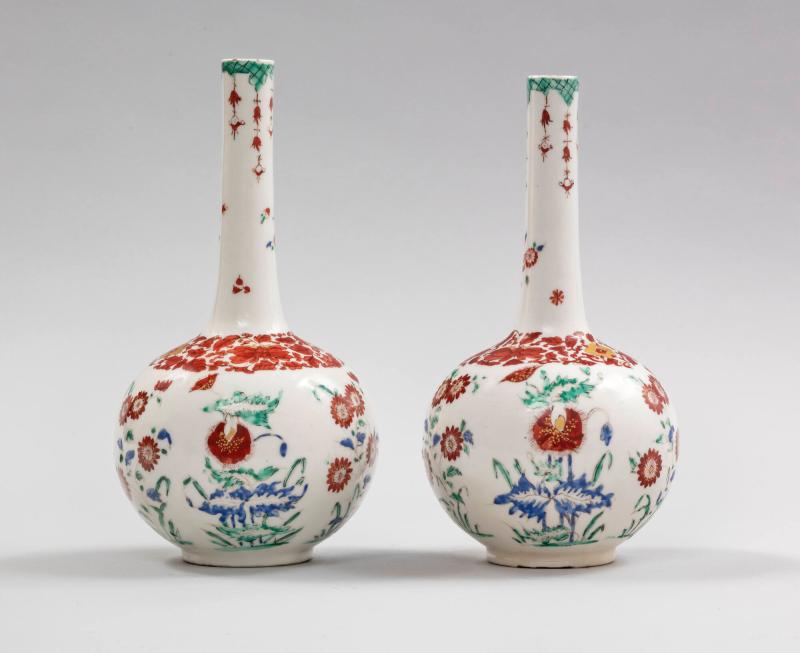
Vase with Ho-o Bird

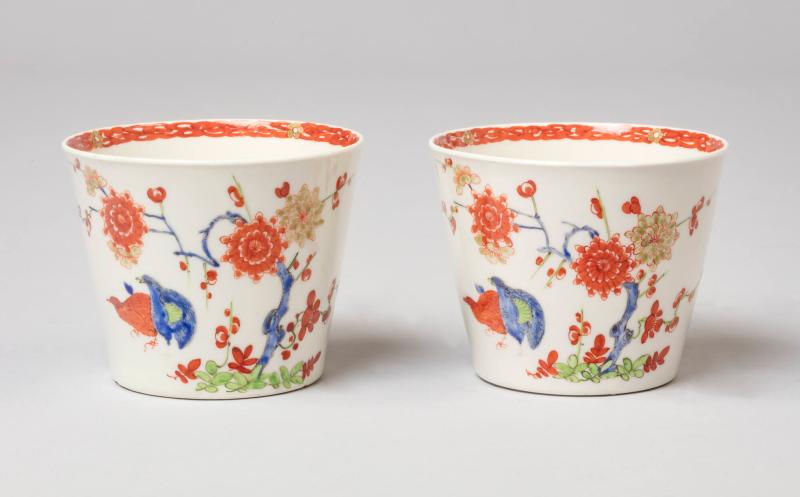
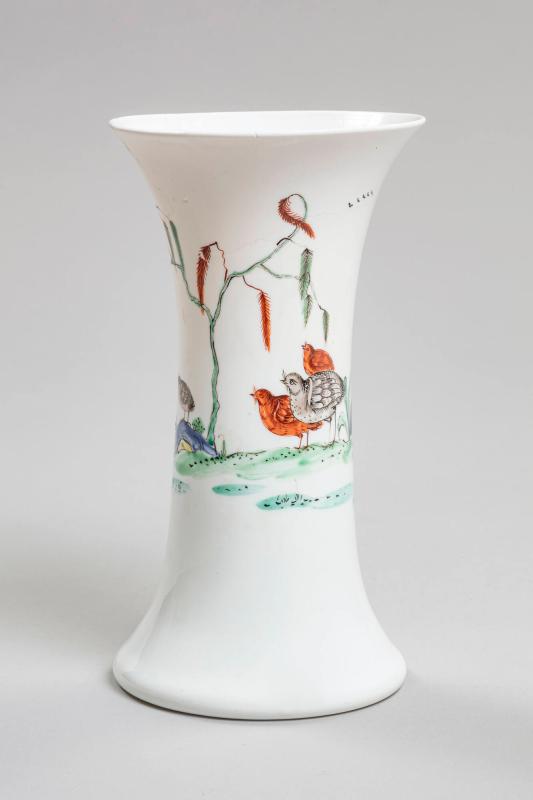
Vase with Ho-o bird, England, Bow, c.1755, Phosphatic (bone ash) soft-paste porcelain with overglaze enamels. The Macdonald Collection

Like most manufactories, the approach taken at Bow was eclectic, uniting sources freely. For instance, this pair of vases applies the Japanese design of a bird on a branch to a vase shape derived from Chinese porcelain of the Kangxi period.

0
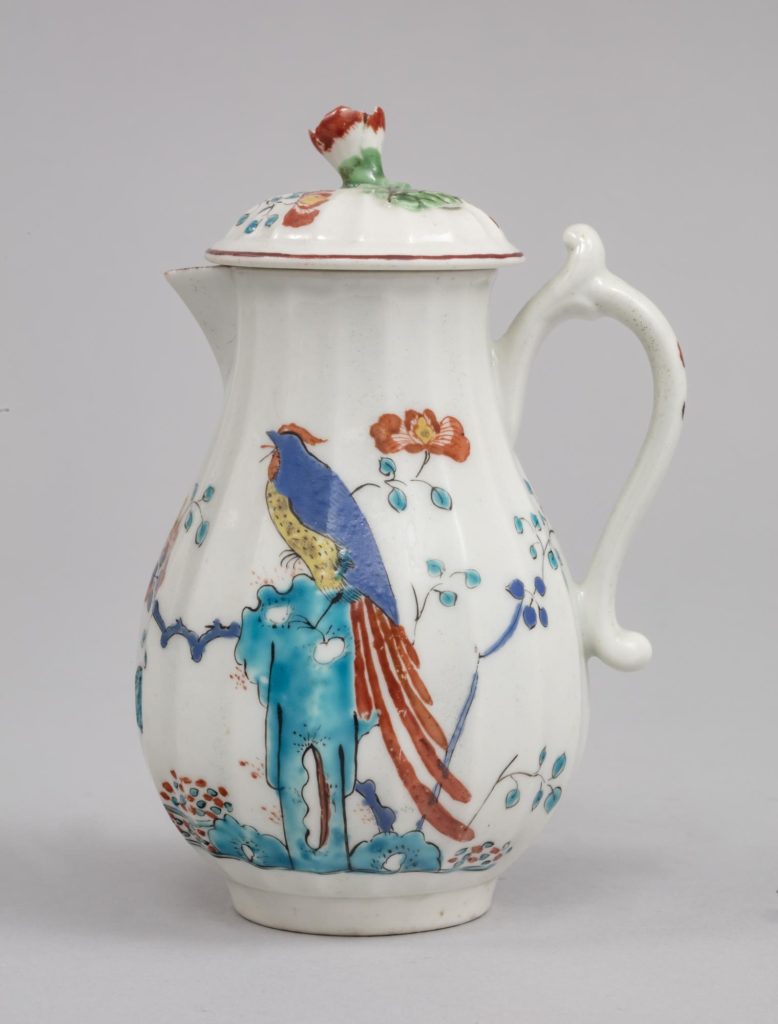
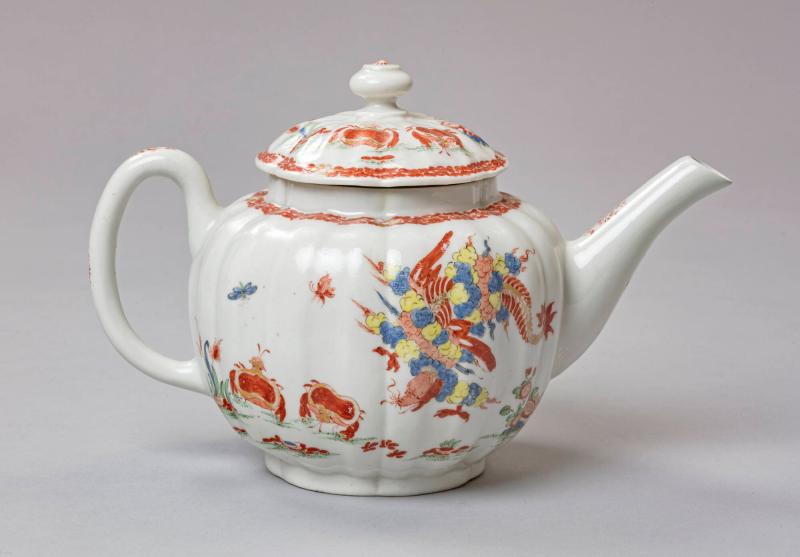
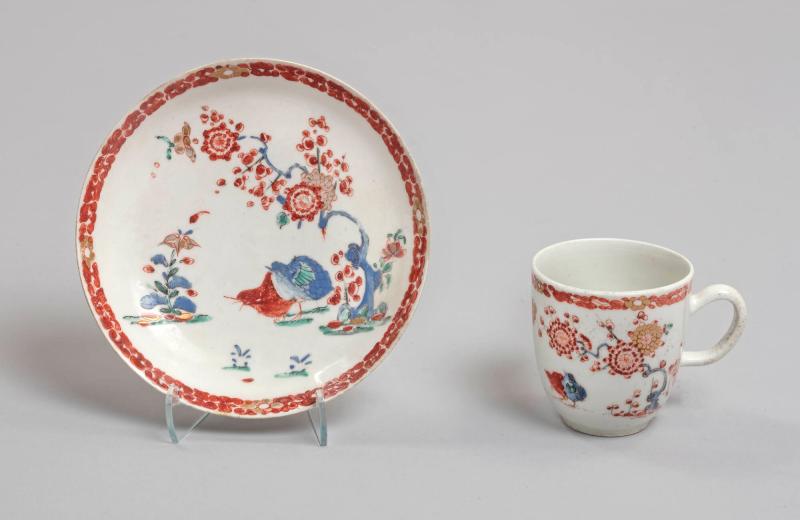
Covered milk jug with ho-o bird

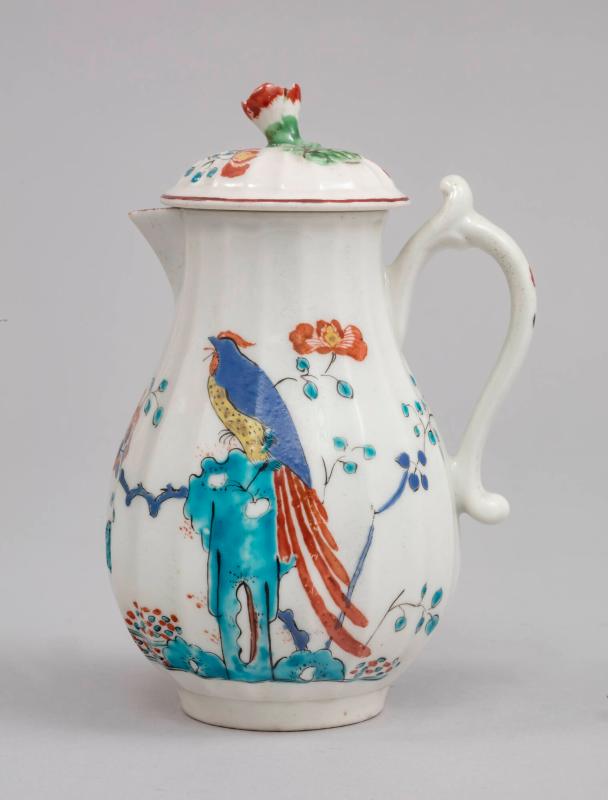
Covered milk jug with ho-o bird, England, Worcester, c.1765-1770, Steatite (soapstone) soft-paste porcelain with overglaze enamels. The Macdonald Collection

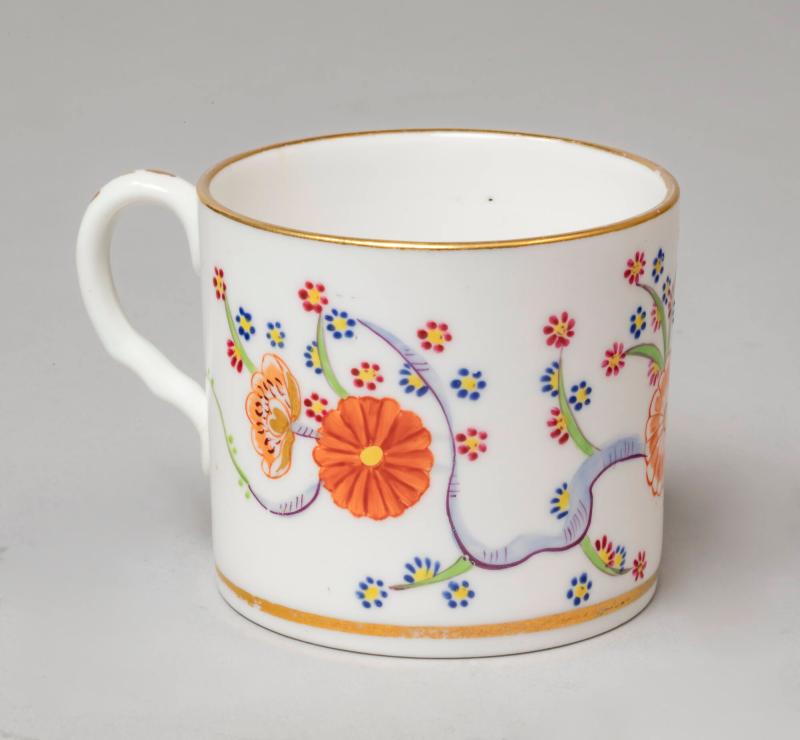
Many other English factories seized the commercial opportunities presented by the fashion for Kakiemon, a style which they interpreted with increasing creative freedom for a broad public. In the 1760s, the Worcester manufactory, whose products reached a wide segment of society, introduced simplified “Japan patterns” as seen on this milk jug. This type of ornament vaguely evoked Asian porcelain and Asia, without sustaining a more specific association.