Ko-Kutani Porcelain

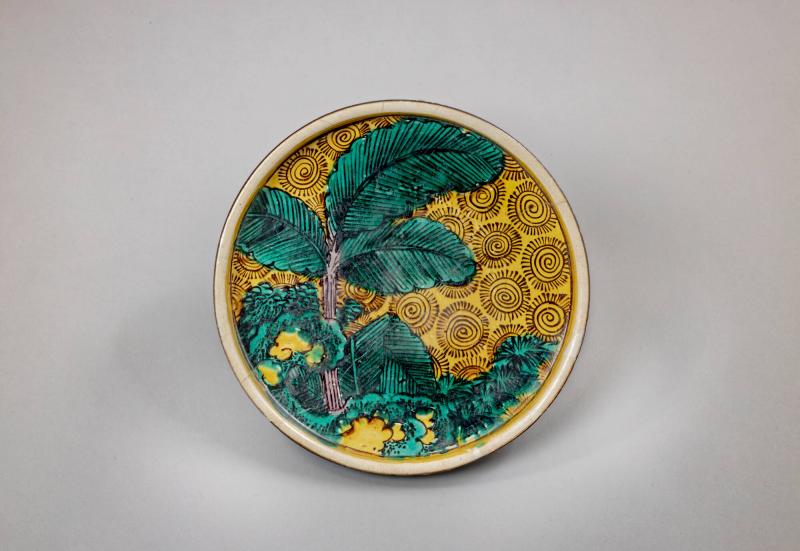
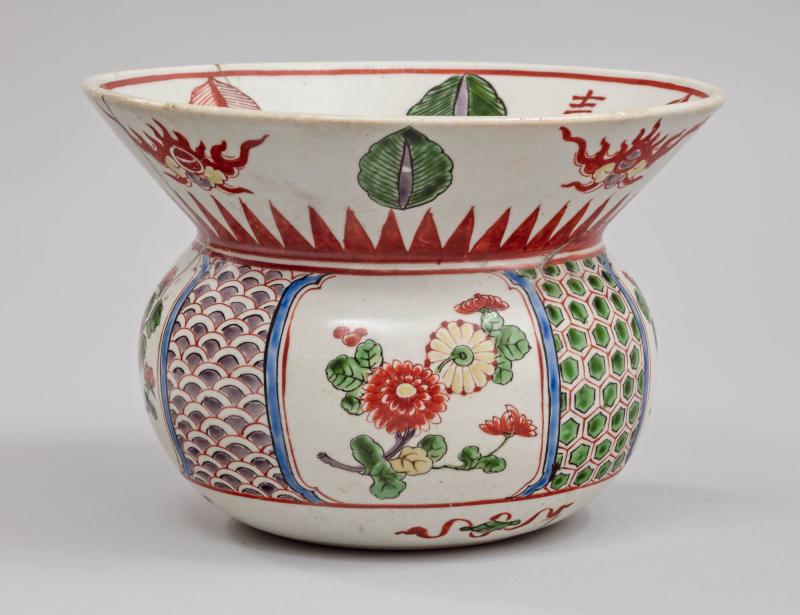
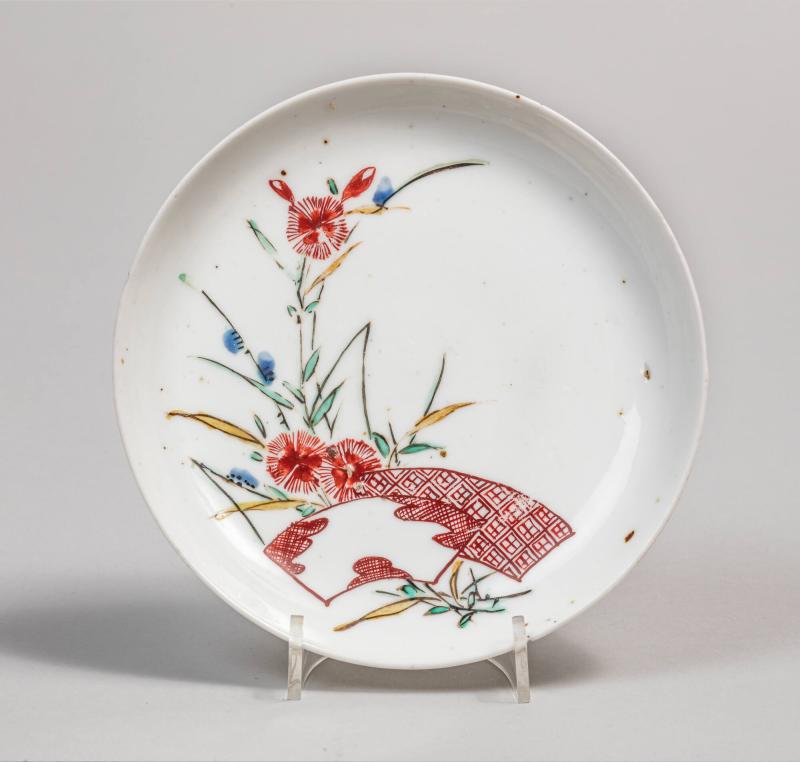
Objects labelled “Ko-Kutani” figure among the early enamelled wares produced over the second half of the 17th century. This group of objects made for domestic consumption is stylistically varied, yet typically features bold and vivid decoration. While potters often drew inspiration from Chinese porcelain in themes and palette, Ko-Kutani porcelain also presents a range of more abstract and asymmetrical compositions that convey the artisan’s individual creativity.

0
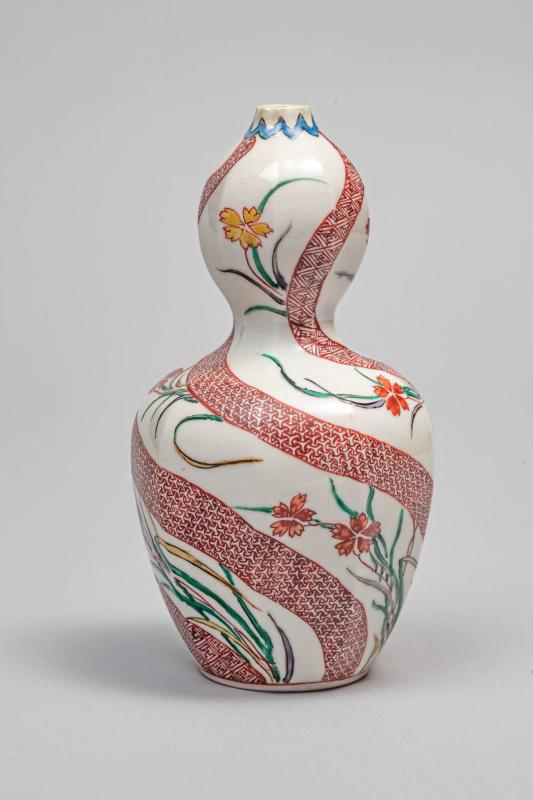
Double-Gourd Flask

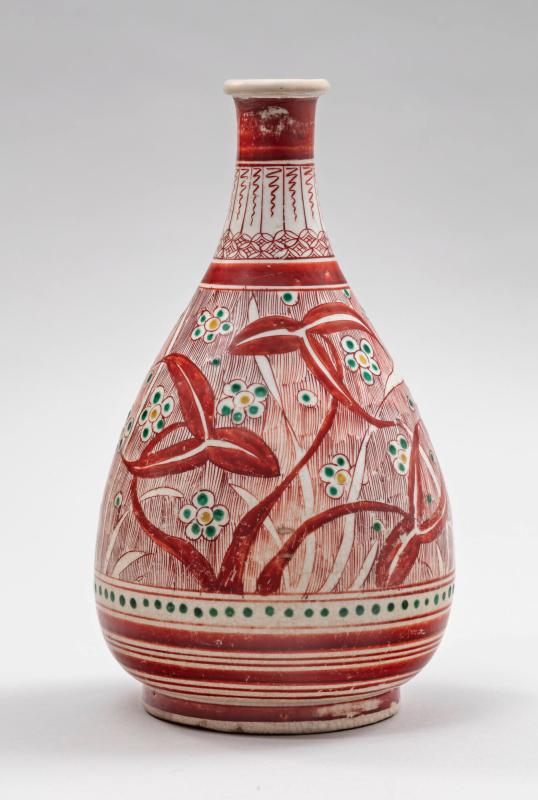
Double-gourd flask, Japan, Hizen, mid-17th century, Porcelain with overglaze enamels. The Macdonald Collection

Ko-Kutani wares made in the mid-17th century are often characterized by the colours employed. This double-gourd flask with spiralling bands and flowers is decorated in the “red style,” which features predominantly red enamels along with three other colours.

 

0
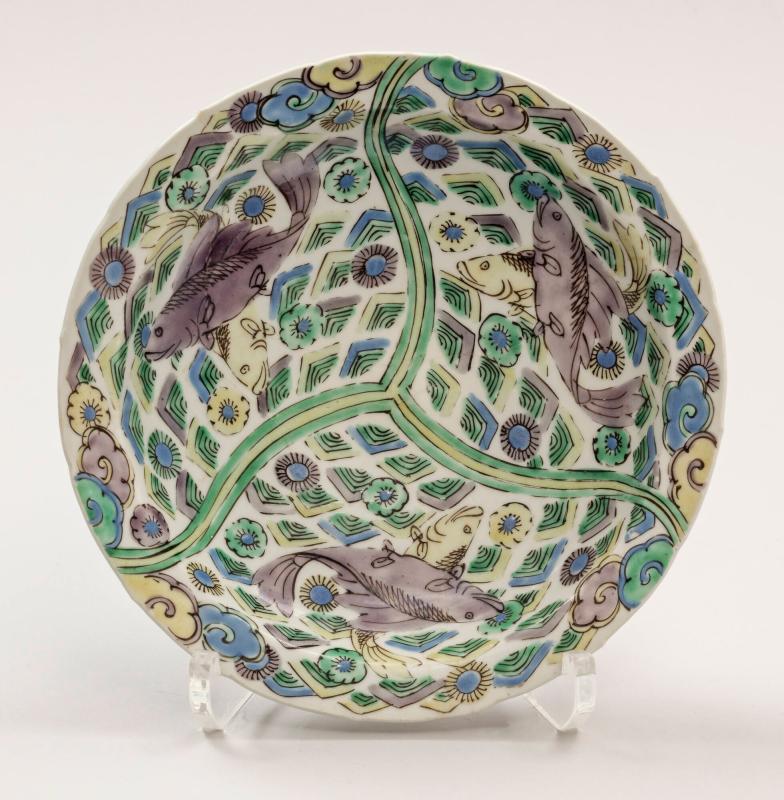
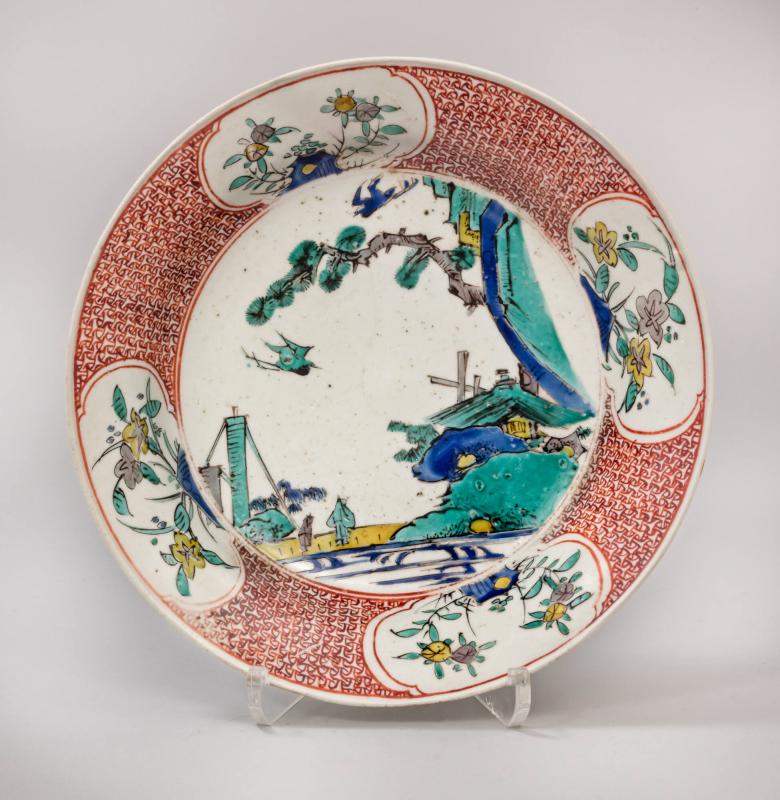
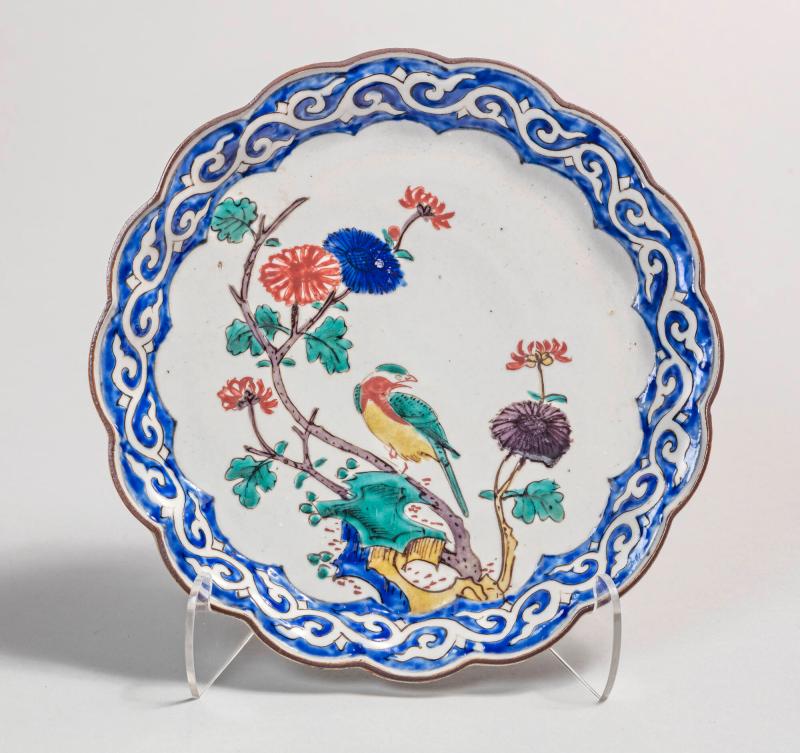
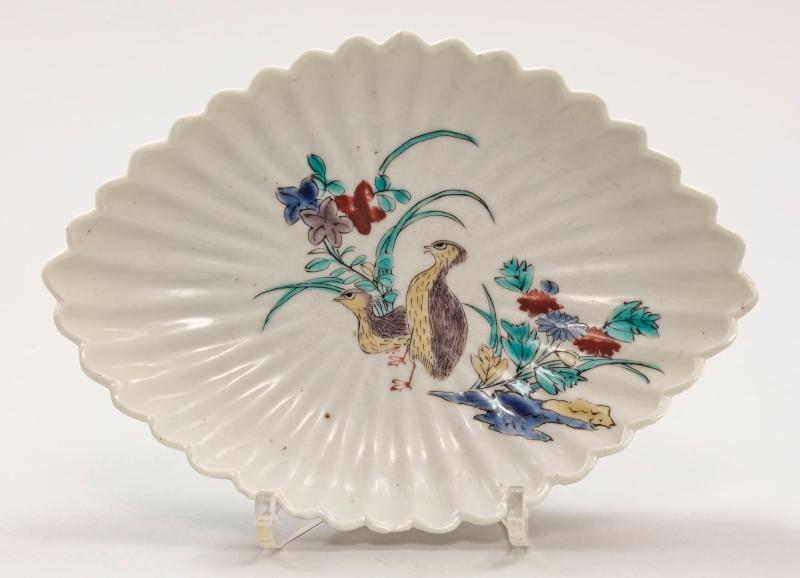
Dish with Bird and Flower

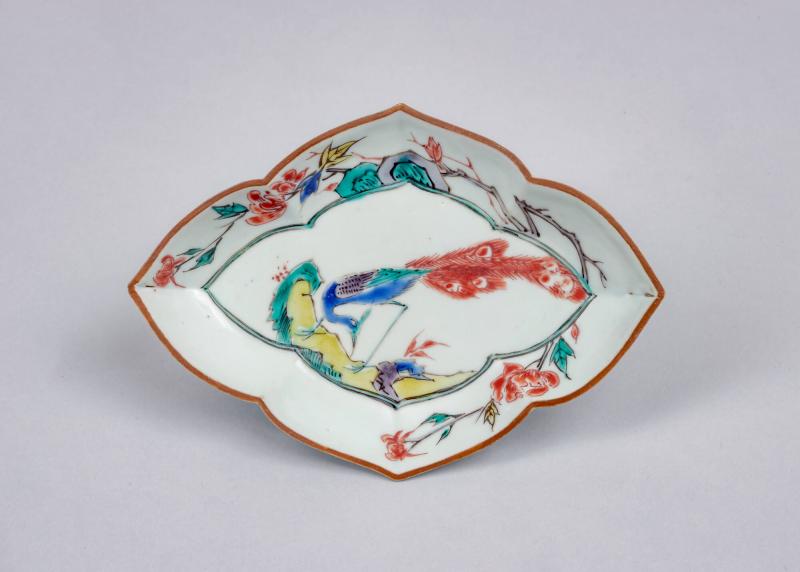
Dish with bird and flower, Japan, Hizen, mid-17th century, Porcelain with overglaze enamels. The Macdonald Collection

The dish with bird and flowers exemplifies a style of decoration in five colours with black outlines known as gosai-de. The piece is inspired by Chinese porcelain both in decoration and palette, a feature of many objects classified as Ko-Kutani.

0
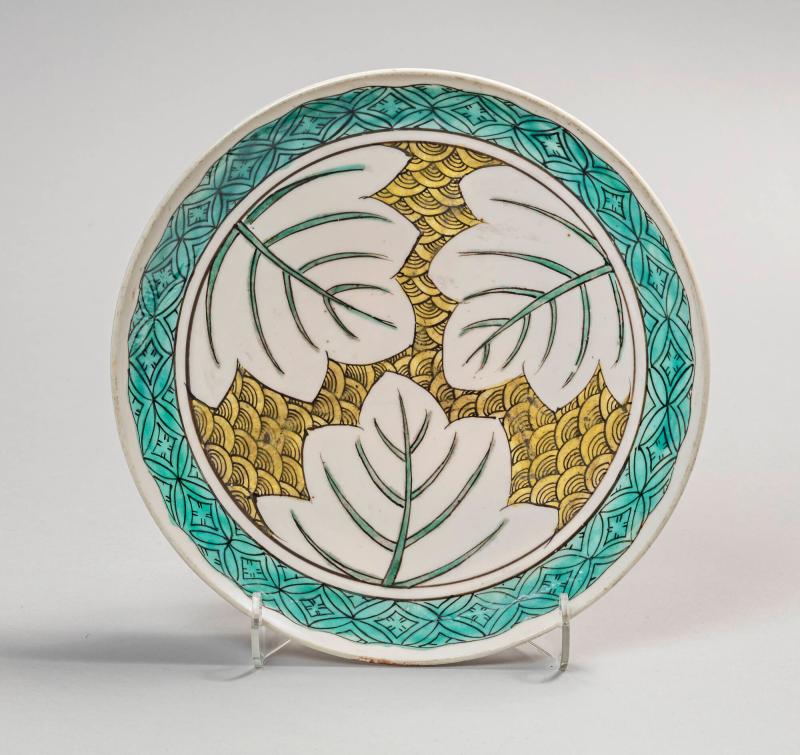
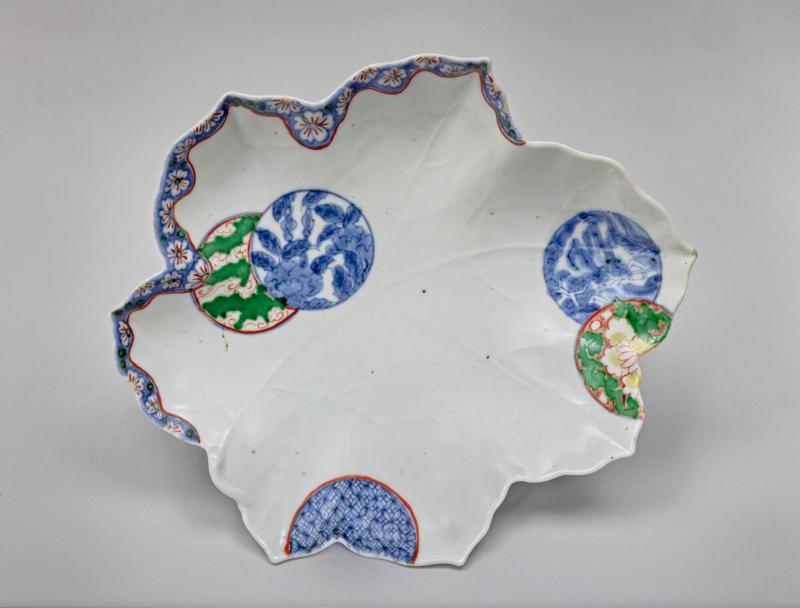
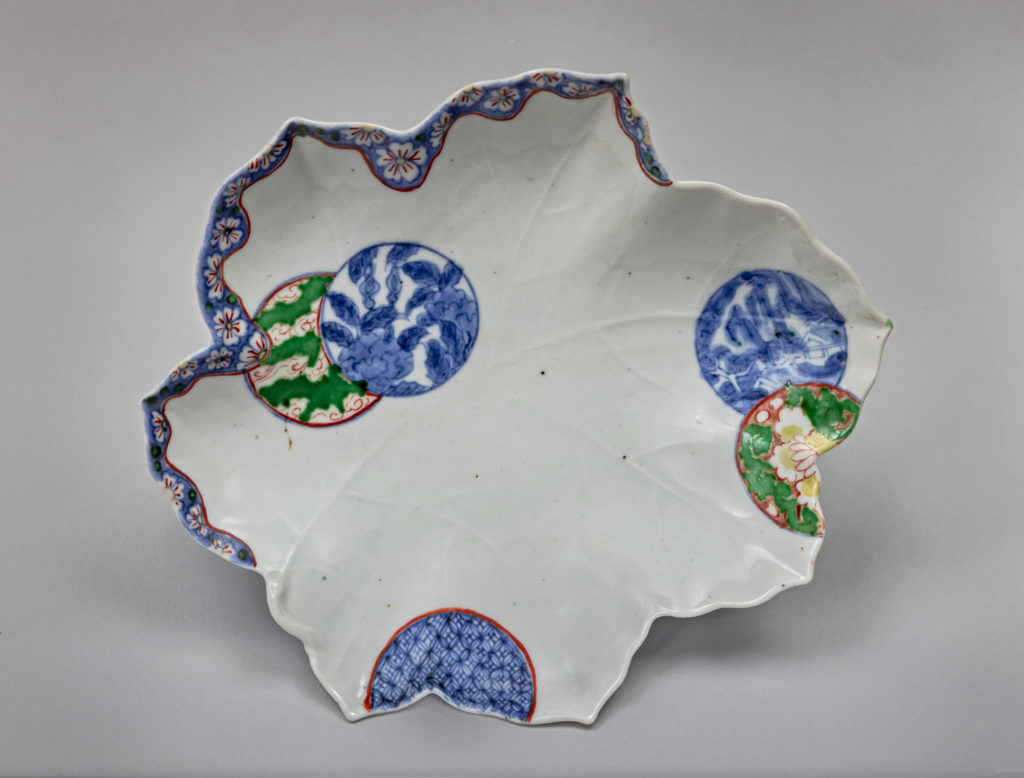
Leaf-shaped dish Japan, Hizen

Leaf-shaped dish Japan, Hizen, mid-17th century Porcelain with underglaze blue and overglaze enamels The Macdonald Collection

The Ko-Kutani group also includes objects with bold designs expressive of a uniquely Japanese aesthetic sensibility in porcelain. The leaf-shaped dish decorated with patterned roundels, cropped and overlapping, is reminiscent of textile and kosode designs, showing how ceramics intersected with objects in other media.

1Discover more about this leaf-shaped dish
0
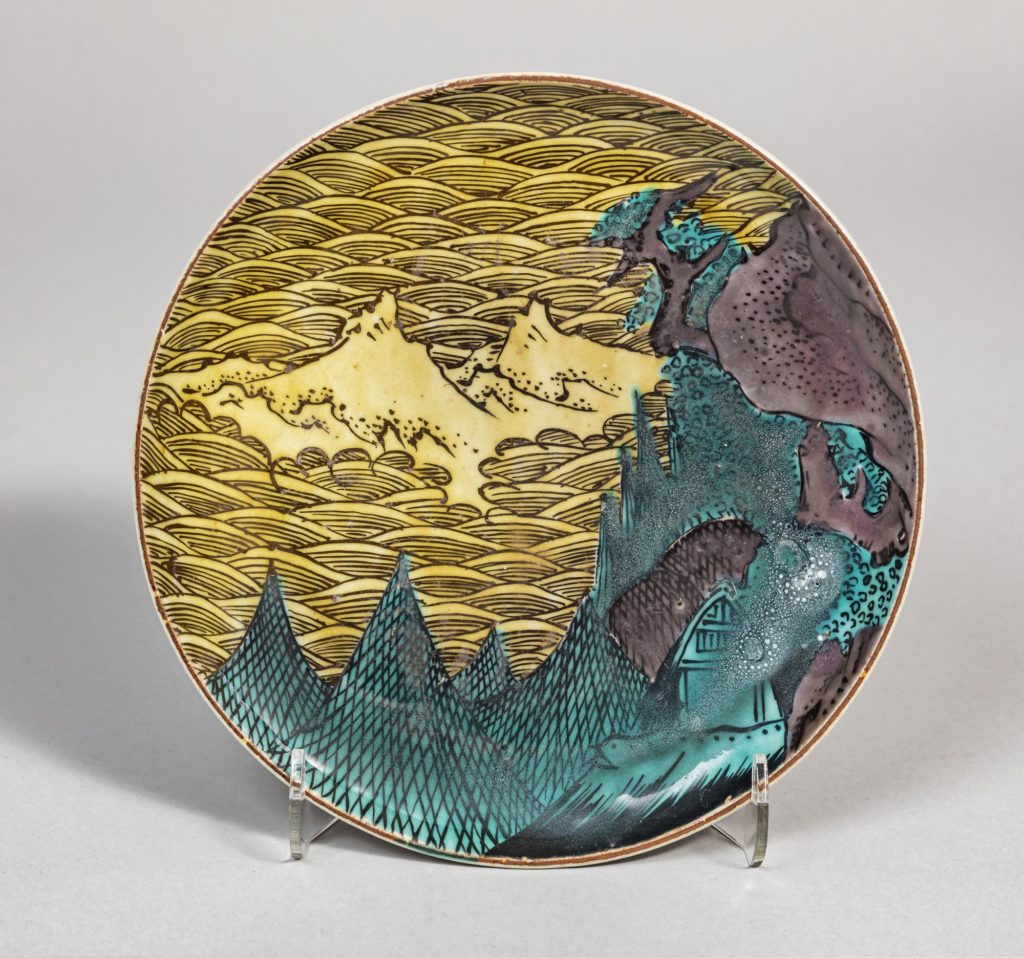
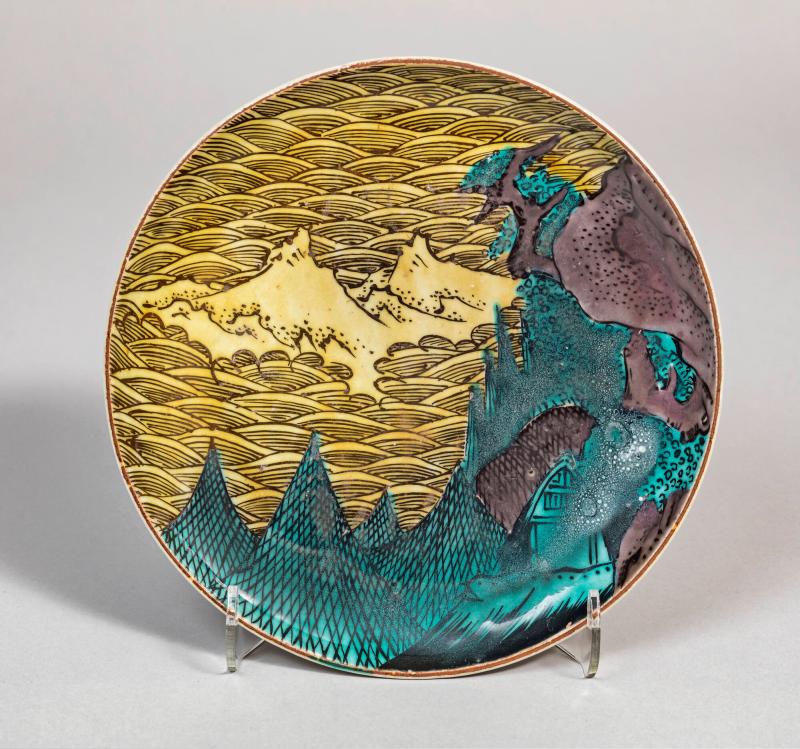
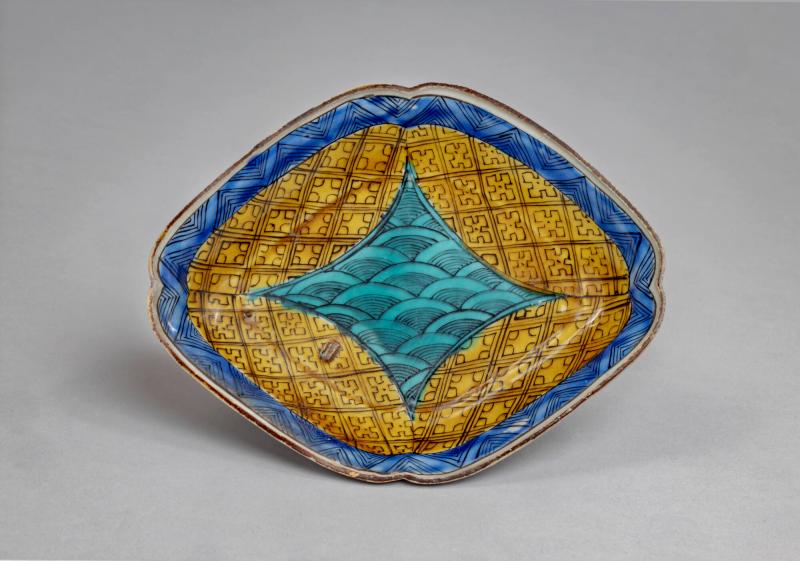
Dish with Fishing Nets

Dish with fishing nets, Japan, Hizen, mid-17th century, Porcelain with overglaze enamels. The Macdonald Collection

The most distinctive wares of the Ko-Kutani group are decorated in the aode (green) style characterized by vibrant enamel decoration covering the entire decorative surface, as seen on the dish with fishing nets cast out at sea. This piece beautifully showcases the deep-green enamel and bold design that make the aode style so unique. Such aode-style wares made in the 1650s in Arita were long believed to have been made in the Kutani village in Ishikawa prefecture. The appellation Ko-Kutani, meaning “Old Kutani,” which came to encompass a range of approaches, derives from this location.

0
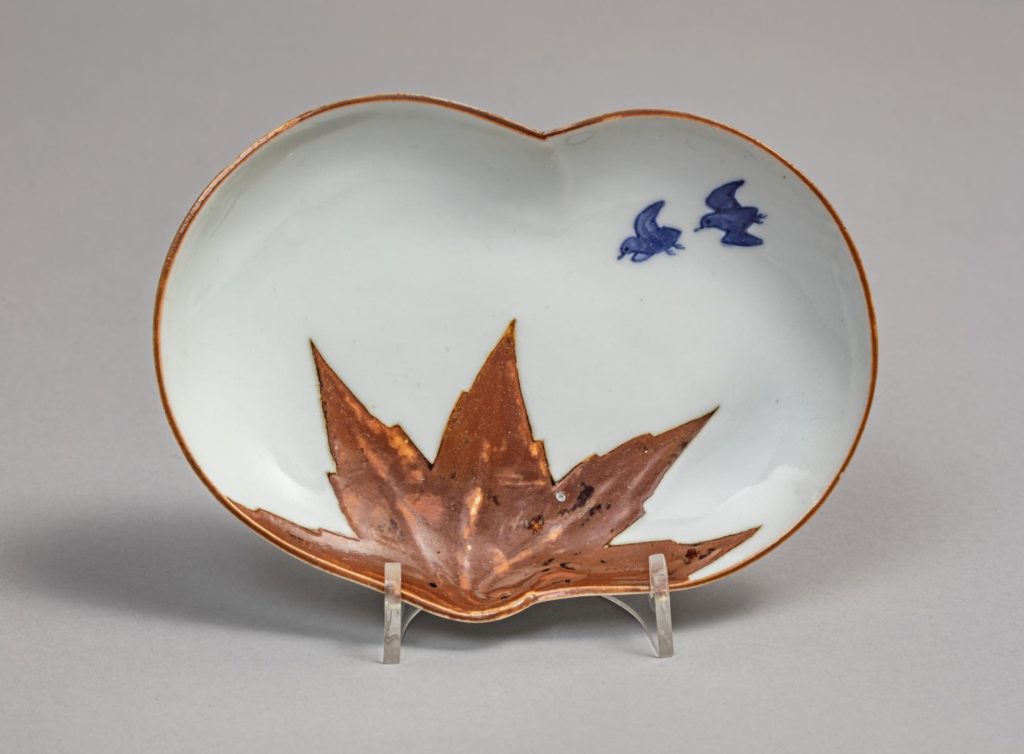
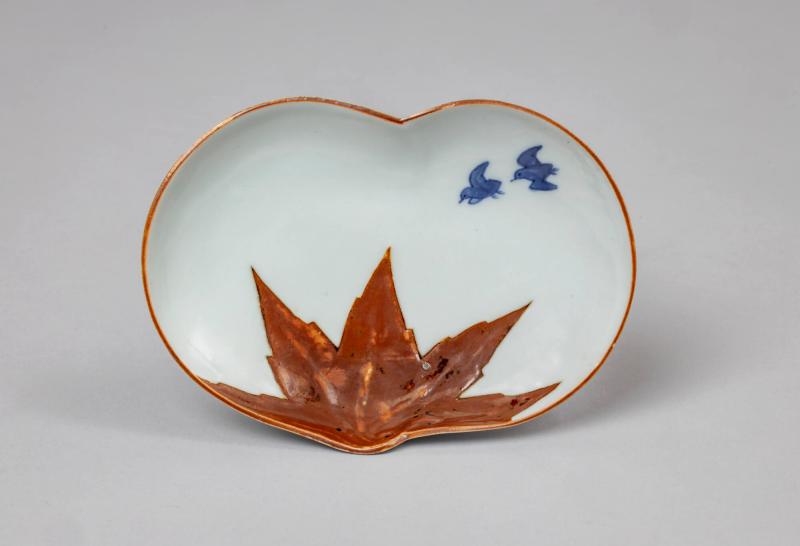
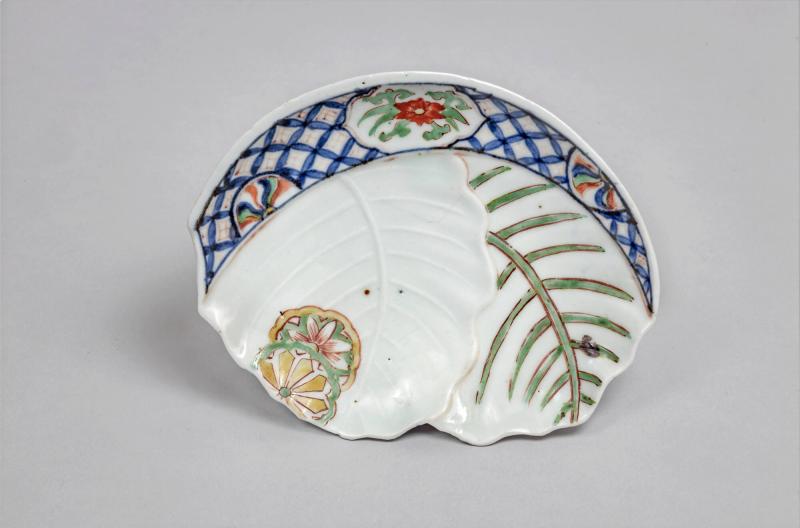
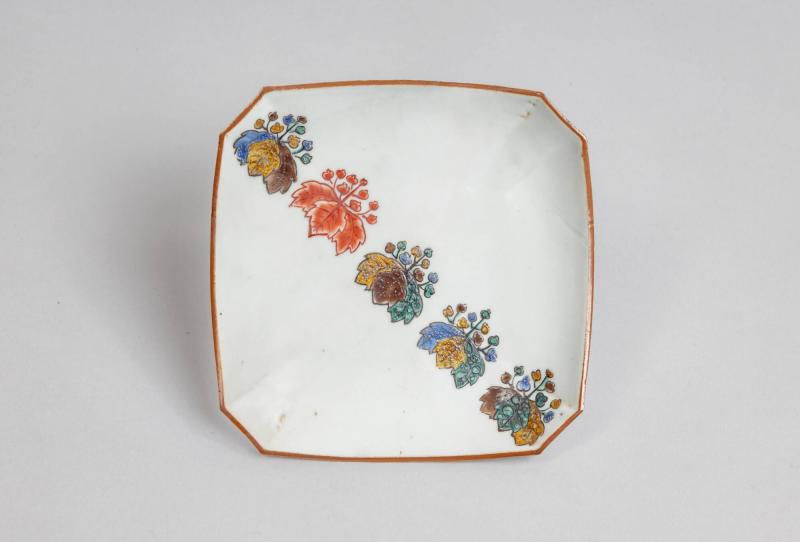
Dish with Maple Leaf

Dish with maple leaf, Japan, Hizen, c.1650-1660, Porcelain with overglaze enamels. The Macdonald Collection

Pieces from the Ko-Kutani group present some of the foundations for the development of different types of wares, such as Kakiemon and Nabeshima. This is particularly evident in the dish with a maple leaf, whose unique design and high level of refinement points to the beginnings of Nabeshima porcelain.