Early Enamelled Wares

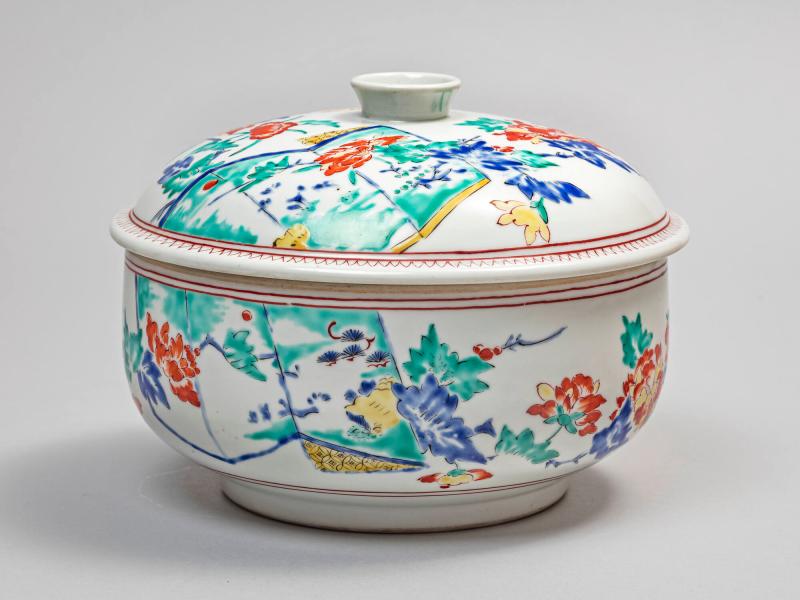
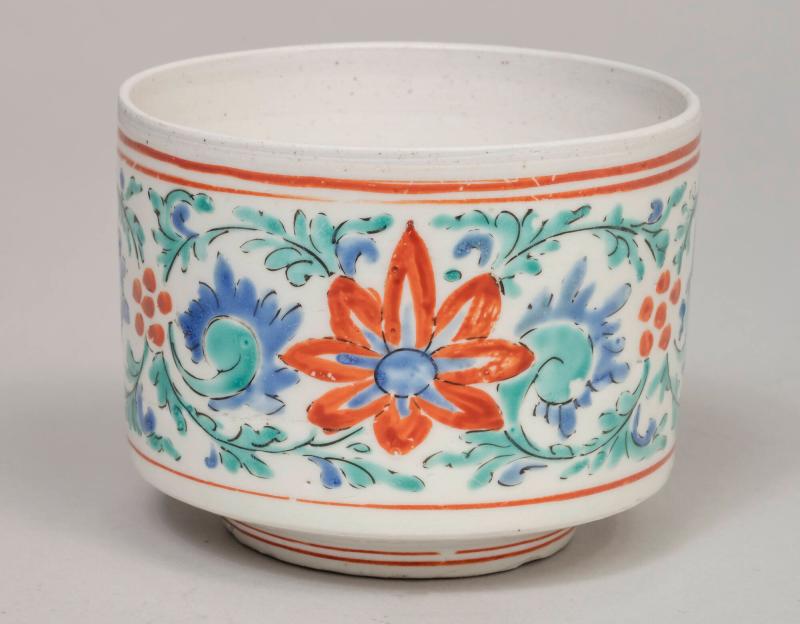
Japanese porcelain production reached technical excellence over the second half of the 17th century. Advances include the refinement of the porcelain paste and the introduction of decoration in colour. During that period, as foreign and domestic demand for porcelain increased, pieces decorated with coloured enamels proliferated.

0
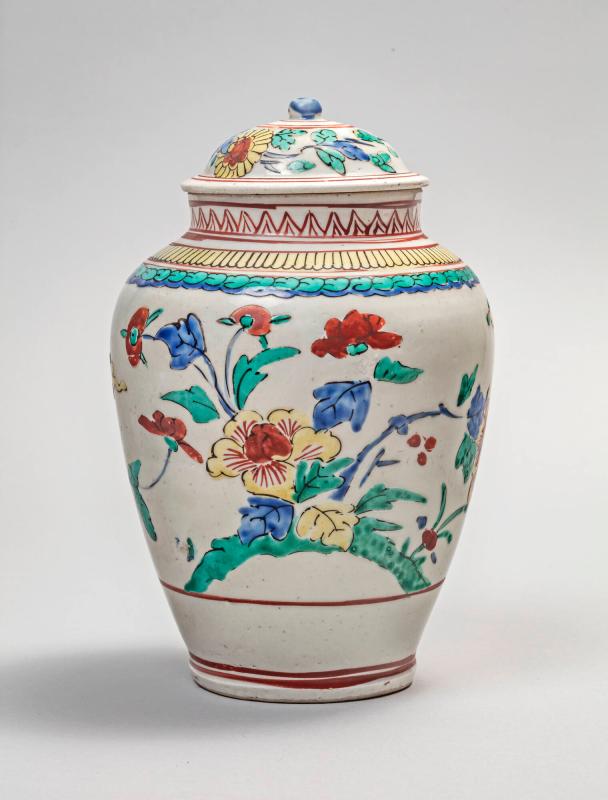
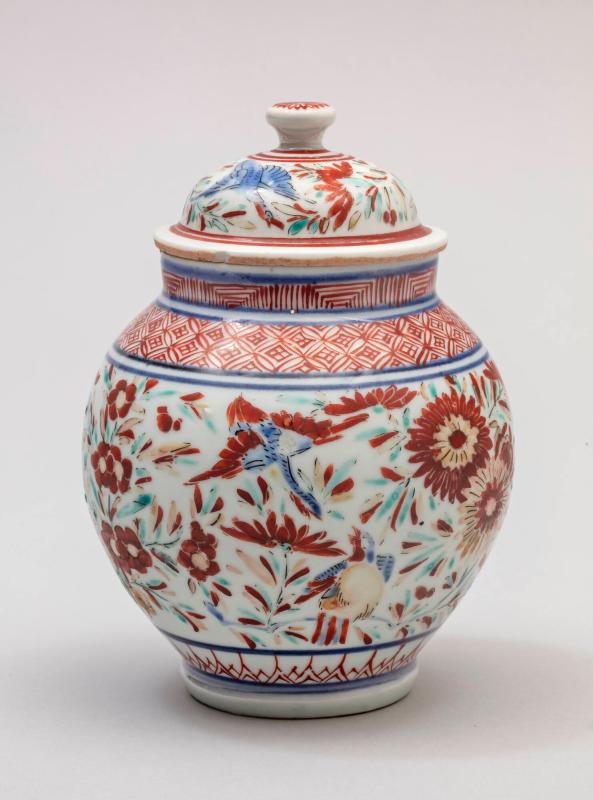
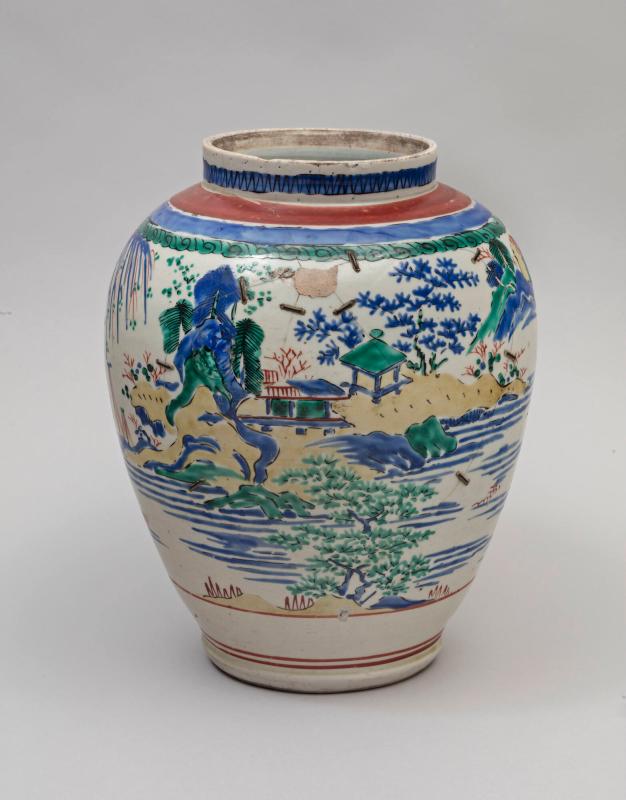
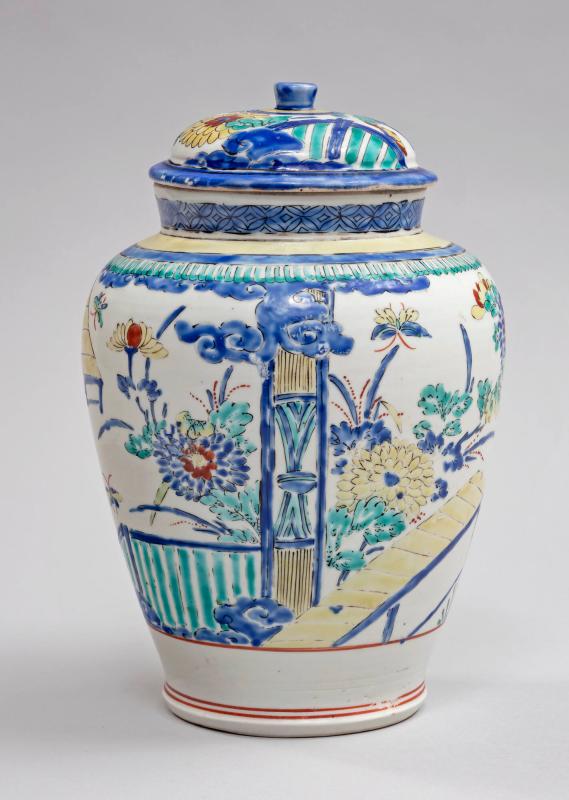
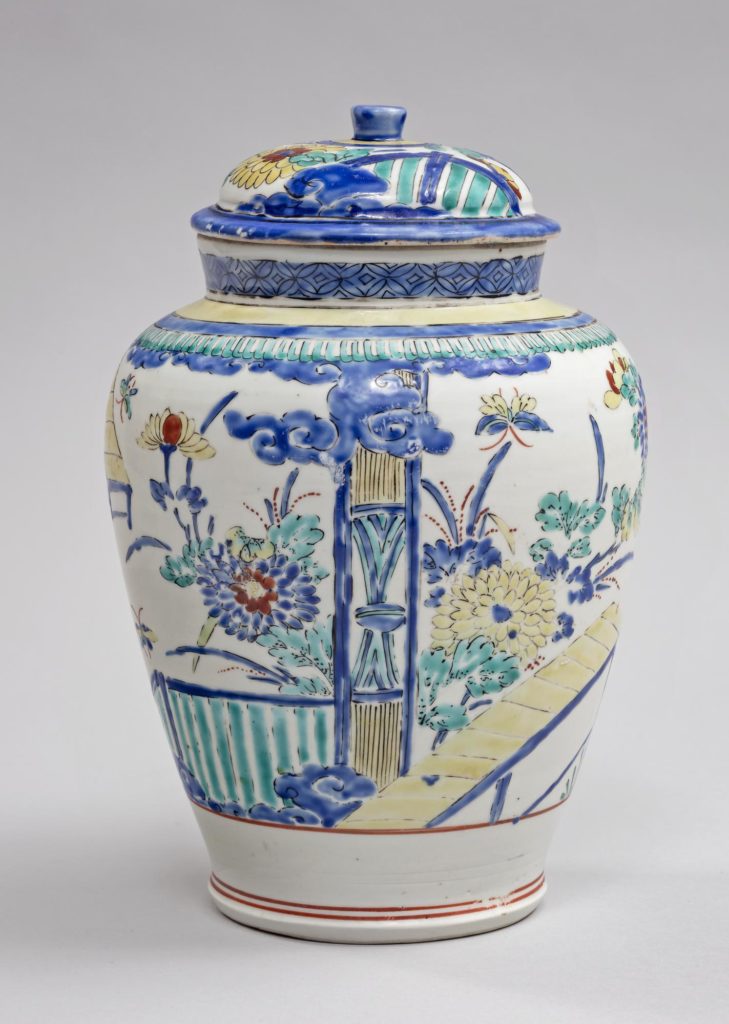
Arita covered jar

Covered jar, Japan, Hizen, c.1660-1680, Porcelain with overglaze enamels. The Macdonald Collection

The technique of applying enamels over the glaze was introduced in the 1640s. It is generally believed that Chinese potters fleeing the turmoil that followed the fall of the Ming Dynasty brought knowledge of the enamelling technique to Japan. Porcelain decorators in Arita absorbed this technical knowledge and developed their own colour palette. They also introduced a cobalt-blue enamel not yet employed in China, as seen on this large covered jar decorated with terraces and flowers.
1
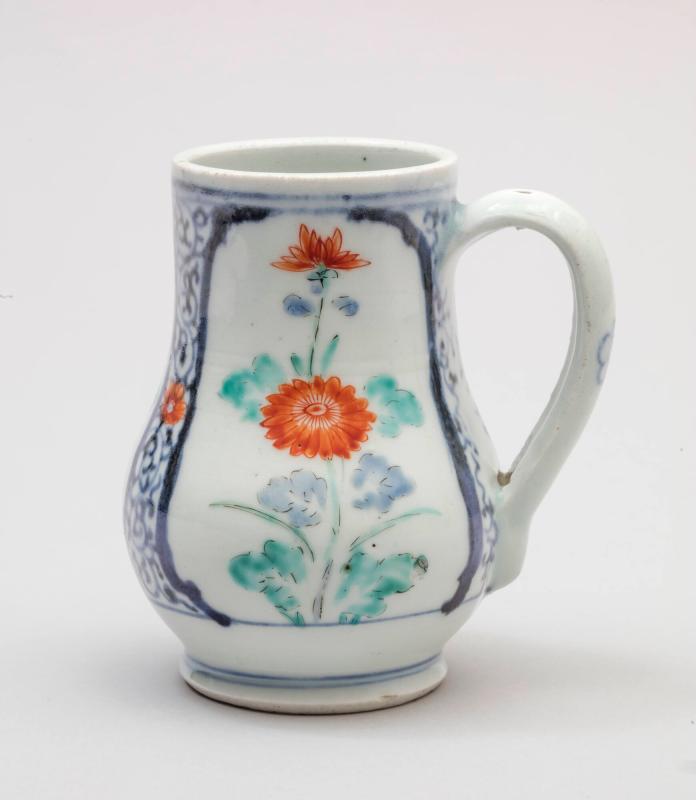
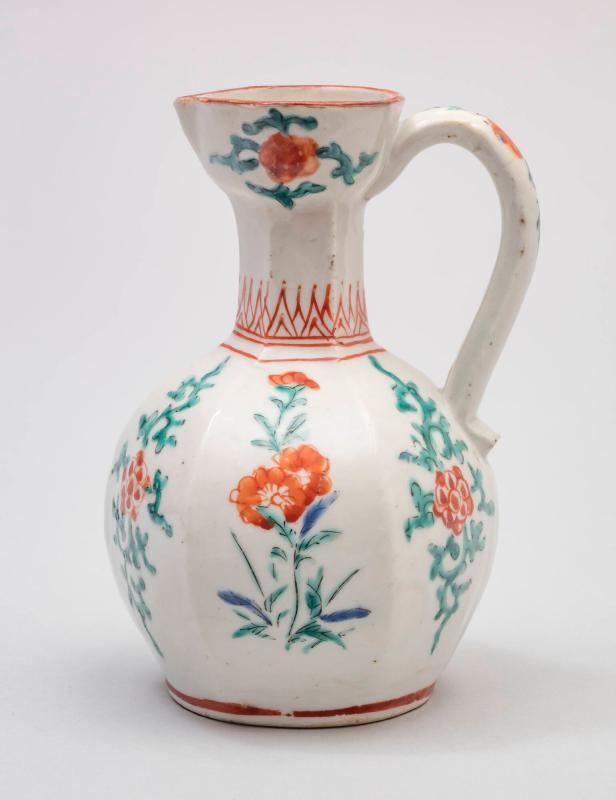
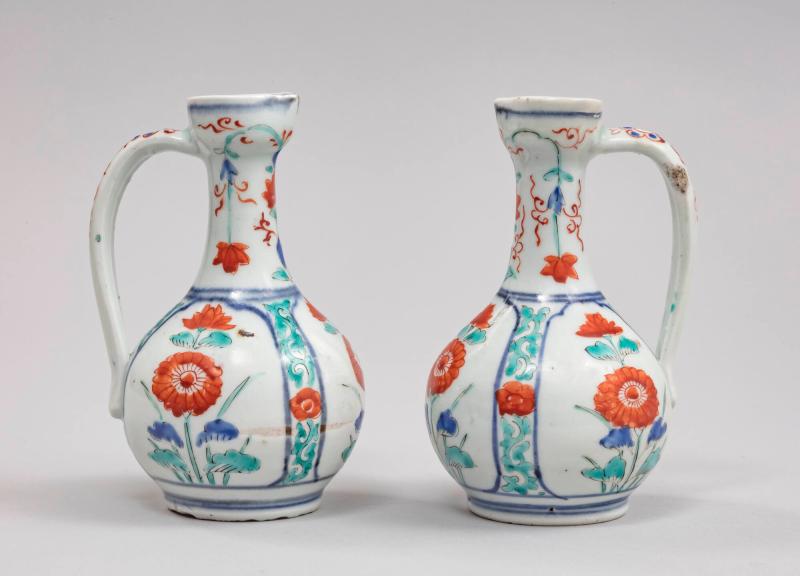
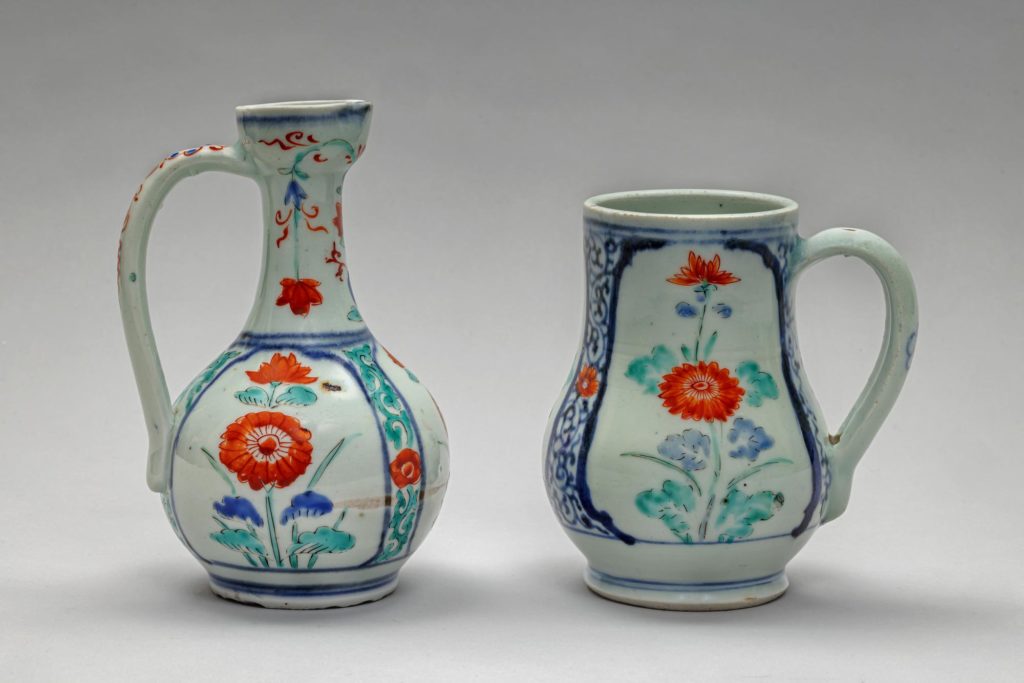
Ewer and mug with bright orange flowers

Ewer and mug, Japan, Hizen, c.1670-1690, Porcelain with overglaze enamels. The Macdonald Collection

Brightly coloured porcelains were first made for a domestic market and quickly became popular export items. From the 1650s to the 1670s, Japan’s trade with the Dutch East India Company greatly stimulated this production. This ewer and mug with chrysanthemums were made following a special order, and their shape was copied directly from wooden models provided by Dutch merchants.

0

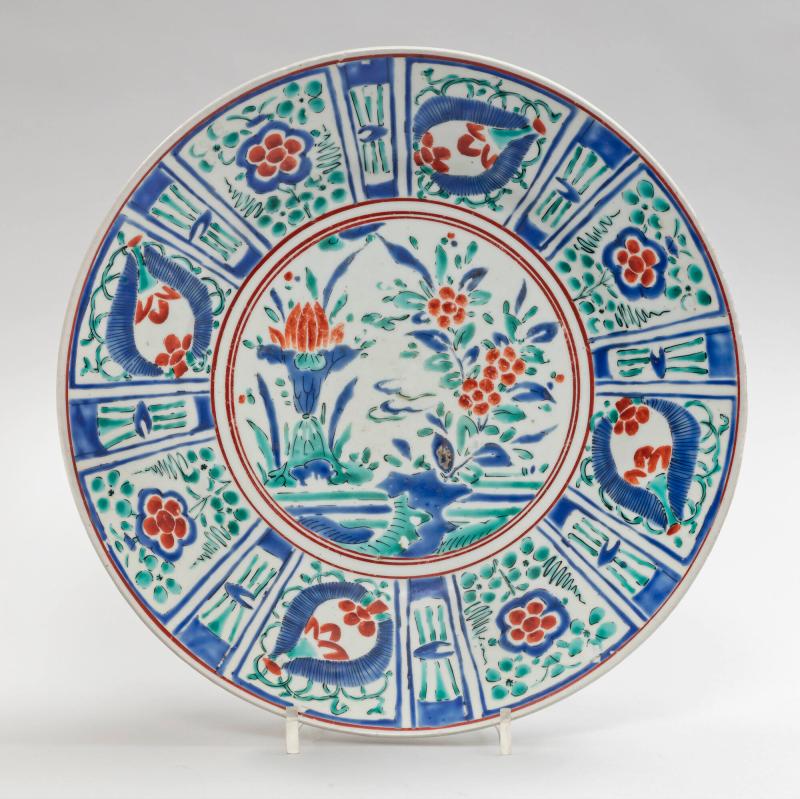
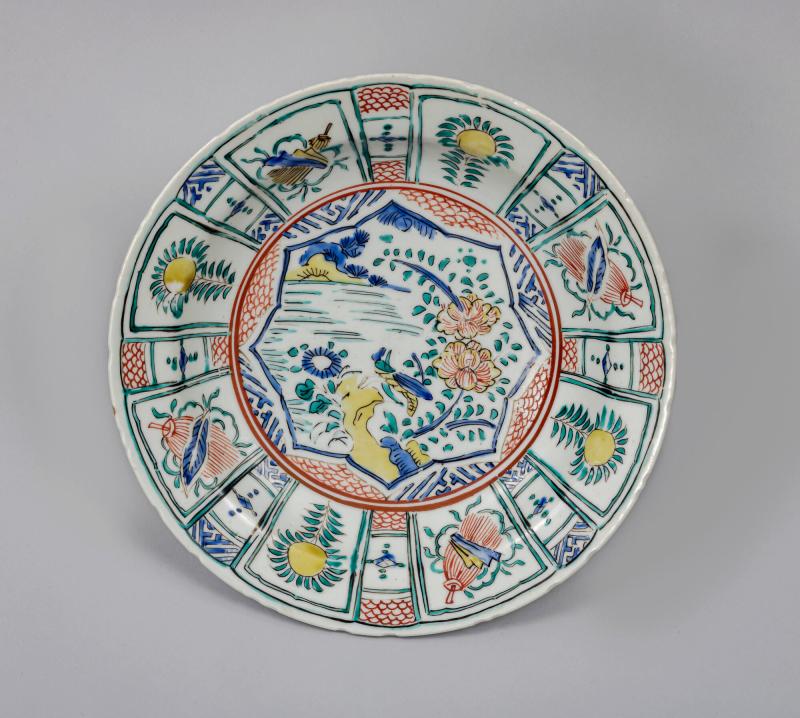
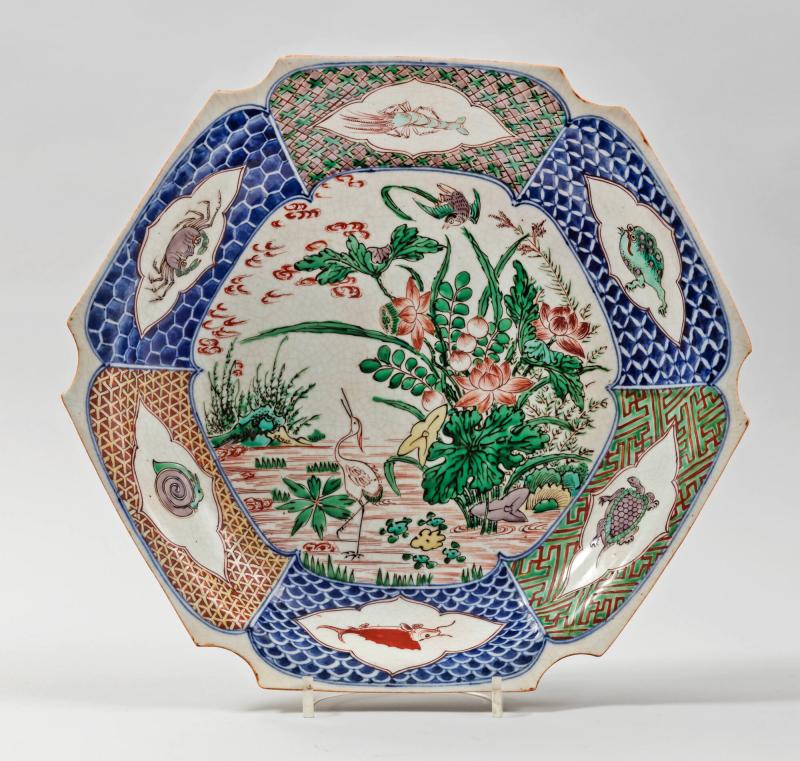
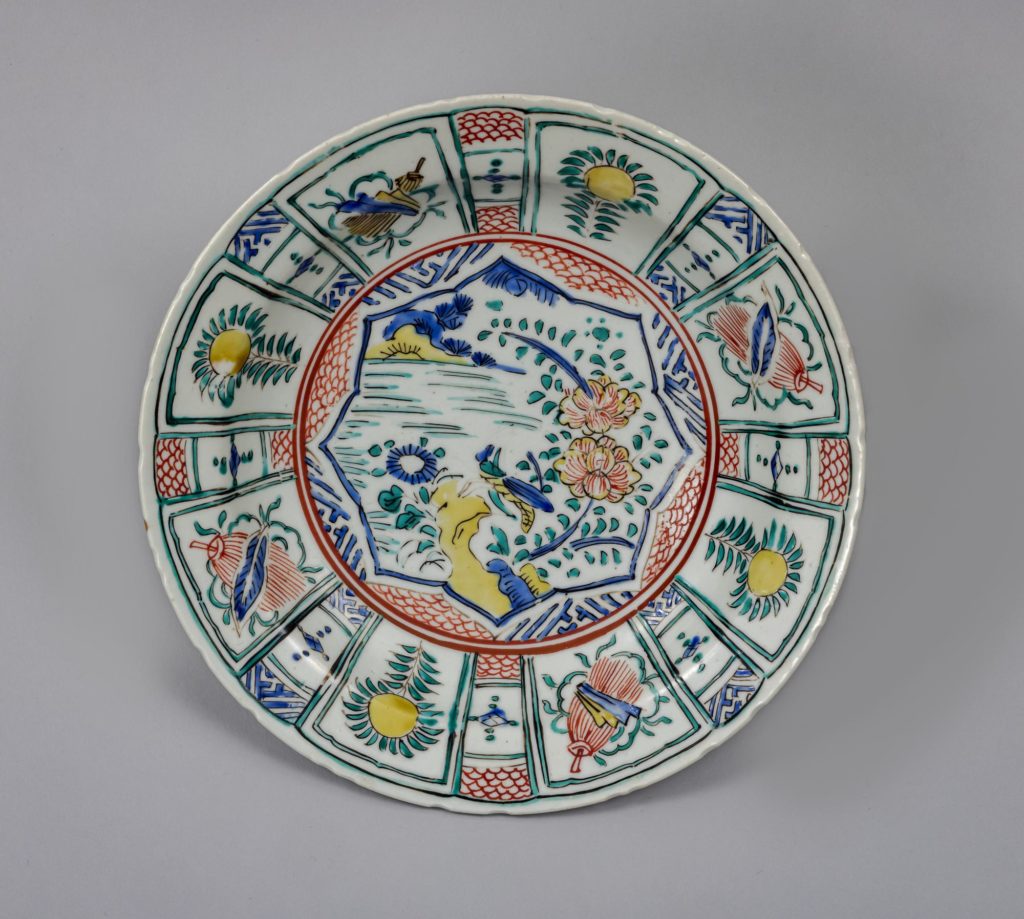
Kraak-style dish Japan, Hizen, c. 1660–70 Porcelain with overglaze enamels The Macdonald Collection

Japanese potters also responded to the demand for Chinese blue-and-white Kraak-style wares with new polychrome interpretations. The rendition of the type characterized by a central nature scene framed by a panelled rim in vibrant colours particularly appealed to markets in South East Asia.

1Discover more about the kraak-style dish
0
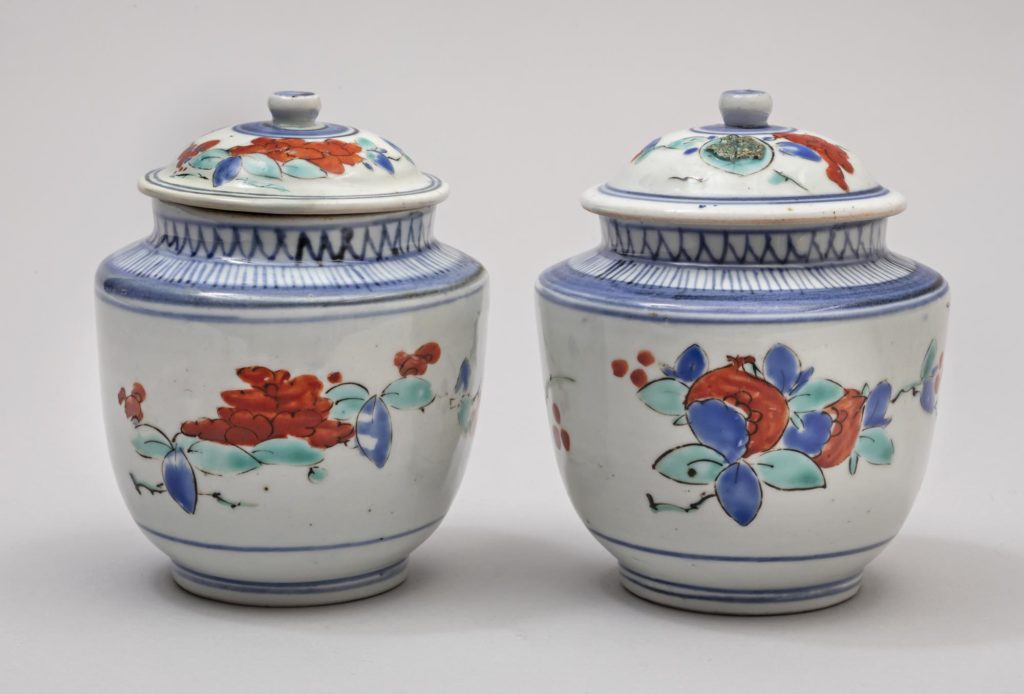
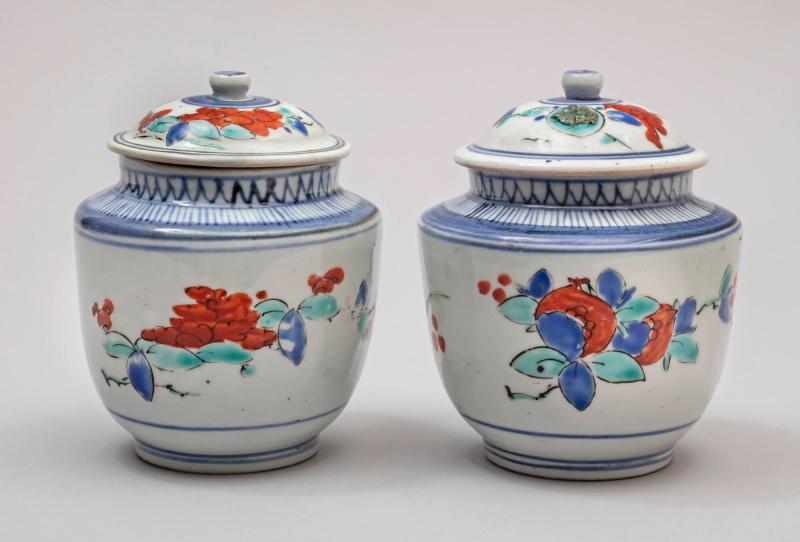
Pair of covered jars with peony and pomegranate

Pair of covered jars with peony and pomegranate, Japan, Hizen, c.1660, Porcelain with underglaze blue, overglaze enamels. The Macdonald Collection

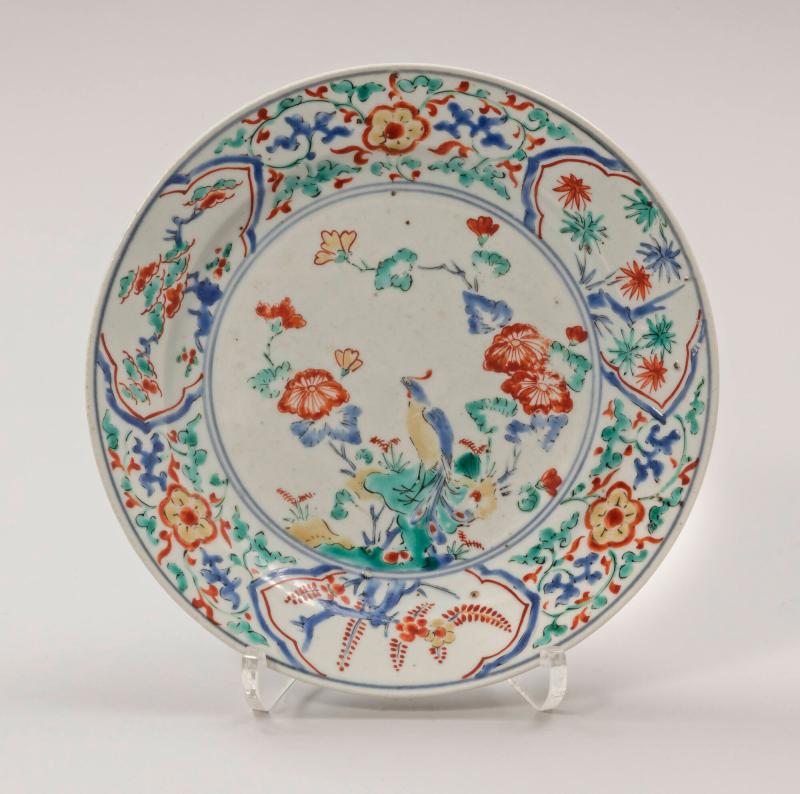
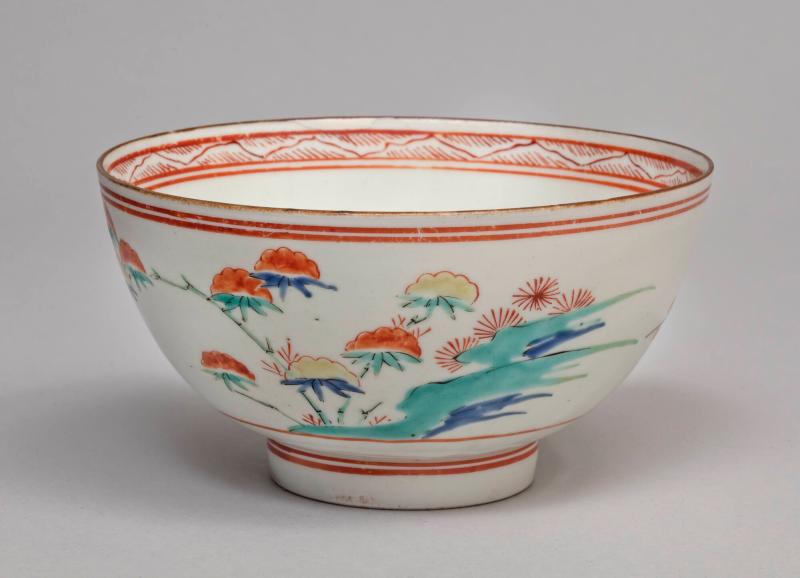
Among the early enamelled wares presented in this group, we find objects featuring design and colour approaches that would lead to the development of a fully fledged Kakiemon style. As such, the pair of covered jars with peony and pomegranate can be described as “proto-Kakiemon.”

The category of early enamelled wares is an umbrella term that unites stylistically diverse pieces made over the second half of the 17th century. It therefore encompasses Ko-Kutani and Nabeshima wares, as well as Kakiemon-style porcelain introduced in the 1670s. These three types are here explored separately.