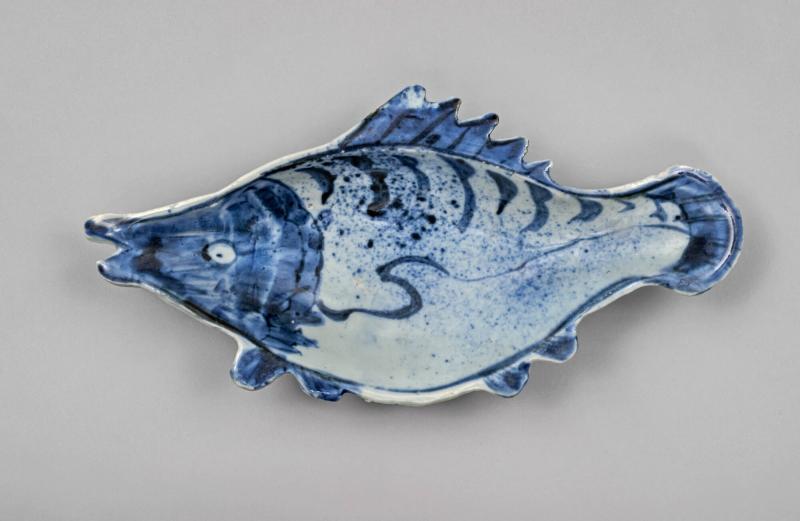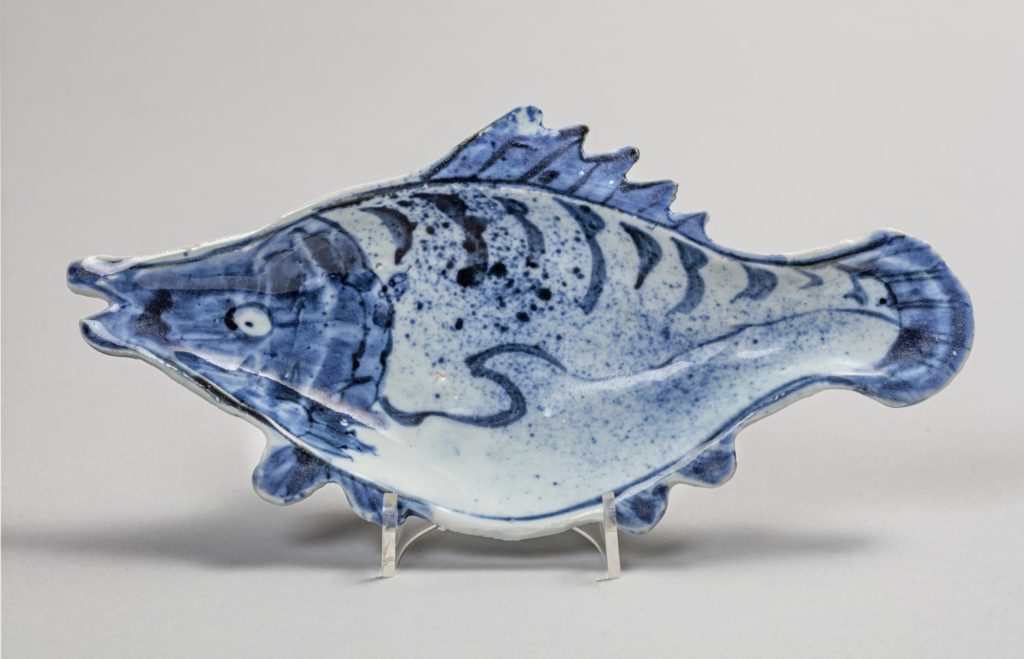
Dish in the shape of a fish, China, Jingdezhen, c. 1621–27 (Tianqi period). Porcelain with underglaze cobalt blue. The Macdonald Collection
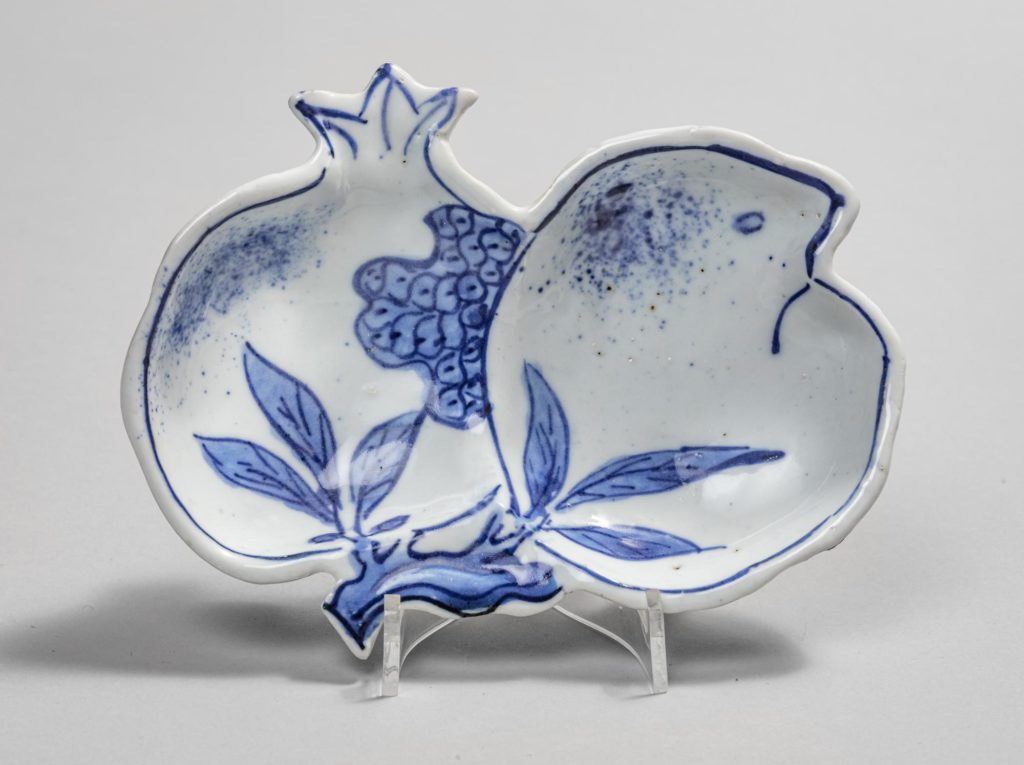
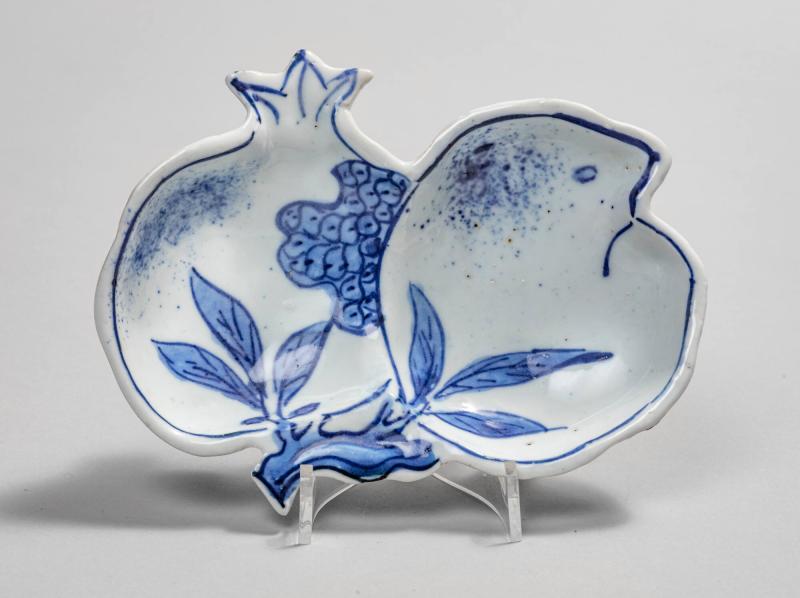
Dish in the shape of a pomegranate and peach, China, Jingdezhen, c. 1621–27 (Tianqi period), Porcelain with underglaze blue. The Macdonald Collection
The presence of Chinese porcelain in Japan goes back to the Kamakura period (c. 1185–1333). Chinese imports were, however, limited in number and expensive so that very few could afford them. By the last decades of the 16th century, Chinese blue-and-white porcelain was imported in greater quantity and integrated within the rituals of the Japanese tea ceremony. In the 1620s and 1640s, small blue-and-white dishes in naturalistic forms (known as ko-sometsuke, or “old blue and white”) were produced specifically for this purpose. The fish-shaped and peach- and pomegranate-shaped dishes exemplify the type appreciated for its rustic and spontaneous quality.
Discover more about the fish-shaped dish