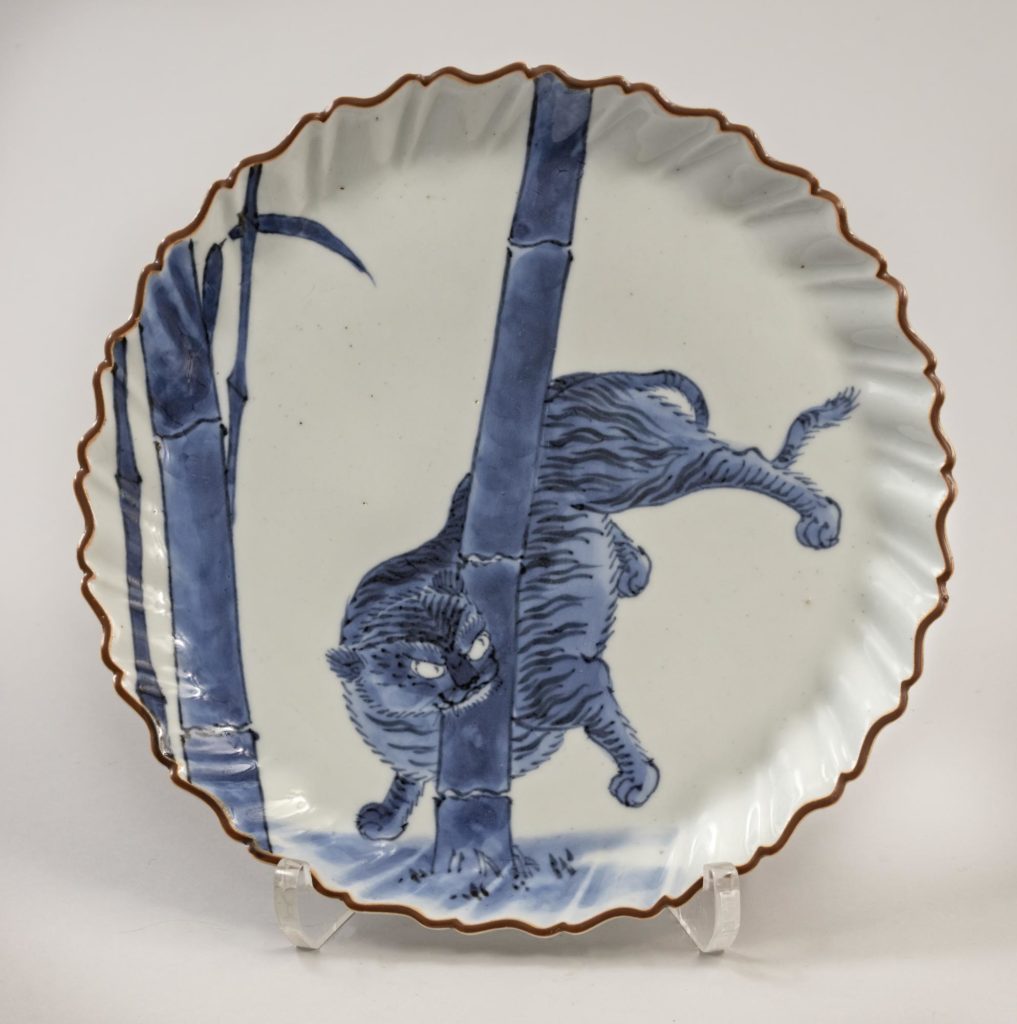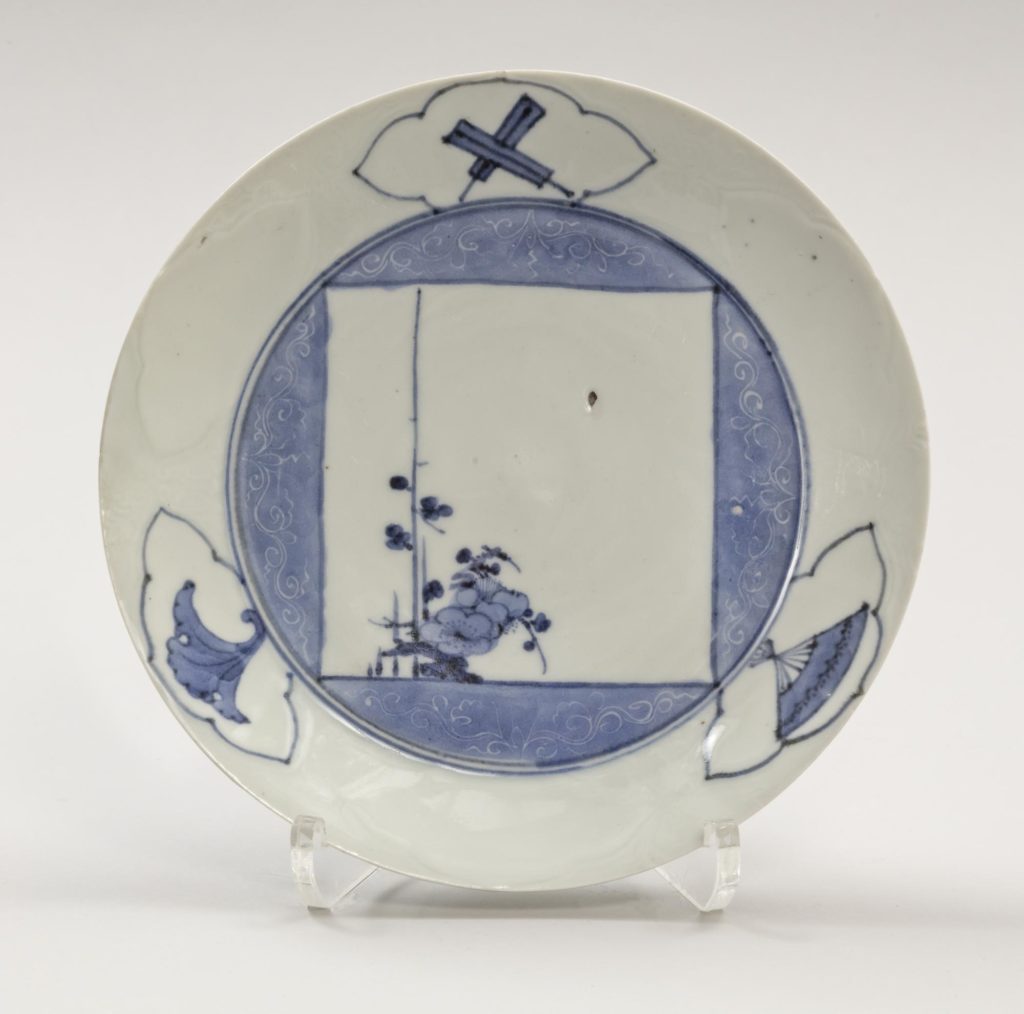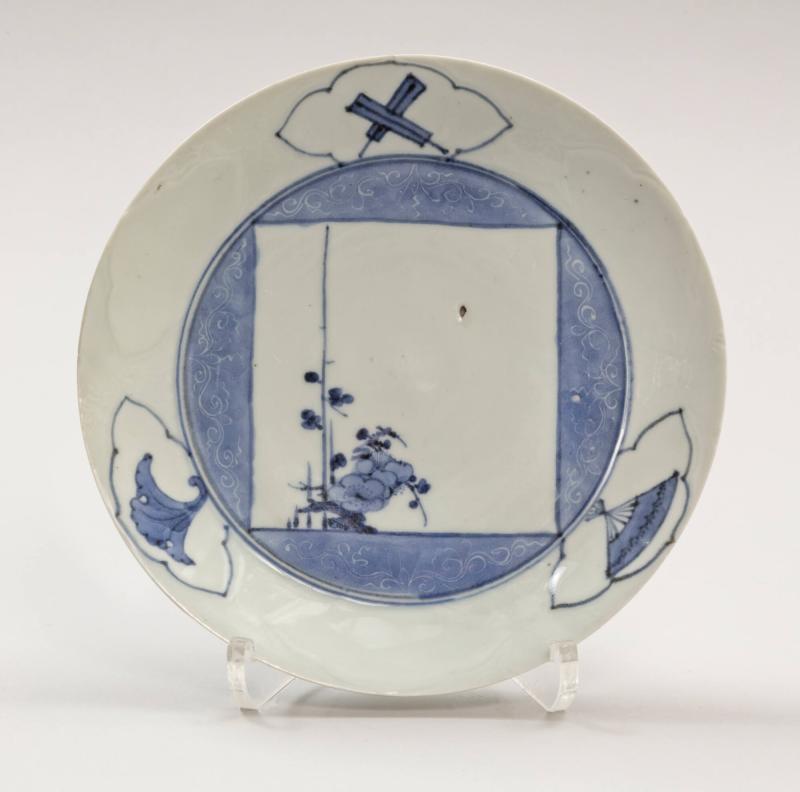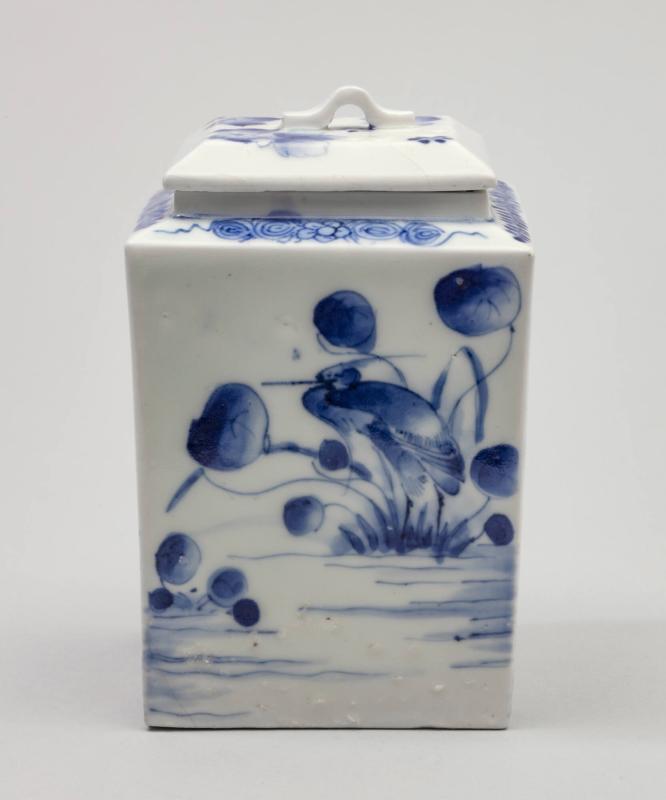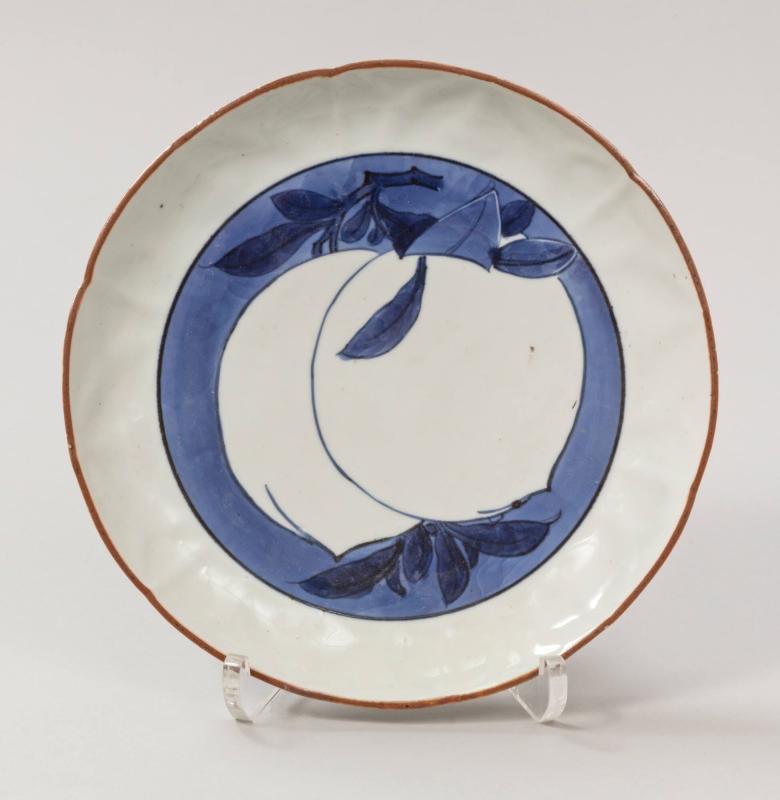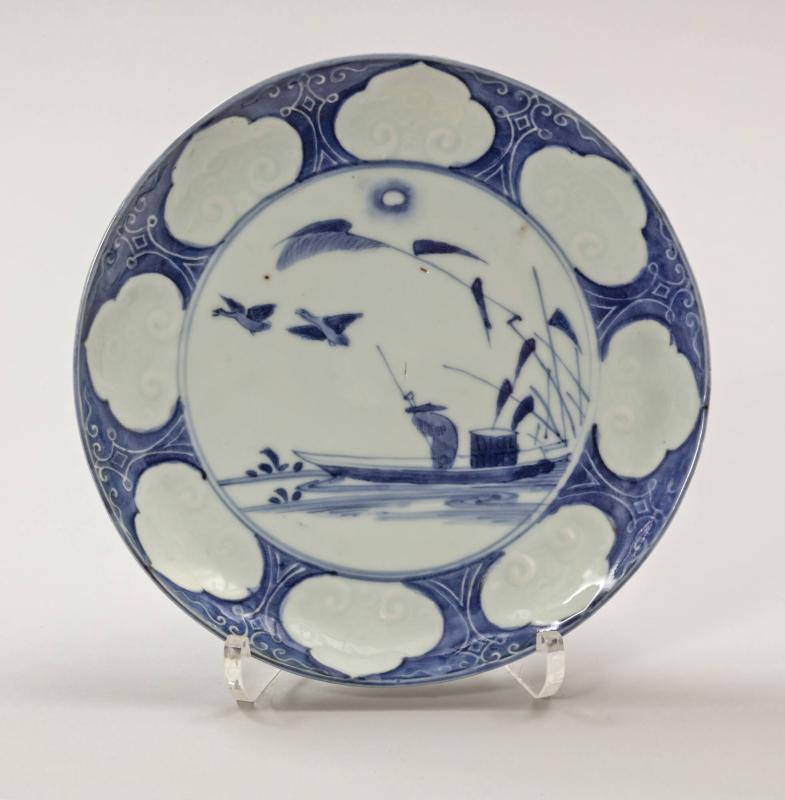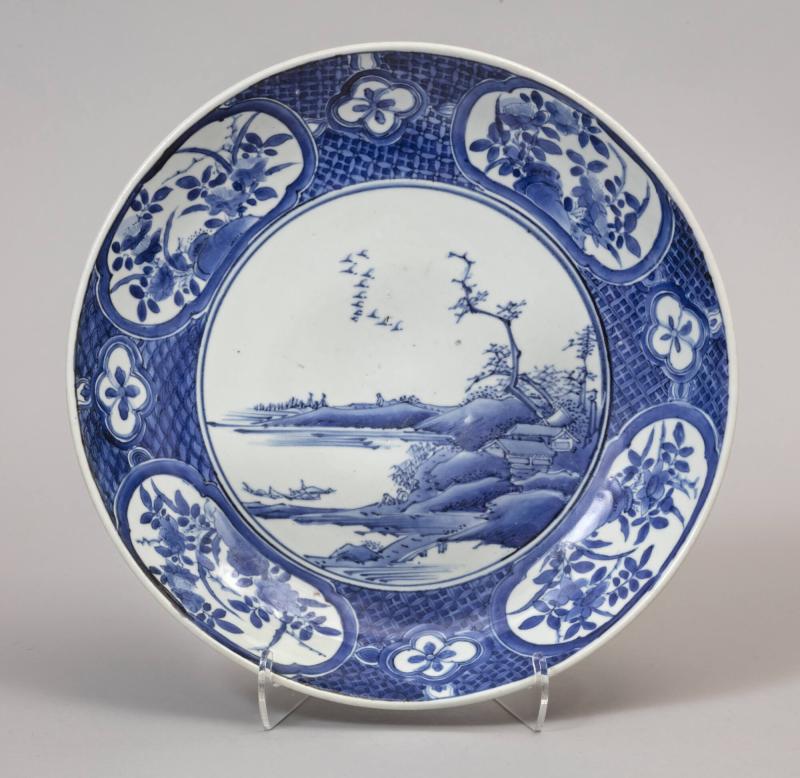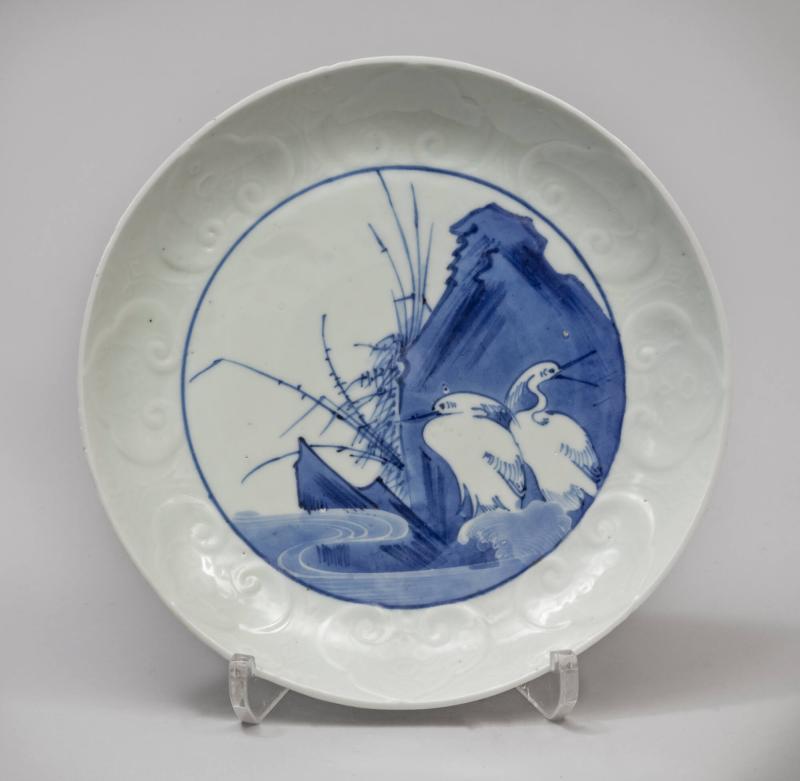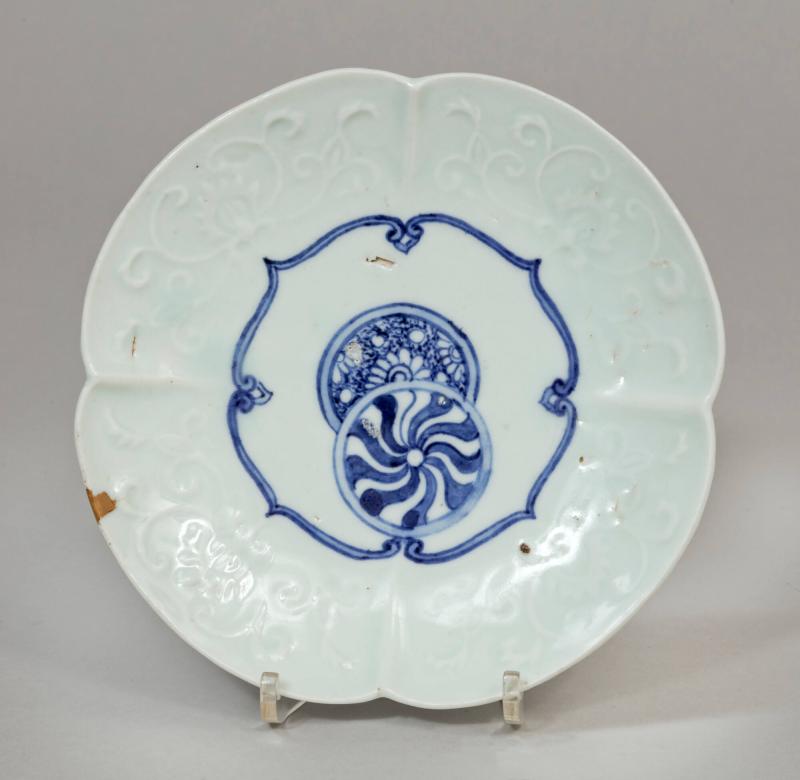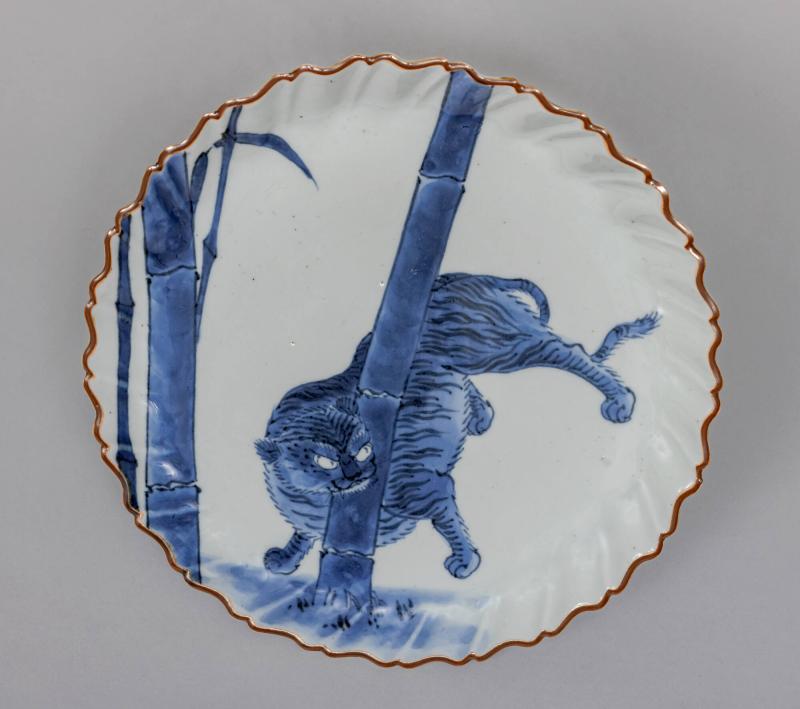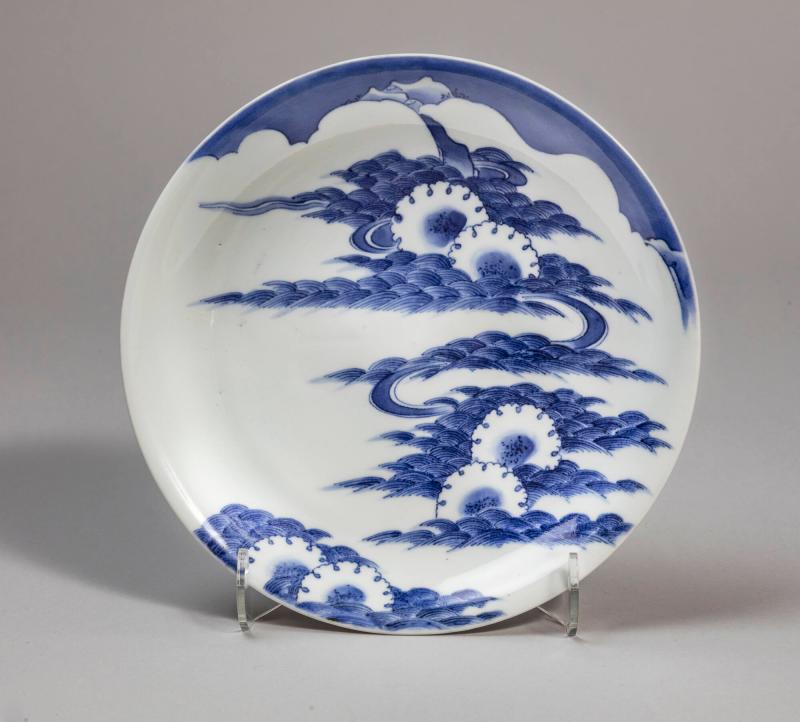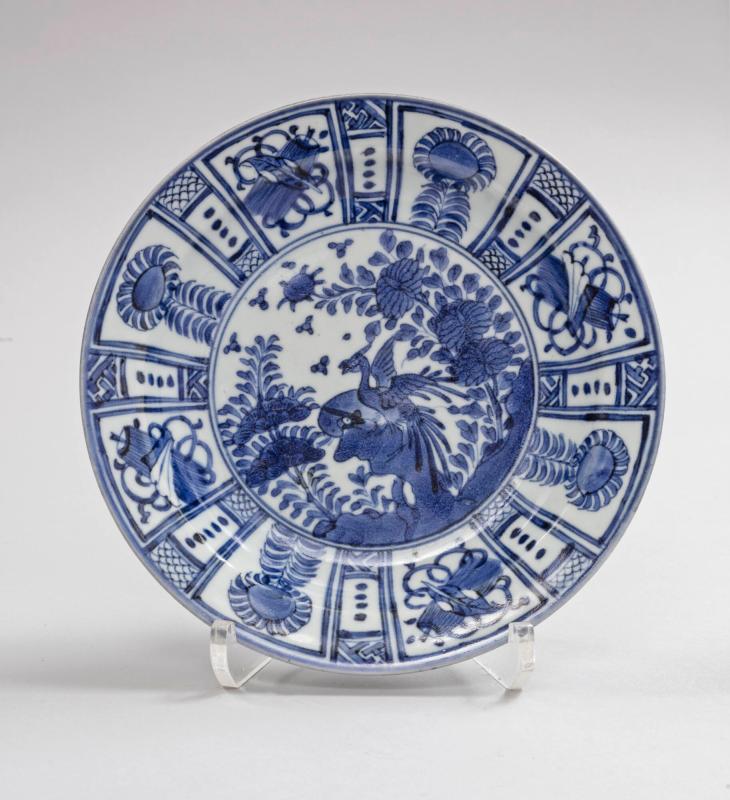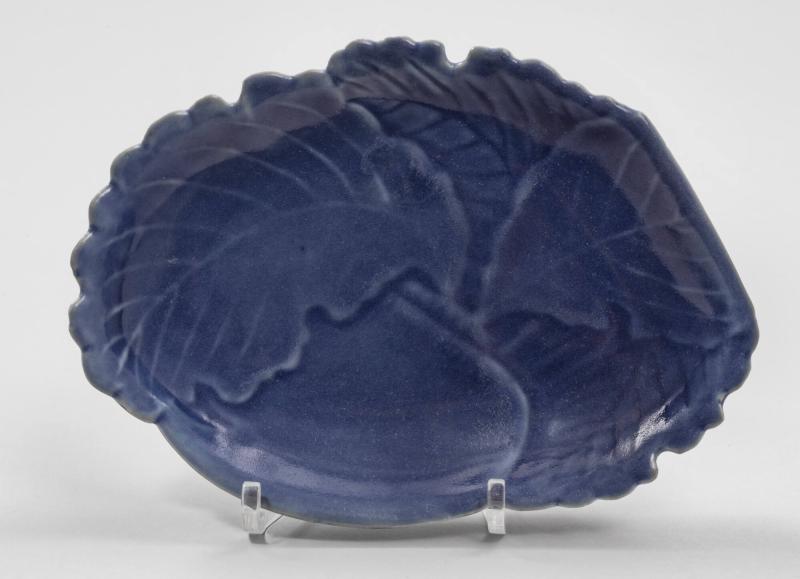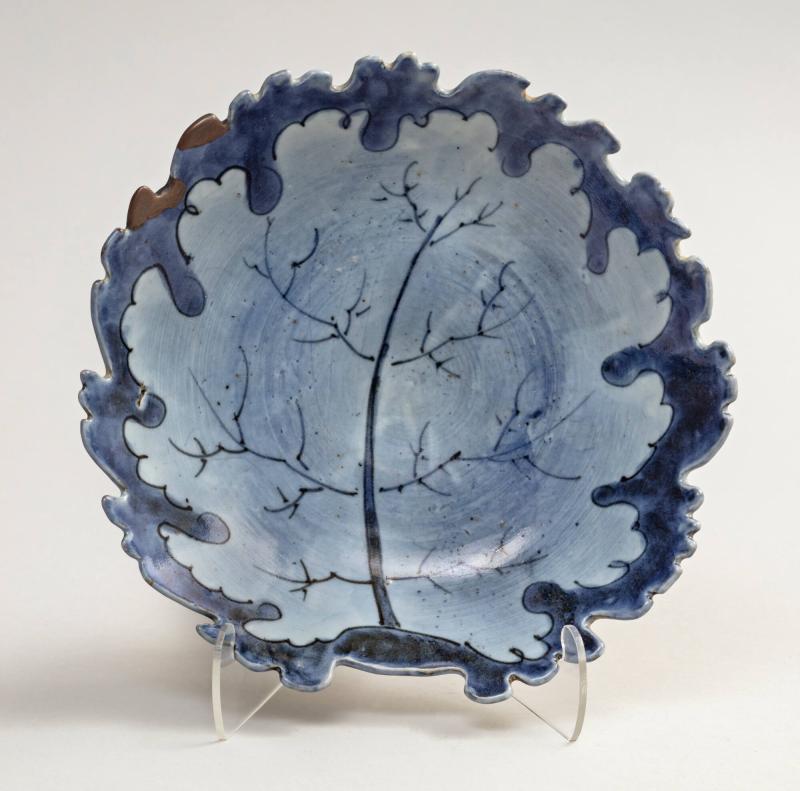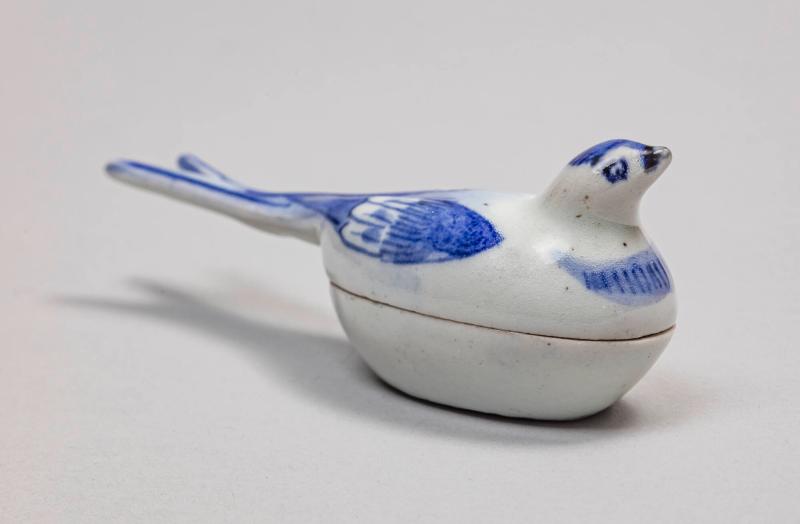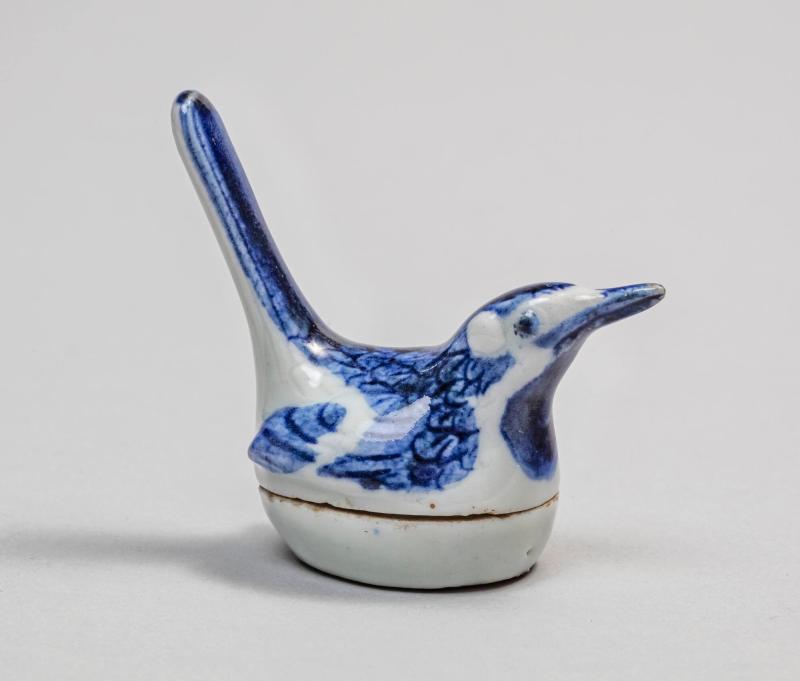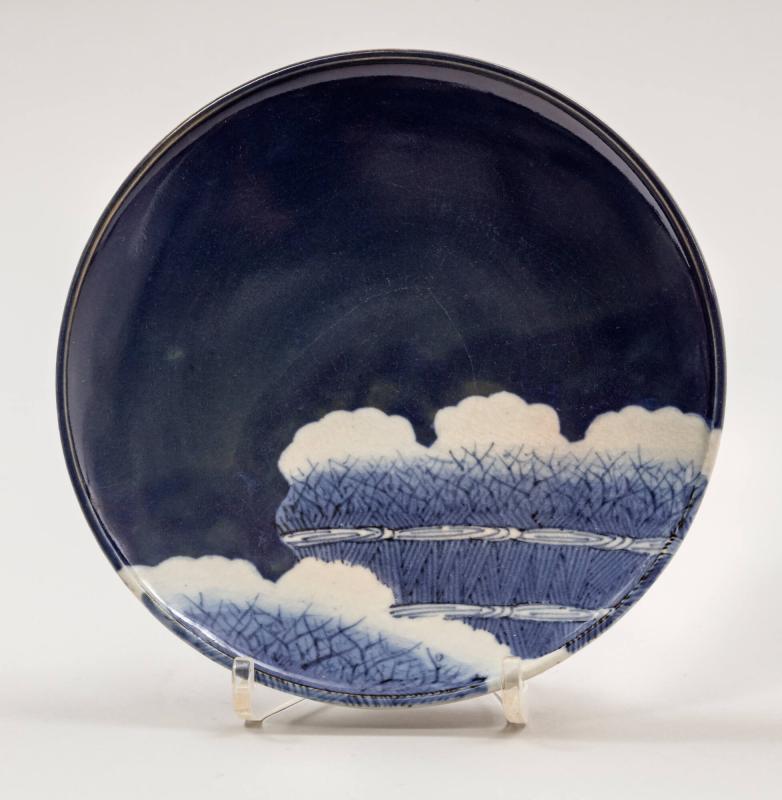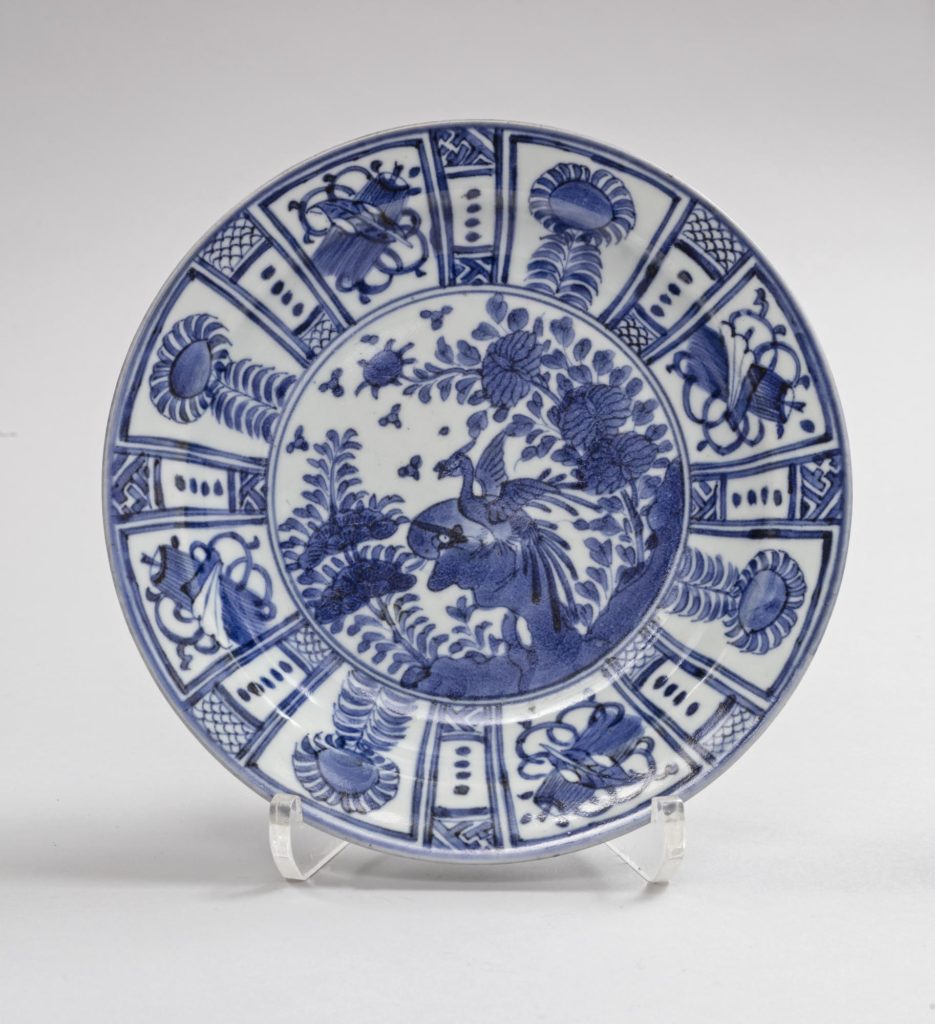
Dish, Japan, Hizen, 1670-1690s, Porcelain with underglaze blue. The Macdonald Collection
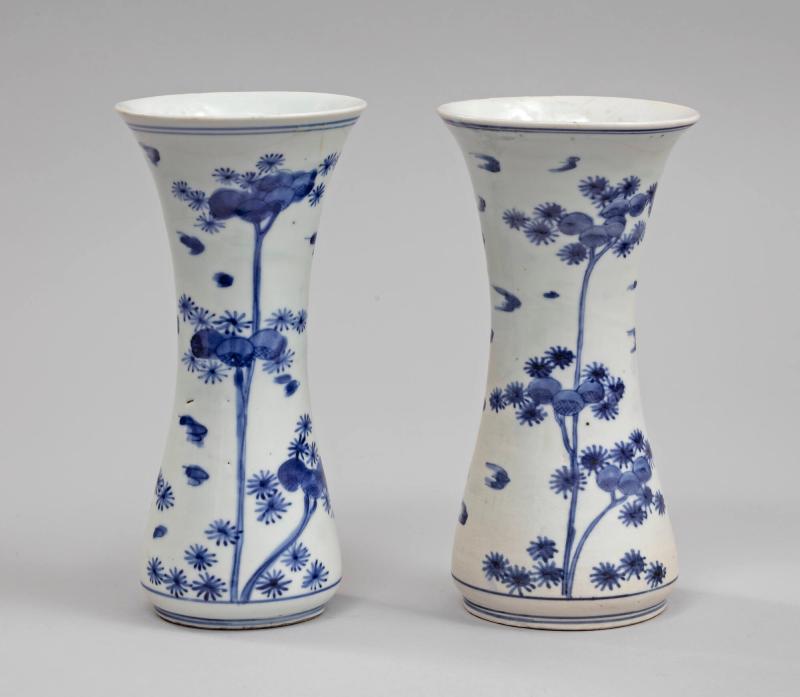
Blue-and-white wares include pieces imitating Chinese wares made to compensate for their absence on the international trade market. In the 1640s to approximately the 1670s, porcelain production considerably declined in China, and in the 1650s, the Dutch East India Company turned to Japan as a source for the types of porcelain popular with European consumers. These included copies of blue-and-white Kraak-style dishes which had been made in Jingdezhen since the late 16th century.