Arita Blue and White Porcelain

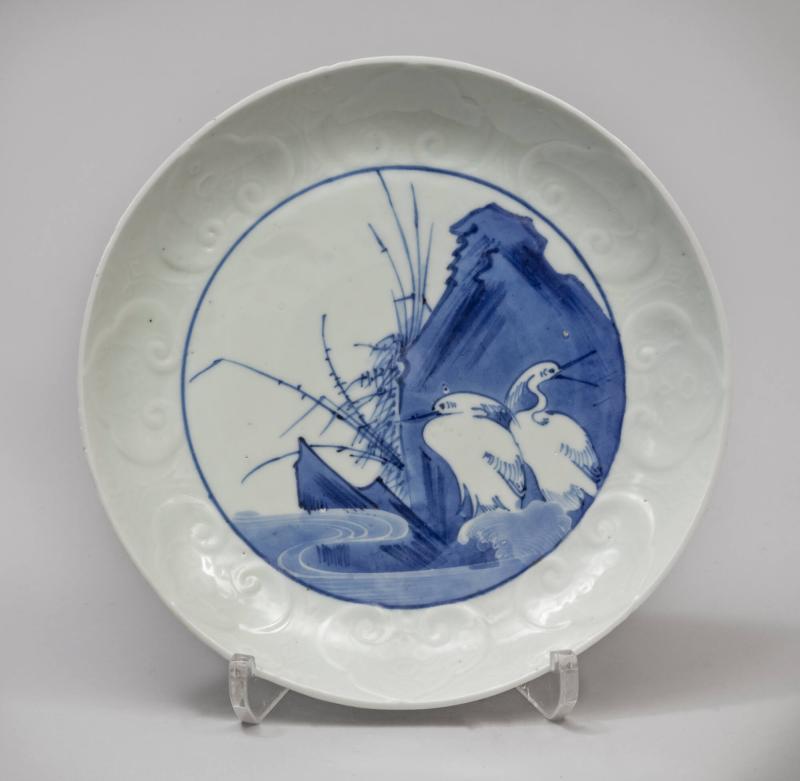
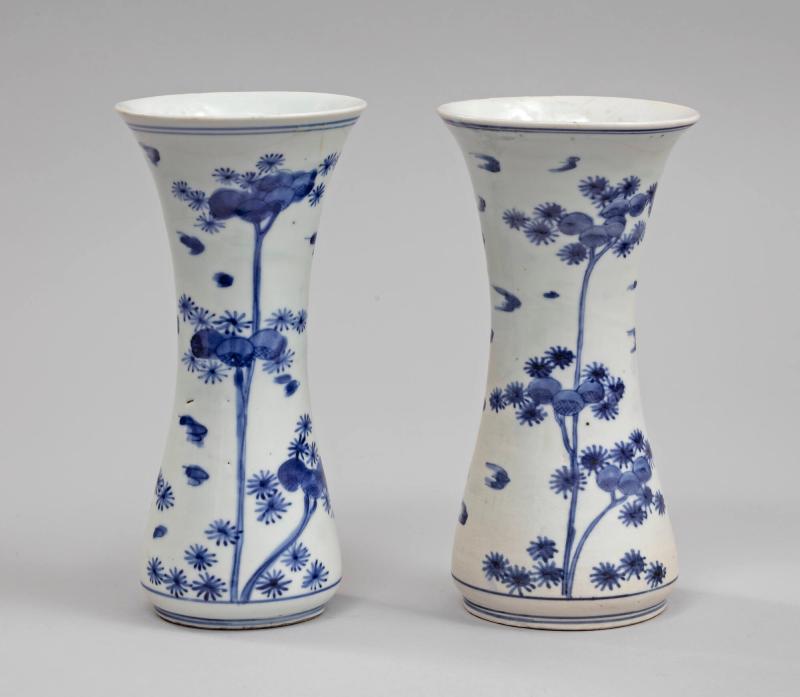
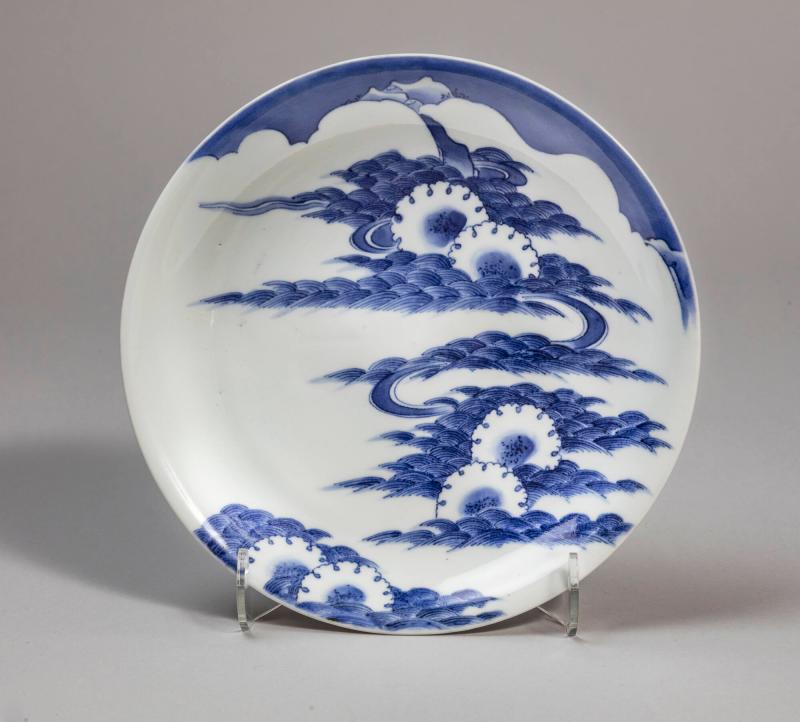
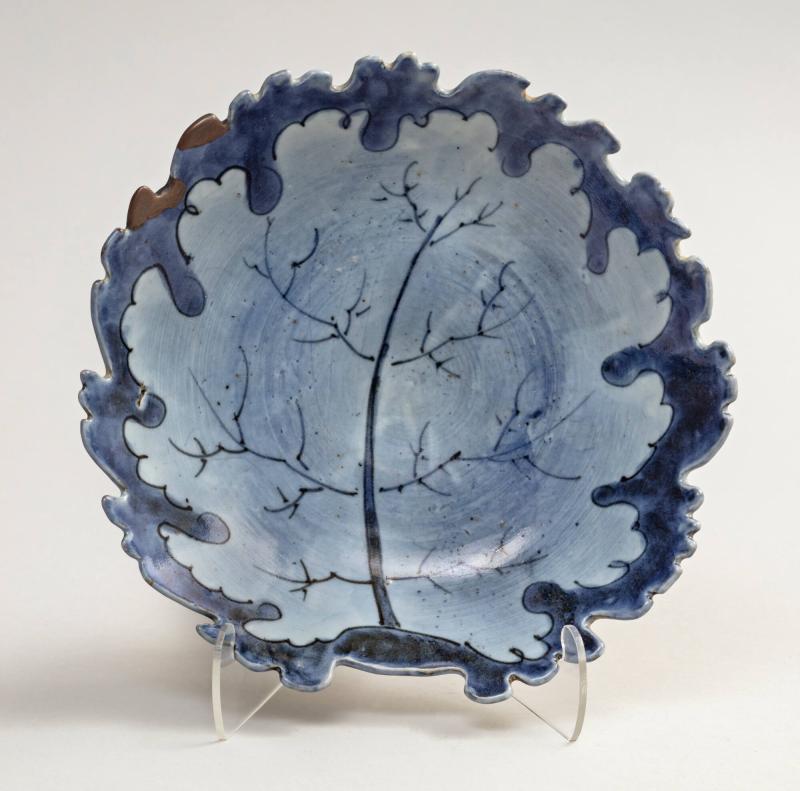
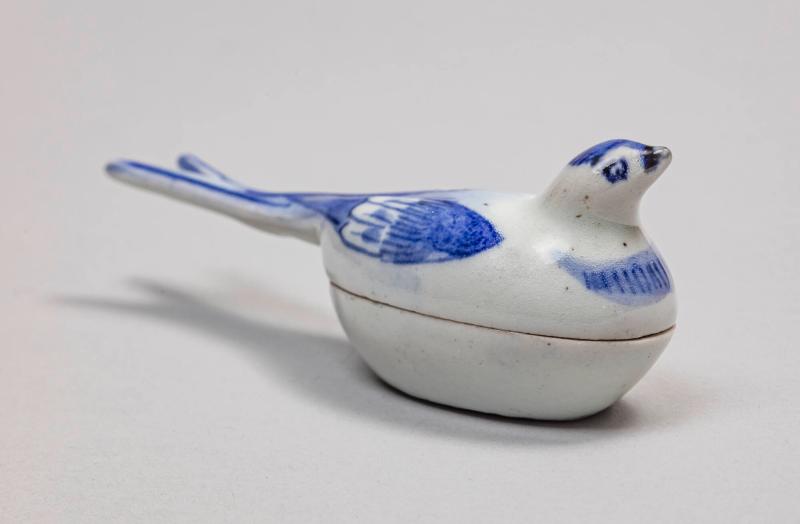
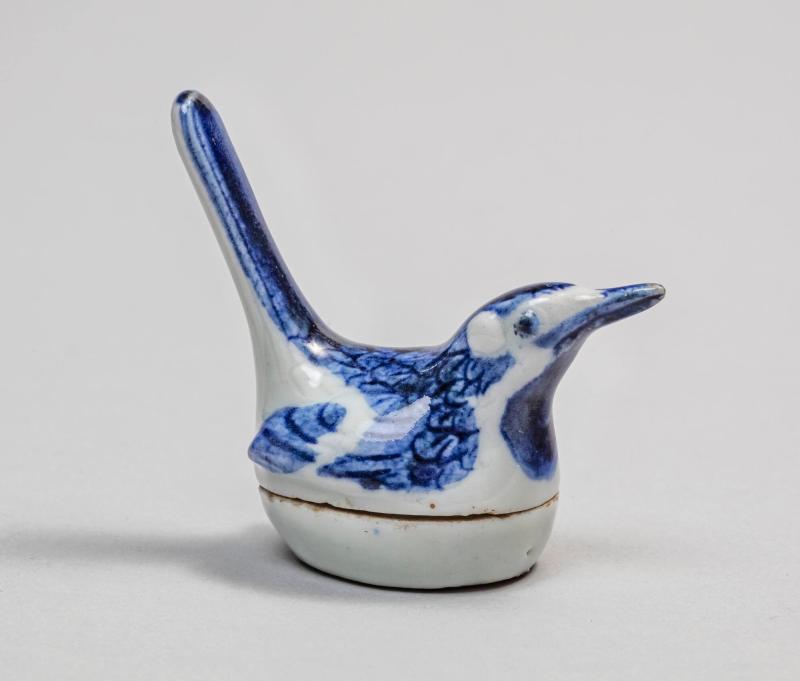
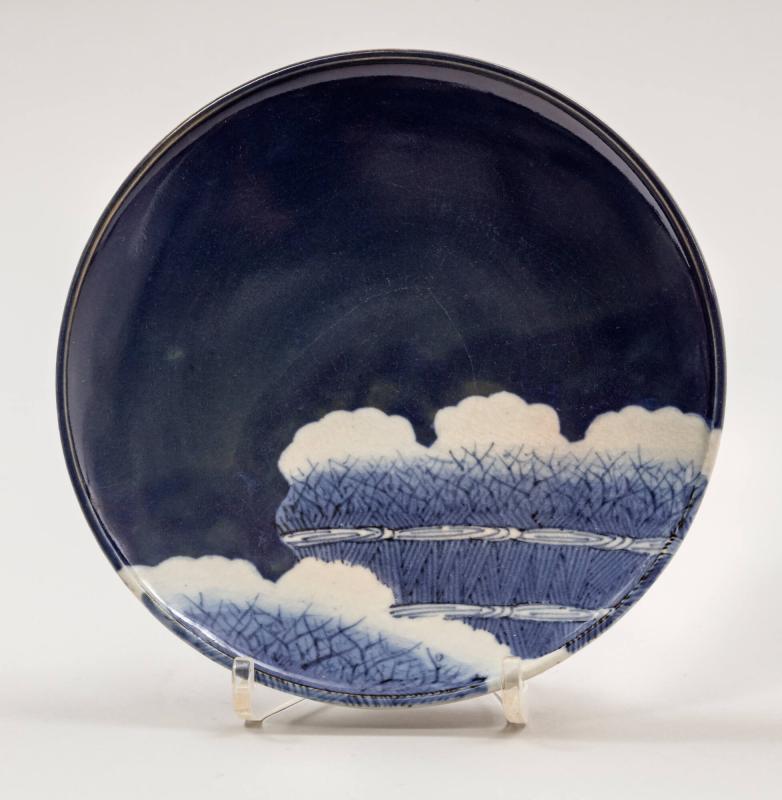
While porcelain embellished with colourful enamel decoration seems to have dominated taste, blue-and-white wares known as sometsuke continued to represent an important part of Arita’s porcelain production. This varied group reflects the fashions and demands of the domestic and export markets.

0
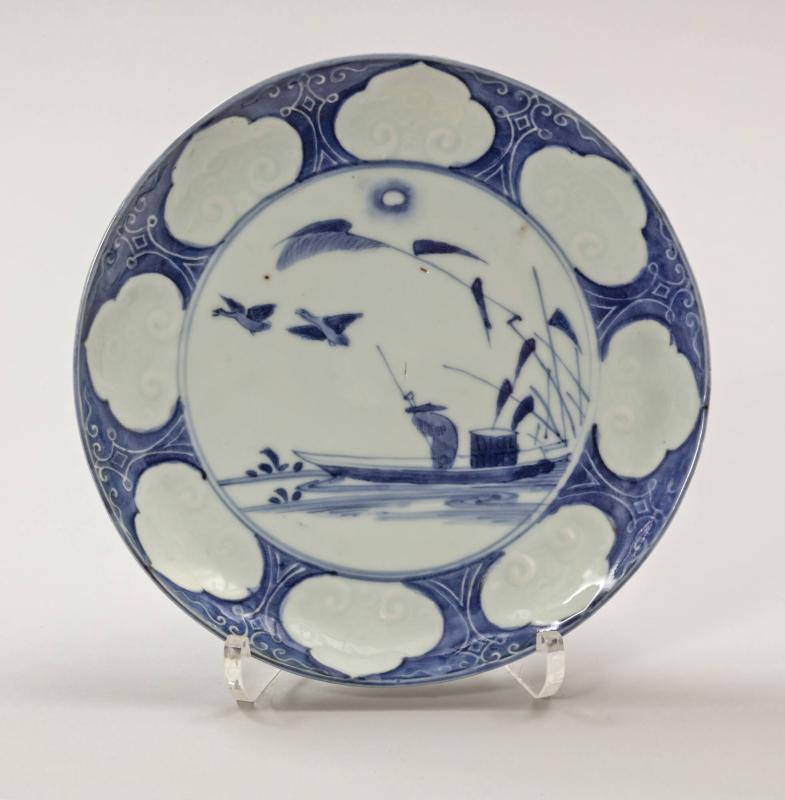
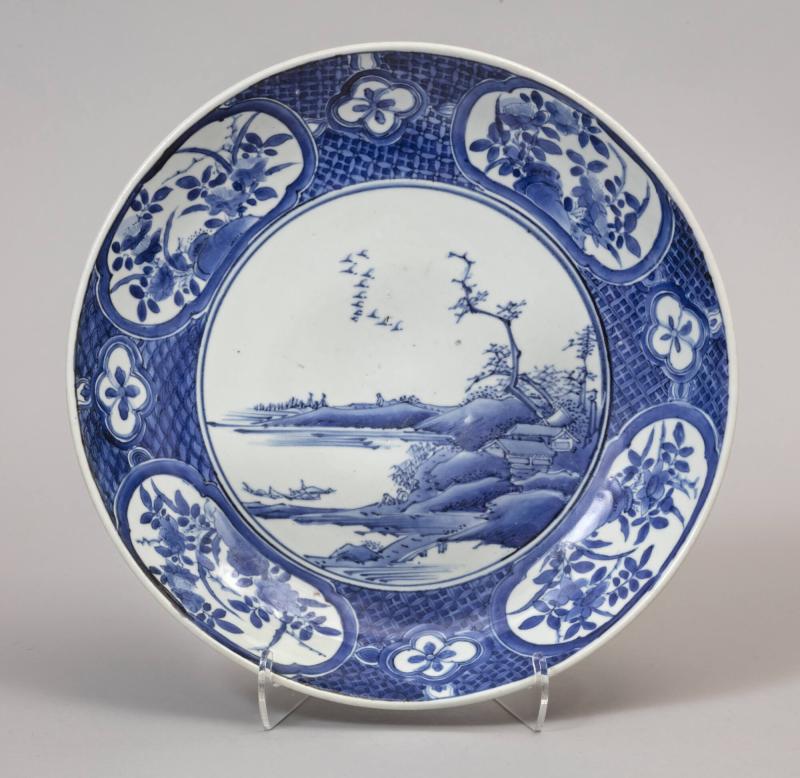
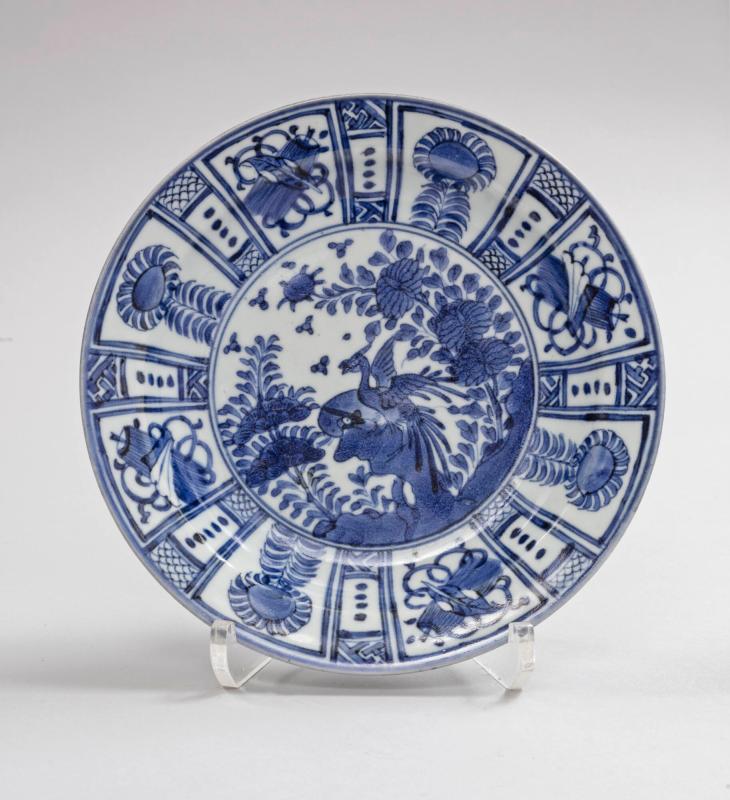
Blue and white highly decorated dish

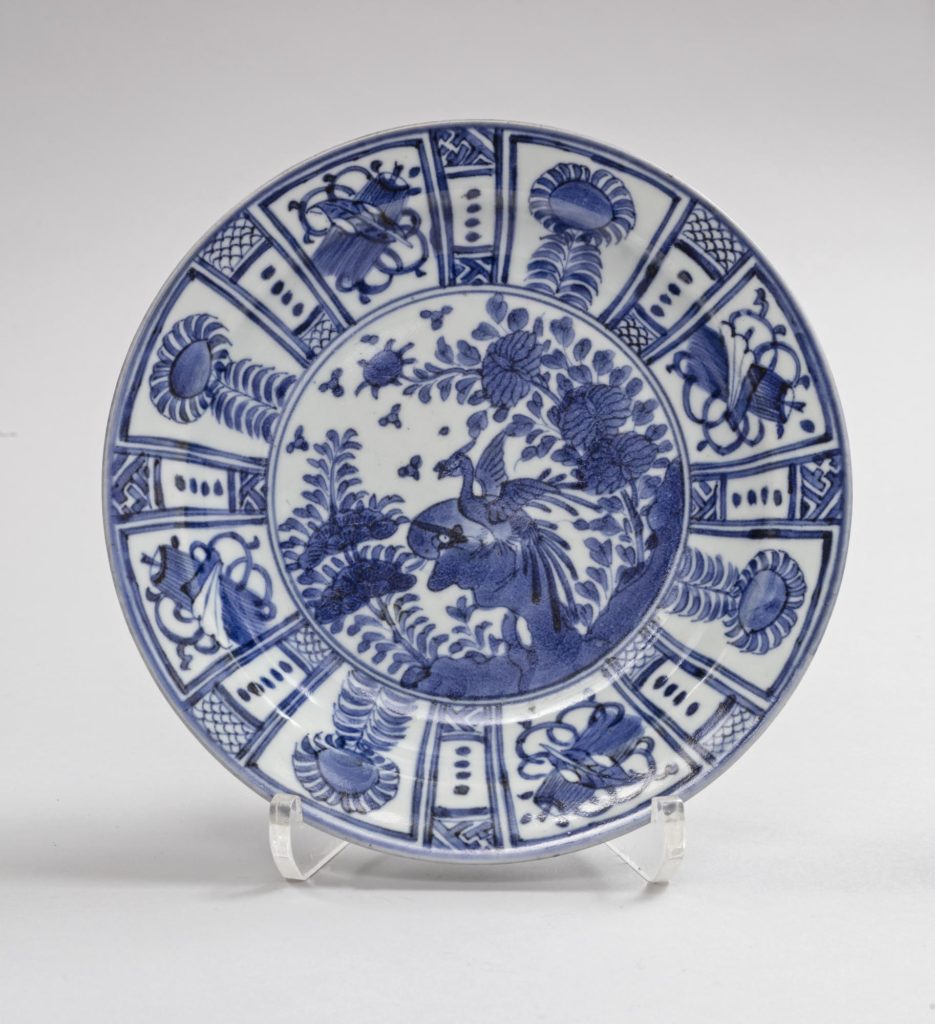
Dish, Japan, Hizen, 1670-1690s, Porcelain with underglaze blue. The Macdonald Collection

Blue-and-white wares include pieces imitating Chinese wares made to compensate for their absence on the international trade market. In the 1640s to approximately the 1670s, porcelain production considerably declined in China, and in the 1650s, the Dutch East India Company turned to Japan as a source for the types of porcelain popular with European consumers. These included copies of blue-and-white Kraak-style dishes which had been made in Jingdezhen since the late 16th century.
0
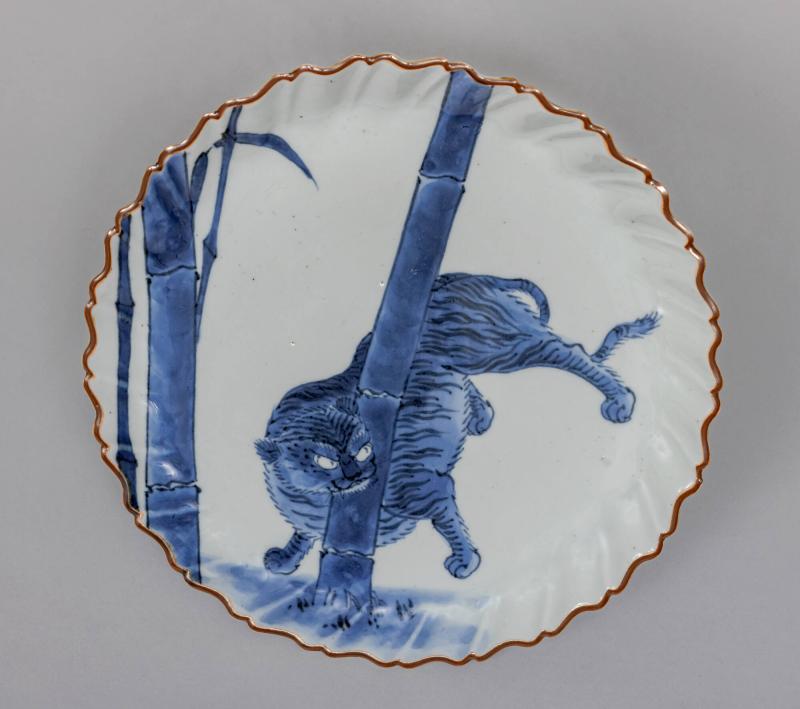
Dish with tiger and bamboo Japan, Hizen

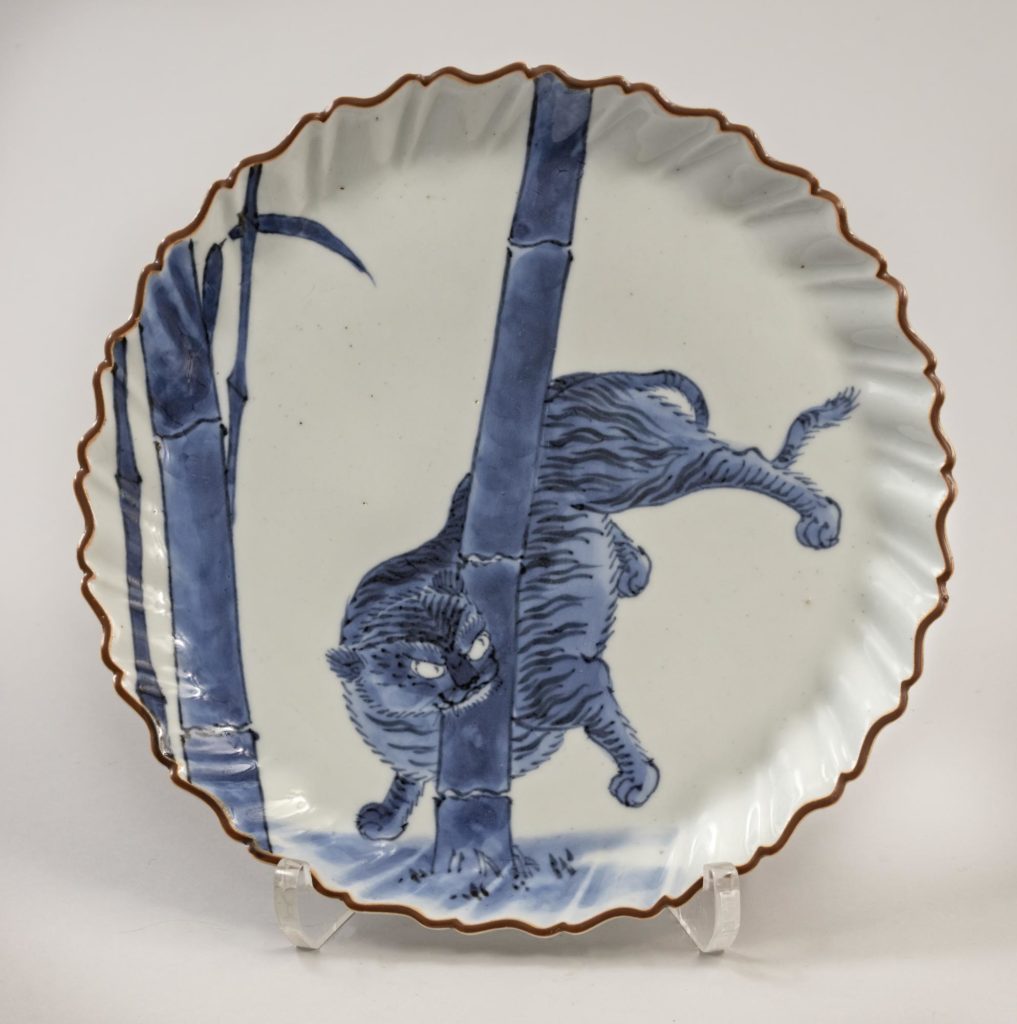
Dish with tiger and bamboo Japan, Hizen, c. 1650 Porcelain with underglaze cobalt blue, iron-oxide brown Mark: fuku (happiness) The Macdonald Collection

While European demand shifted to enamelled wares, decoration in blue and white continued to be popular on the Japanese domestic market and remained so throughout the 18th and 19th centuries. The bold and dynamic designs seen on a dish decorated with a tiger amid stalks of bamboo speak to the emergence of a uniquely Japanese design sensibility in porcelain, one where asymmetry and negative space prevail.

1Discover more about dish with tiger and bamboo
0
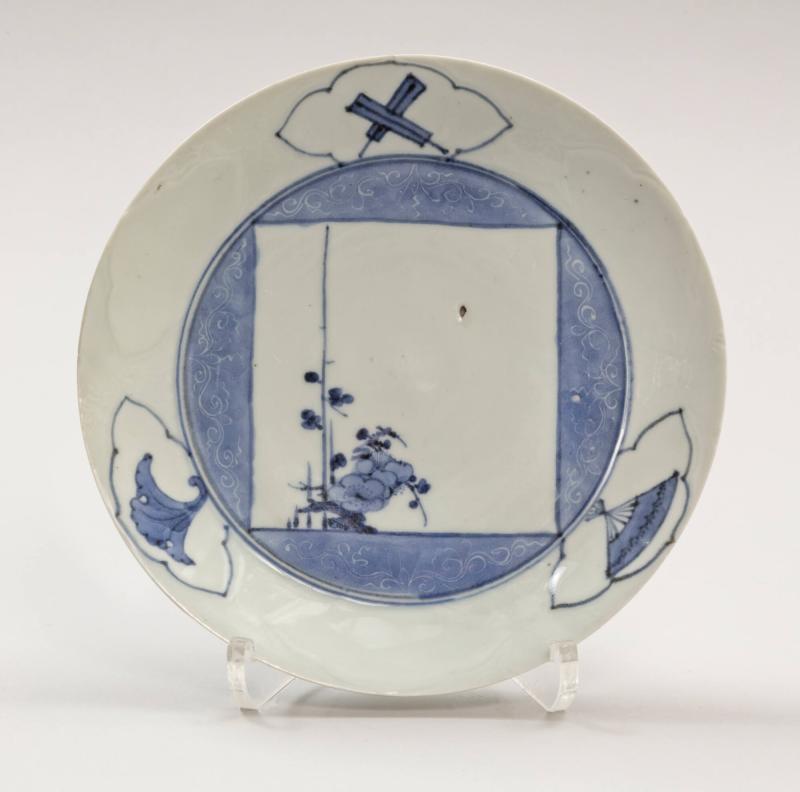
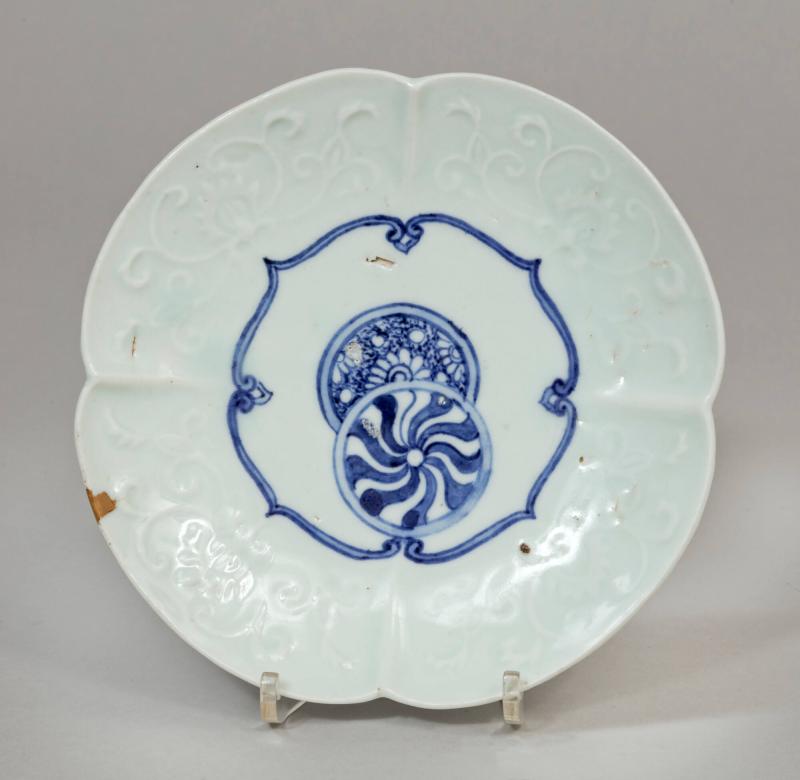
Dish with Shikishi Design

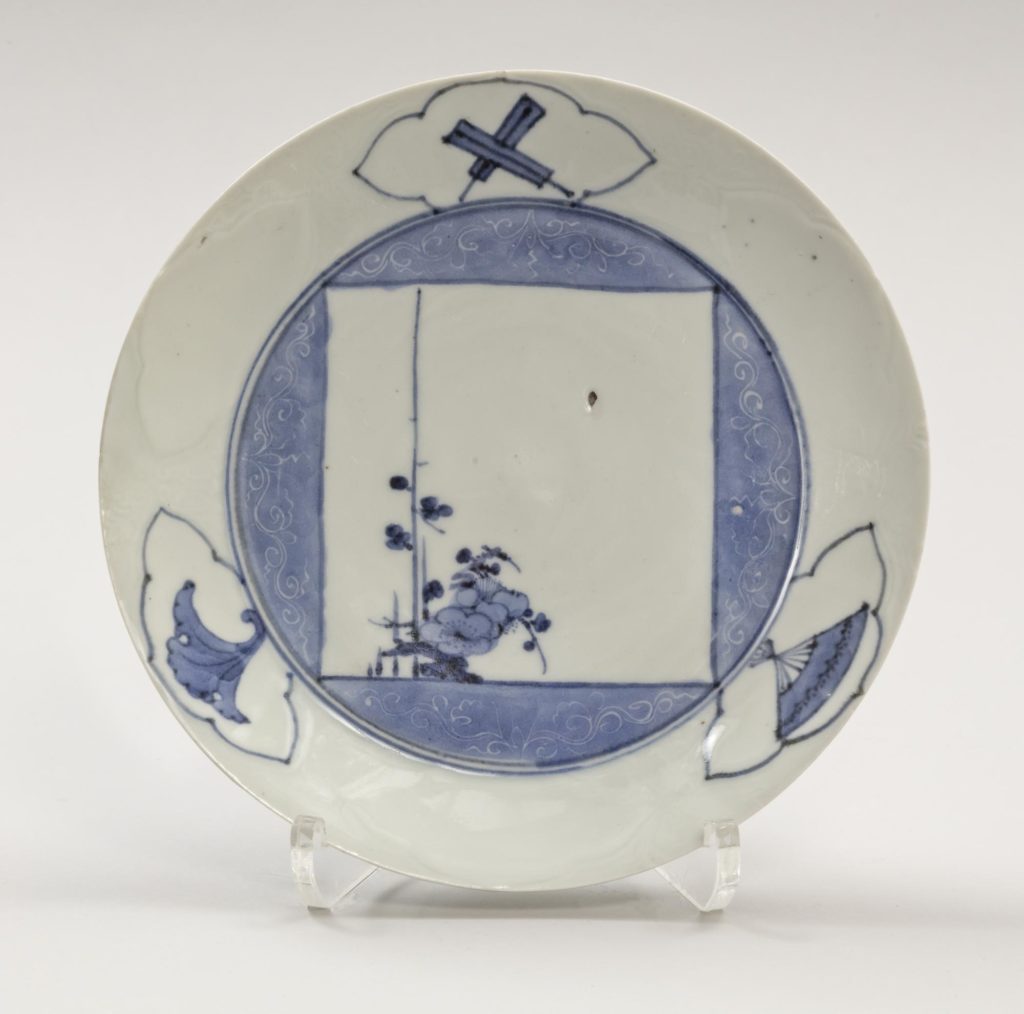
Dish with Shikishi Design, Japan, Hizen, c. 1660-1670, Porcelain with underglaze blue. The Macdonald Collection

Favoured Japanese themes and motifs commonly appear on blue-and-white wares, as exemplified by the dish with shikishi design. A shikishi is a square piece of paper often used for writing poetry in the context of the tea ceremony. While made for the domestic market, similar pieces also made their way to Europe as their presence in late 17th-and early 18th-century collections indicates. This shows how the line between domestic and export production was not always firmly defined.