Nabeshima Porcelain

Nabeshima porcelain was the most luxurious and exclusive type of porcelain made in the Edo period. It is named after the Nabeshima daimyo, the feudal lord who governed over the Saga Domain where this porcelain was made. Its creation emerged as part of a system of regular gift-giving whereby each daimyo was required to present the very best product from his domain to the Tokugawa shogun.

0

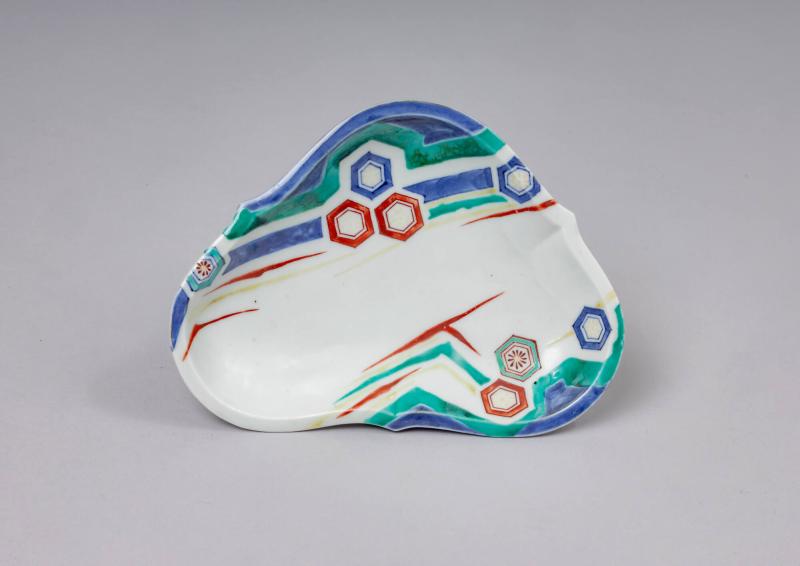
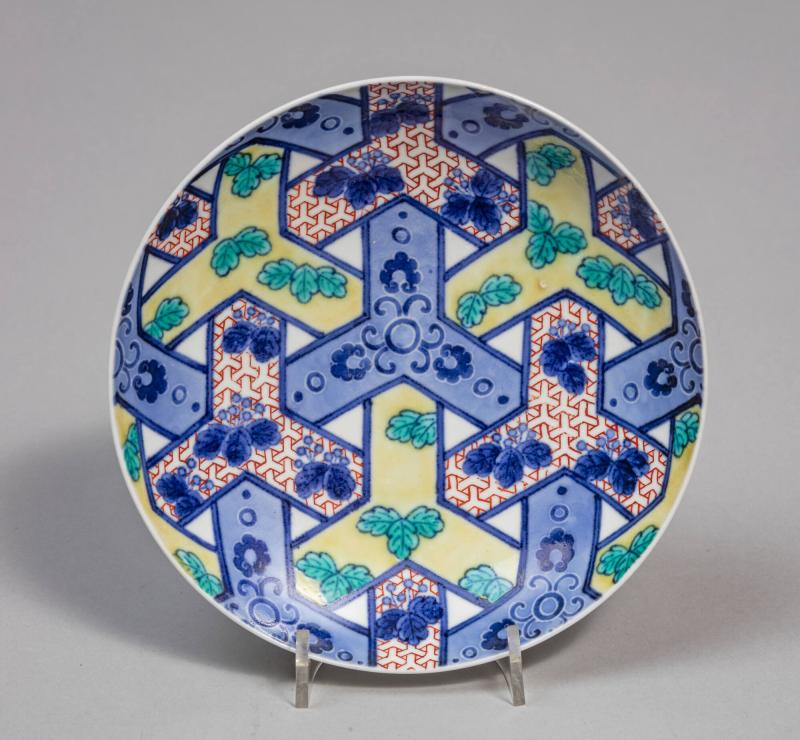
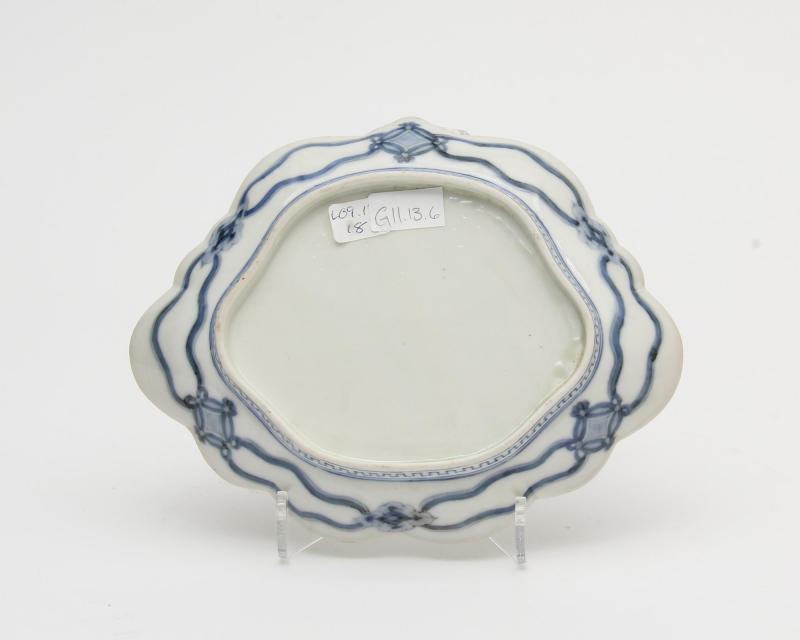
Triangular dish Japan, Hizen, 1650–70 Porcelain with underglaze cobalt blue, overglaze enamels The Macdonald Collection

Over the first half of the 17th century, the Nabeshima daimyo had presented fine Jingdezhen porcelain to which he had special access, as the trade port of Nagasaki was within his domain. When trade in Chinese ceramics ended with the fall of the Ming Dynasty in 1644, he turned to local Hizen ware, selecting the best pieces decorated with overglaze enamels. The triangular dish with hexagons is an early example that presents key characteristics of Nabeshima wares: bright colours, unique and inventive design, asymmetry, and the use of negative space.

1Discover more about this triangular dish
0
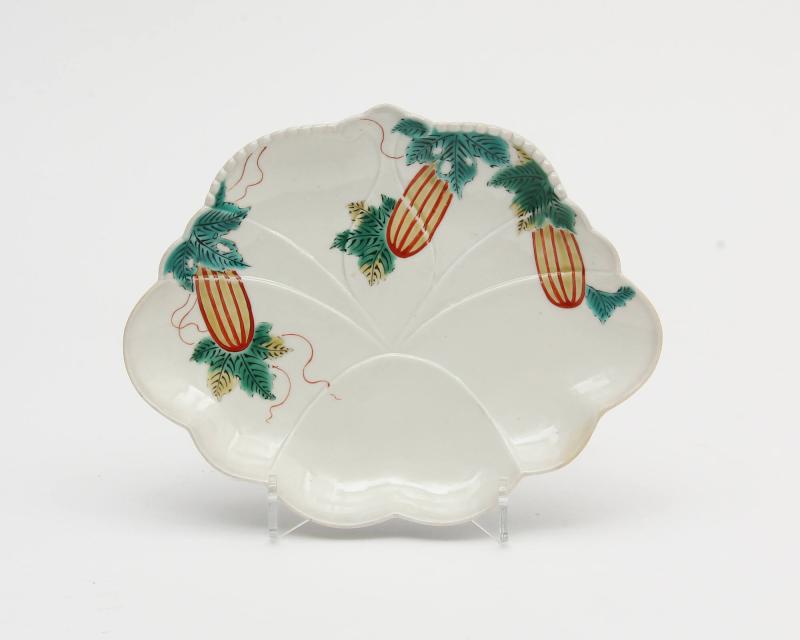
Dish with Gourd

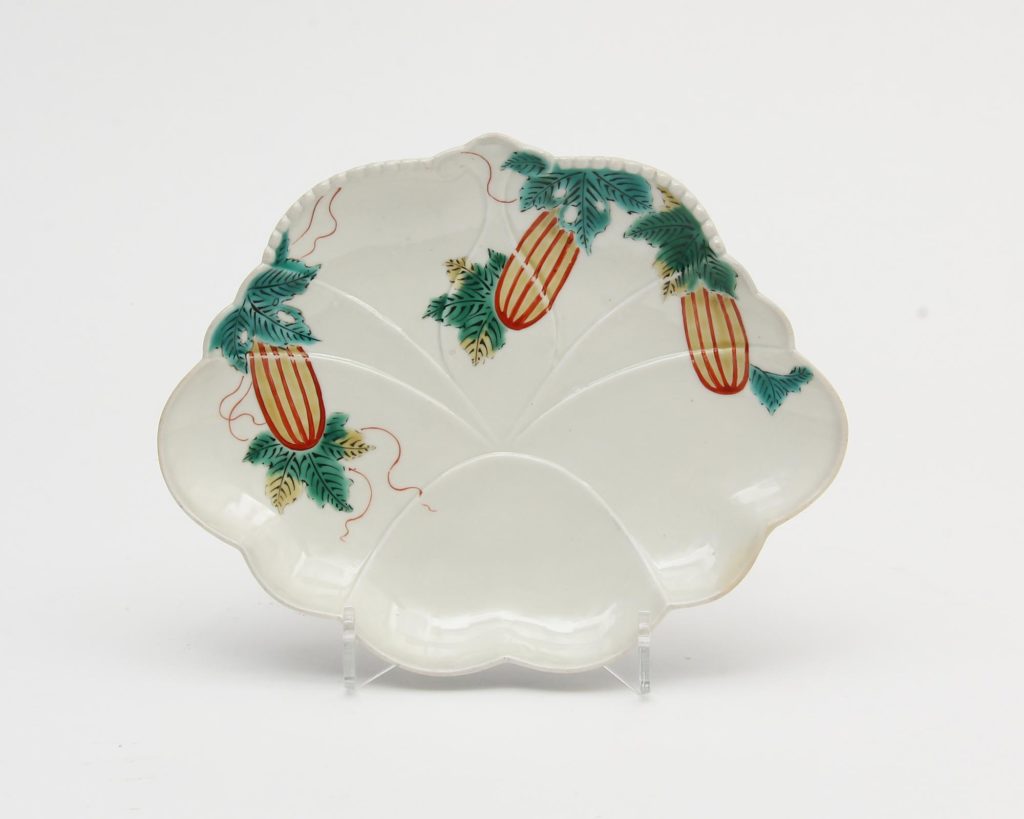
Dish with gourd, Japan, Hizen, mid-17th century, Porcelain with overglaze enamels. The Macdonald Collection

Back of dish with Gourd

The back view of the dish with gourd

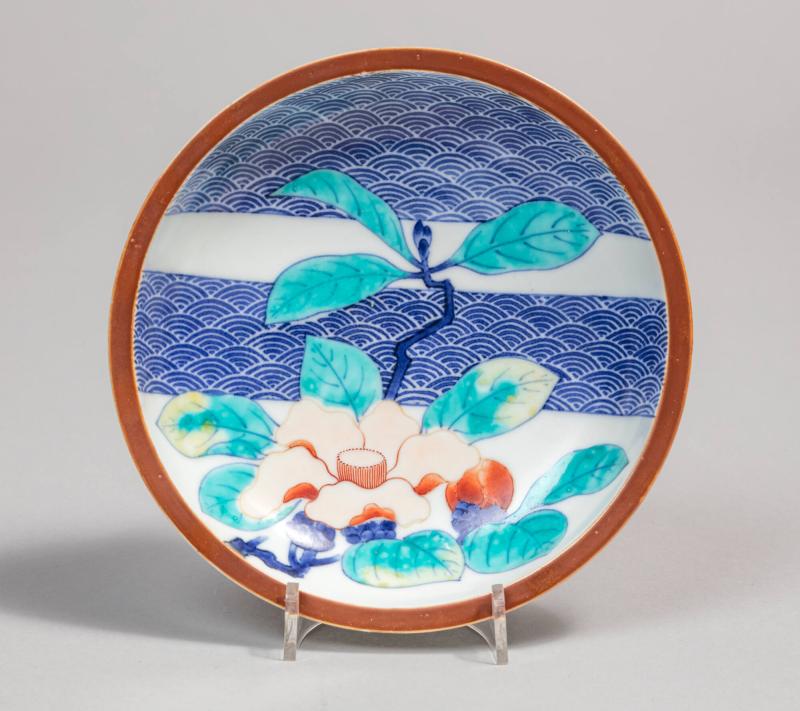
The early dish with melons reflects the contemporary interest in botanical specimens and gardens. Its imagery is specifically tied to the turning of the seasons theme—popular in painting—as conveyed by the yellowing leaves and auburn vine. Early pieces show decoration on the back as well as a high and decorated foot rim, characteristics that speak to the high refinement of Nabeshima wares.

0
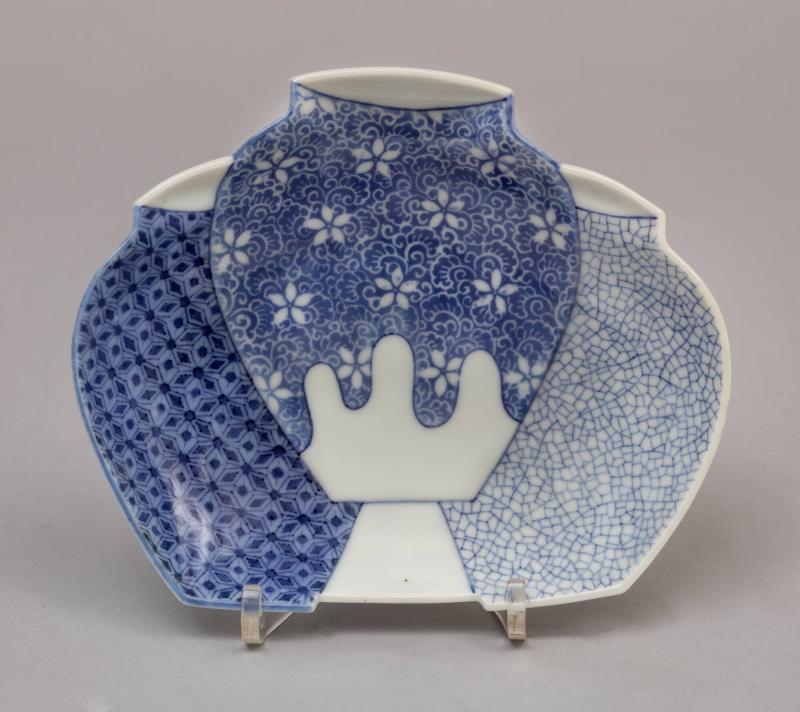
Moulded Jar Dish

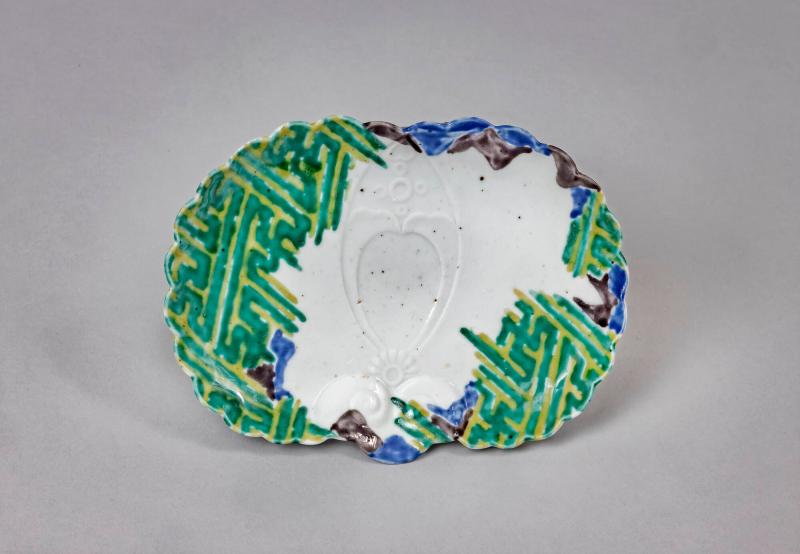
Moulded jar dish, Japan, Hizen, late 17th century, Porcelain with overglaze enamels. The Macdonald Collection

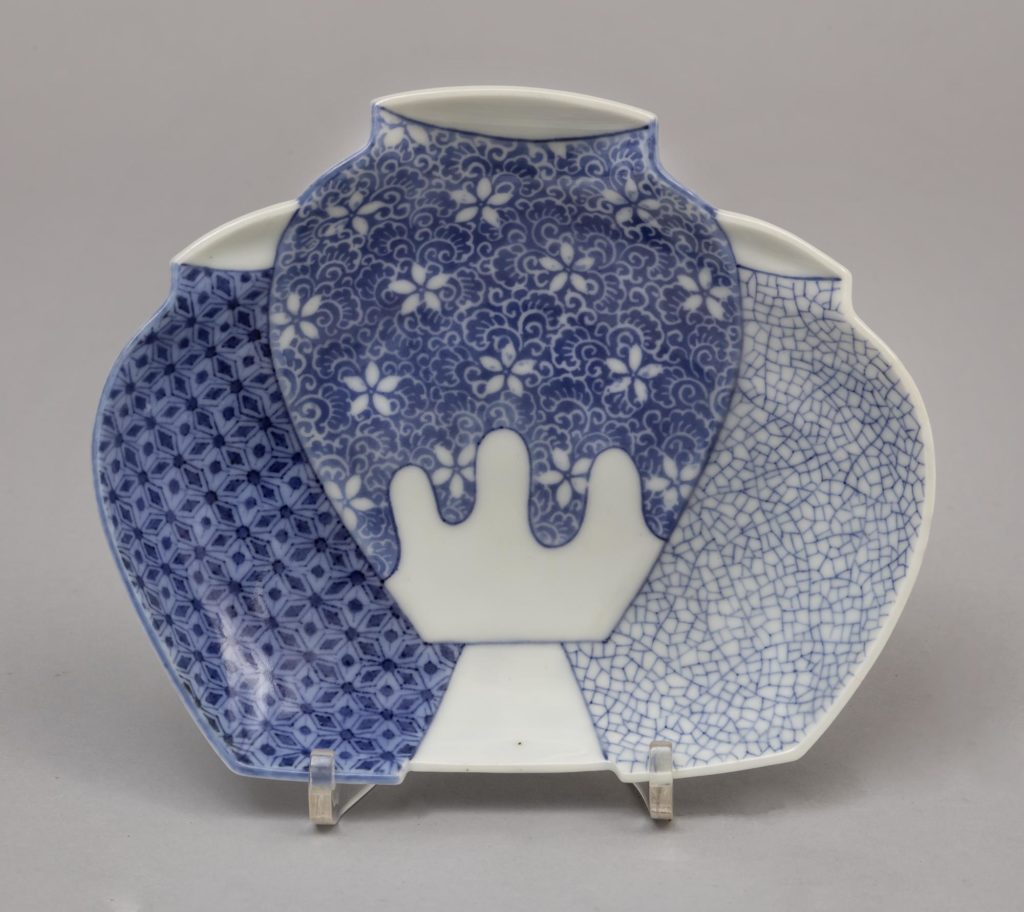
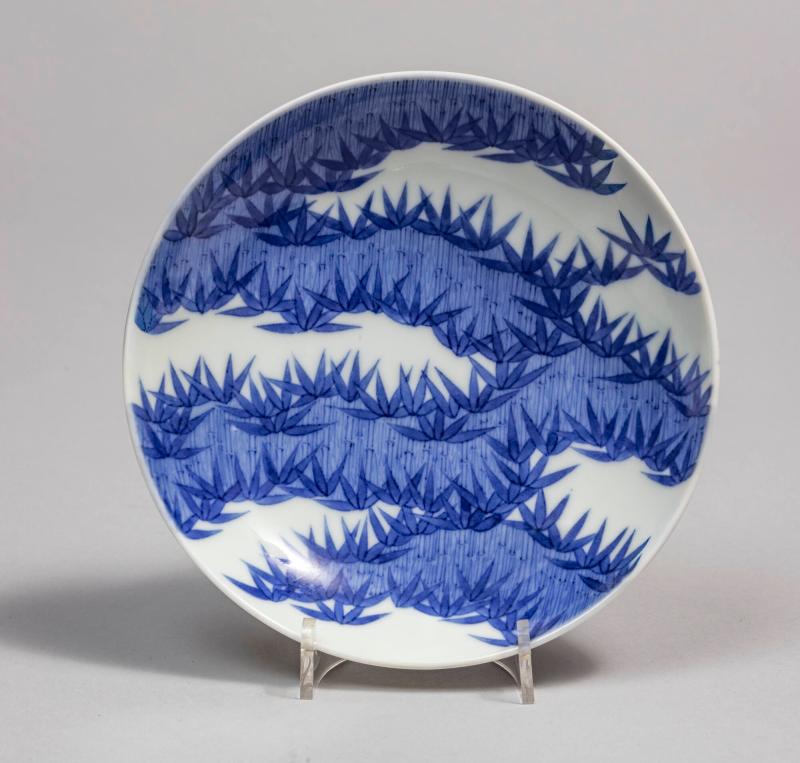
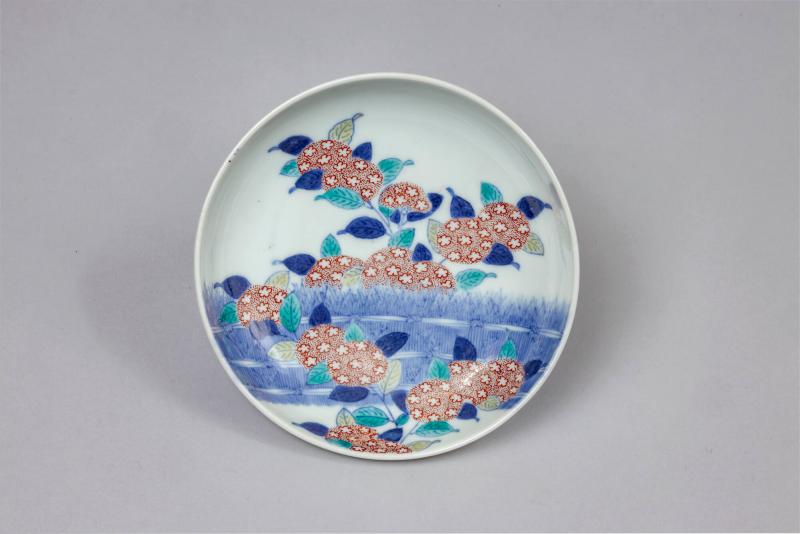
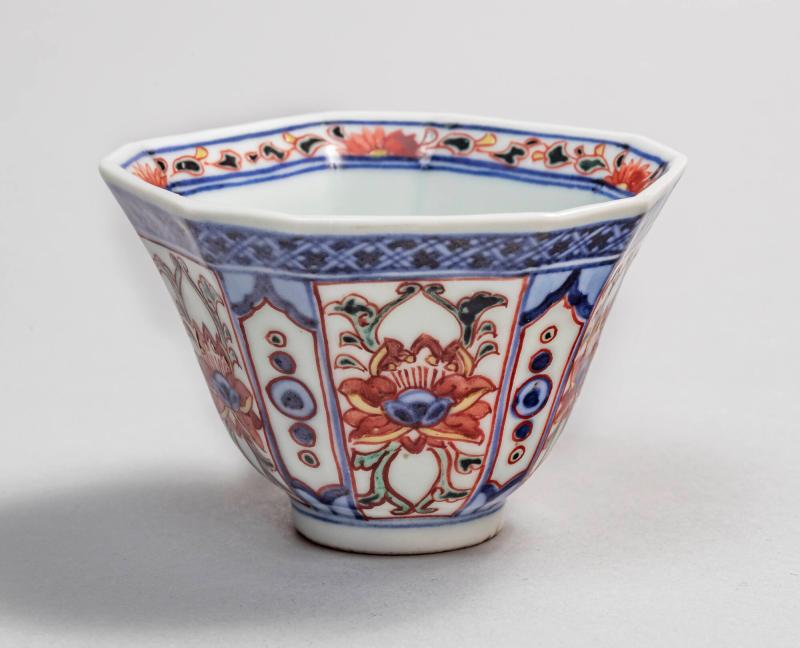
In the 1660s, the Nabeshima clan relocated its kiln to Ōkawachiyama Village in northern Hizen Province, where small dishes and cups were made according to standardized sizes. The moulded dish with three jars shows some of the main characteristics of pieces made there from then onward: delicate and precise patterns, fine lines, and underglaze blue skillfully applied to create subtle gradation and shading. The production of this luxurious tableware, which remained unknown outside Japan until the late 19th century, peaked between 1690 and 1720.