First Experiments (Shoki-Imari)

Porcelain production in Japan started in the 1610s. Experiments leading to its discovery were informed by the expertise of Korean potters brought to Japan as war captives in the 1590s. One among them, a potter named Ri Sampei, allegedly discovered the components of porcelain – kaolin and feldspar – naturally mixed together in the mountains near Arita, Kyushu, in Hizen Province.

0
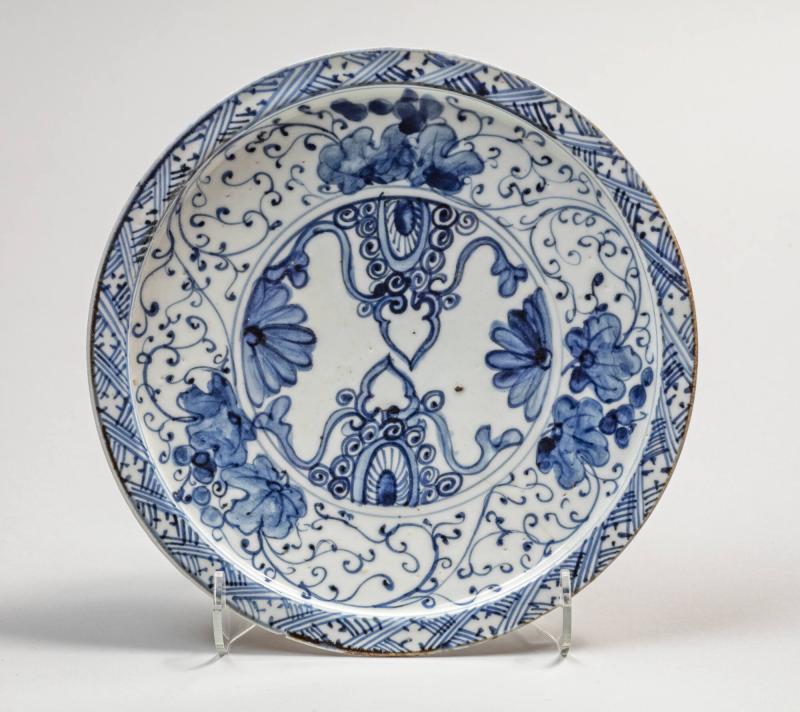
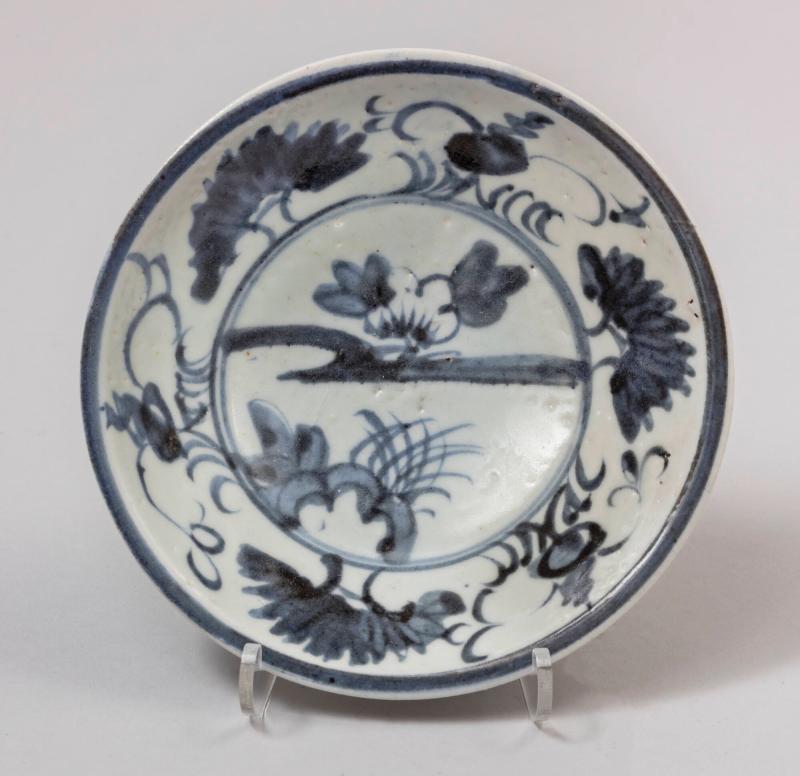
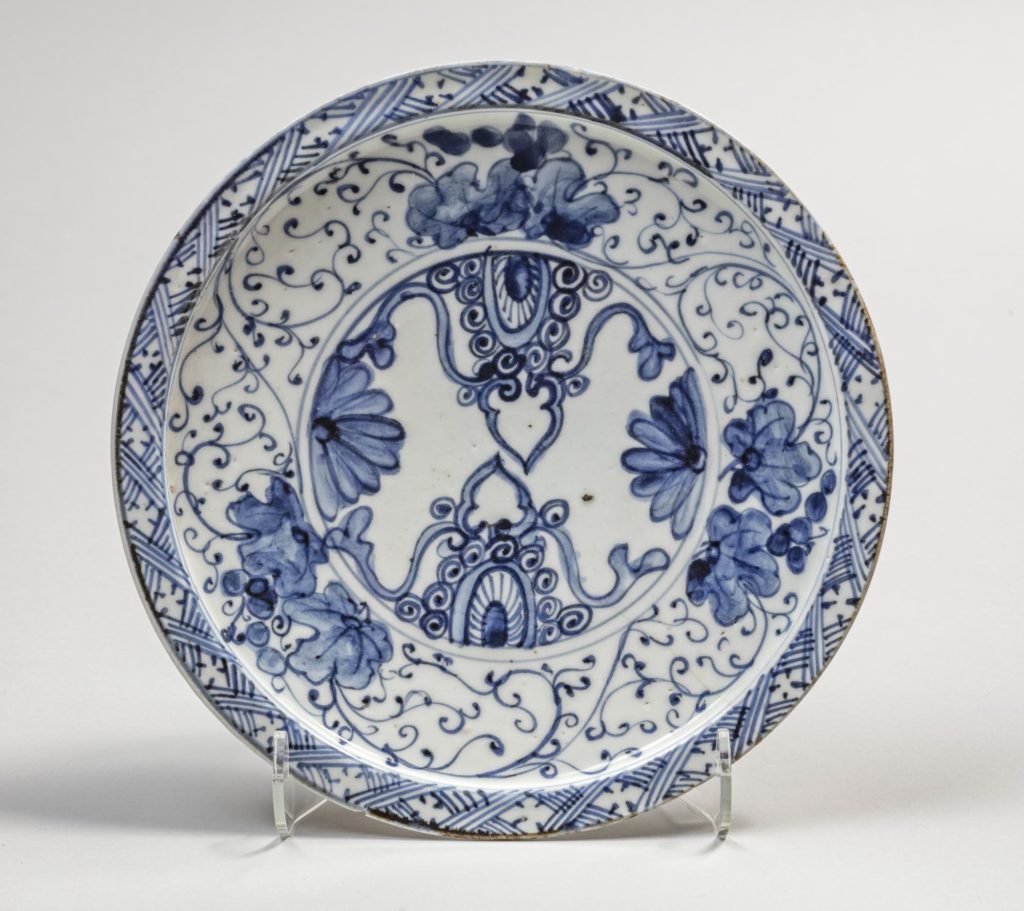
Dish with flower and grapevines after a Chinese model, Japan, Hizen

Dish with flower and grapevines after a Chinese model, Japan, Hizen, c. 1610–30. Porcelain with underglaze blue. The Macdonald Collection

Early Japanese porcelain is referred to as shoki-Imari (early Imari). This group comprises wares made between the 1610s up to the 1640s. Objects produced during this period were aimed at a local, domestic market. Pieces are rather modest in scale and were employed to serve food or for use in tea gatherings, such as this dish with chrysanthemum made c. 1610–c. 1630. Like most shoki–Imari wares, it is decorated in underglaze blue and shows the impact of Chinese porcelain designs on Japan’s first production.
0
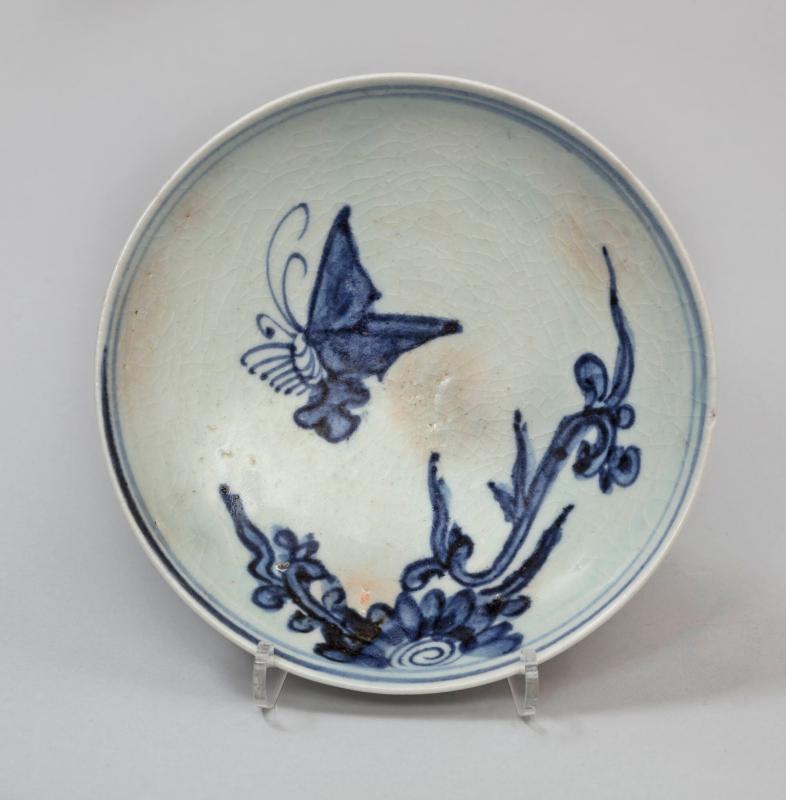
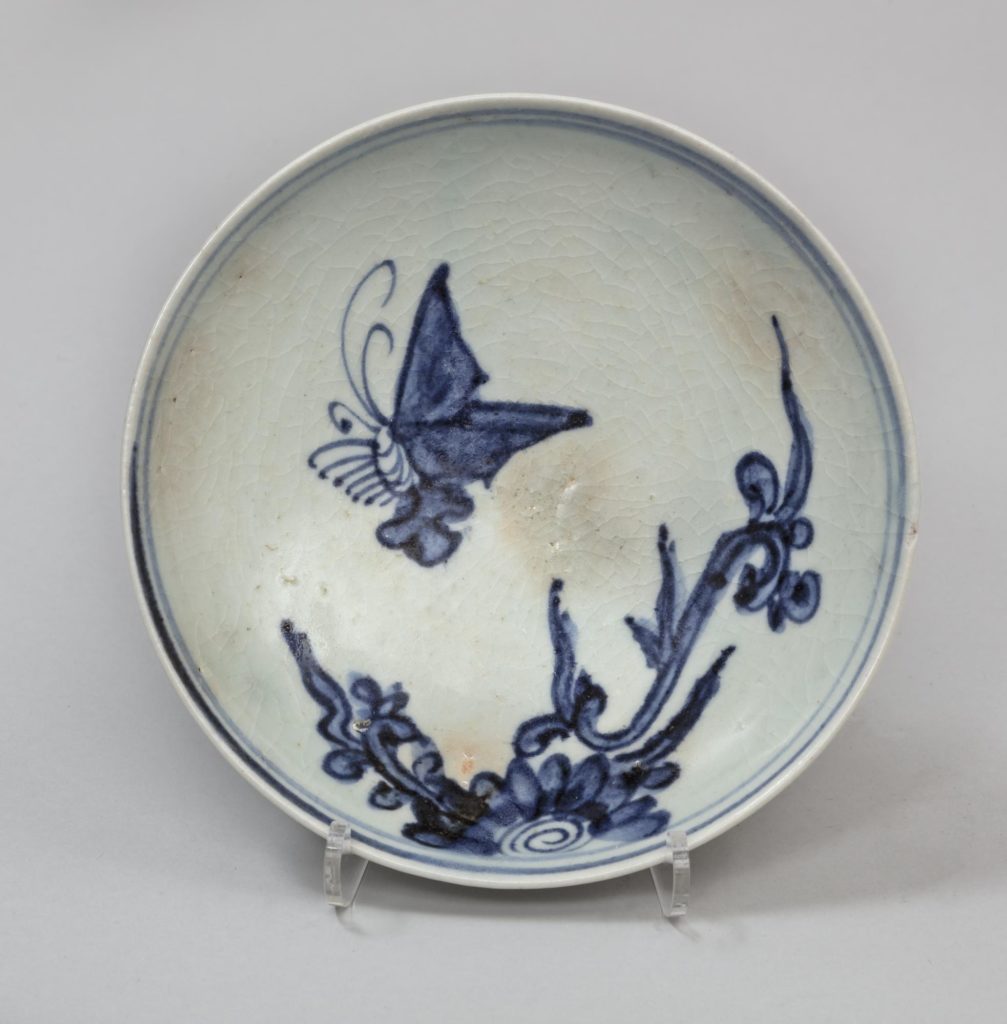
Dish with a butterfly and flowers

Dish with butterfly and flowers, Japan, Hizen, c.1620-1640, Porcelain with underglaze blue. The Macdonald Collection

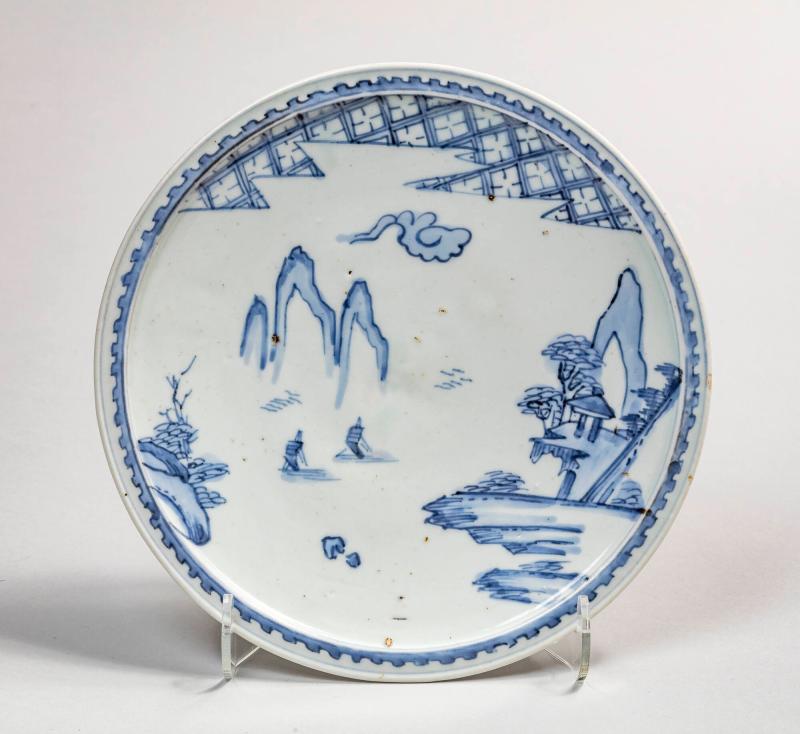
Early Japanese porcelain is often imperfect, thus reflecting a stage of experimentation with the new medium. During this period, pieces frequently came out of the kiln warped and with a mottled grey to pitted white body, as is evident in the small dish with a butterfly and flowers dated 1620–1640. This example also shows iron impurities on the surface of the glaze.

0
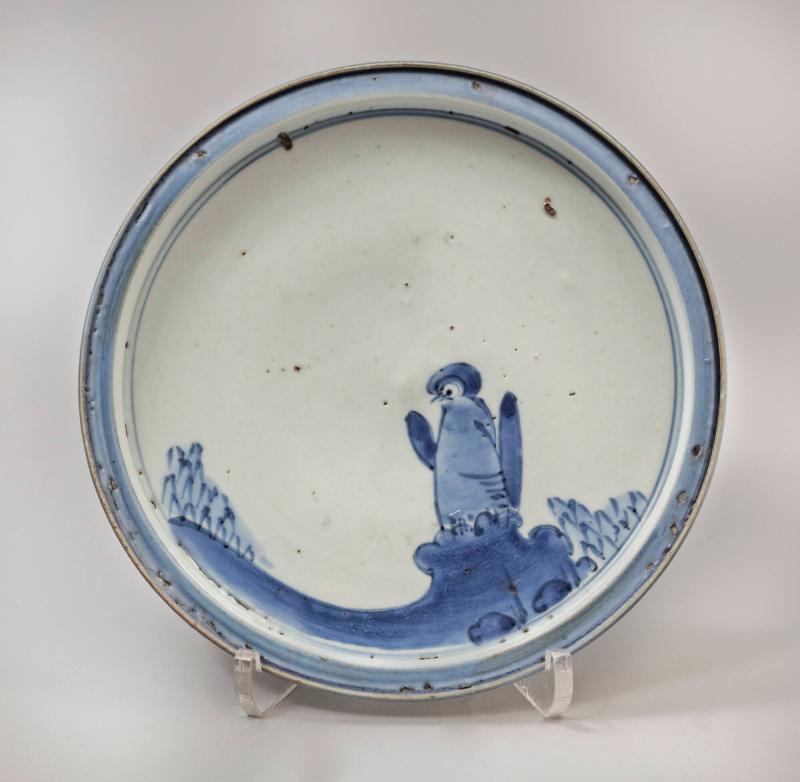
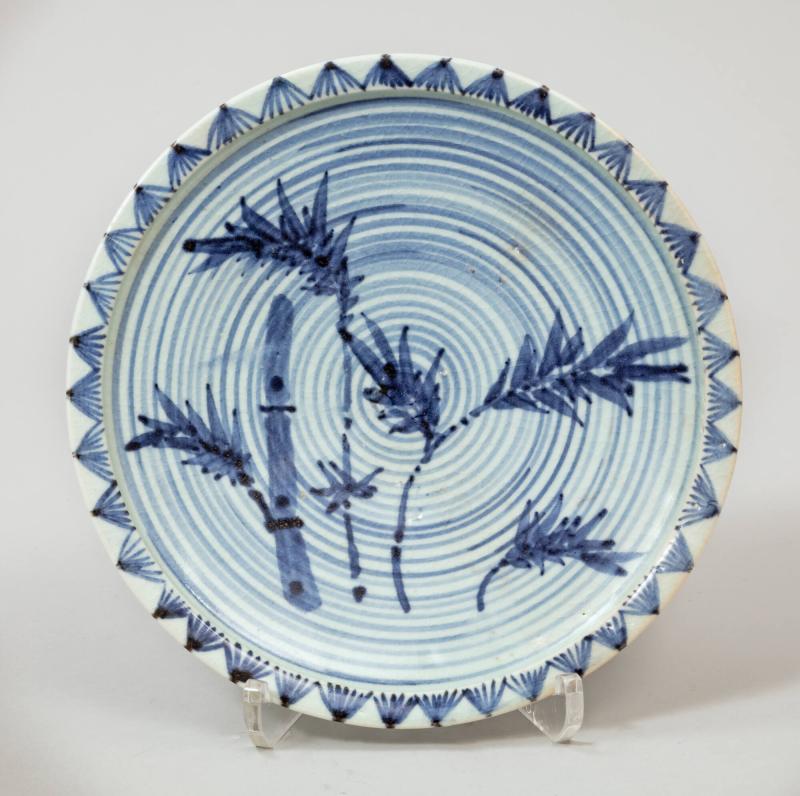
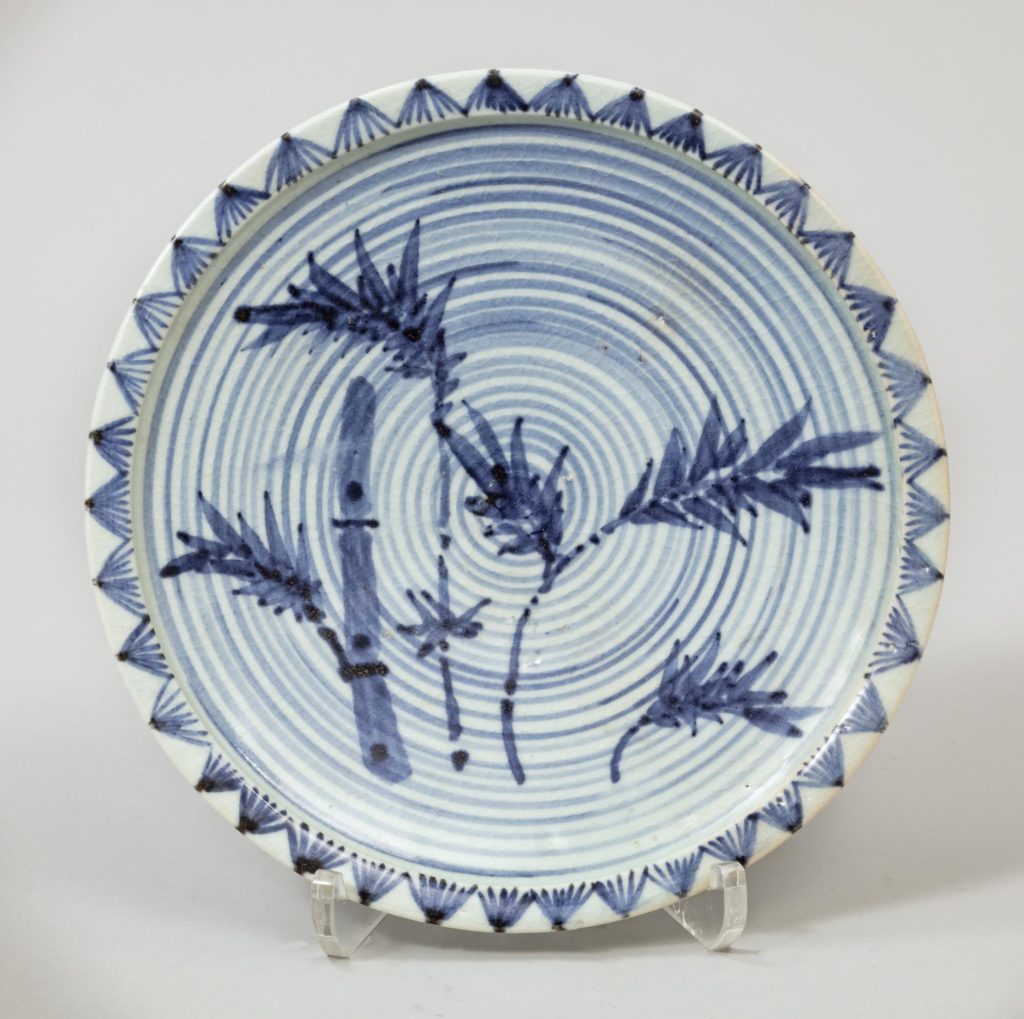
Dish with Bamboo

Dish with bamboo, Japan, Hizen, c.1630-1640, Porcelain with underglaze blue. The Macdonald Collection

As confidence with the medium grew, a distinctly Japanese aesthetic emerged. The plate with stalks of bamboo against concentric circles shows an emerging taste for bold, semi-abstract patterns, asymmetrical compositions, and motifs that intersect with other contemporary media, such as textile and lacquer.


0
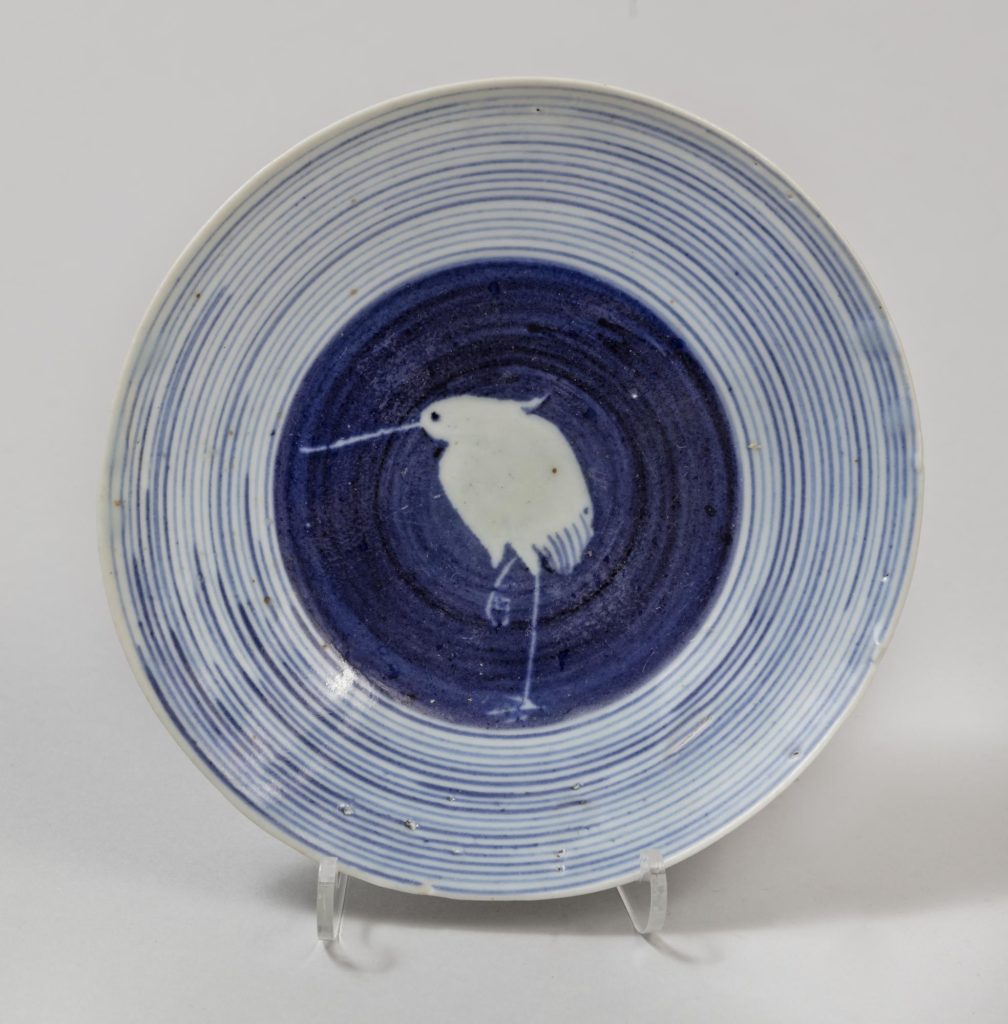
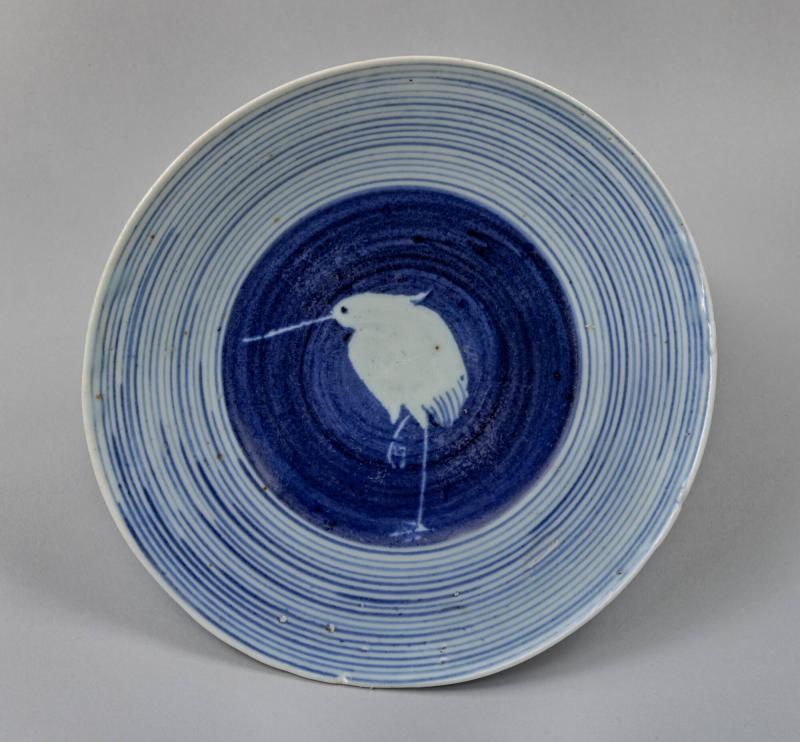
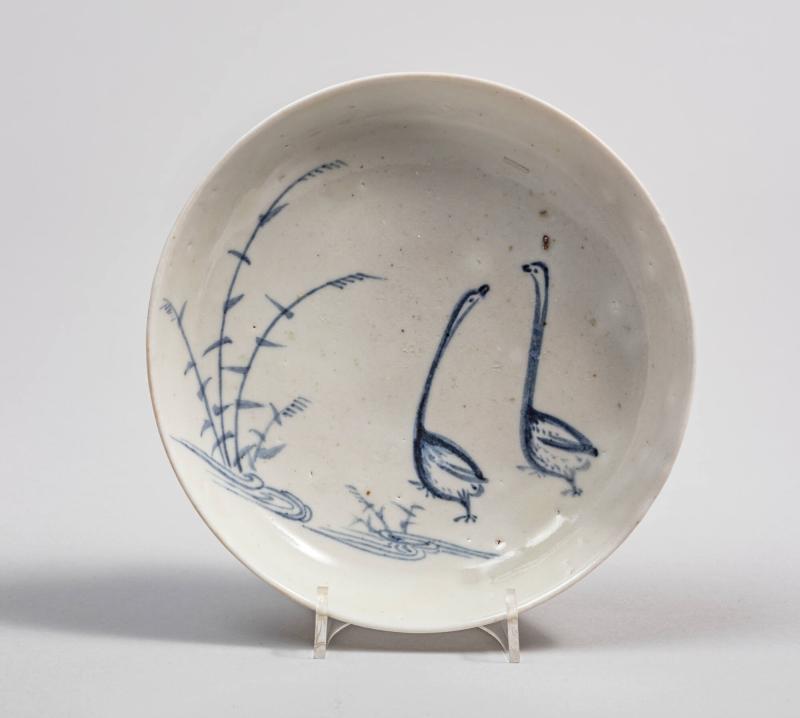
Dish with standing egret Japan, Hizen

Dish with standing egret Japan, Hizen, 1630–40 Porcelain with underglaze cobalt blue The Macdonald Collection

Potters also experimented with decorative techniques employed on textiles such as the use of stencils, as exemplified by the poetic dish with a standing egret. The bird shown in reserve stands on concentric circles that create a rippling water effect.

1Discover more about the dish with standing egret