Animals in Japan
Nature was a primary source of inspiration for Edo period artists, including potters active in 17th-century Arita. Animal motifs are a striking feature of the objects found in the Macdonald Collection. The representation of fauna is varied and ranges from real to mythical creatures that tell us about Japanese culture and beliefs. They appear both in small-scale porcelain sculptures and as design elements on everyday objects. Discover their rich meanings and symbolism.

Clockwise from left: Puppy, Japan, Hizen, c.1680-1690; Rooster, Japan, Hizen, c.1700-1725; Minogame (flaming tortoise), Japan, Hizen, c.1670-1690. The Macdonald Collection
Animals of the Zodiac
Animals associated with the twelve signs of the zodiac commonly occur in Japanese art and porcelain. Ornaments in the shape of the year’s zodiac animal, such as this rooster figure, would have been displayed to welcome the New Year. Zodiac animals are often paired with a specific flower or tree in the context of two-dimensional images. The tiger and bamboo make a standard combination.

Rooster, Japan, Hizen, 1700–25. Porcelain with overglaze enamels. The Macdonald Collection
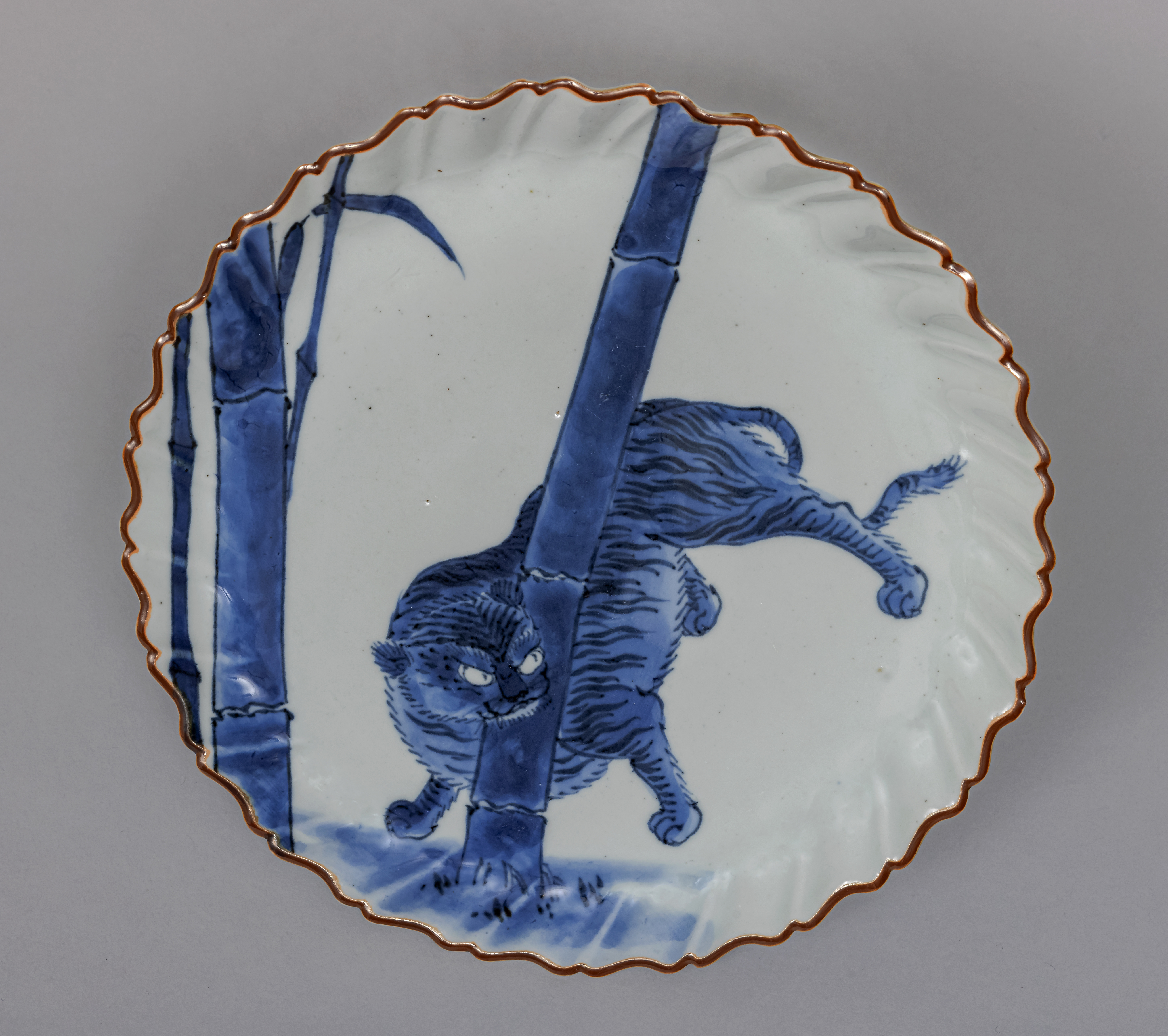
Dish with tiger and bamboo
Japan, Hizen, c. 1650
Porcelain with underglaze blue
The Macdonald Collection
Pets and Guardians
The dog was one of the animals of the Japanese zodiac, symbolizing loyalty, devotion, and diligence. Dogs were among the animals domesticated in ancient Japan. Archeologists have discovered them in solitary burials, which suggest an animal’s great value to an owner. The shishi is one of the dog’s imaginary relatives. A hybrid lion-dog creature, shishi were typically found in pairs at the entrances of temples and shrines as protectors against evil.
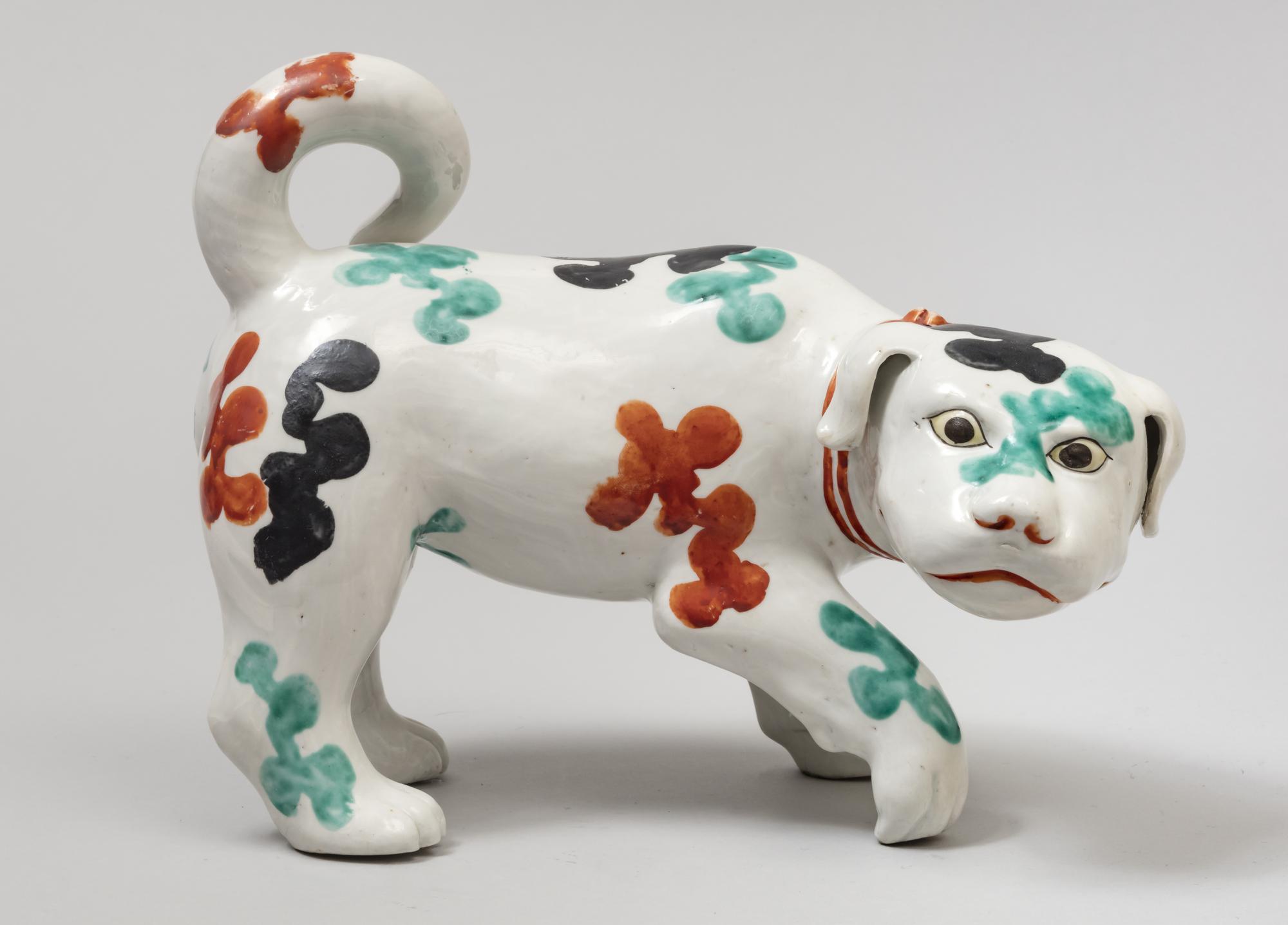
Puppy, Japan, Hizen, c. 1680–90. Porcelain with overglaze enamels. The Macdonald Collection
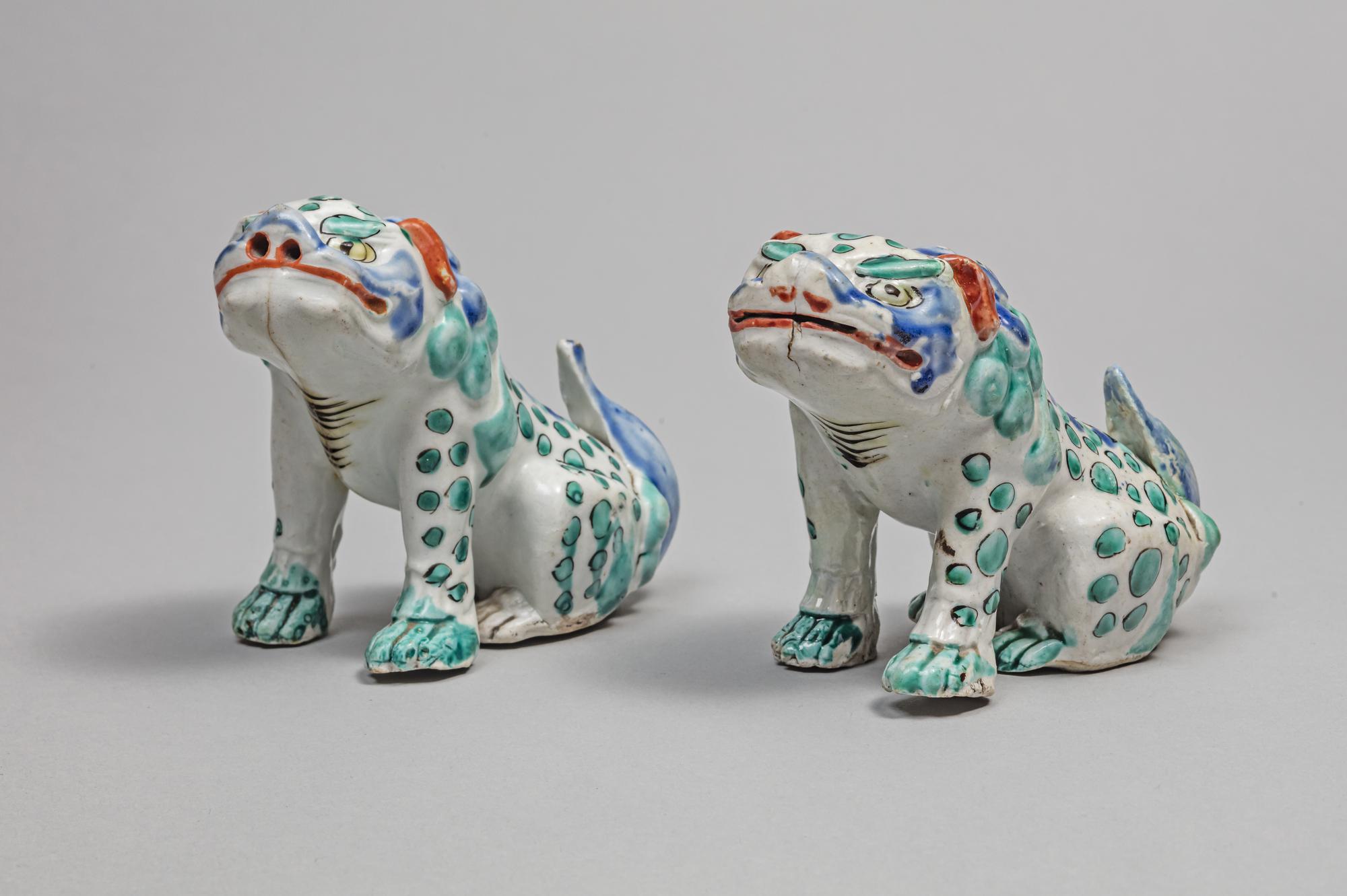
A pair of shishi (lion-dogs), Japan, Hizen, 1680s. Porcelain with overglaze enamels. The Macdonald Collection
Dragon and Tiger: A Perfect Pair
Animals are often shown in pairs. The tiger and dragon, a classic combination, represent heaven and Earth. The dragon is a mythical creature that first appeared in China and entered Japan with the spread of Buddhism. The dragon—also one of the zodiac animals—was worshipped as a water god. It was believed that dragons could bring rain and prevent water-related disasters. The tiger roamed on the earth and was believed to hold the power to drive evil away.

Dragon, Japan, Hizen, late 17th century. Porcelain with overglaze enamels. The Macdonald Collection

Plate with dragon and tiger, Japan, Hizen, 1670–90. Porcelain with overglaze enamels. The Macdonald Collection
The Mythical Hō-ō (Phoenix)
The auspicious phoenix, or hō-ō, was a popular motif in painting and objects of all sorts. An imaginary bird characterized by its strikingly colourful plumage and peacock tail-feathers, the phoenix originated from Chinese mythology and was said to appear when virtuous rulers govern. It is also one of the four guardian deities of the cardinal directions, along with the tiger, the lion, and the turtle. Birds frequently appear as decorative motifs on Japanese porcelain.

Dish with phoenix design, Japan, Hizen, 1670s–90s. Porcelain with underglaze blue and overglaze enamels, iron-oxide brown. The Macdonald Collection
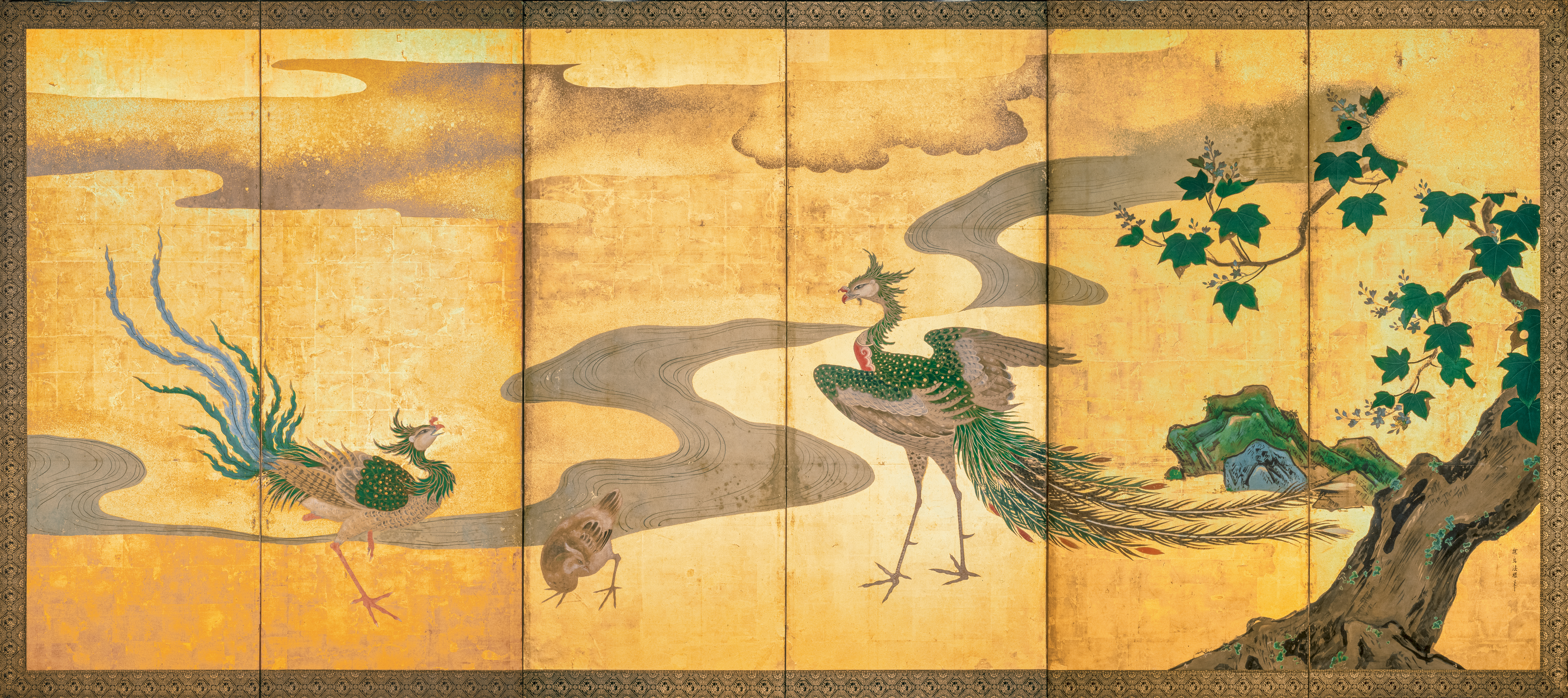
Phoenixes by Paulownia Tree, pair of six-panel folding screens, Edo period, 17th century, Suntory Museum of Art Credits
Auspicious Birds
The arts of the early Edo period are replete with a range of native birds, as well as more generic ones. Auspicious birds are common design elements on porcelain. A symbol of grace and beauty, the egret was also a common sight near Arita. Many animal motifs spread from China, including the crane, a popular symbol of longevity, and the quail, which symbolized a wish for peace and harmony. In Japan, the quail also became a symbol for autumn.
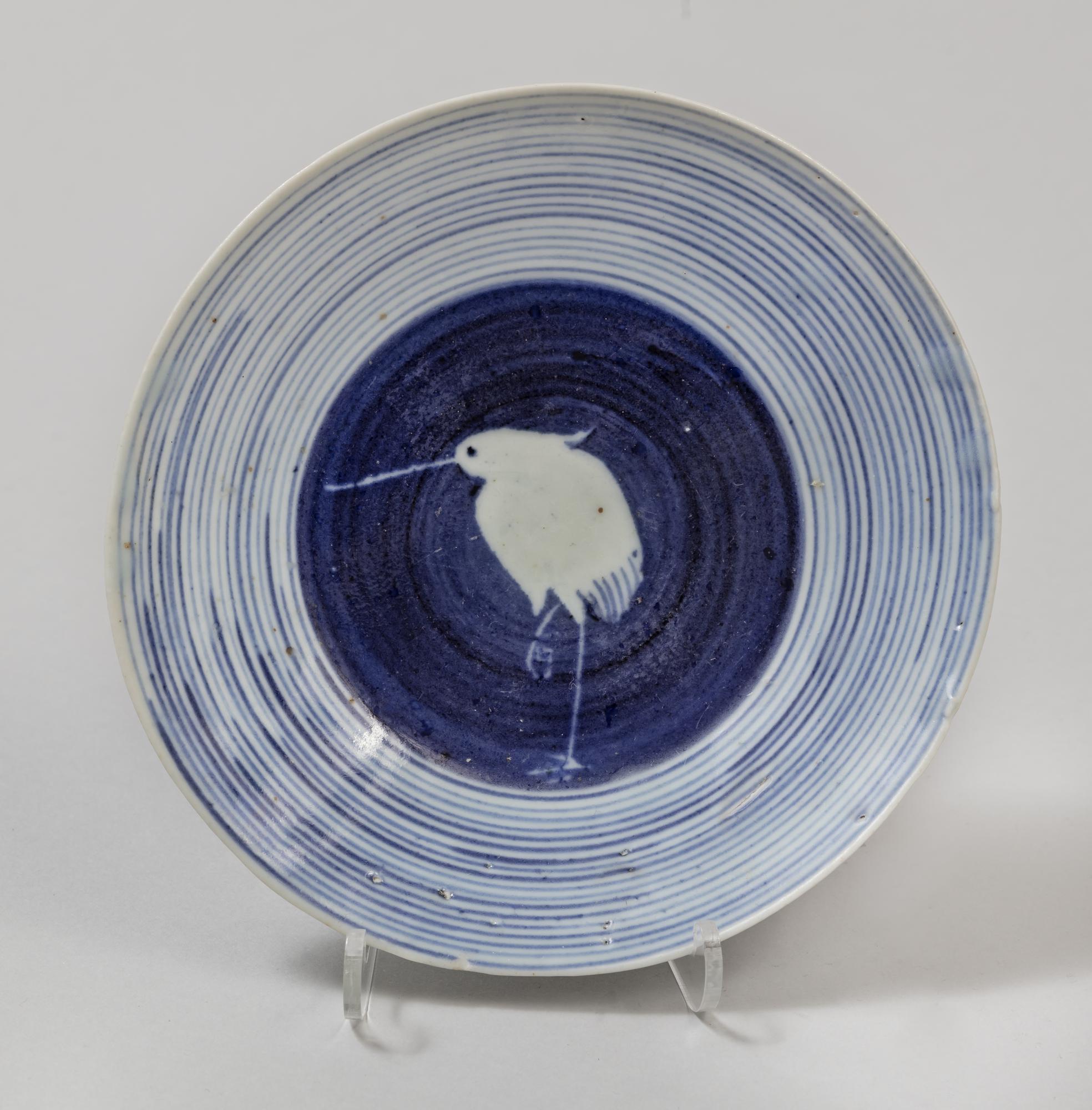
Dish with standing egret, Japan, Hizen, 1630–40. Porcelain with underglaze cobalt blue. The Macdonald Collection
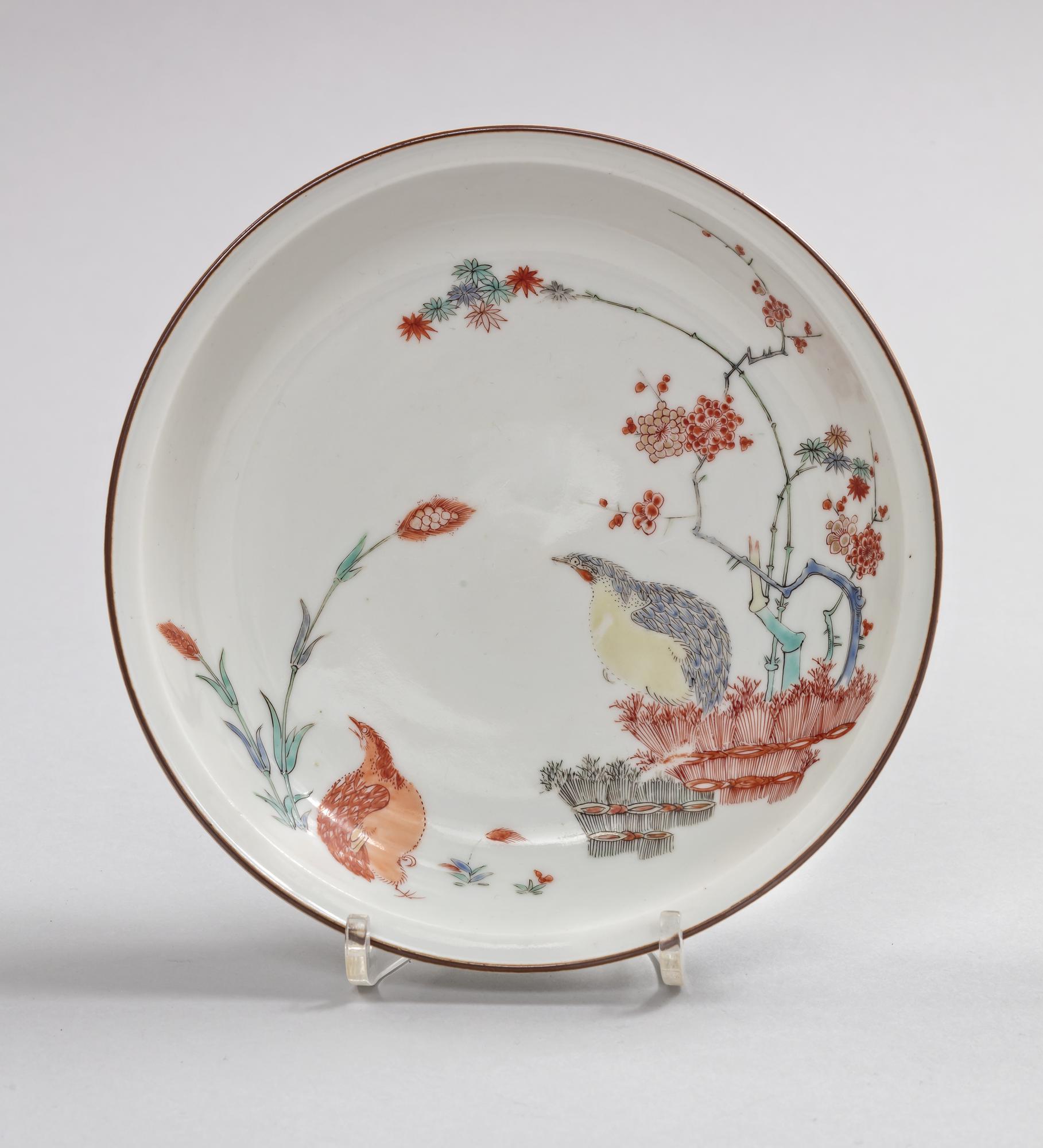
Dish with quail, Japan, Hizen, c. 1670–90. Porcelain with overglaze enamels, iron-oxide brown. The Macdonald Collection
Crane and Turtle: A Very Long Life
Because of its long life span, the turtle was another animal associated with longevity. According to Japanese myth, the turtle (minogame) could live up to ten thousand years, and was associated with legendary places where immortals dwell. Artists thus often depicted ancient tortoises with waterweeds hanging onto their shells as suggested on the figure. The turtle was often paired with the crane, another symbol of longevity; we see them together on the Kakiemon-style plate.
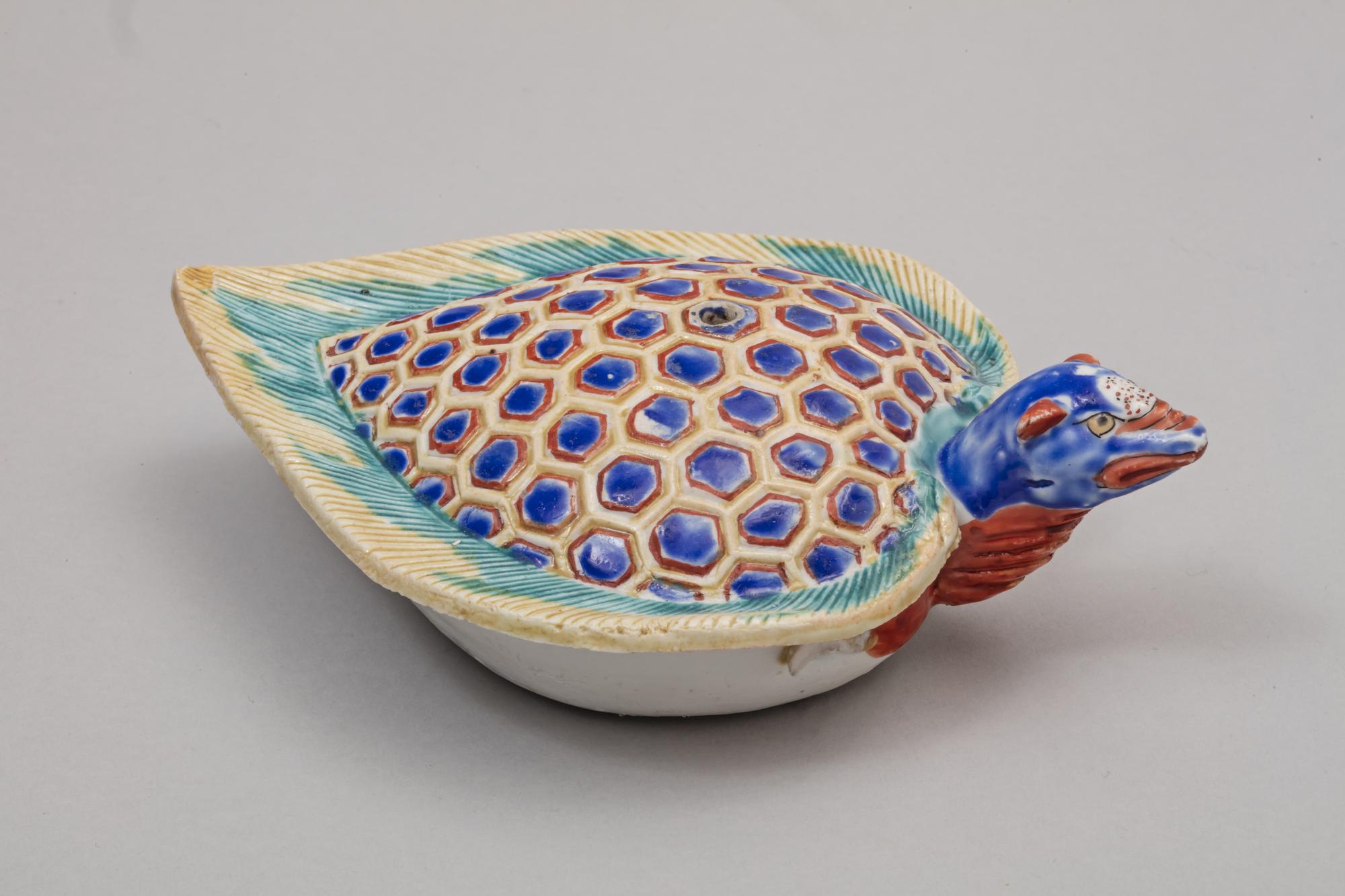
Turtle, Japan, Hizen, c. 1670–90. Porcelain with overglaze enamels. The Macdonald Collection

Dish with two cranes and turtle, Japan, Hizen, 1735–40. Porcelain with overglaze enamels. The Macdonald Collection
The Deer: A Sacred Animal
The deer was a favourite design motif in the 17th century. The animal most often appears in autumnal landscapes along with seasonal plants, as suggested by this plate and contemporary lacquer box. The deer thus stood for autumn, while also symbolizing longevity and good fortune. The animal was considered sacred and was believed to act as messenger of the Shinto gods inhabiting the Kasuga-taisha shrine.

Dish with deer and pine, Japan, Hizen, 1660–80. Porcelain with underglaze blue. The Macdonald Collection
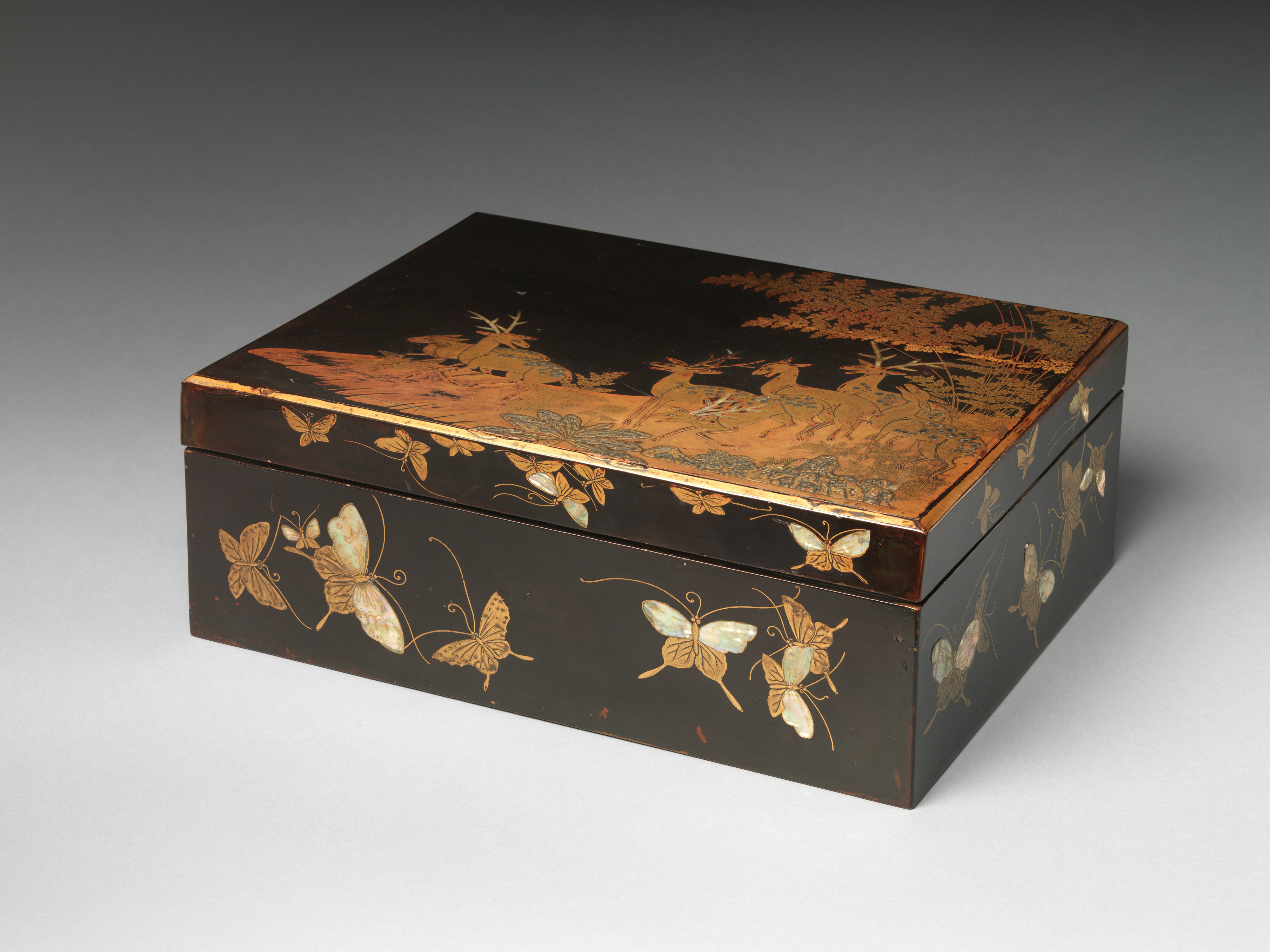
Document box with deer and butterflies, Japan, Edo Period, 17th century, Lacquered wood with gold, mother-of-pearl, and silver. Metropolitan Museum of Art.
Credits