Porcelain at Home in Edo Japan
The Tokugawa shogunate was a period of peace marked by economic growth. This context encouraged leisurely activities and the increased demand for fashionable ceramics. Social rituals and domestic practices called for various types of porcelain objects that held both decorative and functional purposes. Discover objects tied to the Japanese tea ceremony, the way of incense, dining, and the seasonal display of flowers.
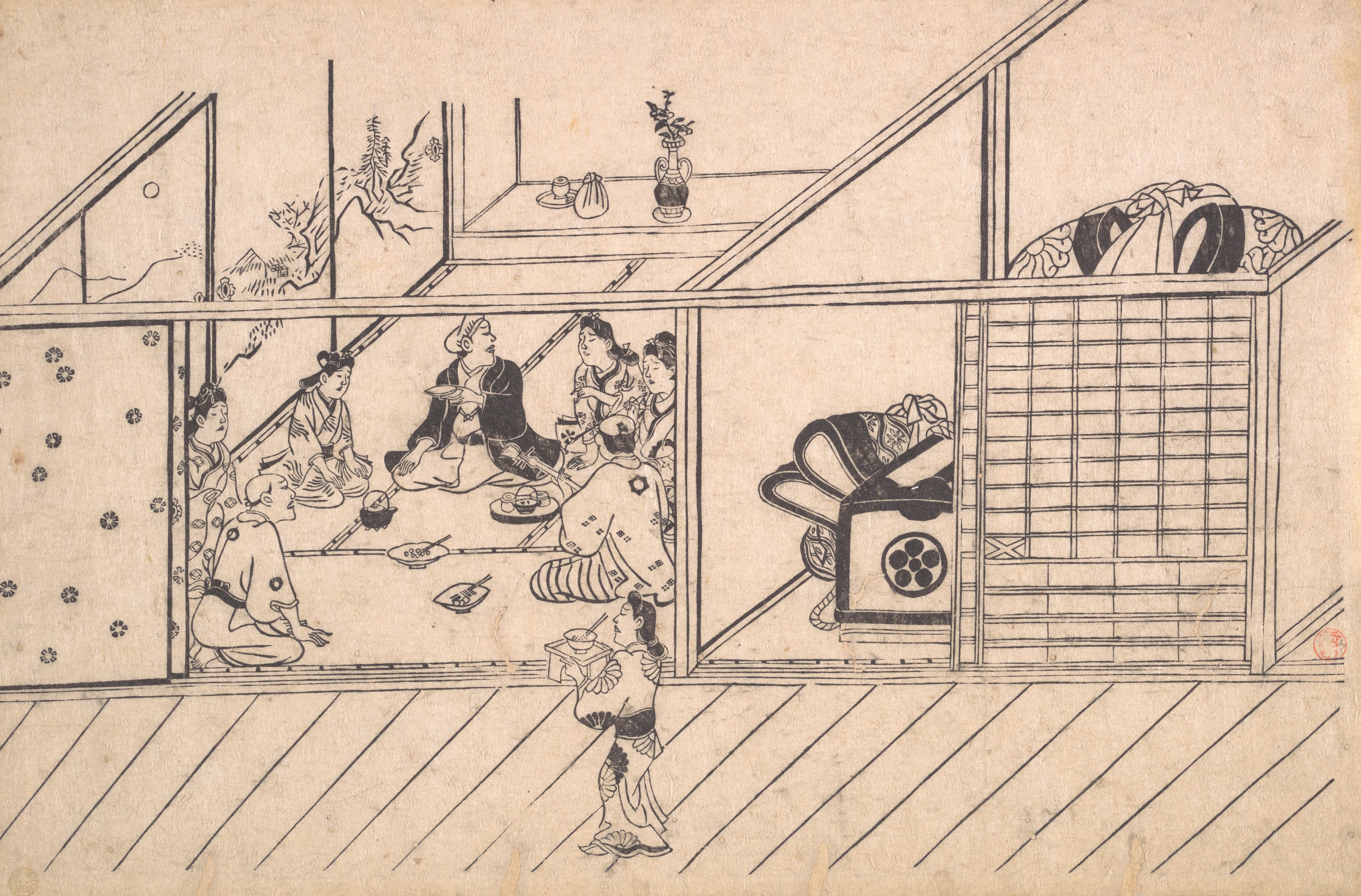
A Banquet in a Joroya (teahouse), Hishikawa Moronobu, Japan, ca. 1680, Monochrome woodblock print; ink and colour on paper. Metropolitan Museum of Art.
Credits
Tea and Chinese Porcelain
The custom of drinking tea in a ritualized manner (chanoyu) originated in 13th-century Zen temples and particularly flourished during the Momoyama period (1568–1618). Tea masters held an important role, orchestrating the ceremony and selecting the necessary objects made of various materials. These small porcelain dishes were made in Jingdezhen, China, for the Japanese market. In Japan, they would have been used to serve the various courses of the kaiseki, a light meal served before the tea ceremony.
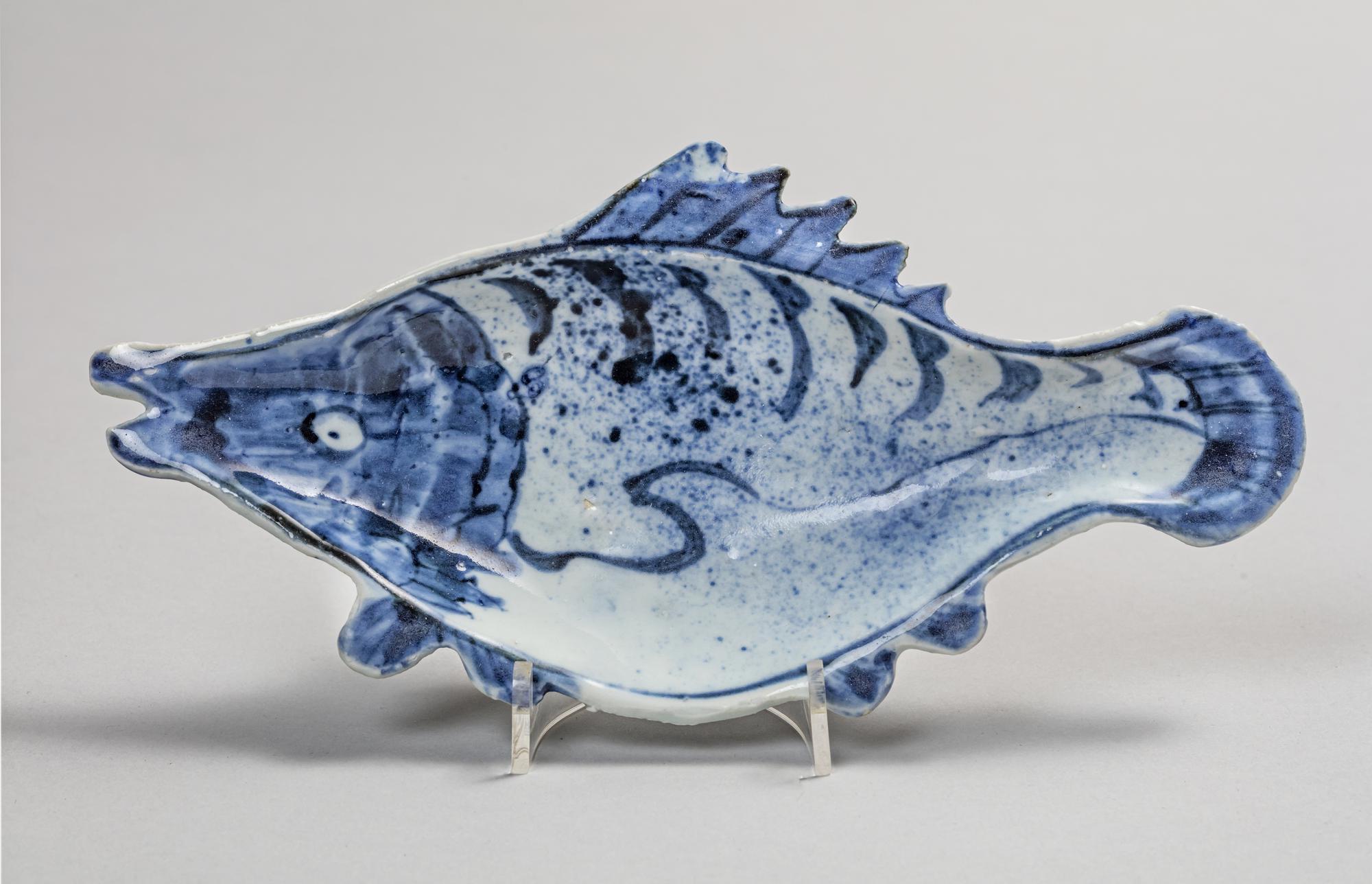
Dish in the shape of a fish, China, Jingdezhen, c. 1621–27 (Tianqi period). Porcelain with underglaze cobalt blue. The Macdonald Collection

Dish in the shape of a pomegranate and peach, China, Jingdezhen, c. 1621–27 (Tianqi period), Porcelain with underglaze blue. The Macdonald Collection
Tea and Japan’s Porcelain Industry
Tea’s popularity was an important impetus behind the development of Japan’s own porcelain industry. As quality improved, local wares became acceptable for use in the tea ceremony. For instance, small size Ko-Kutani dishes could have been used to serve the kaiseki. While stoneware bowls reflecting the aesthetic of simplicity and rusticity were preferred for drinking, other porcelain vessels in the collection can be associated with tea consumption. One of them is this waste bowl based on a Chinese form, which may have been used for tea dregs.
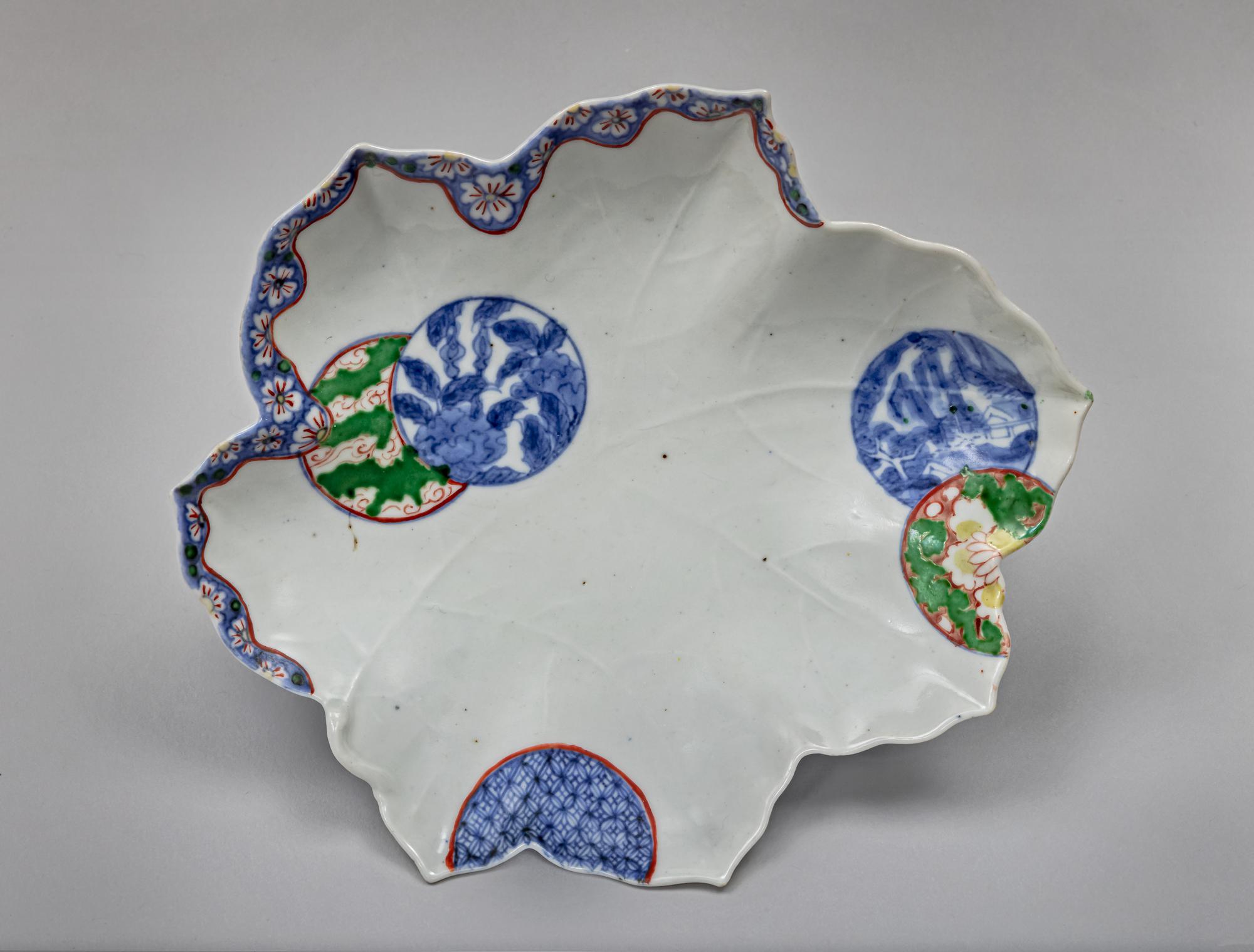
Leaf-form dish, Japan, Hizen, mid-17th century, Porcelain with overglaze enamels. The Macdonald Collection
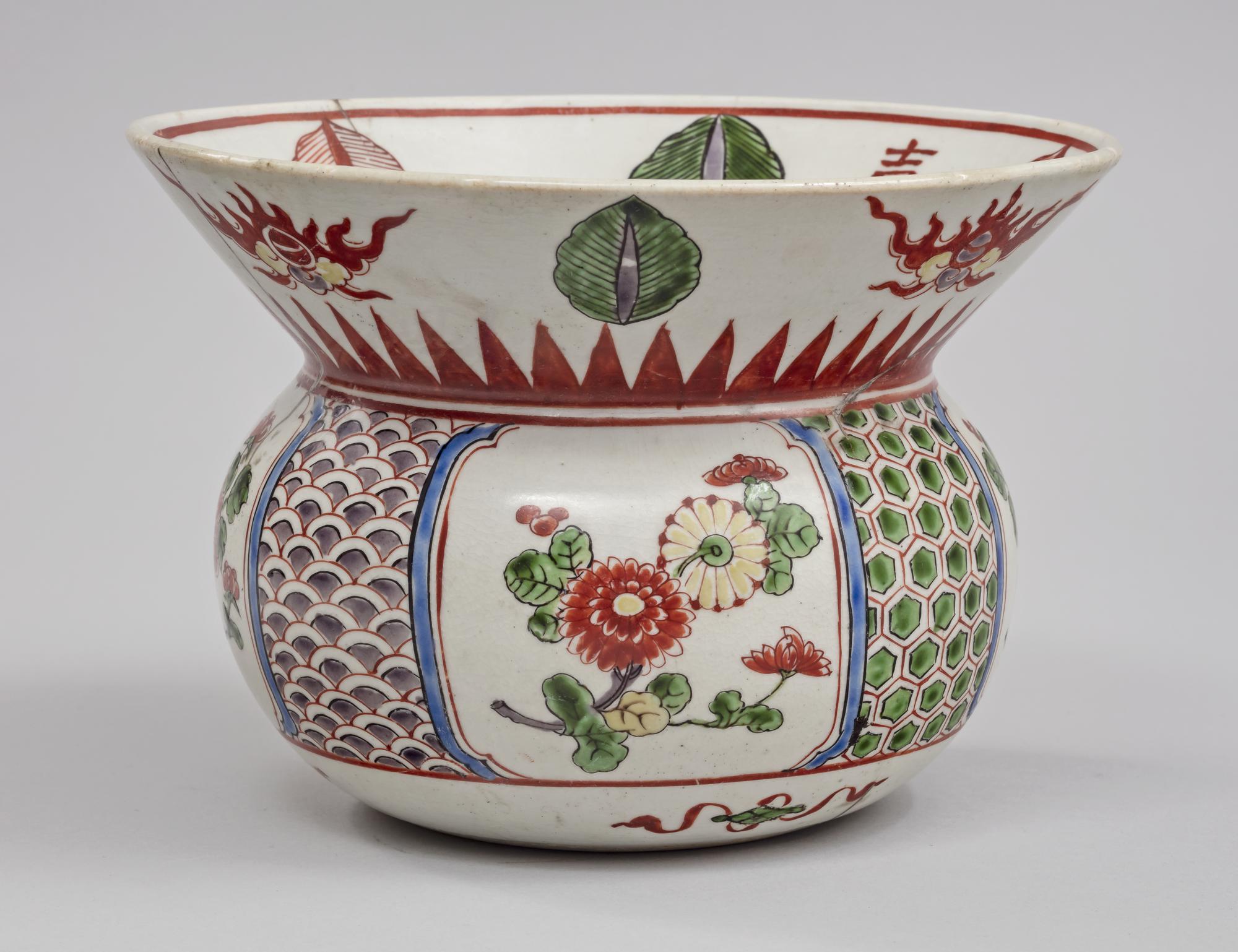
Ko-Kutani waste bowl, Japan, Hizen, 1650–60. Porcelain with overglaze enamels. The Macdonald Collection
Floral Displays
Tea gatherings were held in reception rooms decorated especially for the event. The tokoma, or alcove, was an important feature of reception rooms in homes and tea houses, and the site where valuable and prized possessions, paintings, and floral arrangements were presented. This pair of vases was possibly used to display seasonal flowers in this context.
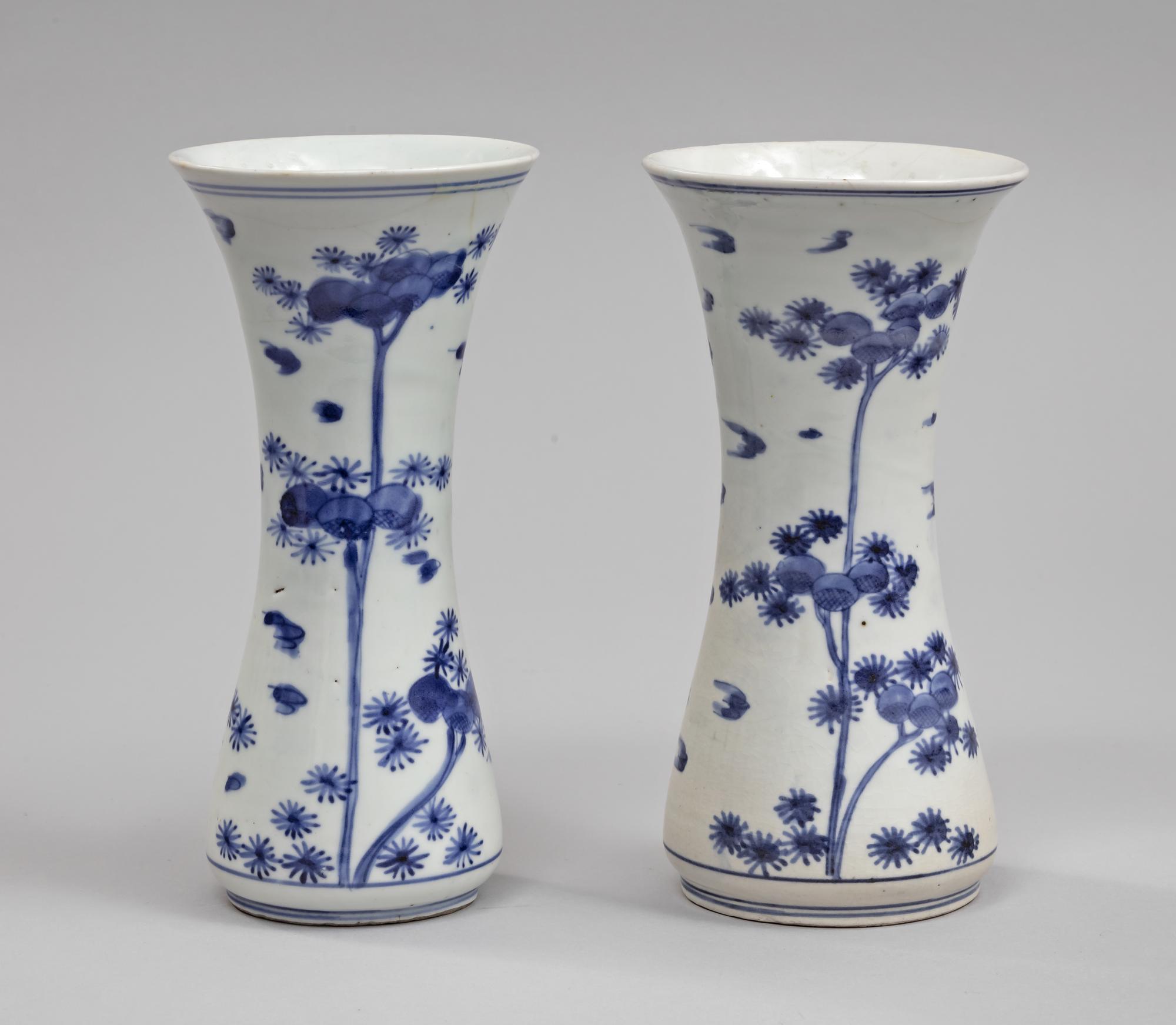
Pair of vases with pomegranates and bats, Japan, Hizen, 1650–60. Porcelain with underglaze blue. The Macdonald Collection
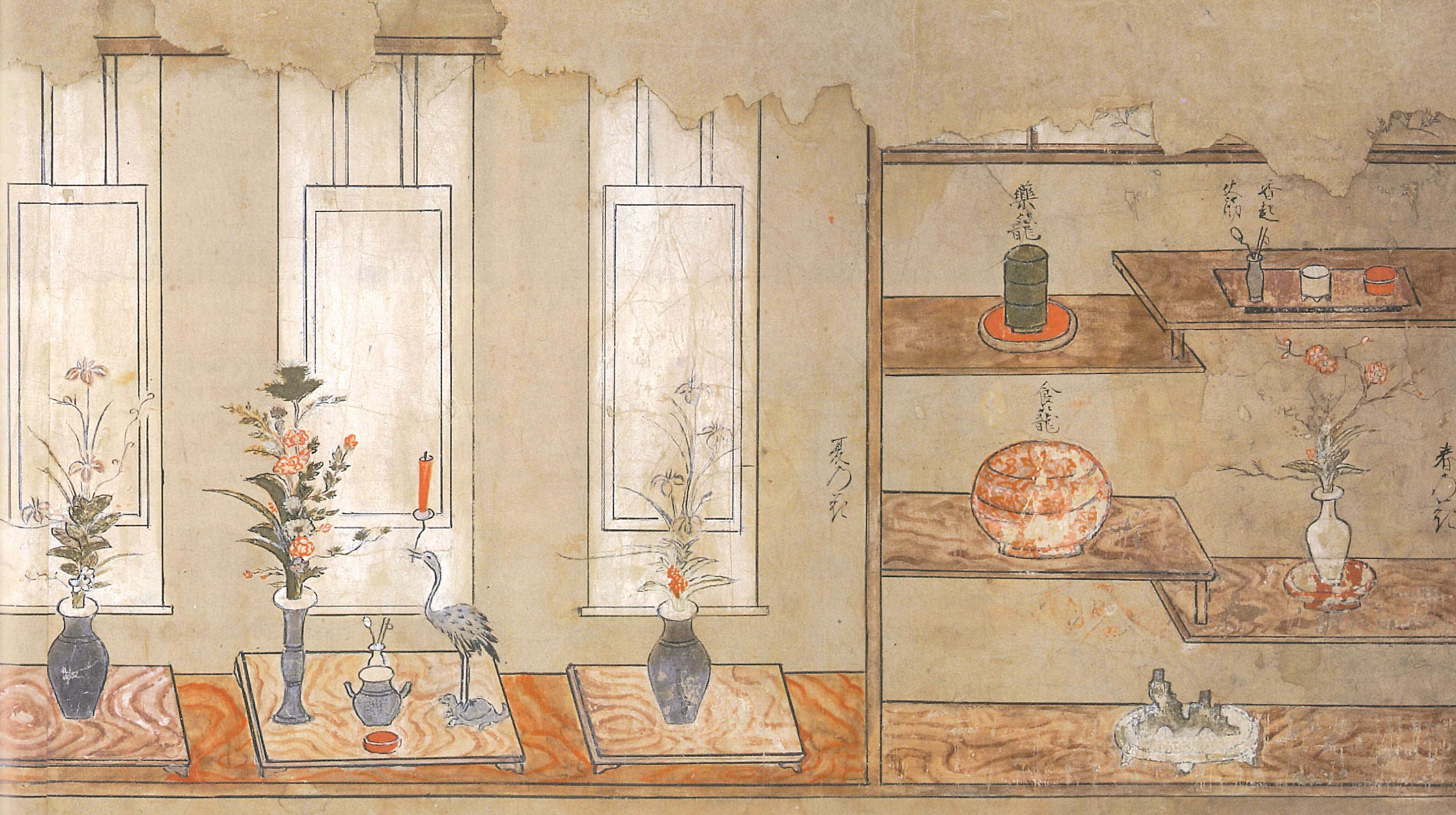
Arrangements for Reception Room Display (Zashiki kazari emaki), Japan, Muromachi period, 1522 (copied 1559), Handscroll ink and colour on paper. Private Collection, Japan
Credits
Burning Incense
Burning incense, or the “the way of incense,” developed in connection with the tea ceremony and emerged as a popular pastime in the Edo period. Like the tea ceremony, it required a range of utensils in various materials including ceramic and lacquer. Incense burners (koro) and boxes to store incense (kōgō)—incense wood or incense mixture balls—could be made of porcelain. Incense perfumed the air as well as clothes and functioned as a symbol of refined taste.
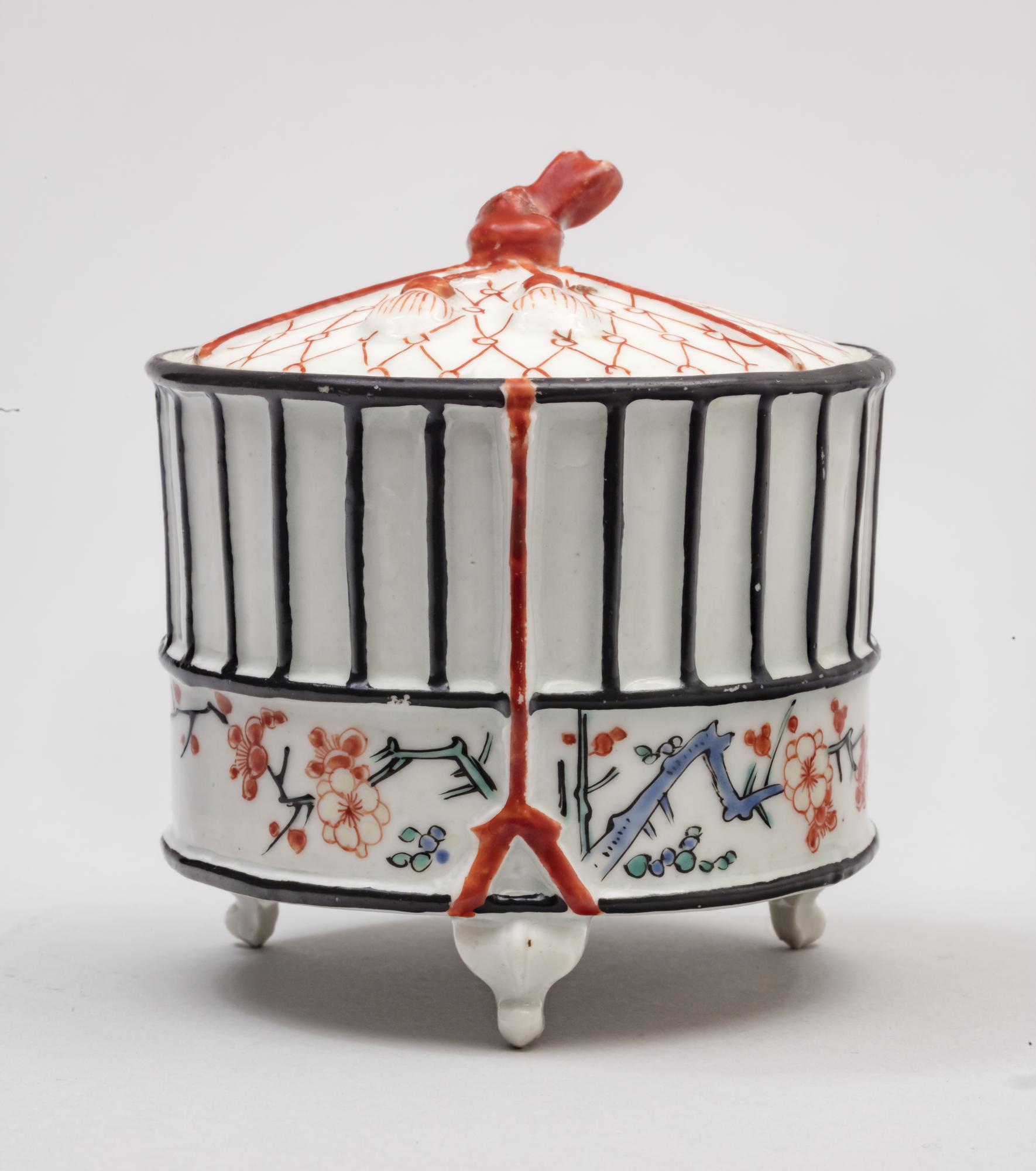
Covered koro (incense burner) in the form of a cricket basket, Japan, Hizen, c. 1690–1700. Porcelain with overglaze enamels. The Macdonald Collection
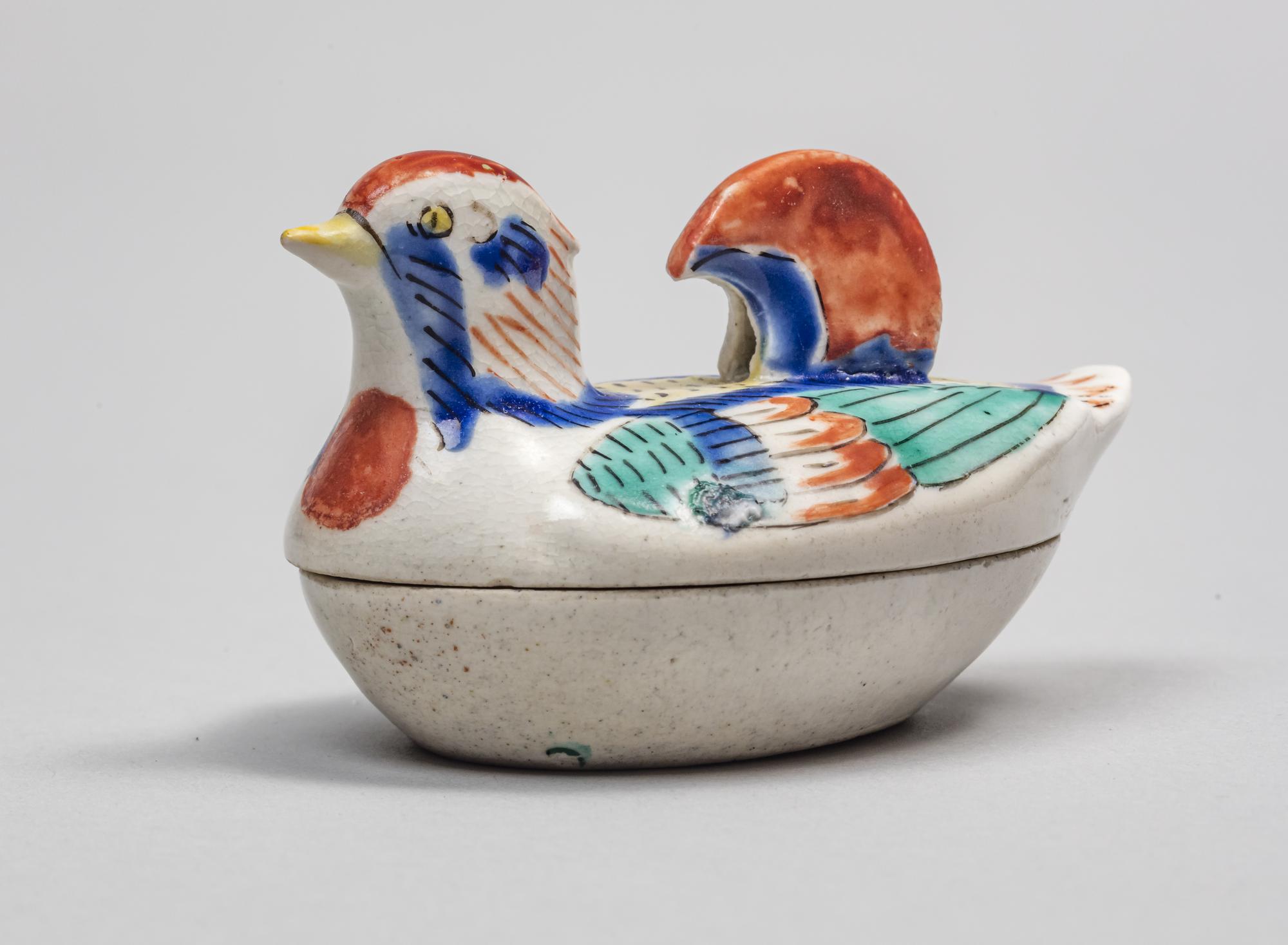
Incense box in the shape of a bird, Japan, Hizen, 1680–1700. Porcelain with overglaze enamels. The Macdonald Collection
Fashionable Dining
Fashionable types of ceramics were used to serve food and drinks at banquets. An elaborate meal would involve the service of multiple small dishes presented on trays. Nabeshima-type wares, such as this triangular dish, would have been employed in the most elite banquets. While the Kakiemon-style wares in the collection were primarily made for export, archeological finds indicate that various forms were appreciated on the domestic market; these bottles made to contain sake are an example.
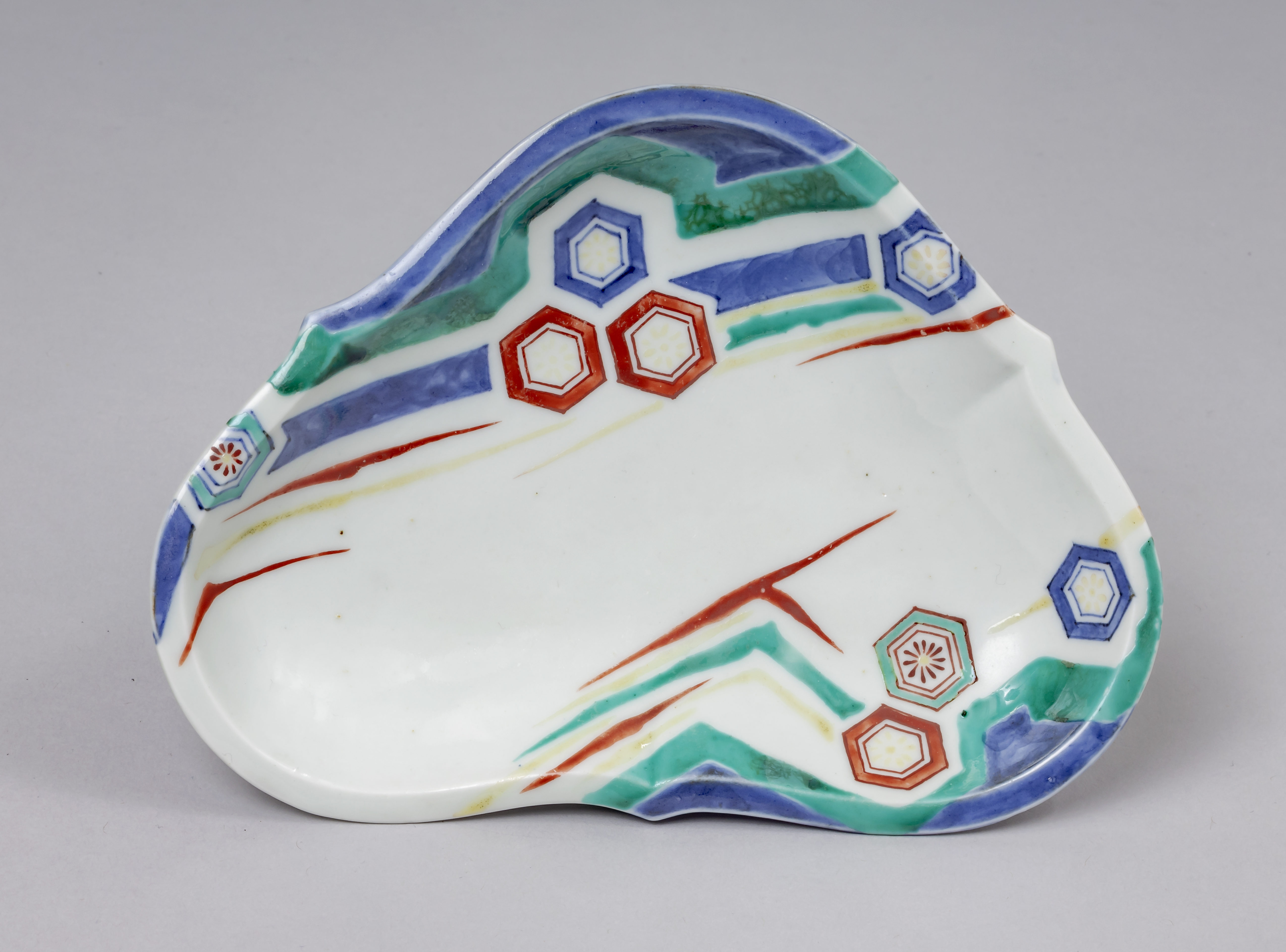
Triangular dish
Japan, Hizen, 1650–70
Porcelain with underglaze cobalt blue, overglaze enamels
The Macdonald Collection
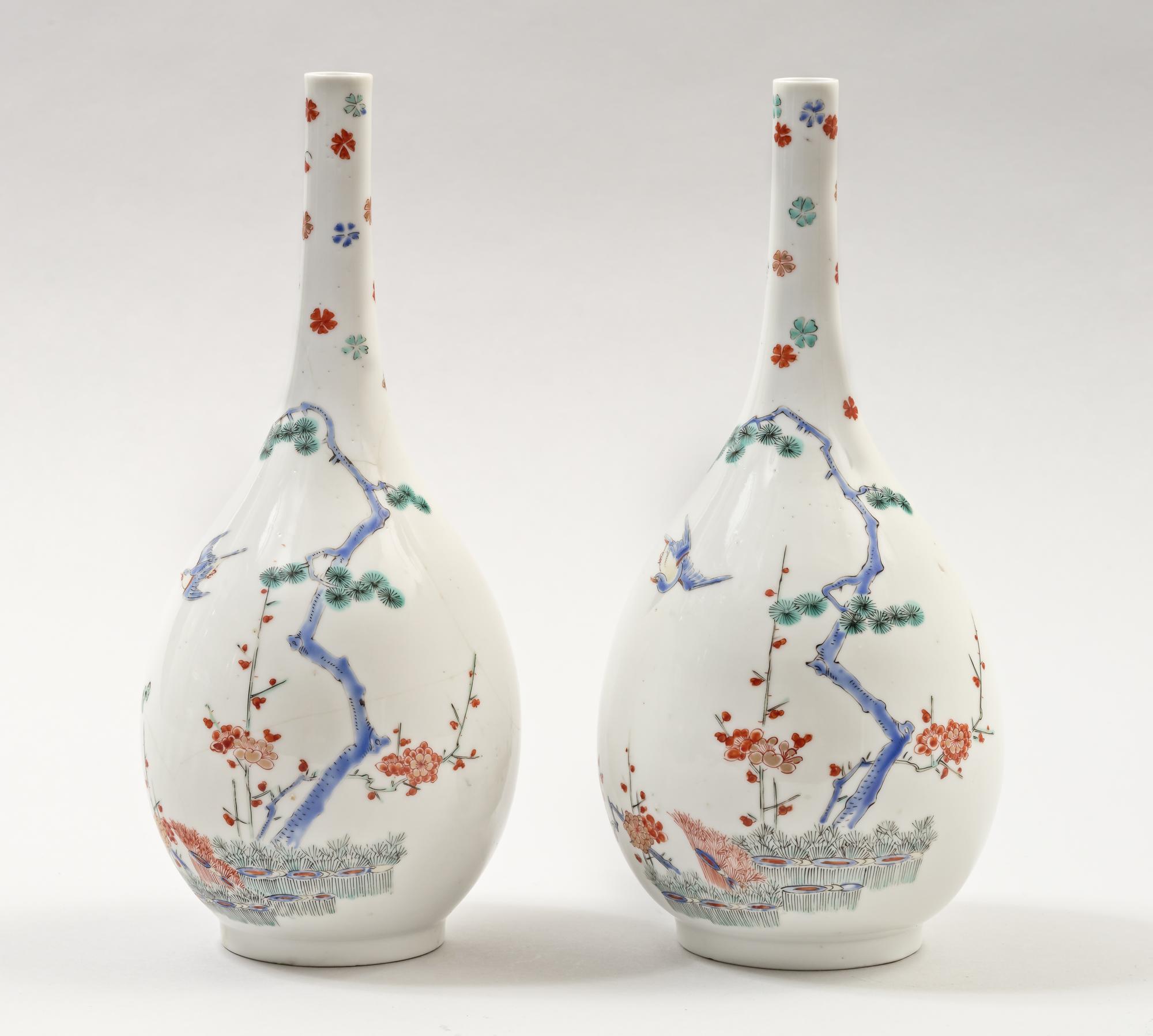
Pair of sake bottles, Japan, Hizen, c. 1670–90s. Hard-paste porcelain with overglaze enamels. The Macdonald Collection
Figures for the Home
Small porcelain sculptures decorated in the Kakiemon palette were first made for domestic use before reaching an export market. Animals, mythical creatures, legendary heroes, folk deities, and characters from the entertainment world were popular themes. The figure of a boy carrying a gourd and sitting on a drum may possibly be a Daoist immortal or an entertainer from the Kabuki theatre. The bijin, or beautiful woman, relates to the world of courtesans. Figures were displayed as decorative elements in interiors, sometimes in the context of seasonal displays or in connection with holidays.
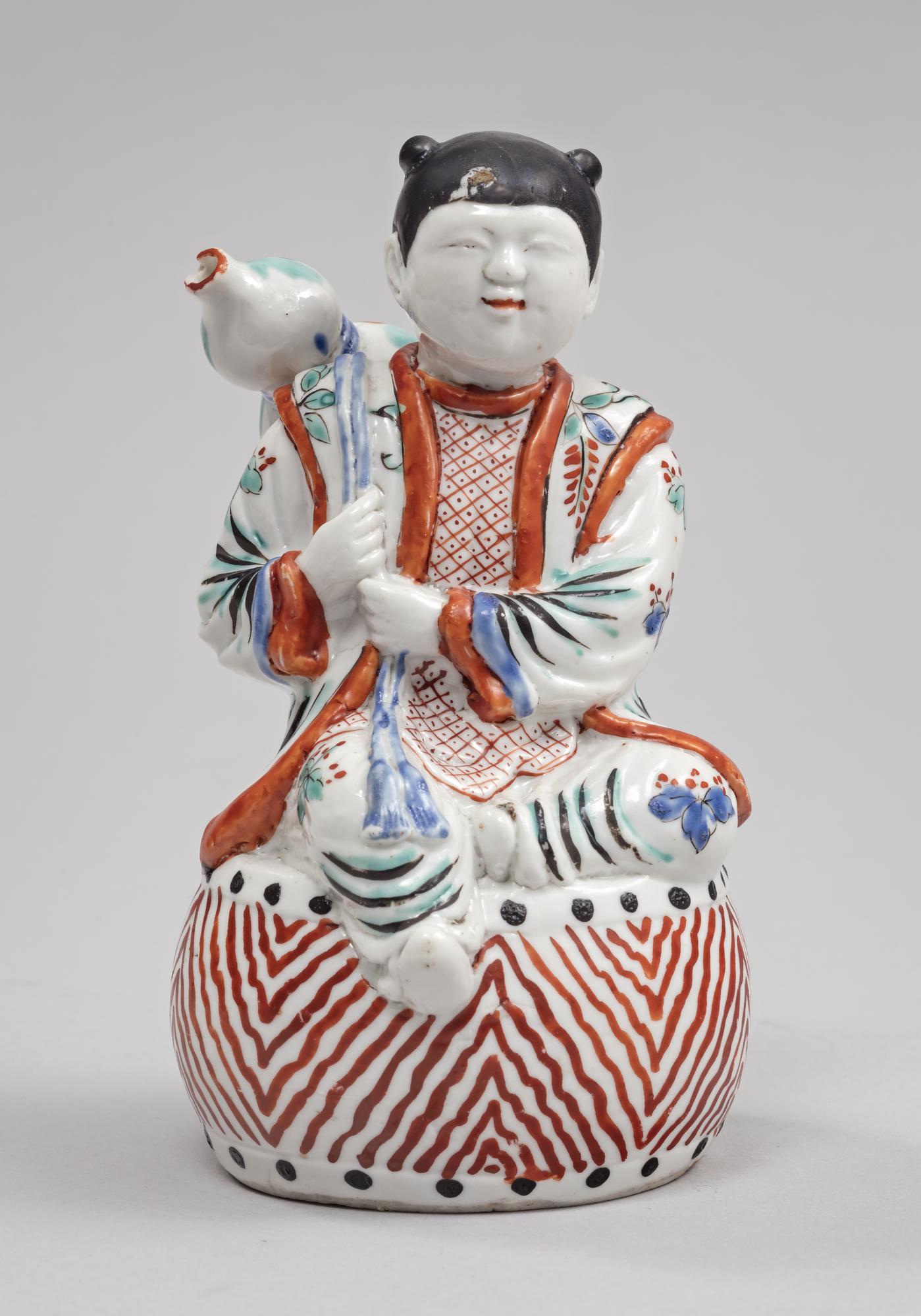
Boy sitting on a drum, Japan, Hizen, c. 1670–1690. Porcelain with overglaze enamels. The Macdonald Collection
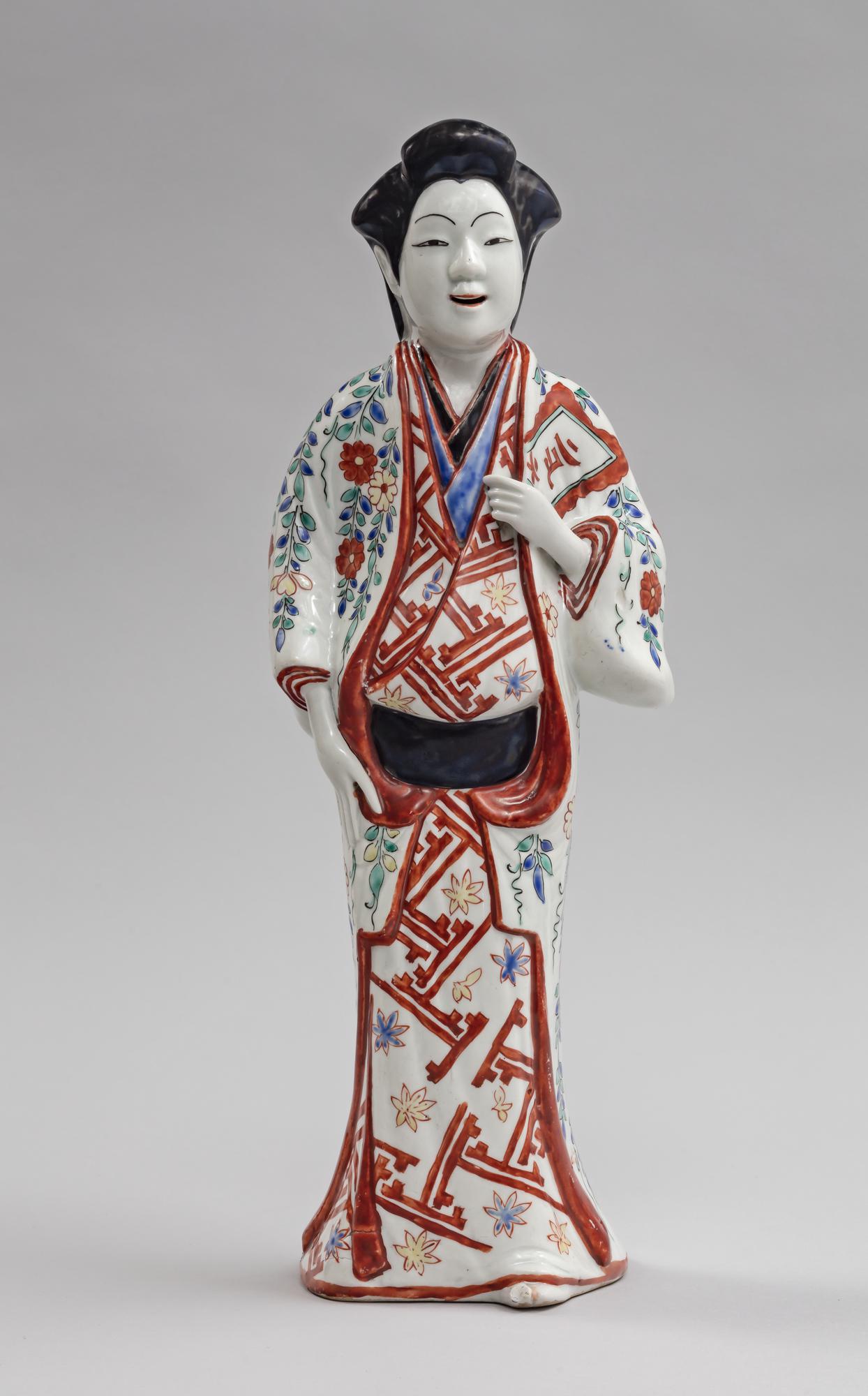
Bijin (Beauty) figure, Japan, Hizen, c. 1680–1700. Porcelain with overglaze enamels. The Macdonald Collection