Credits
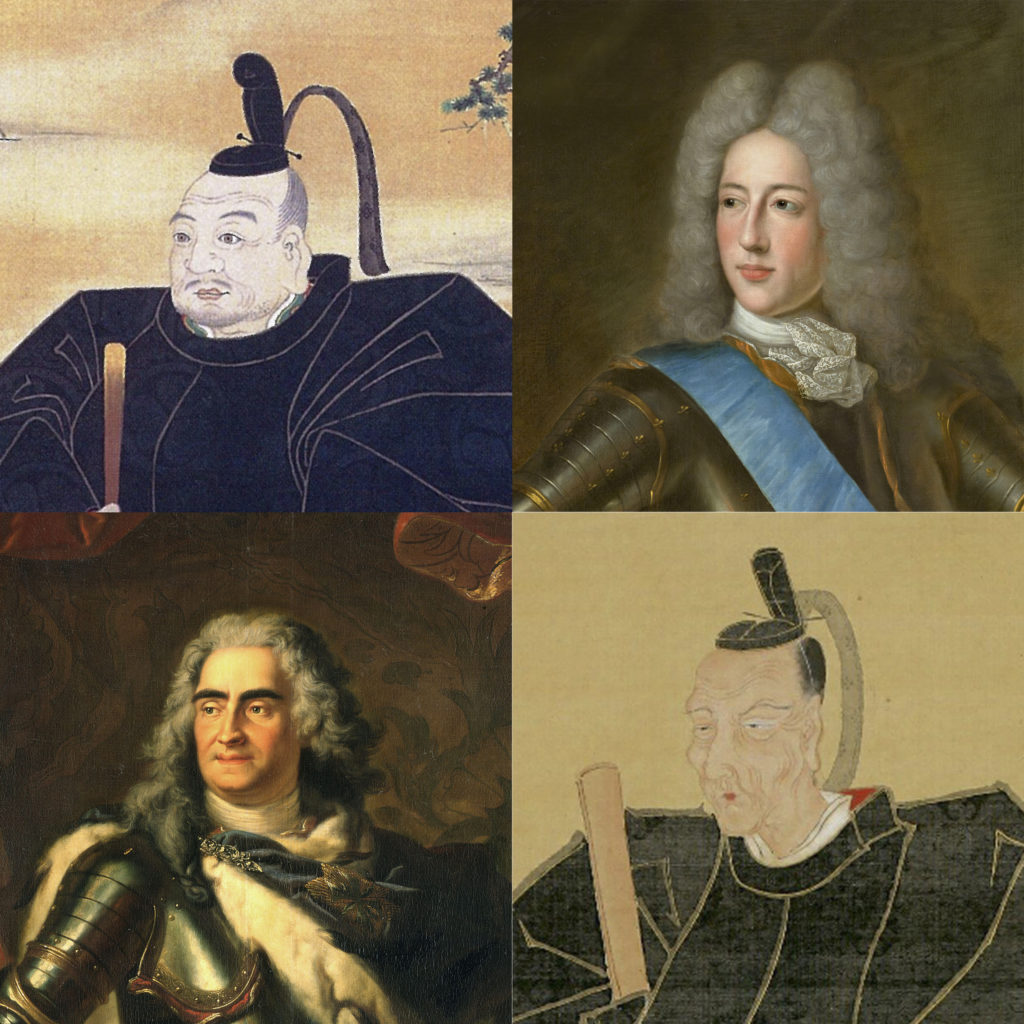
Clockwise from top left: Portrait of Tokugawa Ieyasu, Kanō Tan'yū, Japan, 17th century; Portrait of Louis Henri de Bourbon, septième prince de Condé (After Restoration); Pierre Gobert, France, date unknown; Nabeshima Katsushige, Japan, c.1661, The Museum Chokokan, Nabeshima; King Augustus II of Poland, Elector of Saxony, Louis de Silvestre, the Younger, Germany, 1718
Image Credits clockwise from left:
Image: User:M-sho-gun / Wikimedia Commons / Public Domain
Image: Michel Urtado. Musée Condé, Chantilly, France © RMN-Grand Palais / Art Resource, NY
Image: Gainew Gallery/Alamy Stock Photo
Image: bpk Bildagentur / Photographer: Juergen Karpinski /
Art Resource, NY
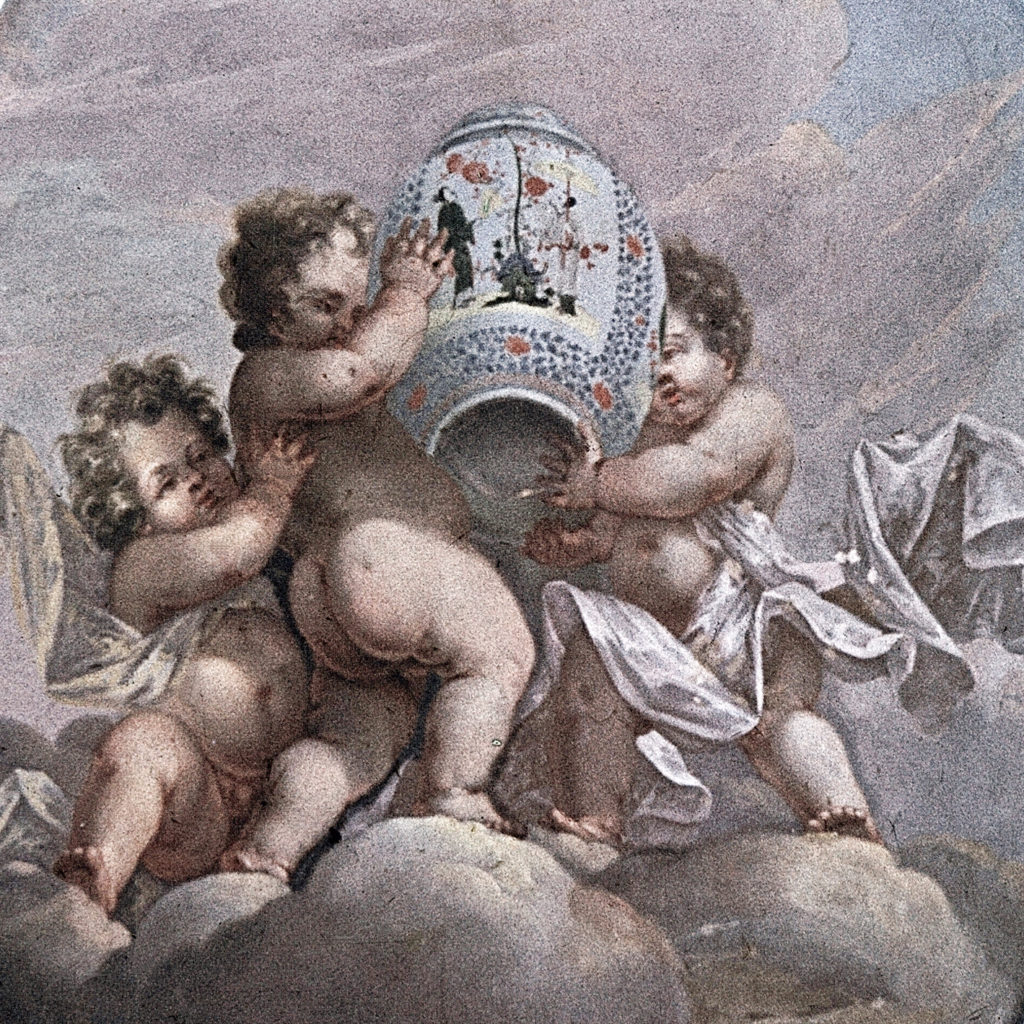
Putti playing with a Japanese Kakiemon vase, Detail from the ceiling of Schloss Oranienburg, Augustin Terwesten, Germany, 1695
Image: Müller & Son © Zentralinstitut für Kunstgeschichte
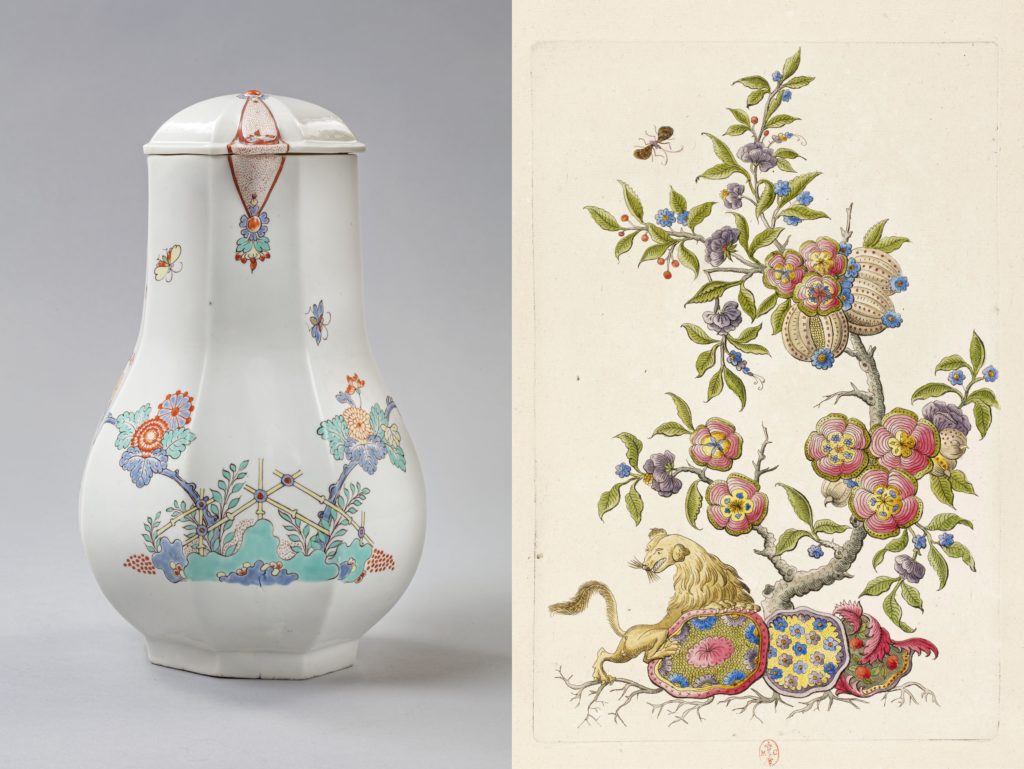
Left: Ewer in the Kakiemon style, France, Chantilly, c. 1735–40, The Macdonald Collection; Right: Livre de dessins chinois, Jean-Antoine Fraisse, France, 1735, Taille douce engraving.
Right:
2005.26folio27
Photo: Thierry Ollivier. Musée Condé, Chantilly, France;
© RMN-Grand Palais / Art Resource, NY
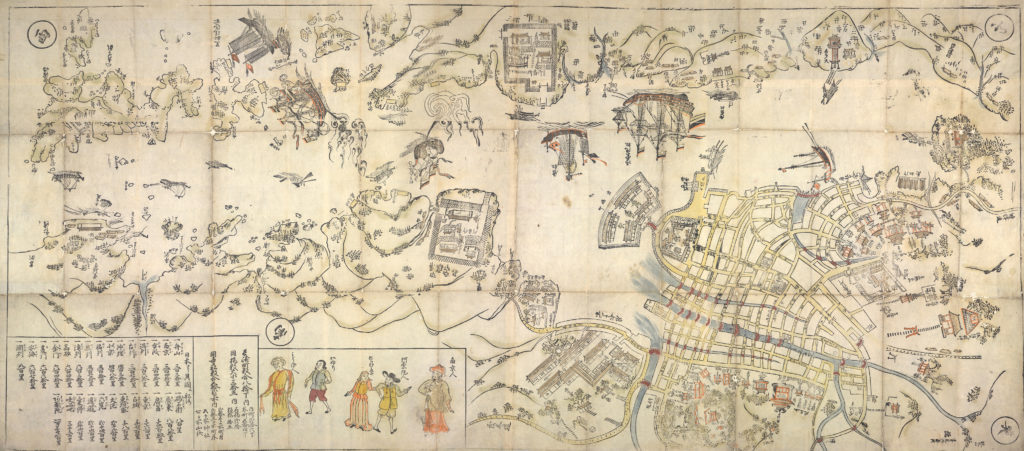
Map of Nagasaki showing the fan-shaped island of Deshima, Japan, c. 1680, Woodblock print. British Library.
Image: © The British Library Board / Or.75.g.25, LHS
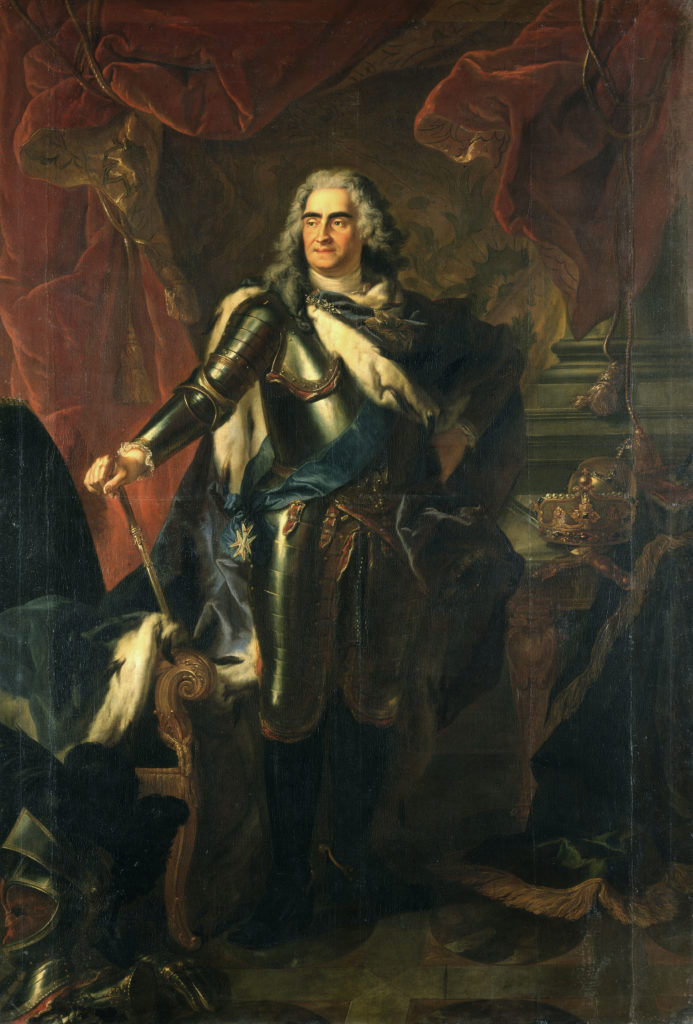
Portrait of King Augustus II of Poland, Elector of Saxony, Louis de Silvestre, the Younger, Germany, 1718, Oil on canvas.
Image: bpk Bildagentur / Photographer: Juergen Karpinski /
Art Resource, NY
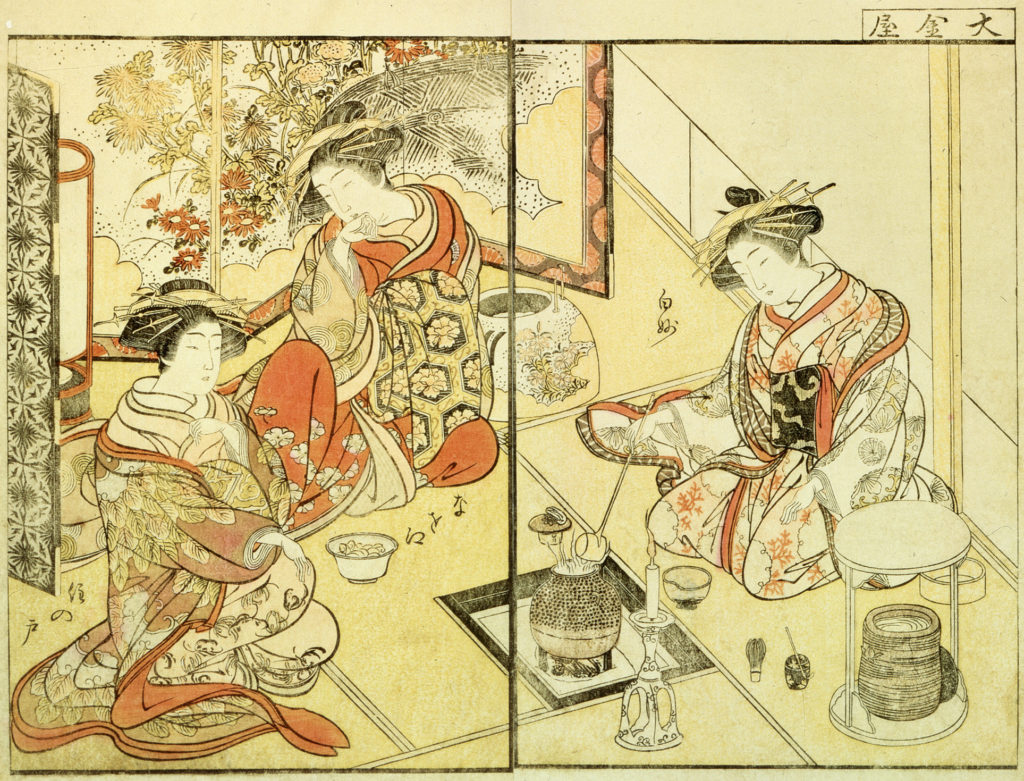
Tea ceremony, Inoue Shinshichi, Japan, 18th century, Coloured woodcut. Museum fuer Asiatische Kunst.
Staatliche Museen, Berlin, Germany
Image: bpk Bildagentur / Museum fuer Asiatische Kunst / Photographer: Juergen Liepe / Art Resource, NY
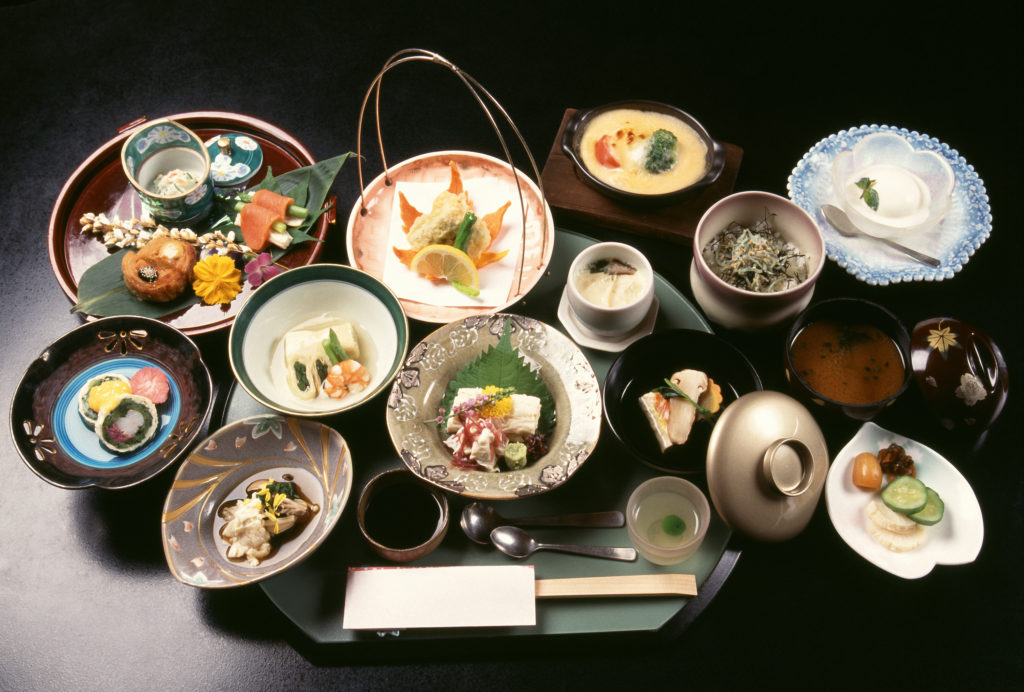
Contemporary Kaiseki Meal
Image: © JenJ_Payless / Shutterstock
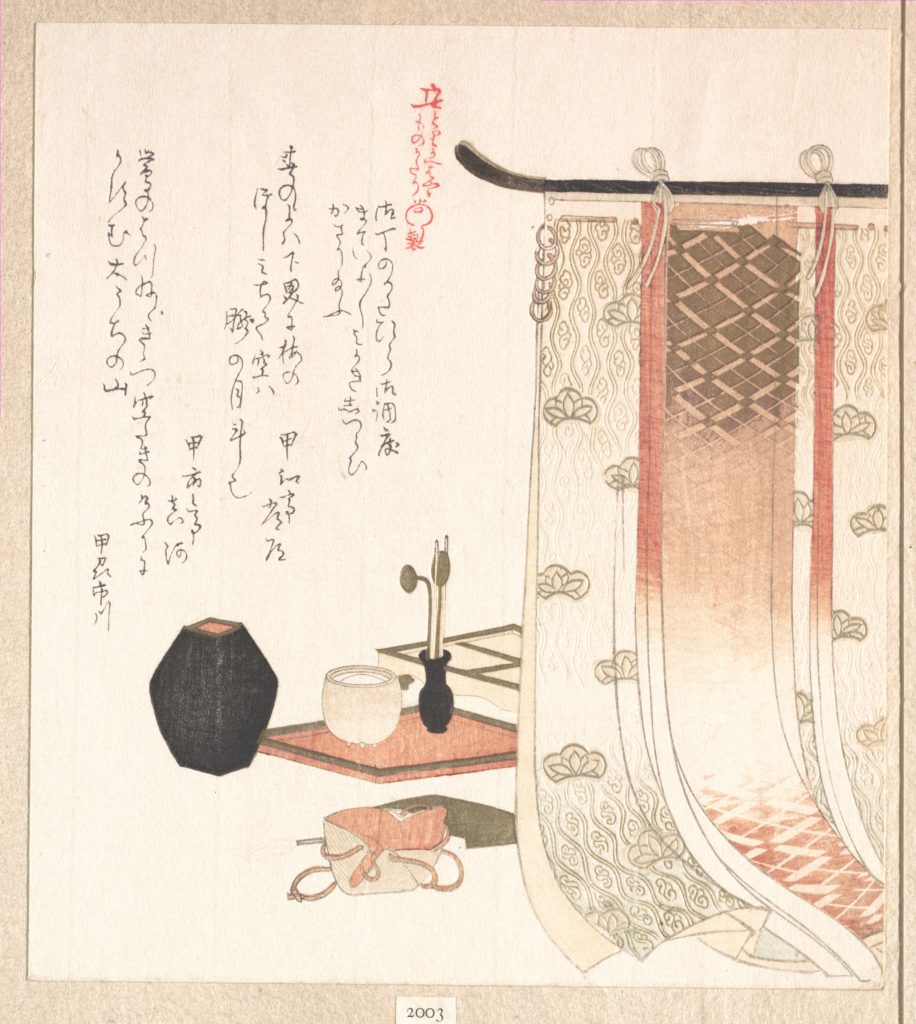
Kubo Shunman (1757–1820), Screen and utensils for the incense ceremony, Japan, 19th century. Woodblock print (surimono); ink and color on paper. The Metropolitan Museum of Art.
H. O. Havemeyer Collection, Bequest of Mrs. H. O. Havemeyer, 1929.
Image: Courtesy of the Metropolitan Museum of Art
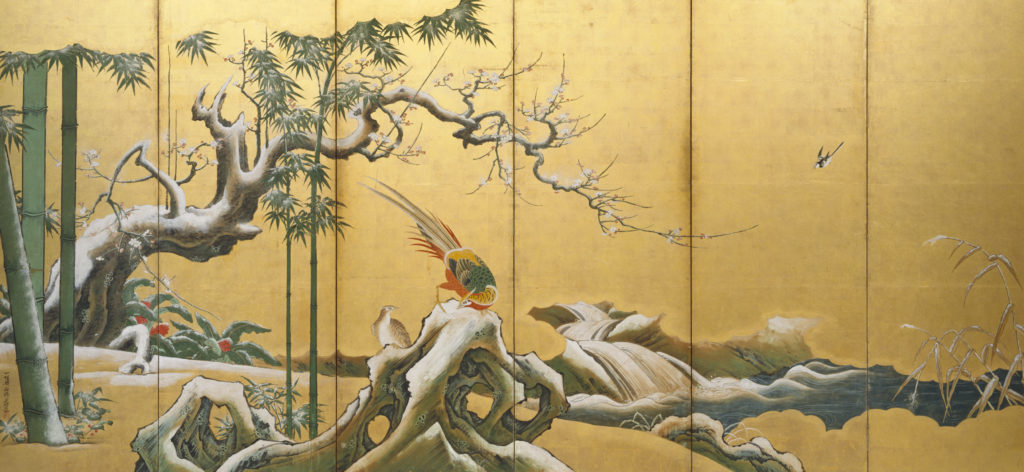
Pine, Bamboo and Plum Blossoms, Kanō Einō, Japan, 17th century, Pair of six-panel screens (byobu); colour and gold on paper. Art Gallery of New South Wales Foundation
Purchase 1994. 638.1994.a-b.
Image: AGNSW
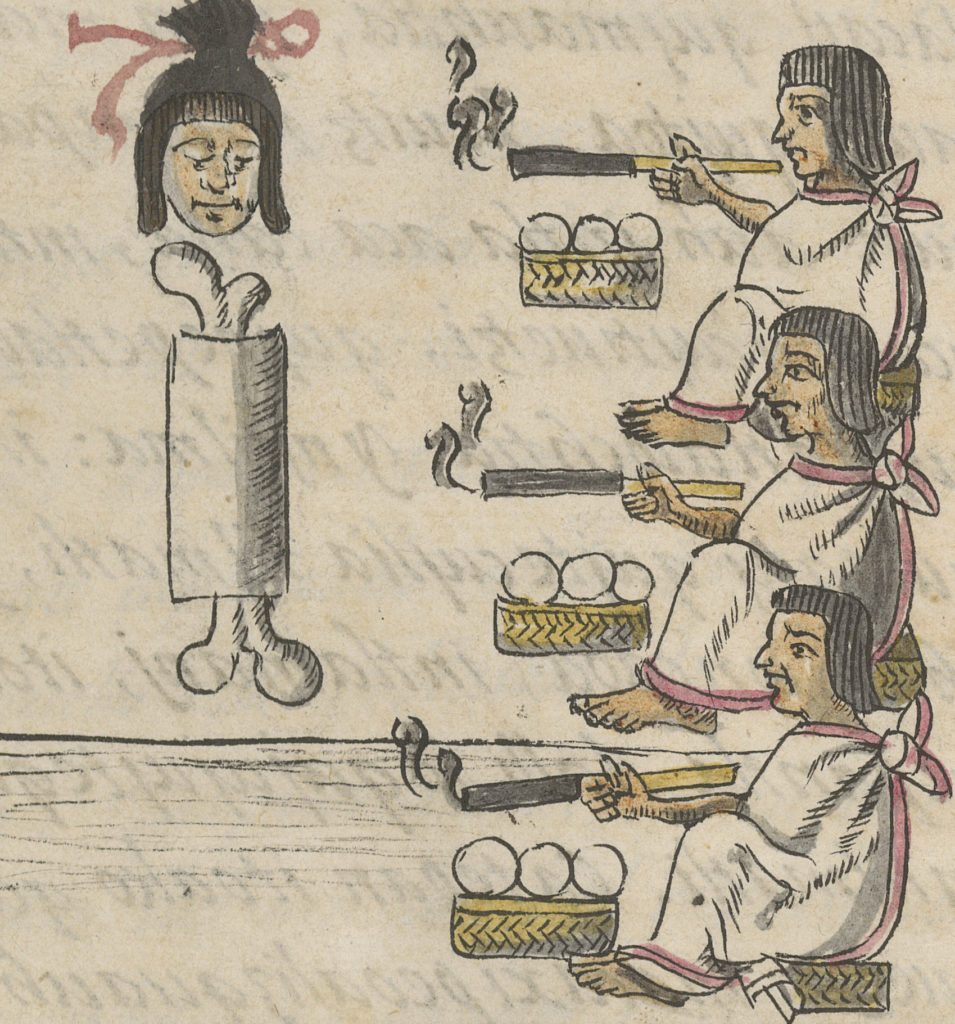
Tobacco smoking is part of the Aztec ritual depicted in this scene from The Florentine Codex. Completed in 1576, the manuscript was authored by the Franciscan friar Bernardino de Sahagún, working together with a team of Indigenous writers and artists to create an encyclopedia of Nahua culture and language.
Credit: Florence, Biblioteca Medicea Laurenziana
Med. Palat. 218, f. 80v
Image: Reproduced with permission of MiC
Further reproduction by any means is prohibited
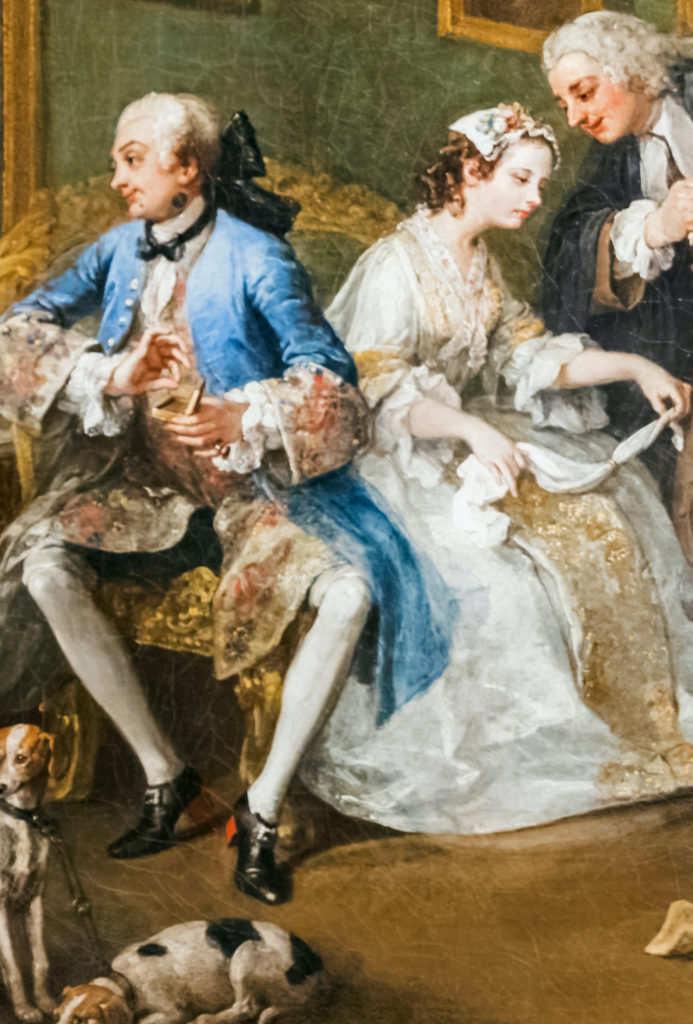
Detail from Marriage A-la-Mode: 1, The Marriage Settlement, William Hogart, England, about 1743, Oil on canvas. The National Gallery.
NG113.
Image: Steve Vidler/Alamy Stock Photo
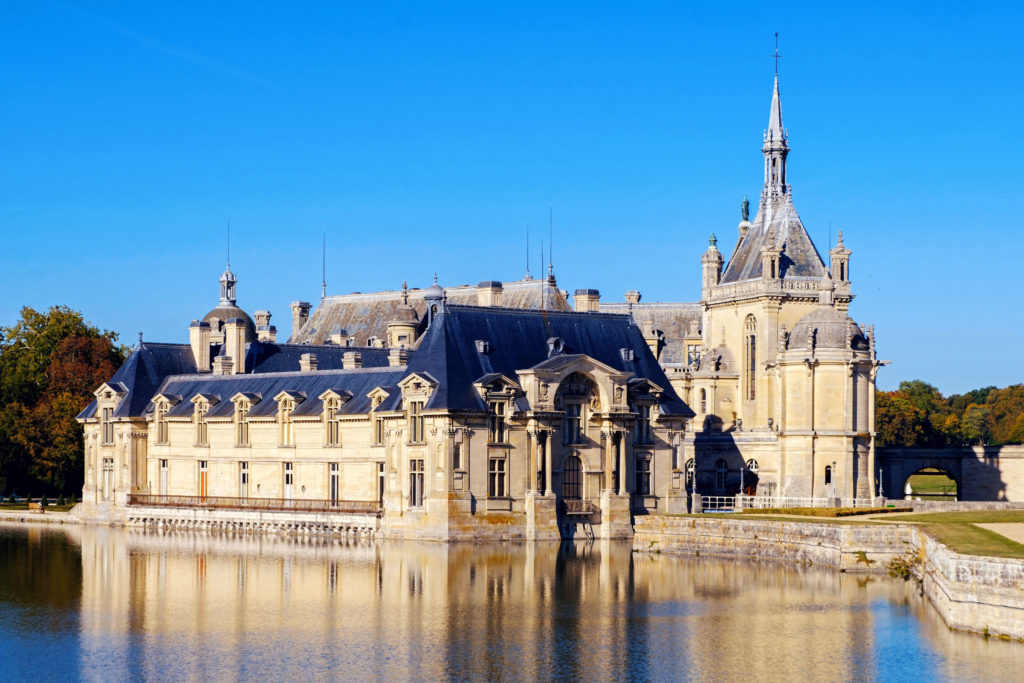
View of Chantilly Castle with Reflection in Water, France
Image: Panther Media GmbH/Alamy Stock Photo
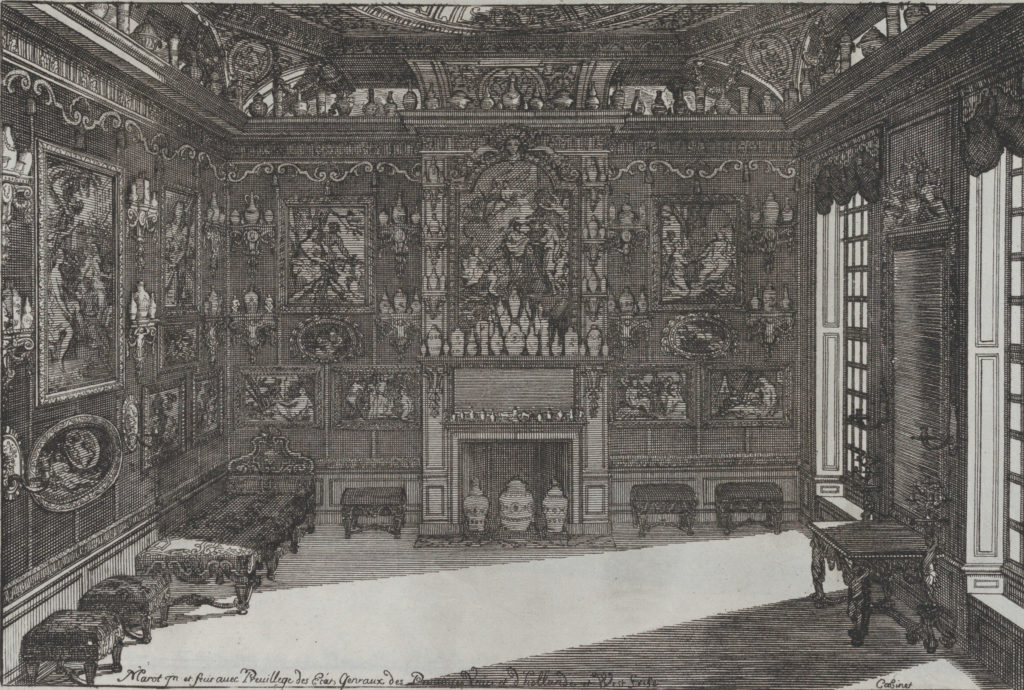
Interior of a Porcelain Cabinet with Paintings and Vases, from Nouveaux Liure da Partements, Daniel Marot the Elder, France, Published 1703 or 1712, Etching. Metropolitan Museum of Art.
Harris Brisbane Dick Fund, 1930, 30.4(9)
Image: Courtesy of the Metropolitan Museum of Art
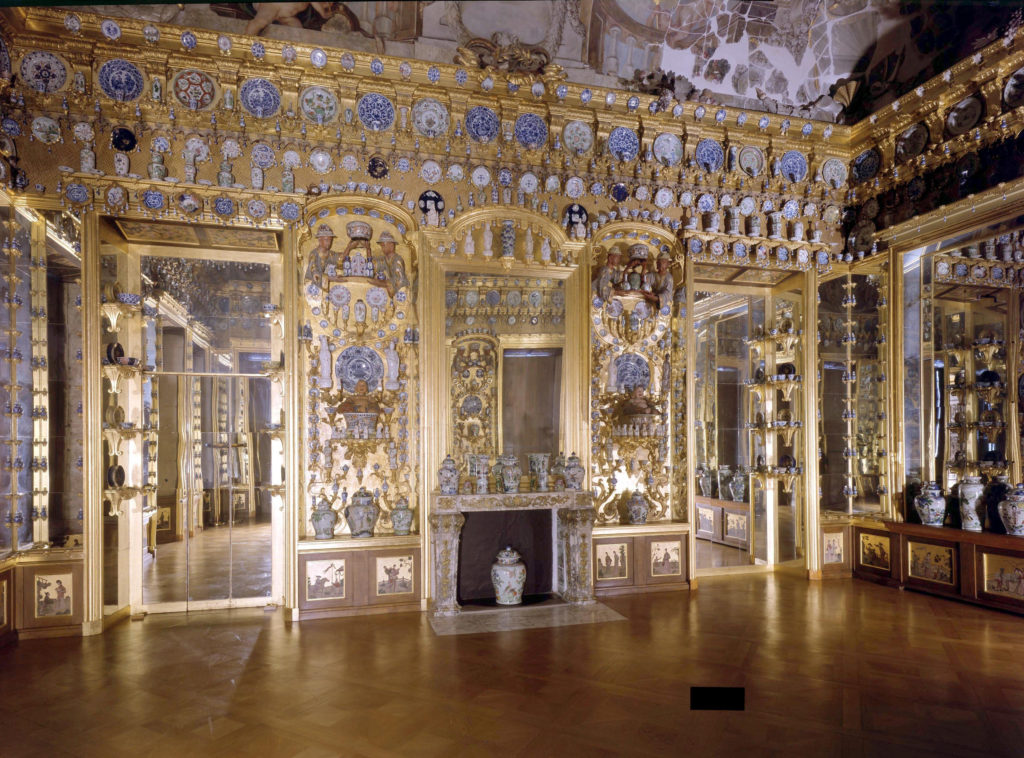
Porcelain Room at Charlottenburg, Berlin, Germany
Image: Smith Archive / Alamy Stock Photo
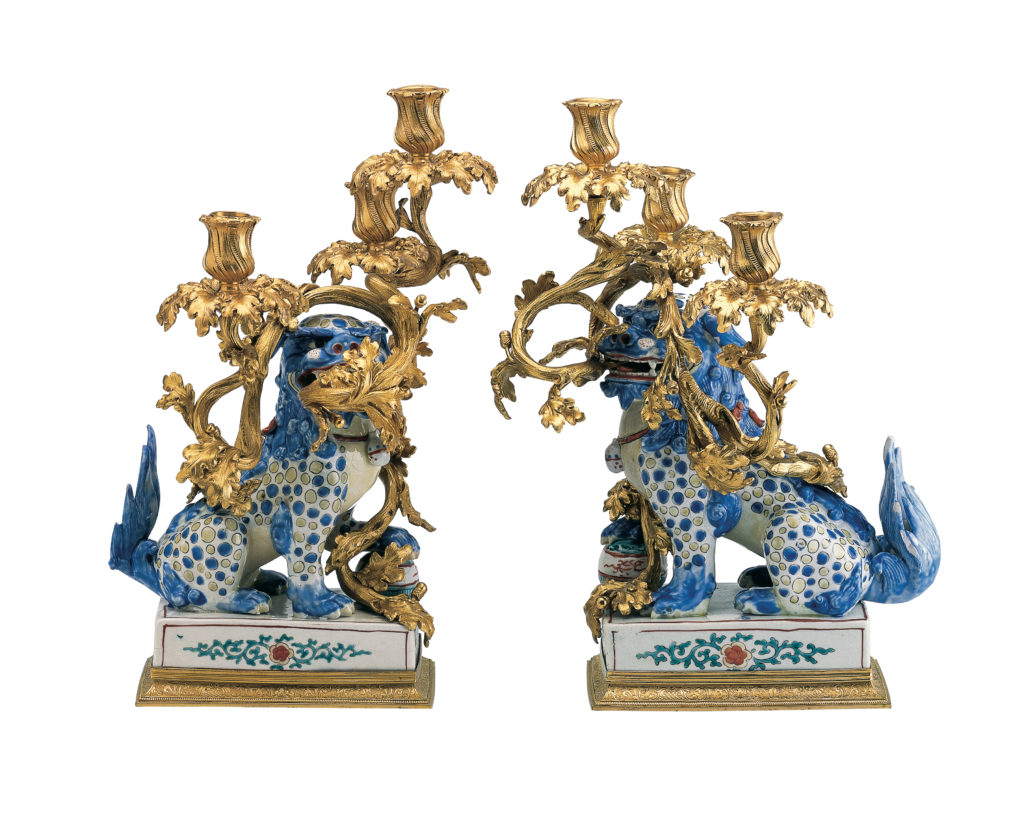
Shishi Mounted in Ormolu as Candelabrum, China, Kangxi Dynsaty (1622-1722). Residenz München, Ostasiatische Porzellansammlung.
ResMüK V c 238
Image: ©Bayerische Schlösserverwaltung, Maria Custodis, München
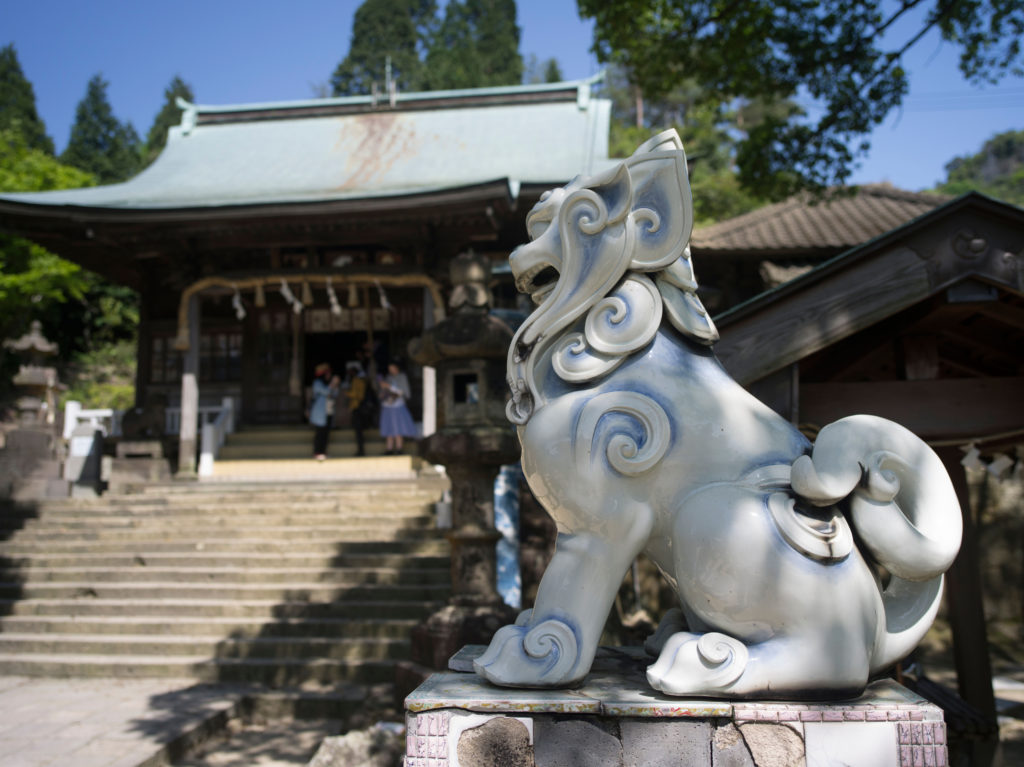
Ceramic Kōmainu at Tōzan Shrine in Memory of Korean-born Potter Ri Sampei, Arita, Saga Prefecture Japan
Image: Chris Wilson/Alamy Stock Photo
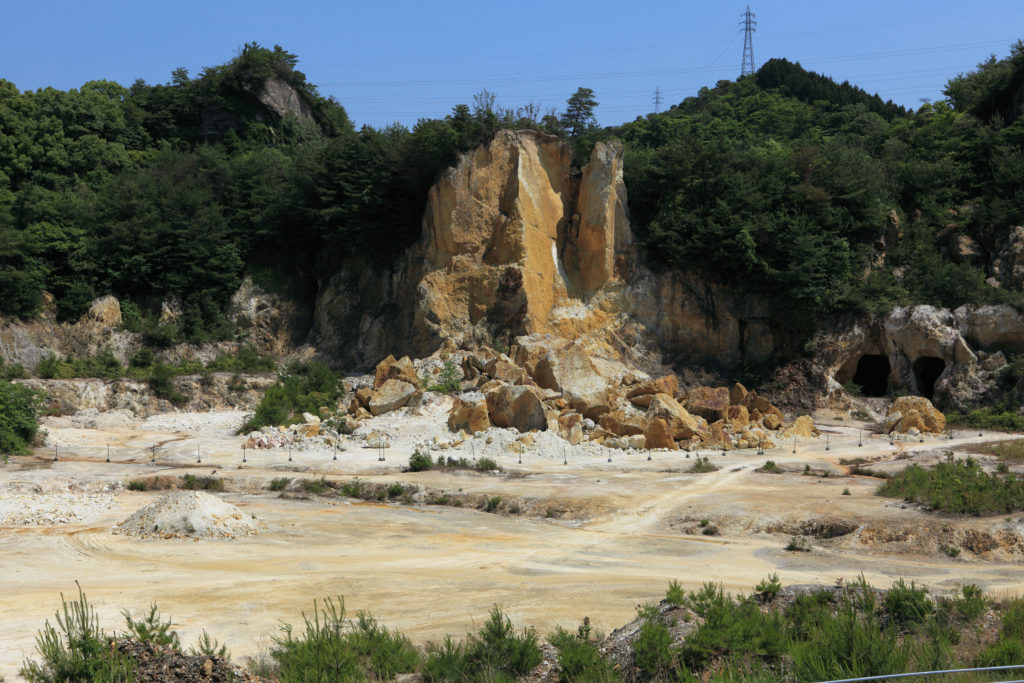
Izumiyama Quarry, Arita, Saga, Japan
Image: SOURCENEXT / Alamy Stock Photo
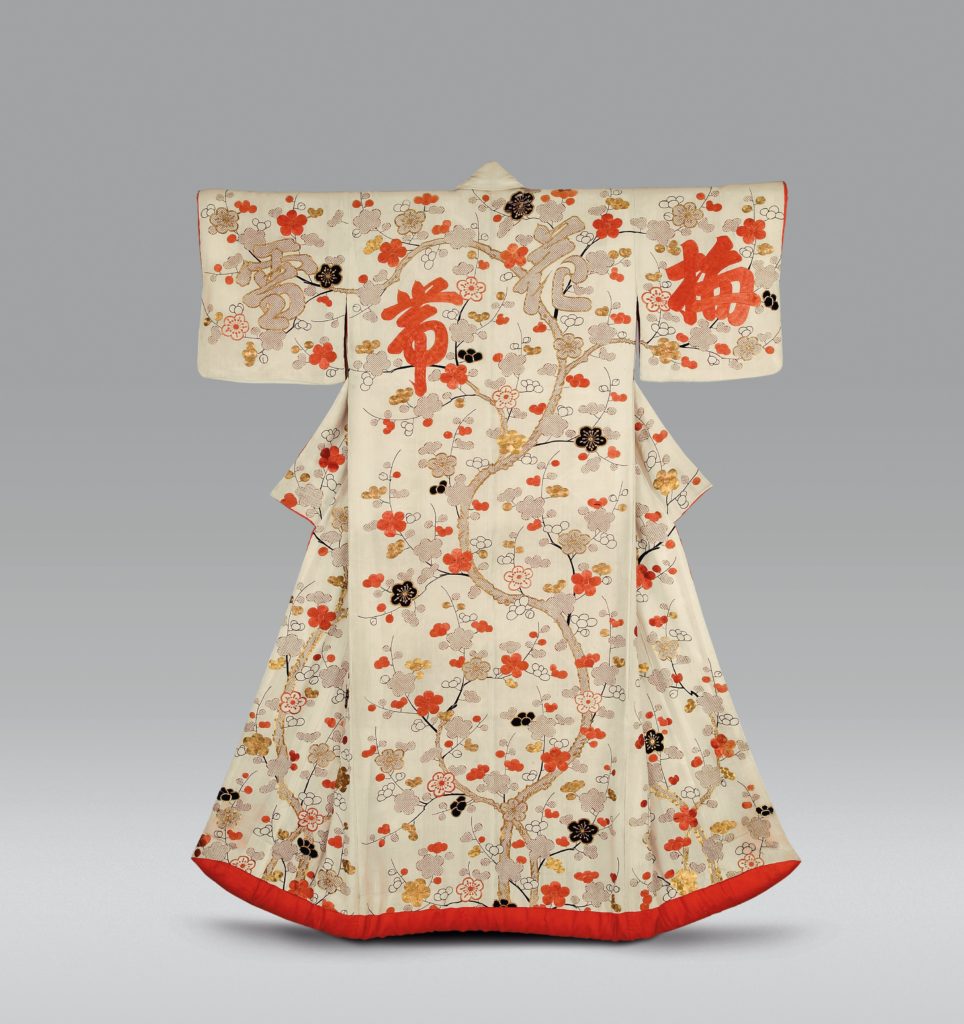
Kosode with Plum Trees and Chinese Poem, Japan, Edo period, second half of the 17th century, Silk, embroidery, and tie-dyeing. Minneapolis Institute of Art.
Mary Griggs Burke Collection, Gift of the Mary and Jackson Burke Foundation, 2015.79.448
Image: Courtesy of the Minneapolis Institute of Art
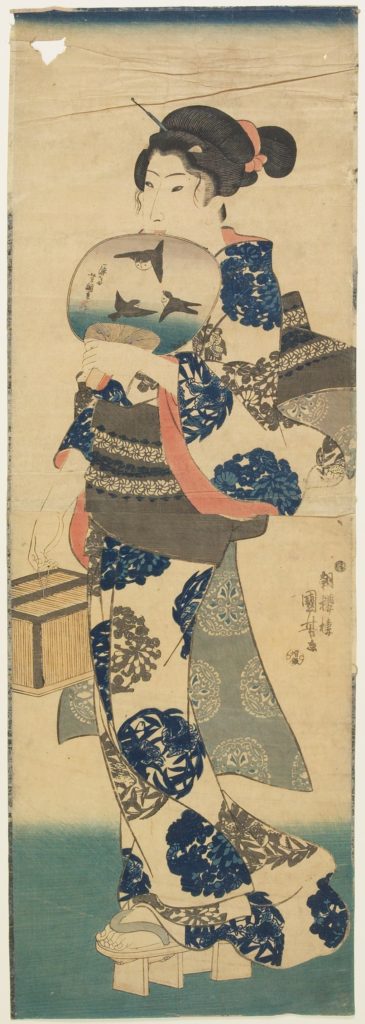
Woman with a Fan and Insect Cage Utagawa Kuniyoshi, Japan, 1843-1847. Minneapolis Institute of Arts.
Bequest of Louis W. Hill, Jr. P.75.51.312
Image: Courtesy of the Minneapolis Institute of Arts
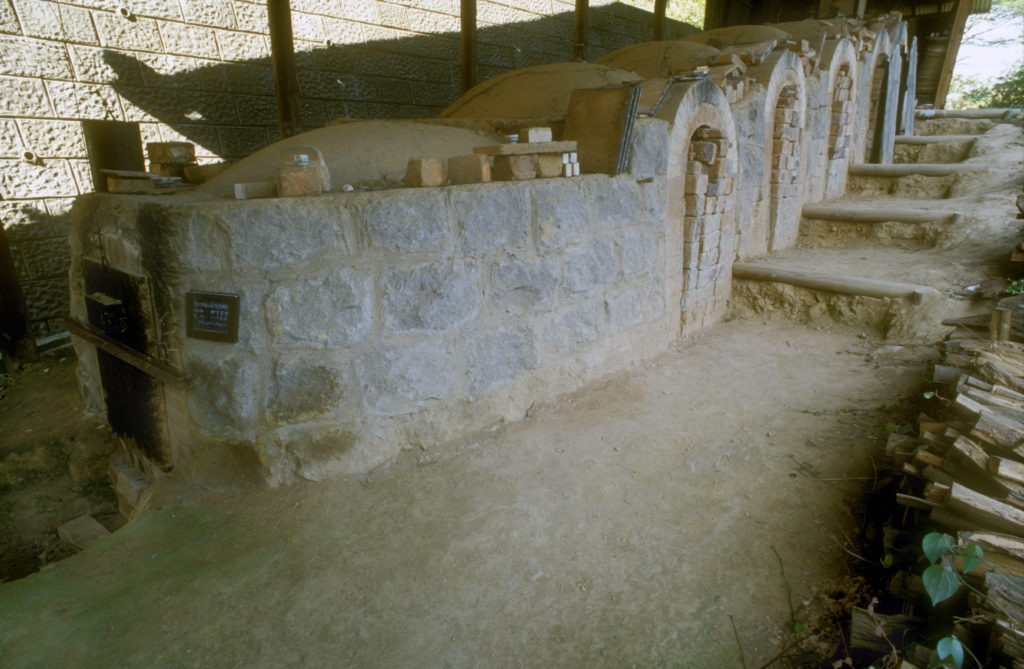
Old Kiln, Arita Village, Kyushu Island, Japan
Image: Paolo Negri / Alamy Stock Photo
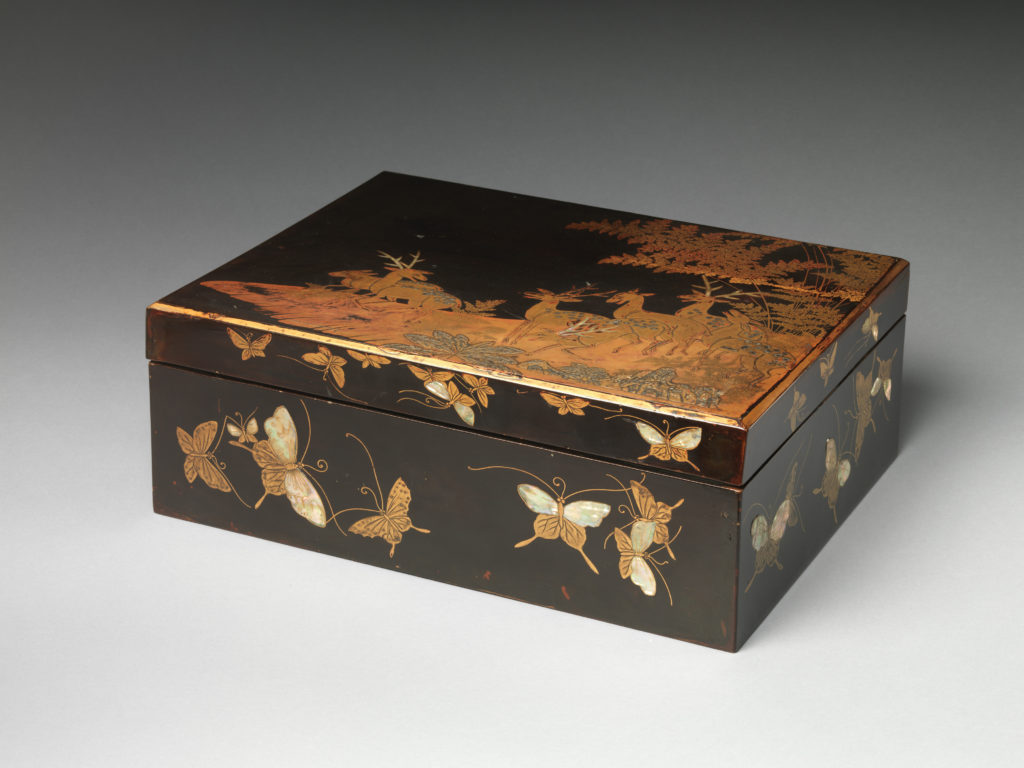
Document box with deer and butterflies, Japan, Edo Period, 17th century, Lacquered wood with gold, mother-of-pearl, and silver. Metropolitan Museum of Art.
Gift of Florence and Herbert Irving, 2015, 2015.500.2.52a,b
Image: Courtesy of the Metropolitan Museum of Art
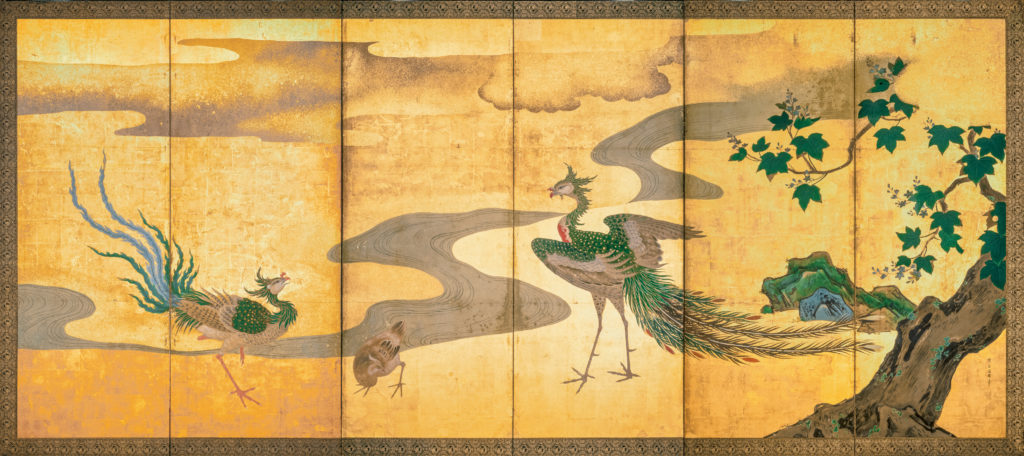
Phoenixes by Paulownia Tree, pair of six-panel folding screens, Edo period, 17th century, Suntory Museum of Art
Image: Courtesy of Suntory Museum of Art
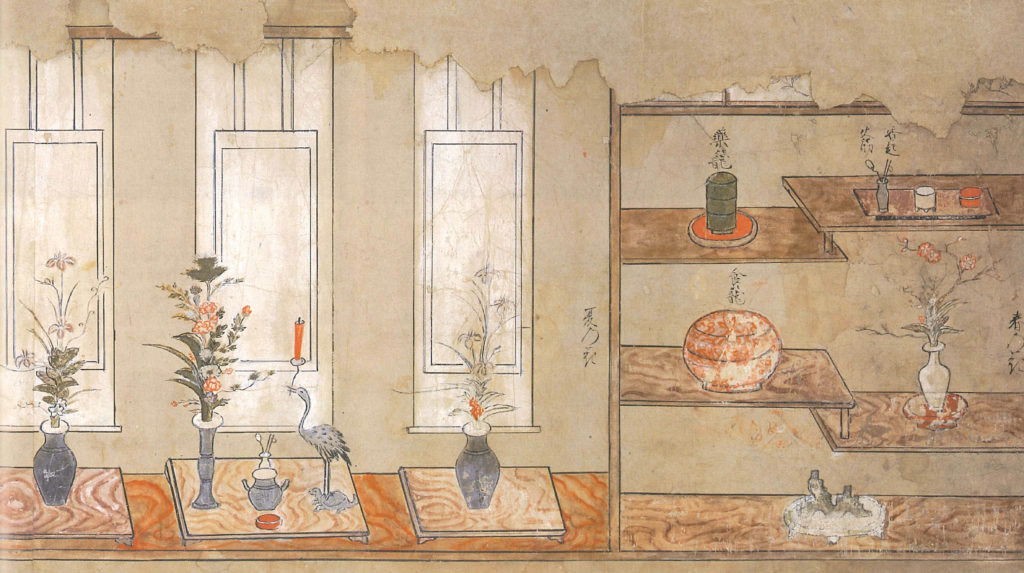
Arrangements for Reception Room Display (Zashiki kazari emaki), Japan, Muromachi period, 1522 (copied 1559), Handscroll ink and colour on paper. Private Collection, Japan
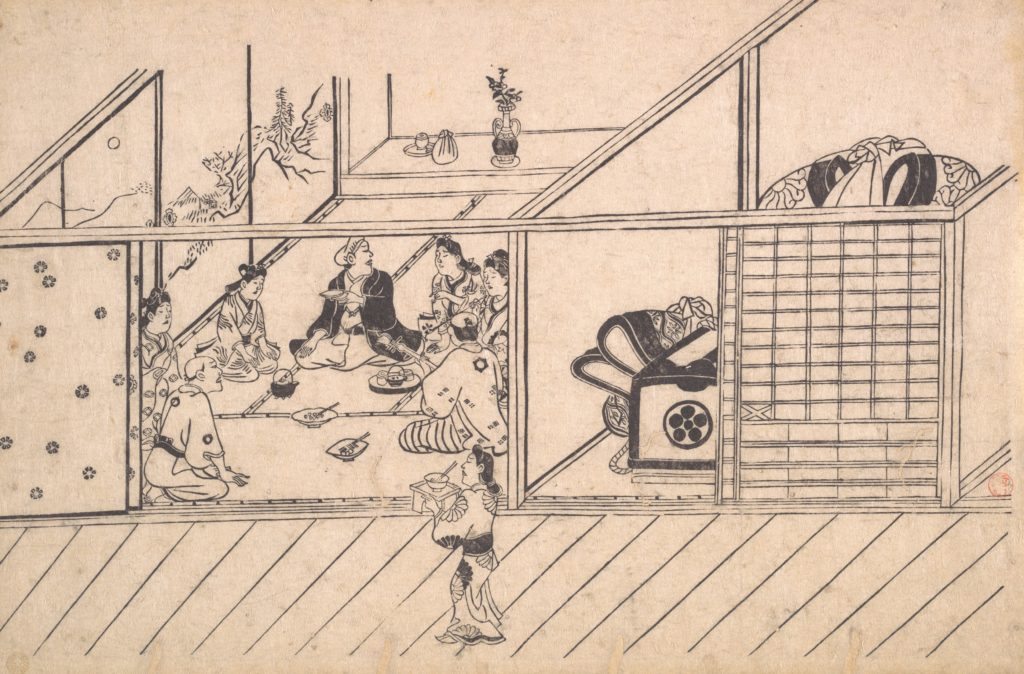
A Banquet in a Joroya (teahouse), Hishikawa Moronobu, Japan, ca. 1680, Monochrome woodblock print; ink and colour on paper. Metropolitan Museum of Art.
Gift of Estate of Samuel Isham, 1914. JP811
Image: Courtesy of the Metropolitan Museum of Art
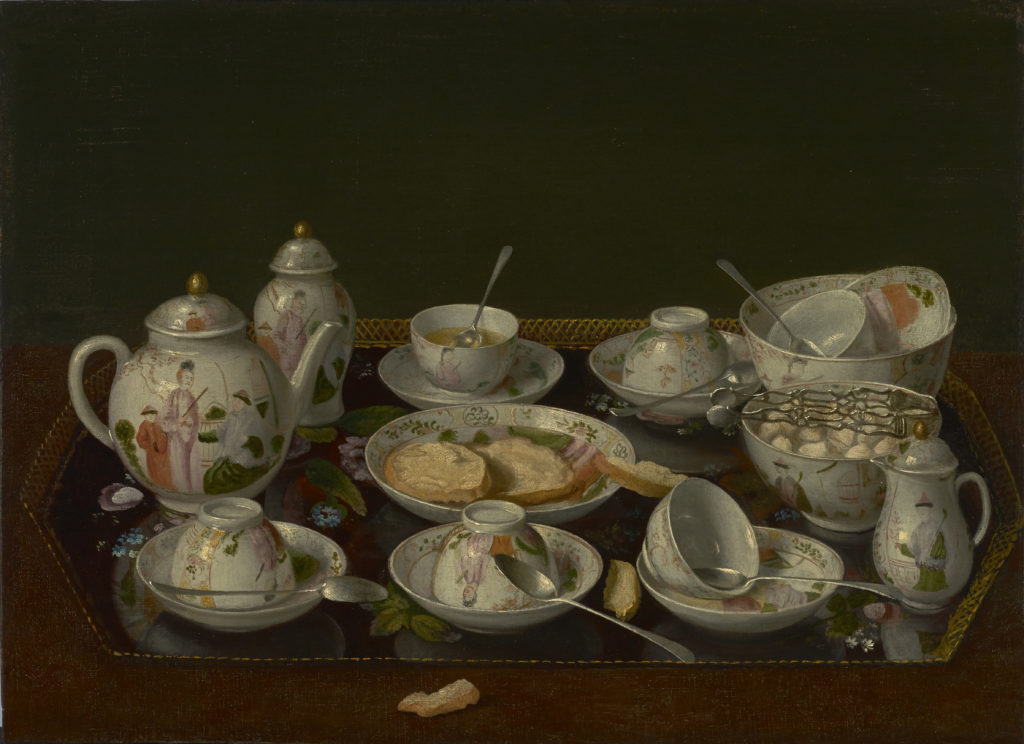
A sugar bowl features prominently in this still life by Jean-Étienne Liotard, Switzerland, c.1781-1783, Oil on canvas mounted on board. The J. Paul Getty Museum, Los Angeles.
84.PA.57
Image: Courtesy of the Getty's Open Content Program
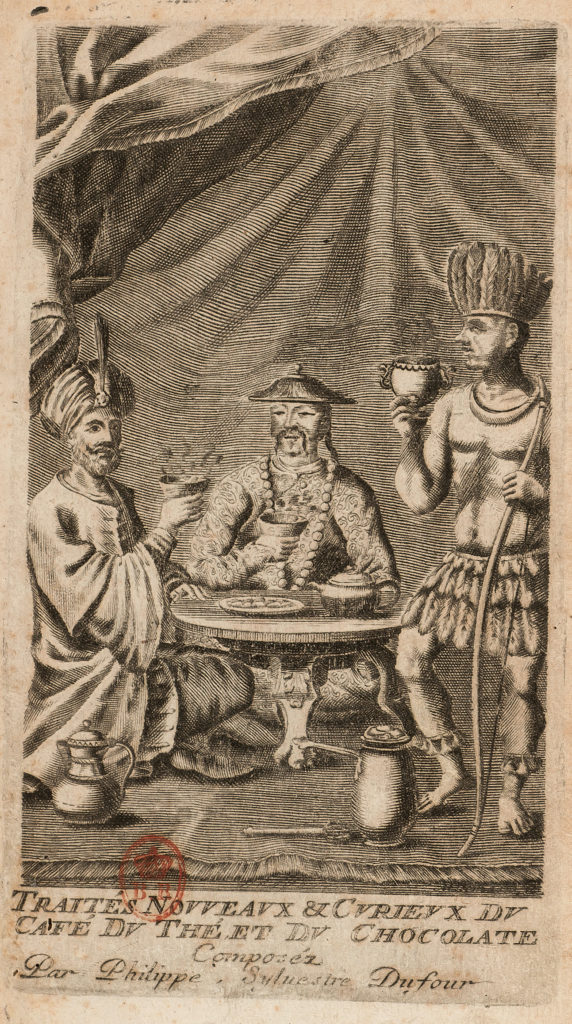
Images disseminated through print and material culture contributed to the formation of racial stereotypes. Frontispiece from Traitez nouveaux et curieux du café, du thé et du chocolate by Philippe Sylvestre Dufour, France, 1685. Bibliothèque nationale de France.
Image: gallica.bnf.fr / Bibliothèque nationale de France
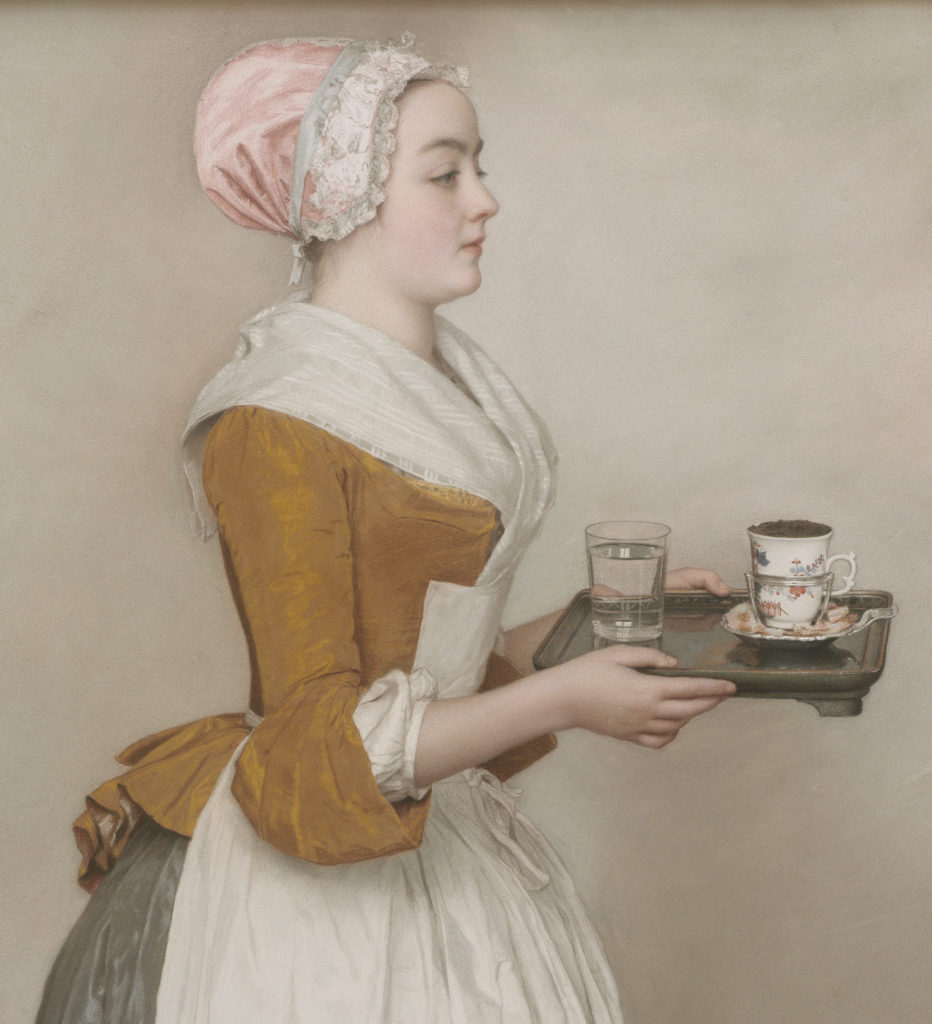
In Jean-Étienne Liotard's The Chocolate Girl (Pastel on vellum, c.1744), a young servant carries a Kakiemon-style chocolate cup on a Japanese lacquer tray.
Image: © Staatliche Kunstsammlungen Dresden / Bridgeman Images
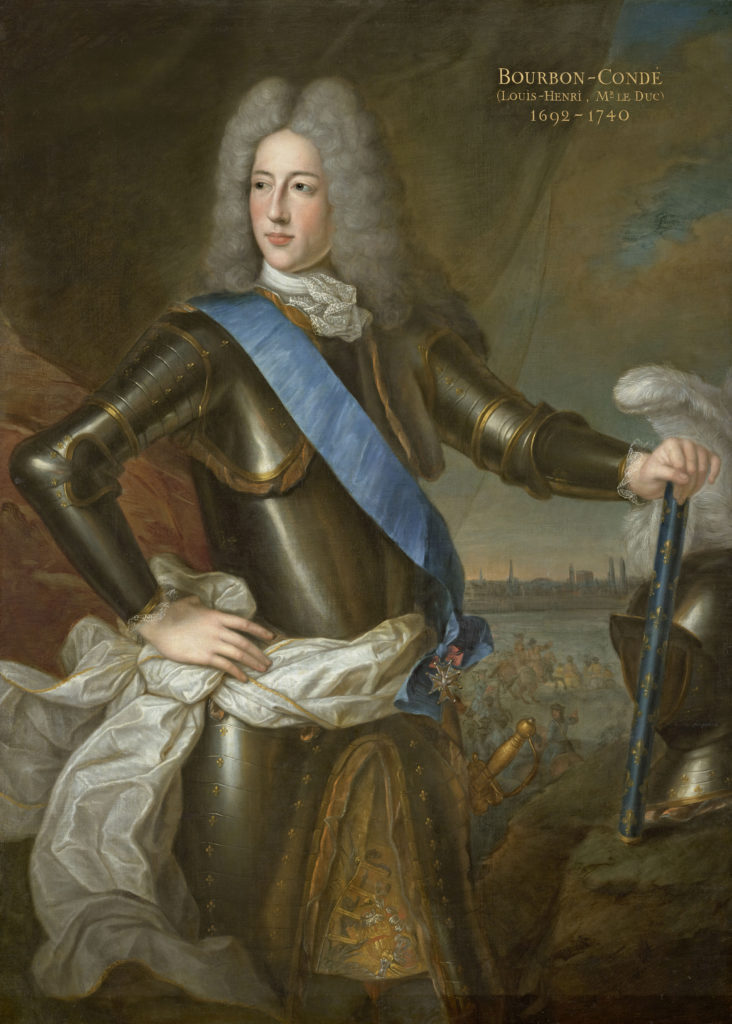
Portrait of Louis Henri de Bourbon, septième prince de Condé (After Restoration), Pierre Gobert, France, date unknown, Oil on Canvas. Musée Condé.
Image: Michel Urtado. Musée Condé, Chantilly, France © RMN-Grand Palais / Art Resource, NY
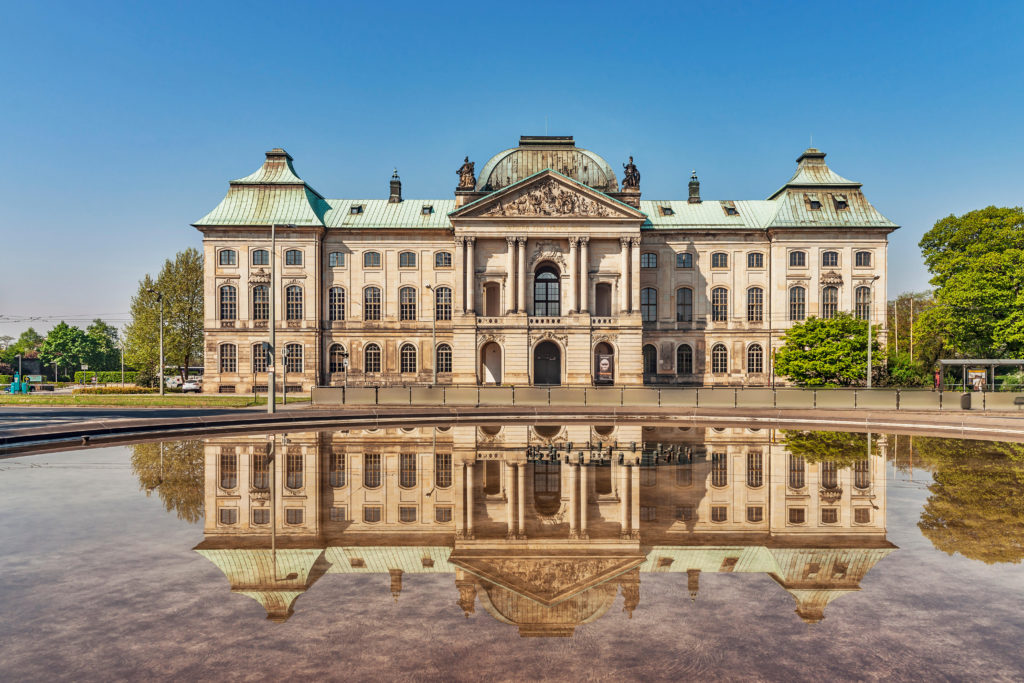
The Japanese Palace, Dresden, Germany
Image: Gunter Kirsch / Alamy Stock Photo
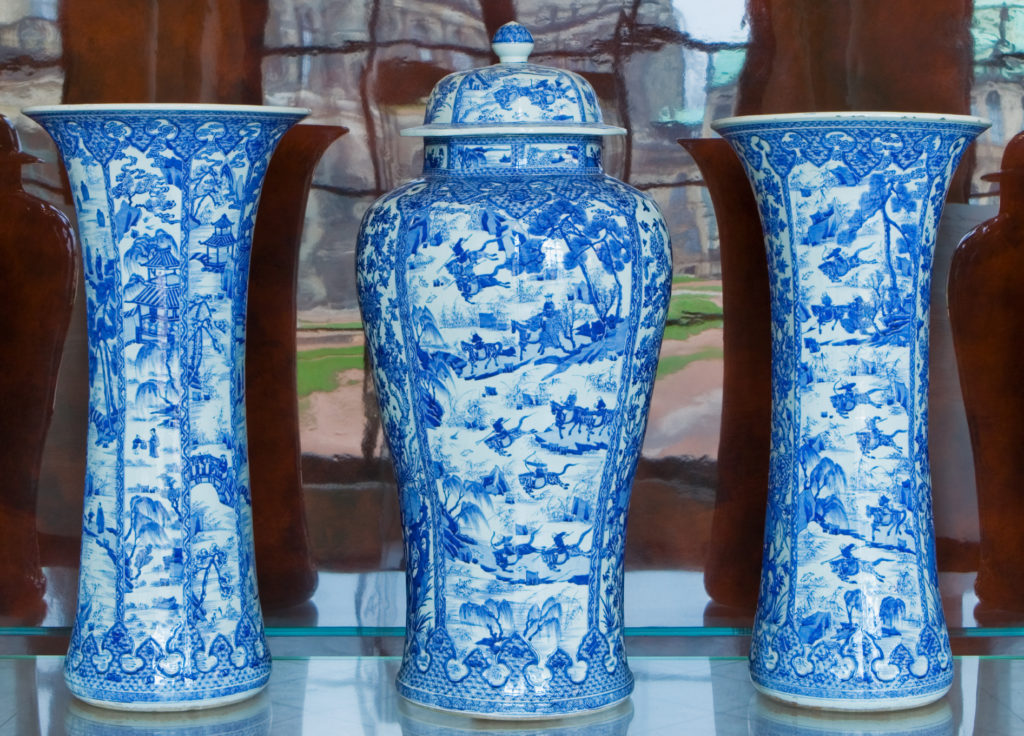
Three of the vases acquired by Augustus the Strong in an exchange with Friedrich Wilhelm of Prussia in 1717
China Jingdezhen, Qing Dynasty, Kangxi Period (1662-1722), Porcelain with underglaze blue. Augustus the Strong's Japanese Palace, Dresden, Germany. Staatliche Kunstammlungen, Porzellansammlung
Image: © Porzellansammlung, Staatliche Kunstsammlungen Dresden / Photographer: Juergen Loesel
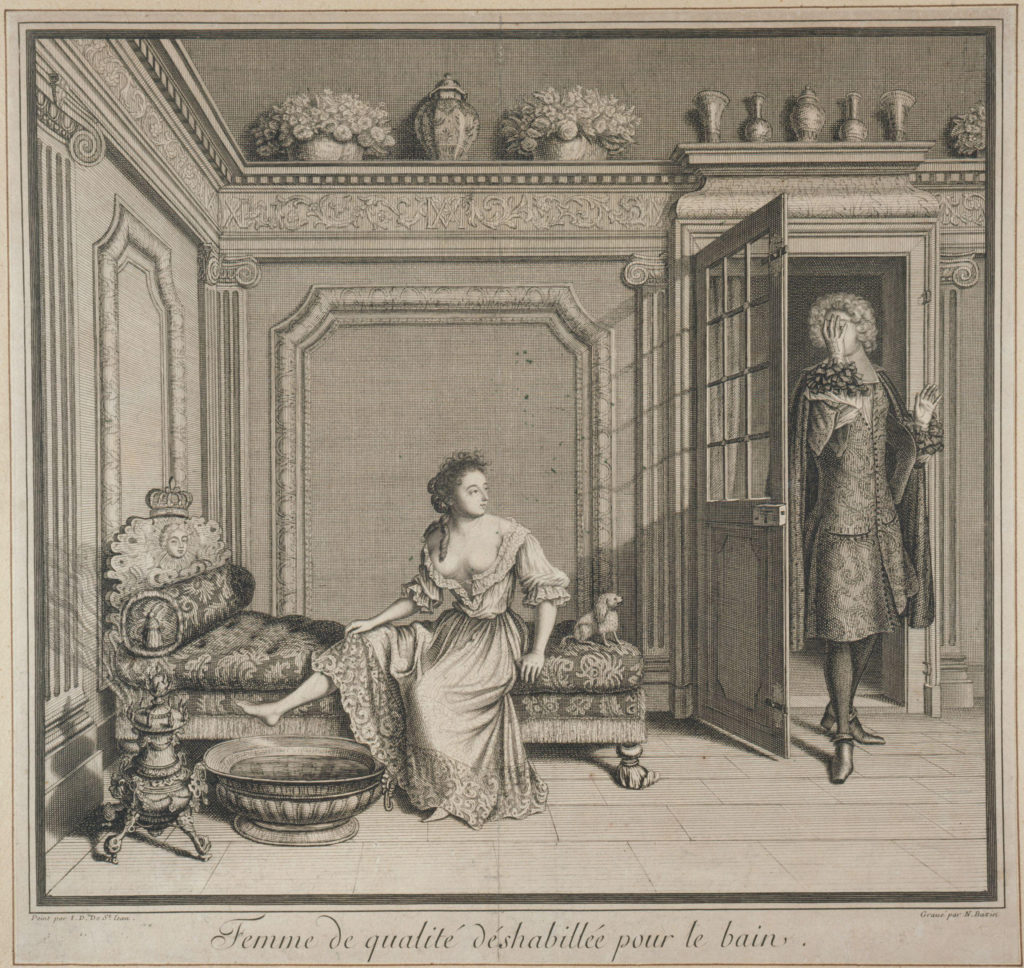
In this engraving, a garniture of vases is displayed above the doorway.
Gentlewoman undressing for a bath, Attributed to Nicolas Bazin, France, c. 1685
Image: PWB Images/Alamy Stock Photo
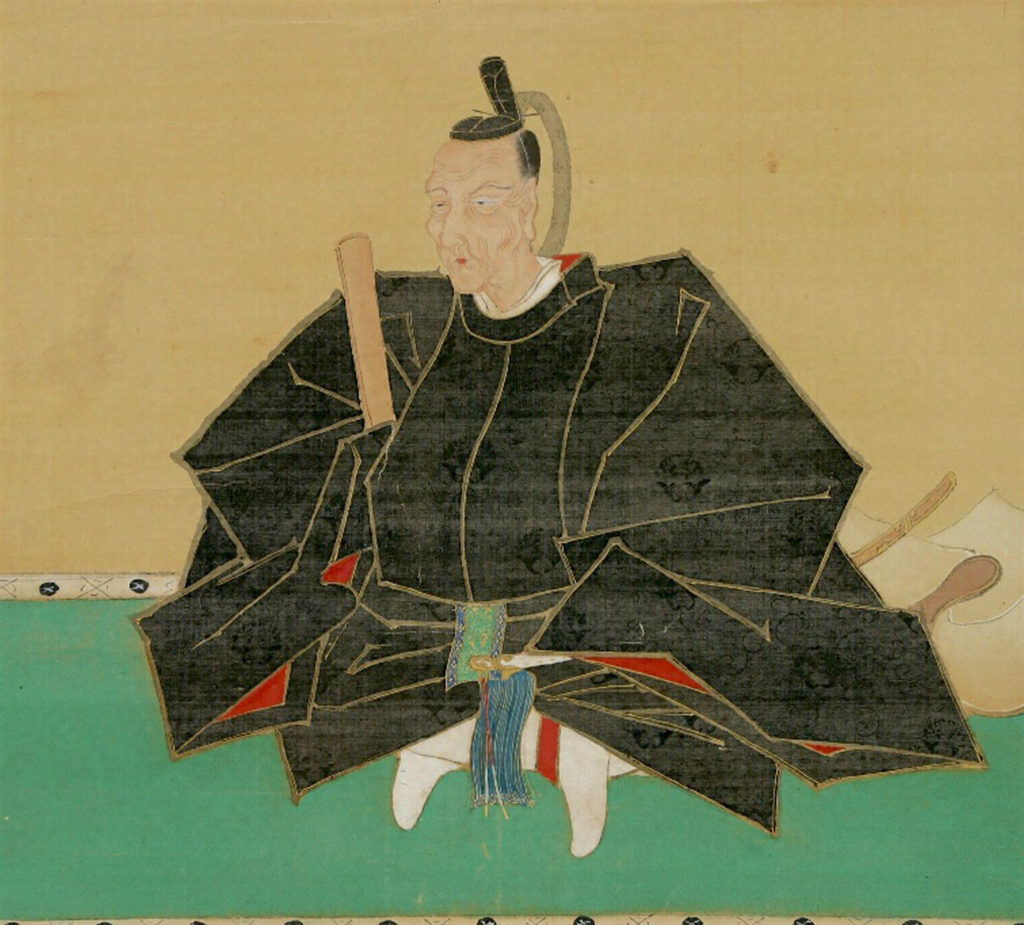
Portrait of Nabeshima Katsushige, Japan, c.1661, The Museum Chokokan, Nabeshima.
Image: Gainew Gallery/Alamy Stock Photo
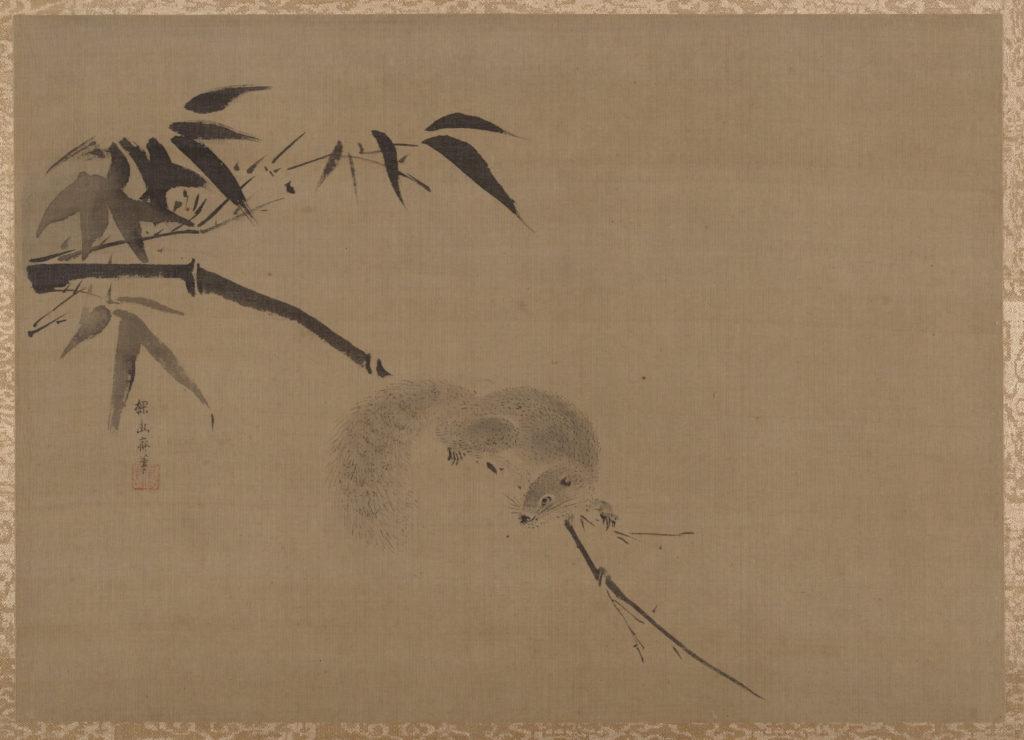
Squirrel on Bamboo, Kanō Tan'yū, Japan, Edo Period, c. 1650, Album leaf, ink and colour on silk. Metropolitan Museum of Art.
Charles Stewart Smith Collection, Gift of Mrs. Charles Stewart Smith, Charles Stewart Smith Jr., and Howard Caswell Smith, in memory of Charles Stewart Smith, 1914, 14.76.61.64
Image: Courtesy of the Metropolitan Museum of Art
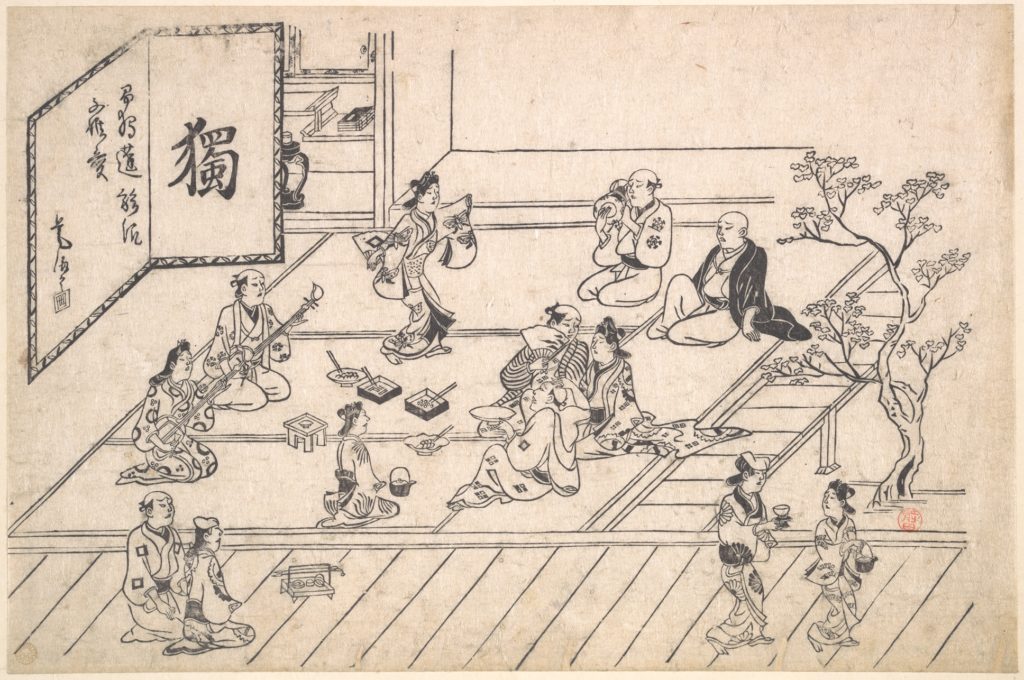
Interior scene in the Yoshiwara, Hishikawa Moronobu, Japan, ca. 1680, Woodblock print; ink on paper. Metropolitan Museum of Art.
Gift of Estate of Samuel Isham, 1914, JP812
Image: Courtesy of the Metropolitan Museum of Art
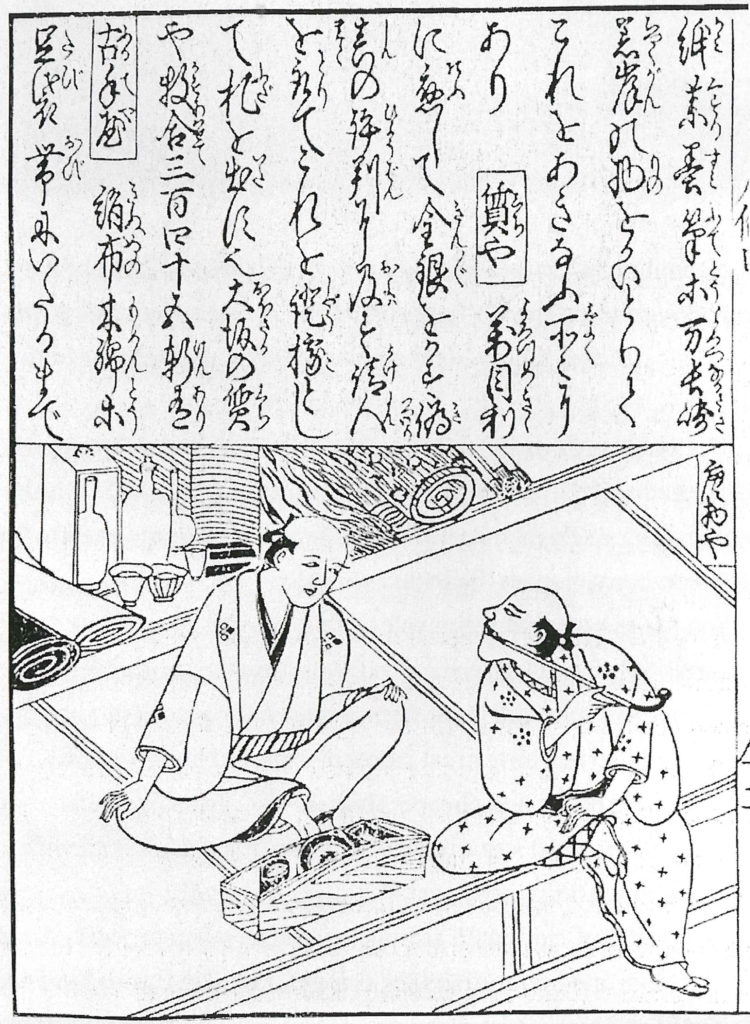
Storefront of a Karamono-ya (shop specializing in imported goods), from Jinrin kinmo zui (Illustrated Encyclopedia of Social Customs), Japan, 1690, Woodblock illustrated book, 7 vols.
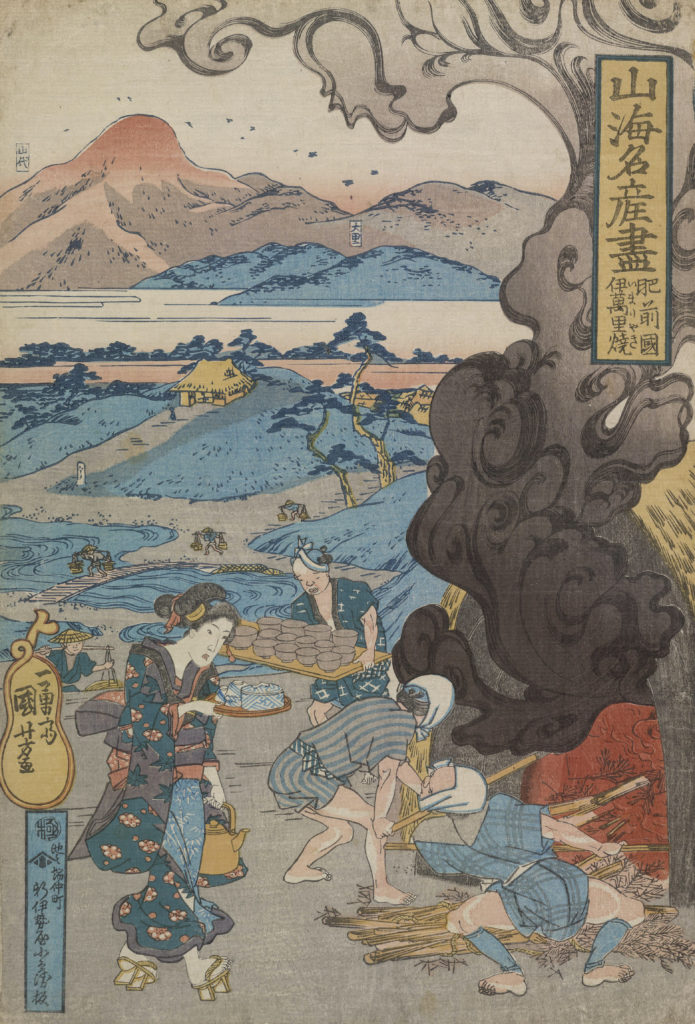
Imari ceramics, from All the Famous Products of Land and Sea, Utagawa Kuniyoshi, Japan, 1830-1831, Woodblock on paper. British Museum.
Donated by the American Friends of the British Museum, 2008,3037.03401
Image: © The Trustees of the British Museum

Sakaida Kakiemon XV, who assumed the title for Arita pottery in Saga Prefecture, southwestern Japan, in February 2014. (Kyodo). SAGA, Japan - Photo taken Feb. 7, 2014
Image: Newscom/Alamy Stock Photo
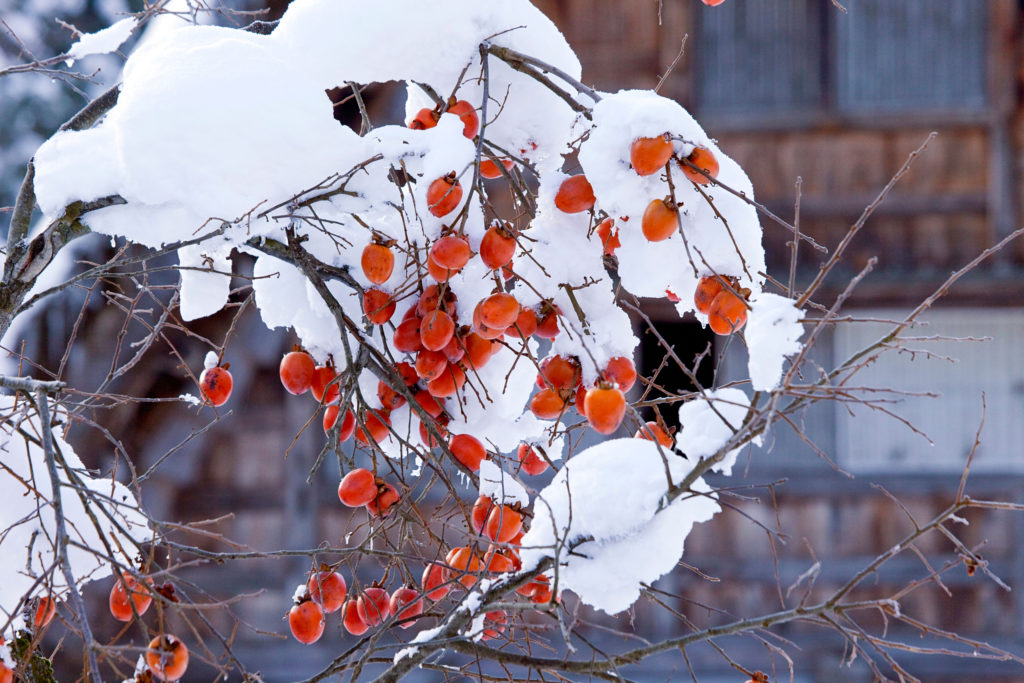
Snow on persimmon tree
Image: Horizon Images/Motion / Alamy Stock Photo
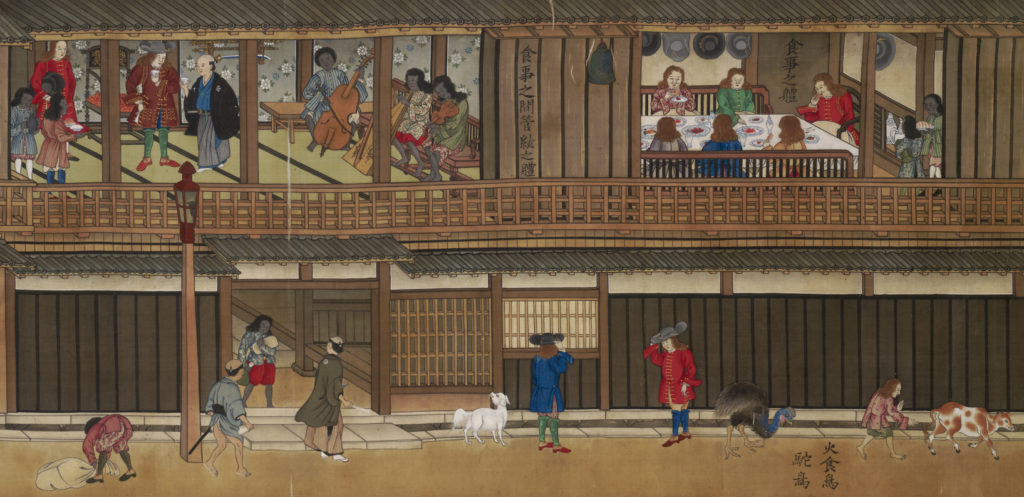
Scenes of life at the Dutch Factory at Deshima. The domestic servants and musicians depicted in these scenes were most probably enslaved individuals from Indonesia, reminding us that the Dutch carried out a slave trade in Asia.
Japan, Nagasaki School, late 18th century, Painted handscroll, silk. British Museum.
1944.1014.0.22
Image: © The Trustees of the British Museum
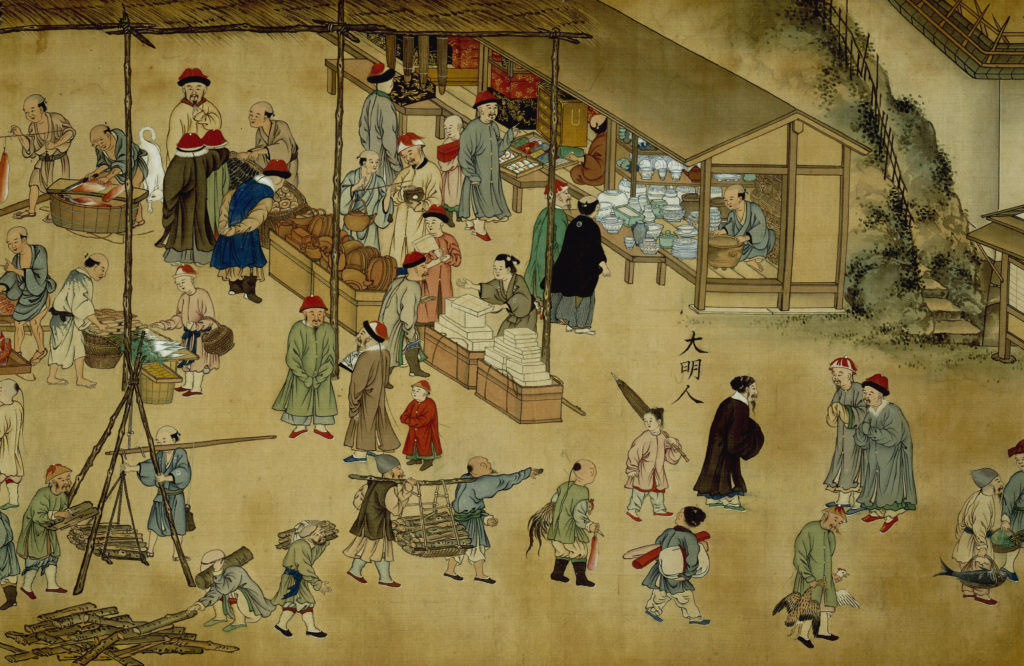
Scenes of life at the Chinese Settlement at Nagasaki, Japan, Nagasaki School, late 18th century, Painted handscroll, silk. British Museum.
1944,1014,0.23
Image: © The Trustees of the British Museum
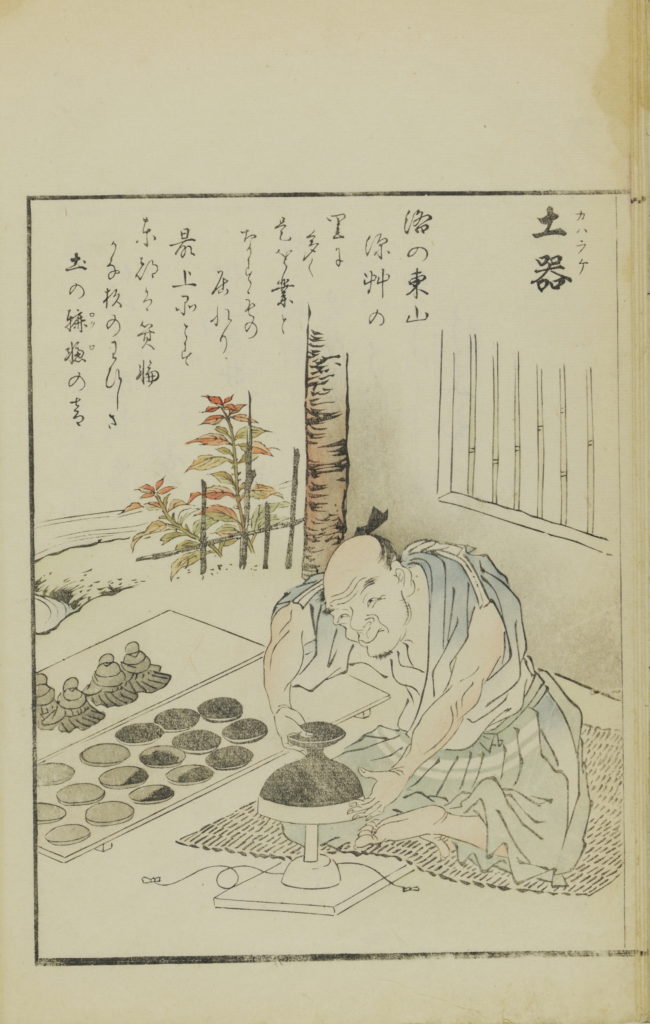
“The Potter” from Saiga Shokunin Burui (Colored Pictures of Classified Artisans), Tachibana Minkō, Japan, 1770, Paper and woodblock. British Museum.
Donated by Sir Herbert Thompson, 1928,0109,0.2.2
Image: © The Trustees of the British Museum

Present-day Arita
Image: Chris Wilson/Alamy Stock Photo
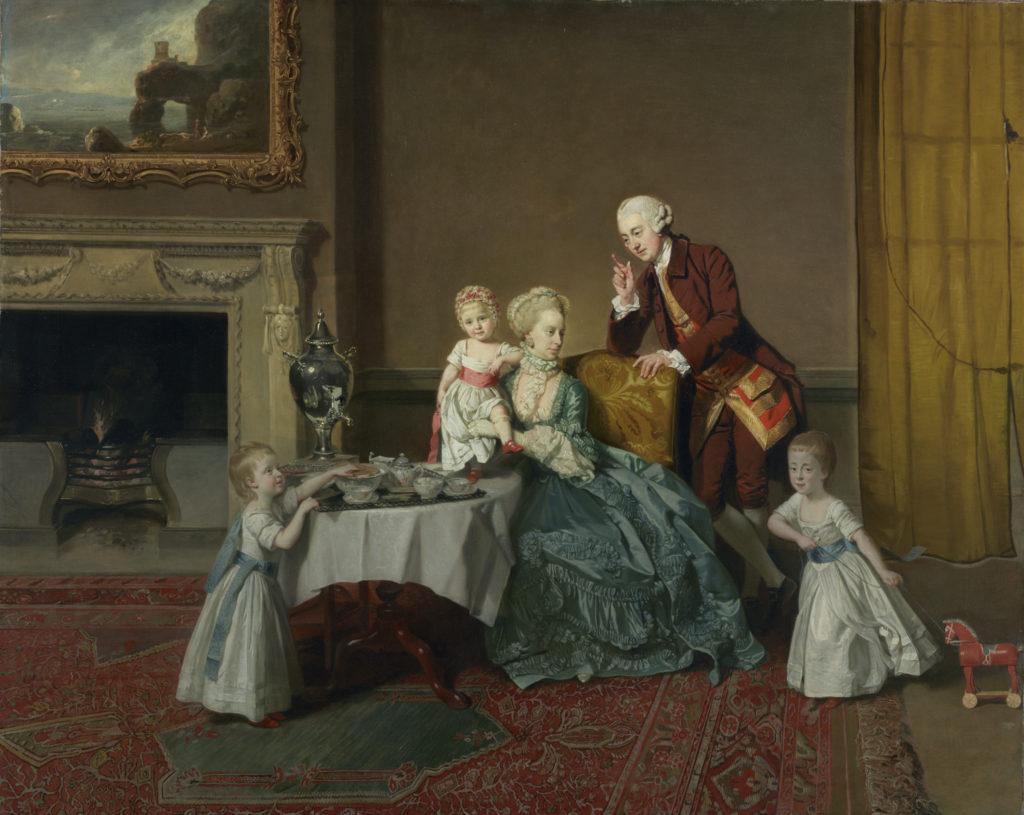
John, Fourteenth Lord Willoughby de Broke, and His Family, Johann Zoffany, England, about 1766, Oil on canvas. J. Paul Getty Museum.
96.PA.312.
Image: Courtesy of the Getty’s Open Content Program
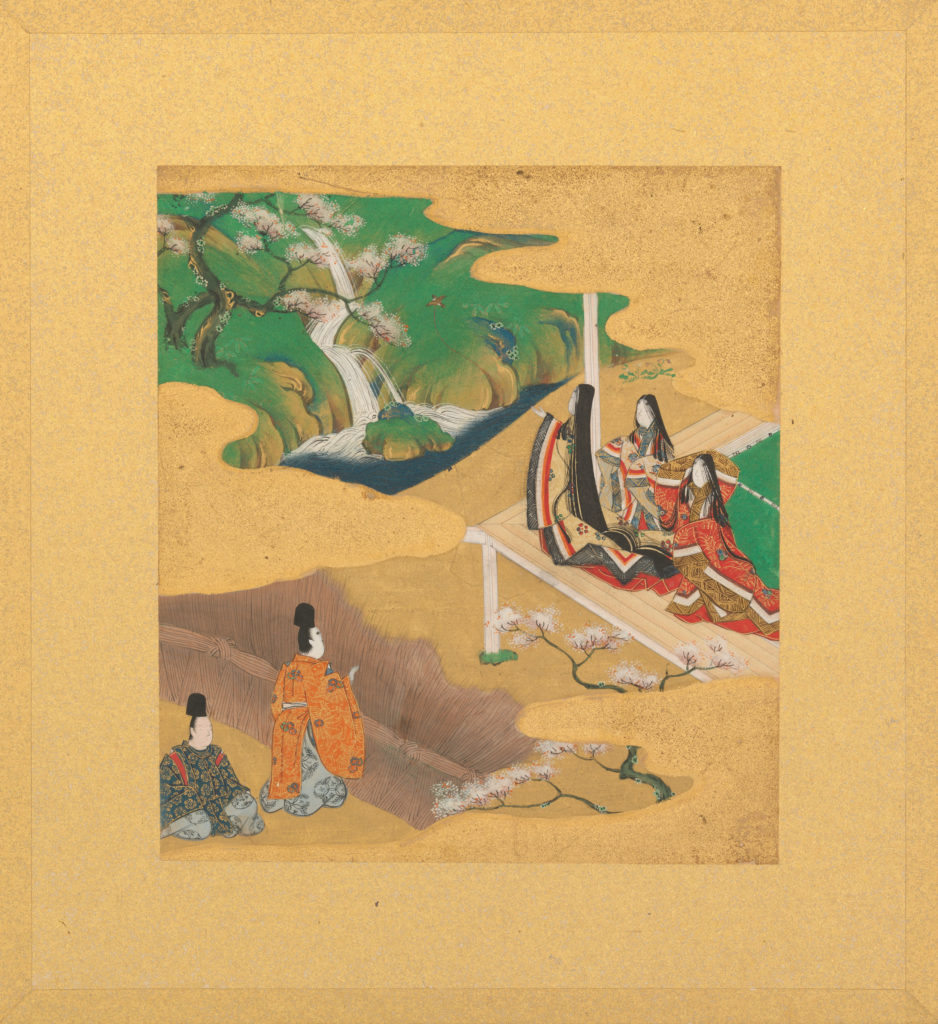
Scene from The Tale of Genji, Japan, Tosa School, early 17th century, Pair of albums (accordion fold) with 54 illustrations; ink, color and gold on paper. The Metropolitan Museum of Art.
Mary Griggs Burke Collection, Gift of the Mary and Jackson Burke Foundation, 2015, 2015.300.35a,b
Image: Courtesy of the Metropolitan Museum of Art
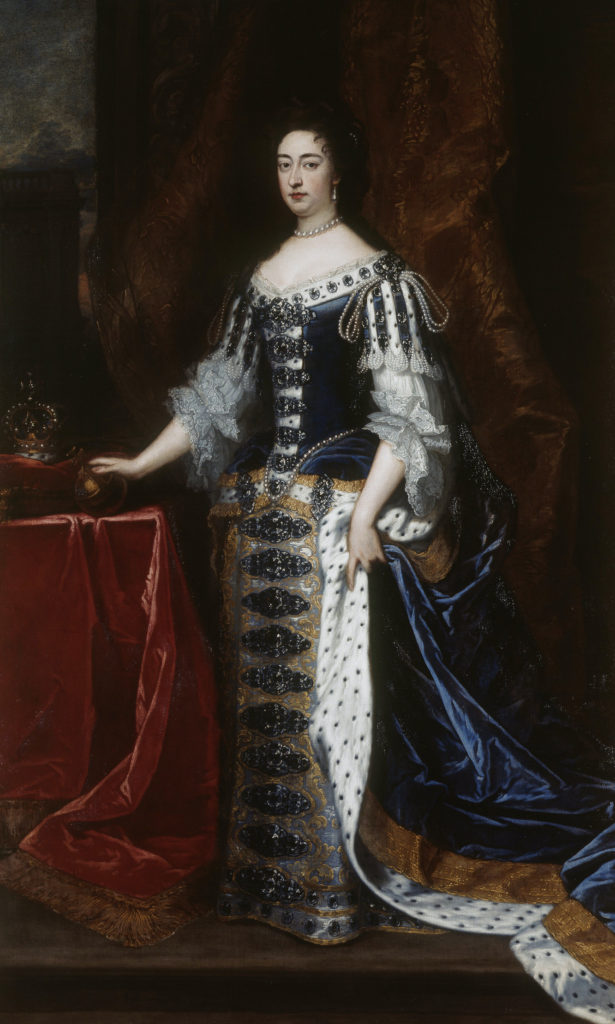
Mary II (1662-1694), Sir Godfrey Kneller, England, dated 1690, Oil on canvas. Royal Collection Trust.
RCIN 405674
Image: Royal Collection Trust / © Her Majesty Queen Elizabeth II 2021
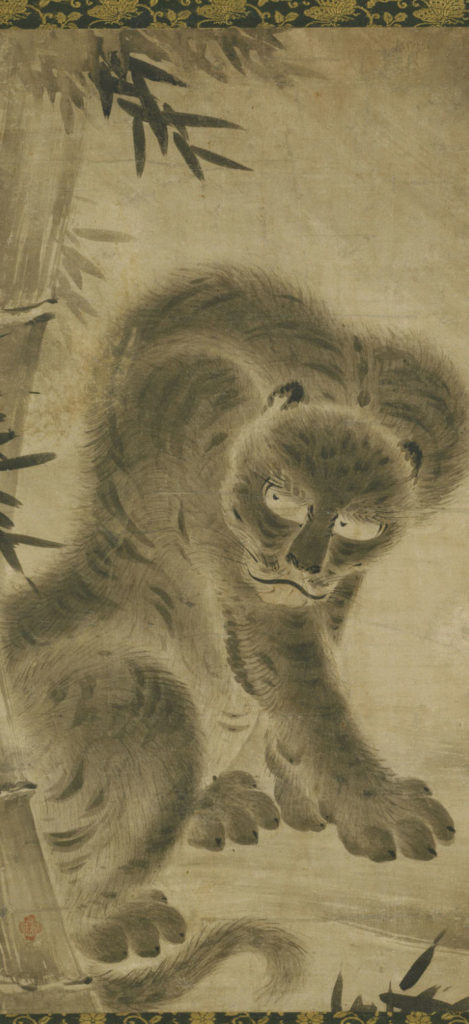
Tiger Scroll, Attributed to Kanō Motonobu, Japanese, c.1477-1559, Japan, Muromachi period, late 15th-early 16th century, Ink and colour on paper, mounted as a hanging scroll, ivory scroll ends. Philadelphia Museum of Art.
125th Anniversary Acquisition. Purchased with the Edith H. Bell Fund, the Edward and Althea Budd Fund, the Hollis Family Foundation Fund, the J. Stogdell Stokes Fund, and the East Asian Art Revolving Fund, 2000, 2000-114-2
Image: Courtesy of the Philadelphia Museum of Art
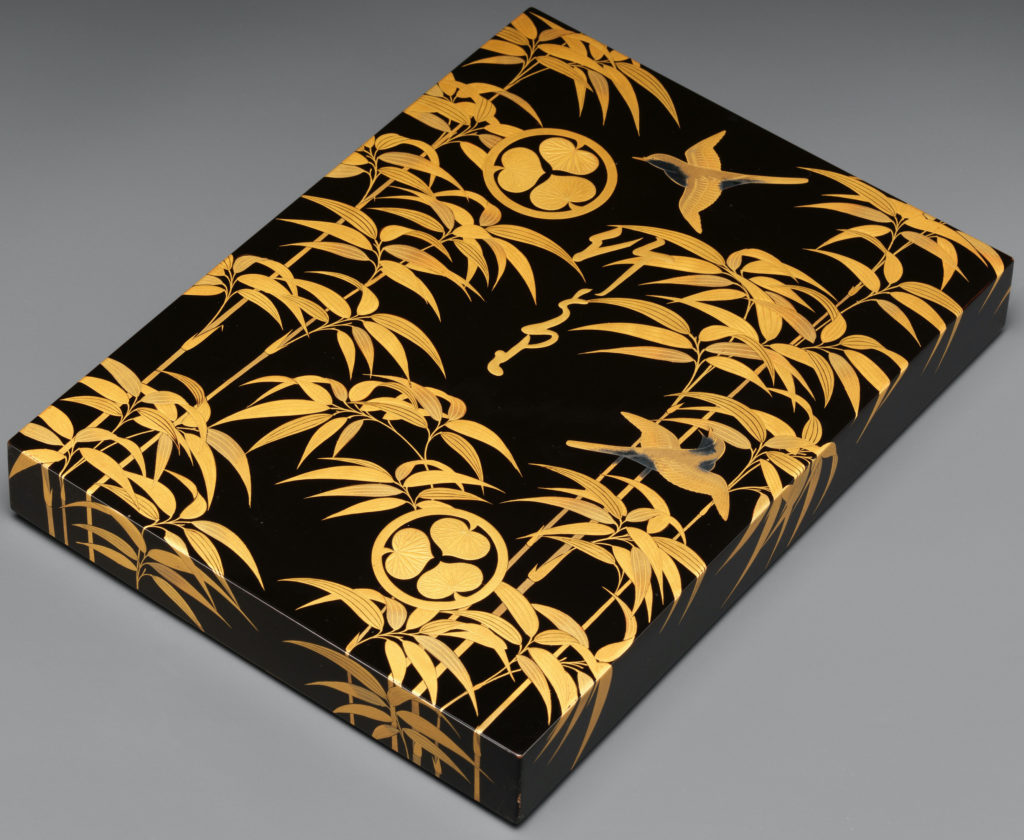
Covered Box for Volumes with Bamboo Grove Design, Japan, late 17th century, Lacquered wood with gold and silver. Metropolitan Museum of Art.
Rogers Fund, 1921, 21.174.1d, e
Image: Courtesy of the Metropolitan Museum of Art
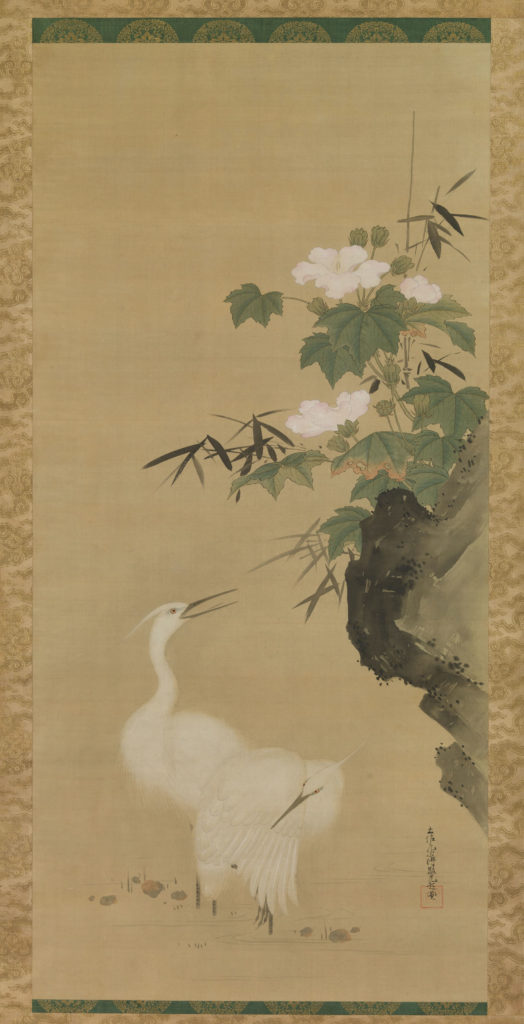
Egrets and Cotton Roses, Tosa Mitsuoki, Japan, mid-late 17th century, Hanging scroll; ink and colour on silk. Metropolitan Museum of Art.
Fishbein-Bender Collection, Gift of T. Richard Fishbein and Estelle P. Bender, 2014, 2014.768.1
Image: Courtesy of the Metropolitan Museum of Art
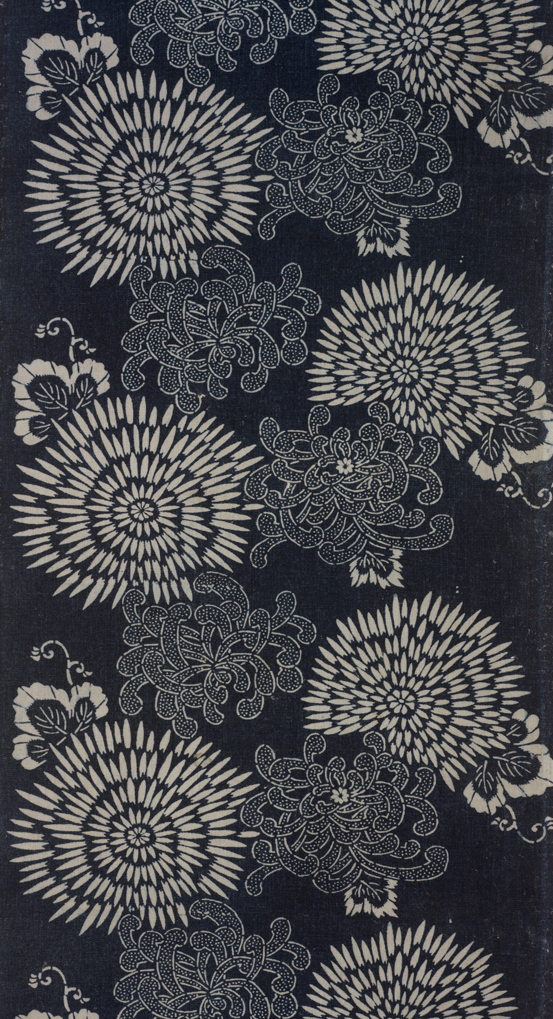
Japanese Meiji, Japan, 1880-1910, Cotton, indigo; resist dye, stencil. Rhode Island School of Design
Gift of Pamela Parmal 1987.098
Image: Courtesy of the Rhode Island School of Design Museum
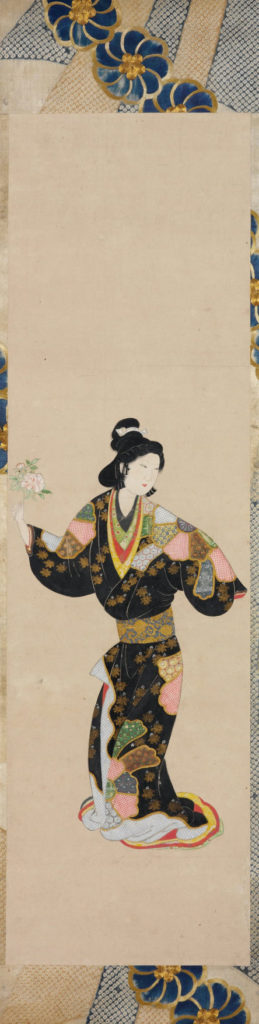
Beauty of the Kanbun Era, Japan, ca. 1660–1680, Edo period, Hanging scroll; ink, colours, and gold on paper. John C. Weber Collection.
Image © John Bigelow Taylor
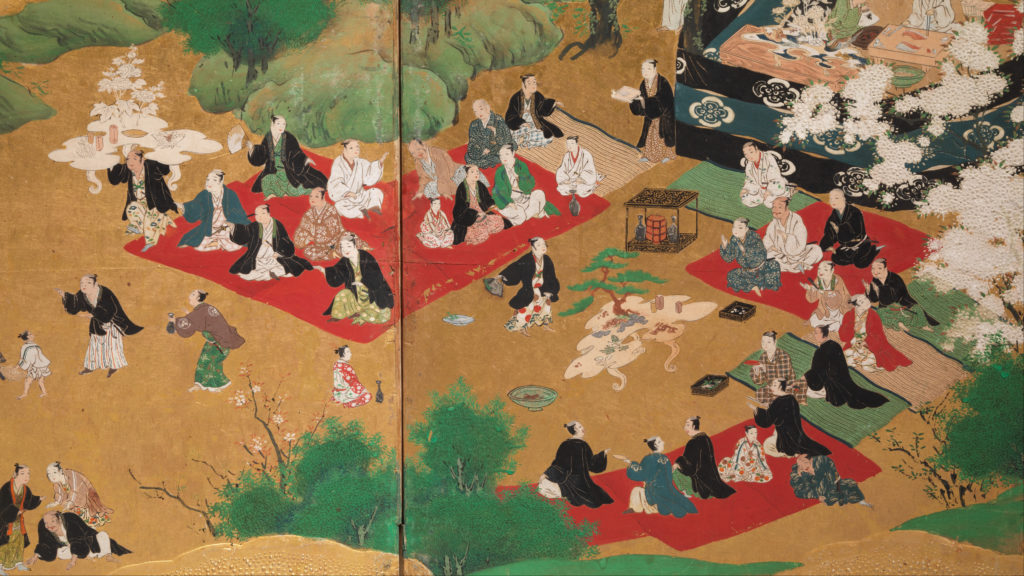
Amusements at Higashiyama in Kyoto, Japan, Kano School, ca. 1620, Edo Period, Pair of six-panel folding screens; ink, color, gold, mica, and gold leaf on paper. The Metropolitan Museum of Art.
Purchase, 2013 Benefit Fund and Mary and James G. Wallach Foundation Gift, 2014
Image: Courtesy of the Metropolitan Museum of Art
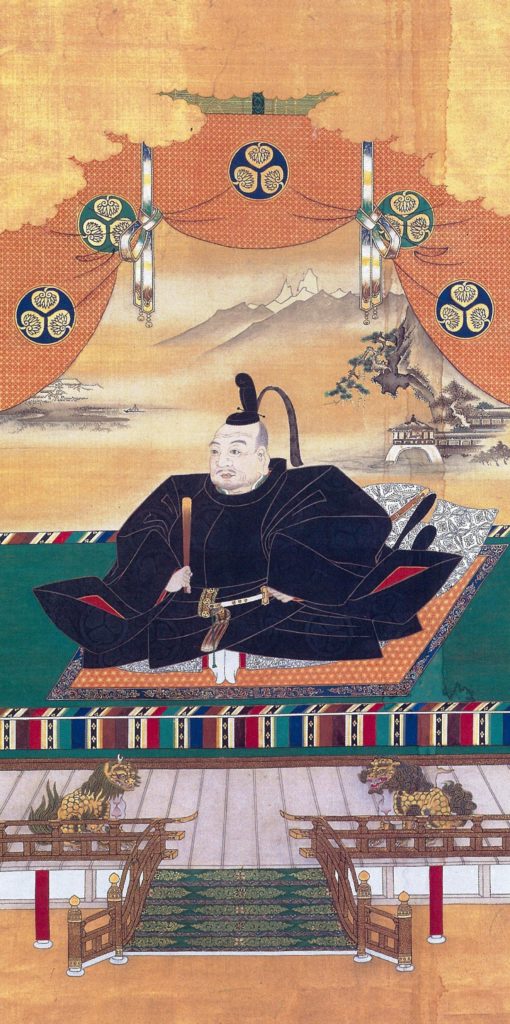
Portrait of Tokugawa Ieyasu, Kanō Tan'yū, Japan, 17th century, Water-based pigments on hanging scroll. Osaka Castle.
Image: User:M-sho-gun / Wikimedia Commons / Public Domain
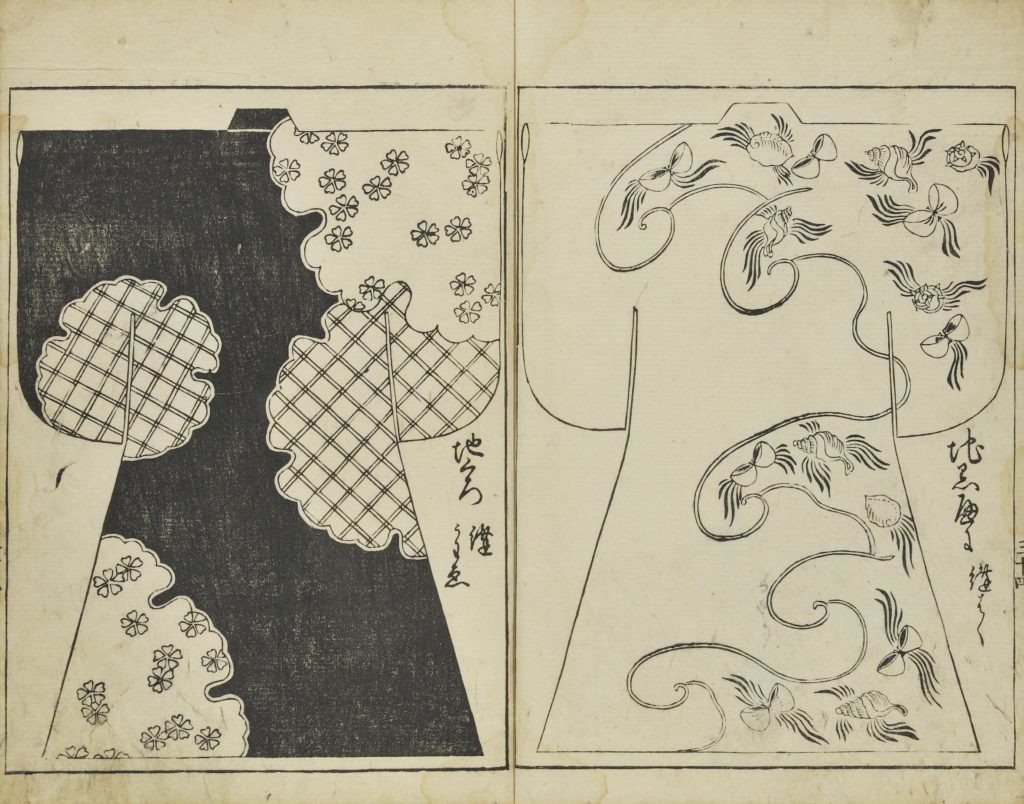
Kosode on Hinagata, Vol.2, Hishikawa Moronobu, Japan, 1677, Woodblock print. British Museum
1958,0510,0.1.2
Image: © The Trustees of the British Museum
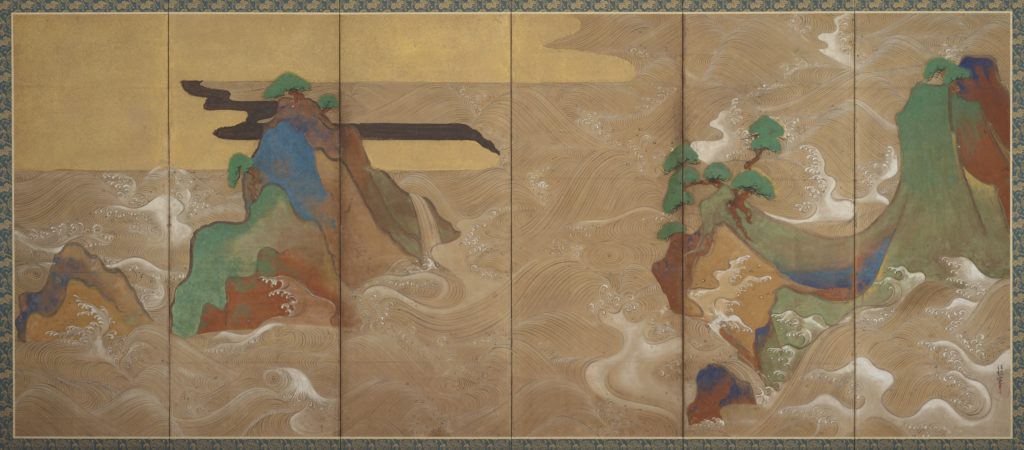
Waves at Matsushima, Tawaraya Sōtatsu, Japan, 17th century, Edo Period, Ink, color, gold, and silver on paper. Smithsonian Institute of Art.
Freer Gallery of Art and Arthur M. Sackler Gallery. Gift of Charles Lang Freer, F1906.231-232
Image: Courtesy of the Smithsonian Institute of Art.
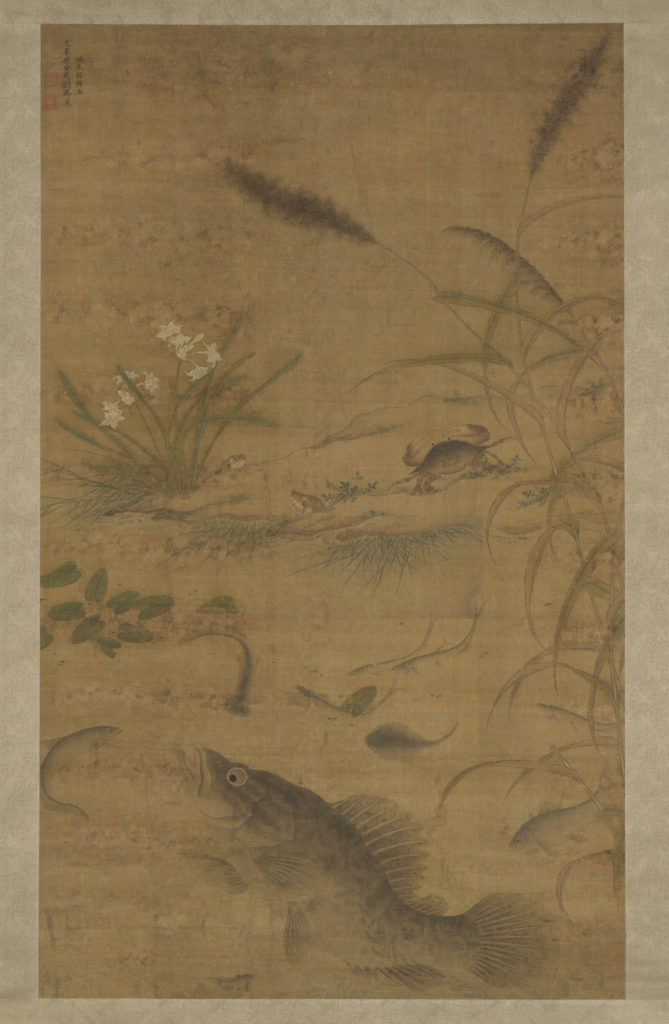
Flowers, Fish, and Crabs, Liu Jie, China, Ming dynasty (1368–1644), mid-16th century, Hanging scroll; ink and color on silk. Metropolitan Museum of Art.
From the Collection of A. W. Bahr, Purchase, Fletcher Fund, 1947. 47.18.130
Image: Courtesy of the Metropolitan Museum of Art

